


Renowned Academy Award-winning filmmaker Barry Jenkins, celebrated for his evocative storytelling in works like Moonlight and If Beale Street Could Talk, has lent his distinctive cinematic lens to Prada, directing the luxury house’s Autumn/Winter 2026 campaign. This collaboration marks Jenkins’ inaugural foray into the realm of high fashion advertising, a surprising yet ultimately harmonious pairing given his reputation for "slow cinema" and Prada’s long-standing commitment to artistic integrity and experimental narratives. The partnership underscores a pivotal moment in the convergence of cinematic artistry and global fashion, reaffirming Prada’s unique position as a patron of cultural dialogue.
A Vision Unveiled: The AW26 Women’s Show Experience
The genesis of this collaboration can be traced back to an unseasonably warm day in late February, when Jenkins attended what he termed his "first real" fashion show: Prada’s Autumn/Winter 2026 women’s presentation. His qualifier, "real," speaks volumes, acknowledging the unparalleled theatricality and conceptual depth inherent to a Prada spectacle orchestrated by co-creative directors Miuccia Prada and Raf Simons. Jenkins recalled being profoundly inspired by the show’s ability to forge "very concrete metaphors out of shapes and silhouettes," noting its clear and compelling narrative structure.
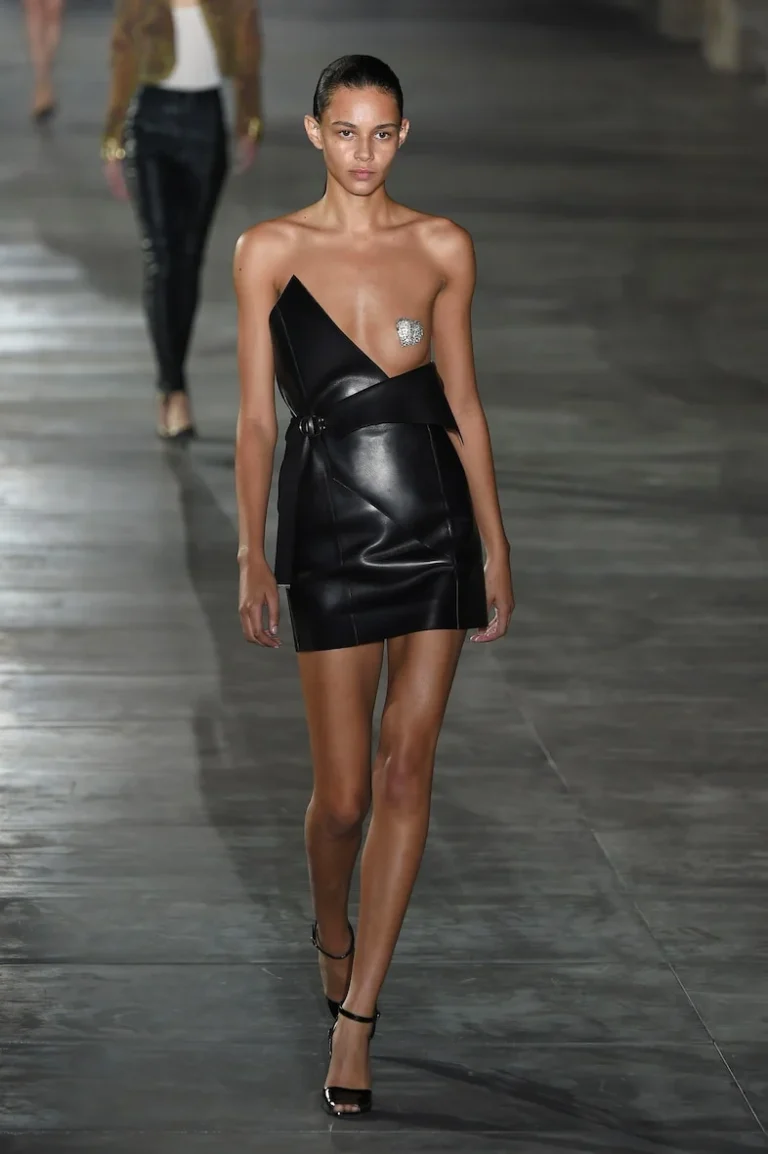
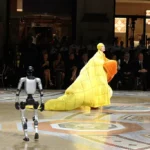
The runway itself was a masterclass in layered storytelling. Fifteen models, embodying a diverse spectrum of contemporary femininity, first appeared in meticulously crafted slimline trenches, intricately embellished coach jackets, and robust zip-up fisherman knits. What followed was a striking performance of revelation: each model reappeared a total of four times, progressively shedding layers to unveil further garments beneath. This sartorial unfolding was more than a mere display of clothing; it was a deliberate act of visual metaphor, symbolizing the multifaceted realities and inherent complexities of women’s lives – a theme explicitly articulated by the house. The models’ "careening, directional walks" imbued the procession with a powerful sense of agency and purpose, further amplified by the thudding, hypnotic techno soundtrack of Robert Hood’s "Chroma Light." Jenkins, deeply affected by the experience, described it as "awesome," confessing the soundtrack remained so vivid in his memory that he playfully recreated the Prada runway ambiance for his infant child, highlighting the intense and moving energy of the event.
From Front Row to Director’s Chair: An Organic Proposition
Jenkins’ profound engagement with the AW26 show was not lost on Miuccia Prada and Raf Simons. Shortly after the presentation, the acclaimed director was extended an invitation to capture the season’s campaign – a proposition he described as remarkably "organic." "It wasn’t, ‘hey, we have this thing you have to do’," Jenkins recounted. "It was ‘we’re thinking of some things. What do you think?’ And it just took off from there." This collaborative ethos, centered on genuine artistic exchange rather than rigid directives, is a hallmark of Prada’s approach to its campaigns, distinguishing it within the luxury sector. Jenkins’ transition from an inspired observer to a key creative force behind the brand’s visual identity for the season underscores the powerful synergy that can emerge when fashion and film intersect at their highest echelons.
Prada’s Enduring Dialogue with Cinema: A 20-Year Legacy
Barry Jenkins’ involvement is not an isolated incident but rather the latest chapter in Prada’s celebrated, two-decade-long tradition of inviting visionary film directors to interpret its collections. This strategy, initiated in 2005, has cemented Prada’s reputation as a cultural institution that transcends mere fashion production, actively engaging with broader artistic discourse. The brand, under the singular vision of Miuccia Prada and more recently in tandem with Raf Simons, has consistently sought out auteurs whose distinctive voices could translate the intricate conceptual frameworks of their collections into compelling cinematic narratives.
The legacy began with director Ridley Scott, whose 2005 campaign featuring Daria Werbowy unfolded as a chrome-hued, jazz-infused chase through a city, instantly setting a new benchmark for fashion advertising. Scott’s mastery of visual storytelling and high-octane drama brought an unprecedented cinematic grandeur to the campaign, transforming it from a simple ad into a short film with its own distinct aesthetic and narrative thrust.
Years later, in 2013, Wes Anderson, known for his meticulously symmetrical compositions, whimsical narratives, and idiosyncratic characters, crafted Castello Cavalcanti. This short film, starring Jason Schwartzman, was less a traditional campaign and more an immersive extension of Anderson’s unique filmic universe, seamlessly integrating Prada’s aesthetic into his signature style. It showcased Prada’s willingness to surrender creative control to a director, trusting that the resulting artistic expression would resonate deeply with its audience.
More recently, in 2025, the Greek director Yorgos Lanthimos, celebrated for his unsettlingly surreal and darkly humorous films, directed a short for the Galleria Bag. This campaign featured a mysterious giant orb and three cloned Scarlett Johanssons, embodying Lanthimos’s characteristic blend of the bizarre and the thought-provoking. These collaborations, spanning different decades and directorial styles, illustrate Prada’s consistent dedication to intellectual curiosity and artistic exploration, positioning their campaigns not just as advertisements, but as significant cultural artifacts. By continuously partnering with directors like Xavier Dolan, Autumn de Wilde, Nicolas Winding Refn, and Yang Fudong, Prada has fostered a unique platform where fashion becomes a medium for profound artistic expression, challenging the conventional boundaries between commerce and art.
Crafting the AW26 Narrative: A Study in Introspection
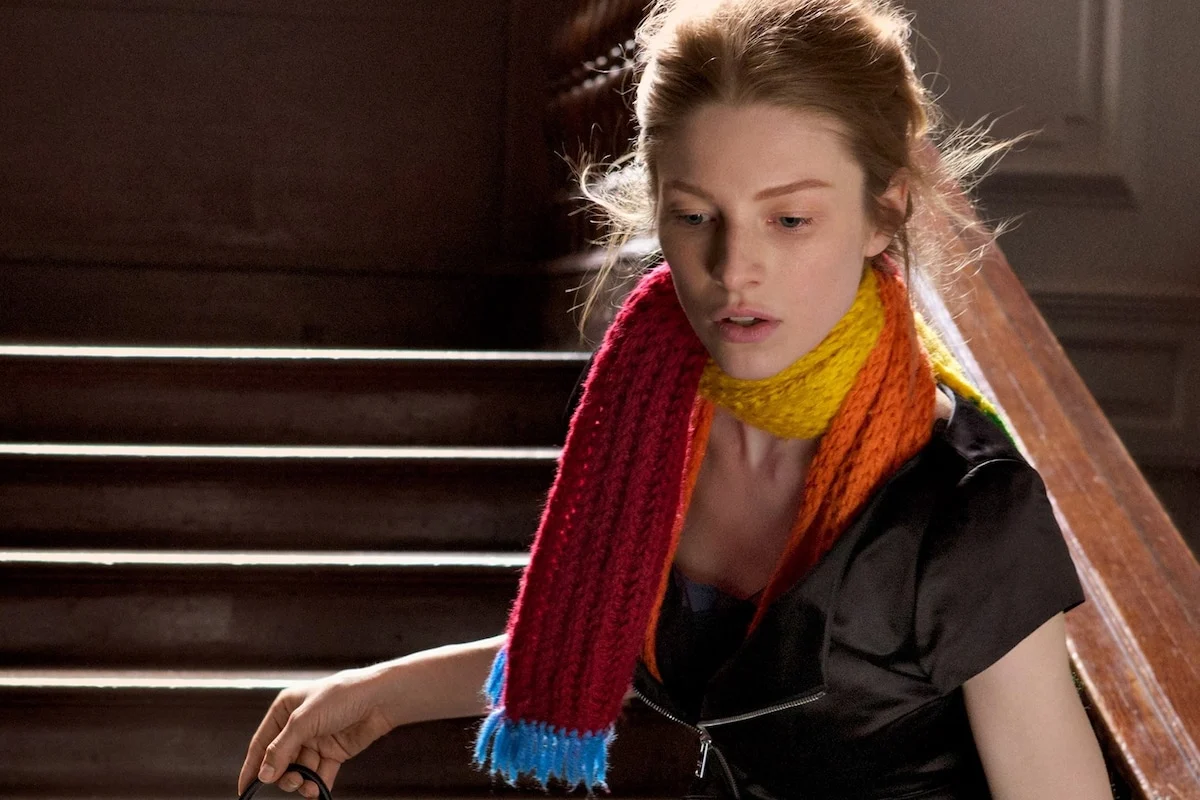
For the Autumn/Winter 2026 campaign, Jenkins created a film that masterfully captures a mood of introspective contemplation. Set within a sparsely decorated stately home, the narrative unfolds across various interconnected spaces – rooms, corridors, and stairwells – yet crucially, the four protagonists never cross paths. This deliberate separation heightens a sense of individual journey and psychological isolation, mirroring the complexities of modern existence.
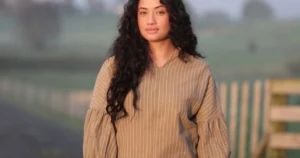
The ensemble cast features a compelling mix of established and rising talents: Chinese actress Chen Haoyu, American actor Kelvin Harrison Jr., transgender actress and model Hunter Schafer, and Australian actor-musician Troye Sivan. Each performer embodies a distinct facet of the campaign’s thematic exploration. Sivan is depicted staring tensely through a window, gazing into the expansive grounds beyond, his expression hinting at a longing or an unspoken burden. Haoyu combs her hair with a distant, almost melancholic look in her eyes, her gesture suggesting a ritual of self-reflection or preparation for an unseen future. Schafer, in a particularly poignant scene, tears pages from a book and throws them into a lit fireplace, an act that could symbolize rejection, renewal, or the deliberate destruction of old narratives to make way for new ones.
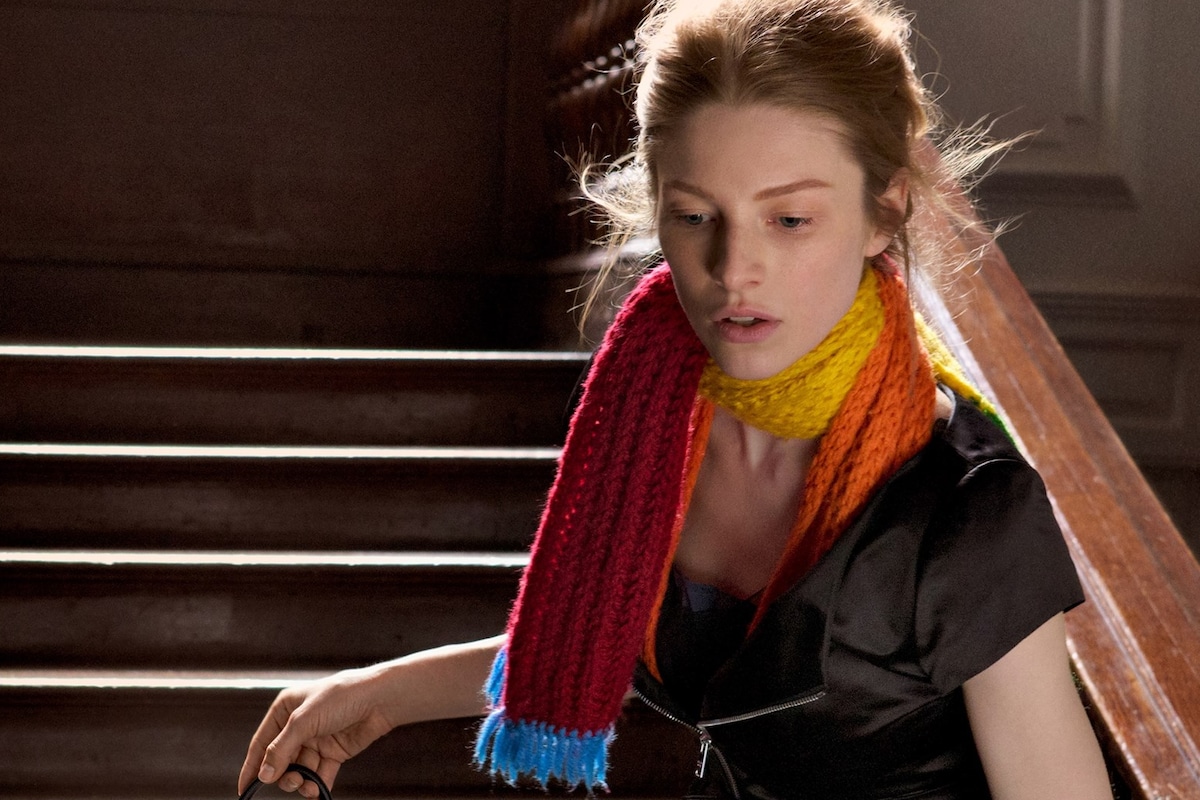
The film is punctuated by Kelvin Harrison Jr.’s evocative voiceover, which articulates the campaign’s underlying sense of existential questioning: "I feel like I’m in a cycle, I can’t figure it out." This statement encapsulates the modern human condition – a pervasive feeling of being trapped within routines or societal expectations, constantly searching for meaning or an exit from perceived constraints. The stately home itself, with its grand but empty spaces, serves as a powerful metaphor for the inner landscapes of the characters, vast yet potentially confining. Jenkins’ film, therefore, transcends a simple showcase of garments; it becomes a meditation on identity, autonomy, and the search for understanding in an often bewildering world.
The Art of Performance: Beyond Modeling
Jenkins’ approach to casting and performance for the Prada campaign was deeply informed by his directorial background, prioritizing authentic emotional resonance over conventional modeling aesthetics. He sought individuals who would "open themselves" to the creative process, emphasizing that the selection was driven more by "how they felt" than by their physical appearance. This focus on internal state allowed for a more profound and expressive interpretation of the campaign’s narrative.
His aim was to transcend the typical expectations of fashion advertising, pushing the quartet of actors and musicians beyond merely presenting clothes. "It was about communicating in a way that we can push this past just being models and actually get to something that was a little bit more expressive, a little bit deeper," Jenkins explained. He admired the cast’s willingness to engage in genuine "thespian" performances, noting, "It was really cool to have people who were somewhat comfortable, but actually performing like thespians and not just models." This commitment to character and emotional depth elevates the campaign from a commercial endeavor to a piece of cinematic art, where the garments become integral to the characters’ internal worlds rather than simply external adornments.
Prada’s Philosophy and Jenkins’ Interpretation
Jenkins’ creative alignment with Miuccia Prada and Raf Simons extends to a shared philosophy regarding the relationship between the individual and their attire. He articulated this understanding beautifully: "What I love about Mrs Prada and Raf, what they’re doing, and what she’s always done, is that it’s not about taking the person who’s going to wear the clothing and forcing them to reconfigure themselves because they’re wearing Prada. It’s about, ‘how can you express yourself now that you have chosen these garments?’" This perspective challenges the notion that fashion dictates identity, instead positing it as a tool for self-expression and affirmation.
In crafting the campaign film, Jenkins sought to emulate this non-prescriptive approach. When questioned about a definitive narrative structure, he responded, "I don’t want anyone to watch these images and go, ‘Barry Jenkins is telling you this image means this thing’." While he confirmed that a specific story was developed and shared with the cast to guide their performances, his ultimate goal was for the audience to engage with the visuals on their own terms, fostering individual interpretation. This open-endedness encourages viewers to project their own experiences and understanding onto the characters and their journeys, creating a more personal and resonant connection with the brand. It positions Prada not as a purveyor of singular truths, but as a facilitator of diverse, personal narratives, reflective of the very "multifaceted realities" the AW26 collection aimed to explore.
Challenging Conventions: "Slow Cinema" Meets Commercial Art
The choice of Barry Jenkins, a director often associated with "slow cinema"—a genre characterized by its contemplative pace, extended takes, and emphasis on mood and character over plot—for a high-speed commercial medium like a fashion campaign might initially seem counterintuitive. Jenkins himself admitted to the surprise: "It was surprising! Because my movies, to this point, they’re not fashion films. They’re sometimes referred to as slow cinema, and you can’t have a fashion campaign that is slow cinema." He acknowledged the inherent tension, recognizing that fashion advertisements typically demand a message communicated "very clearly and very quickly" to capture fleeting attention spans in a crowded market.
However, it is precisely this perceived dichotomy that makes the collaboration so compelling and indicative of Prada’s innovative spirit. Miuccia Prada and Raf Simons are renowned for their intellectual curiosity and their willingness to embrace artistic challenges. They have consistently demonstrated that they are not deterred by an artist’s signature style, even if it deviates from conventional advertising norms. Instead, they seek to harness that unique vision, allowing auteurs to imbue Prada campaigns with their distinct artistic sensibilities. This strategy reflects a broader understanding that in an increasingly saturated media landscape, authenticity and artistic depth can be more powerful and memorable than overt commercialism. By trusting Jenkins to translate his contemplative style into a concise, yet profound, fashion narrative, Prada once again reaffirms its commitment to art as a fundamental component of its brand identity, pushing the boundaries of what a fashion campaign can be.
Broader Implications: The Evolving Landscape of Fashion and Film
Barry Jenkins’ collaboration with Prada carries significant implications for both the luxury fashion industry and the broader artistic landscape. For Prada, it further solidifies its position as a cultural vanguard, unafraid to blend high fashion with high art. This strategy differentiates the brand in a competitive market, appealing to an audience that values intellectual engagement and artistic merit alongside sartorial excellence. By continuously aligning with respected cinematic voices, Prada cultivates an image that is sophisticated, thought-provoking, and deeply embedded in contemporary culture, reinforcing its reputation for intelligence and avant-garde sensibilities.
For Jenkins, this venture represents a notable expansion of his creative portfolio, demonstrating his versatility and capacity to apply his profound storytelling abilities to diverse formats. It exposes his work to a wider, fashion-conscious audience, potentially broadening the appeal of his feature films. This cross-pollination benefits both worlds: fashion gains artistic credibility and narrative depth, while cinema finds new avenues for funding, creative expression, and audience engagement outside traditional distribution channels.
More broadly, this collaboration highlights a growing trend of convergence between film and fashion, where luxury brands are increasingly commissioning filmmakers to create short, artistic narratives that blur the lines between advertising, cinema, and art installations. This evolution reflects a consumer base that demands more than just product display; they seek meaningful content, compelling stories, and a deeper connection to the values and ethos of a brand. The success of such partnerships may encourage other luxury houses to embrace less conventional, more artist-driven approaches, fostering a richer, more diverse creative ecosystem within the commercial sphere. Jenkins’ final reflection on the collaborative mindset – "What was really beautiful about this process was that it wasn’t about me fitting myself into this Prada box. It was ‘we love what you do, and we’d love to see your interpretation of what we do’… When someone approaches you for a collaboration with that mindset, it wants you to figure out a way to be open and activated" – encapsulates the essence of this progressive artistic alliance, marking a significant moment in the ongoing dialogue between cinematic poetry and sartorial innovation.