










The intersection of luxury fashion, high-end manufacturing, and artificial intelligence has yielded a significant new market entrant. Atorie, an AI-powered fashion startup, announced on Thursday that it has successfully closed a $9.5 million seed financing round. The investment was backed by prominent venture capital entities, including a16z Speedrun, Night Capital, and Lightspeed Ventures partner Jeremy Liew.
The capital injection arrives as the global retail sector undergoes a structural shift. Consumers are increasingly pushing back against the aggressive post-pandemic price hikes implemented by heritage luxury houses like Prada and Louis Vuitton. Atorie aims to capitalize on this consumer fatigue by offering shoppers apparel and leather goods produced in the exact same factories—and utilizing the exact same raw materials—as traditional high-end brands. However, the startup bypasses the multi-thousand-dollar price tags associated with legacy luxury labels, pricing its items—such as genuine Italian leather handbags—at a fraction of the cost, typically running into the low hundreds of dollars.
The Origins and Evolution of Atorie
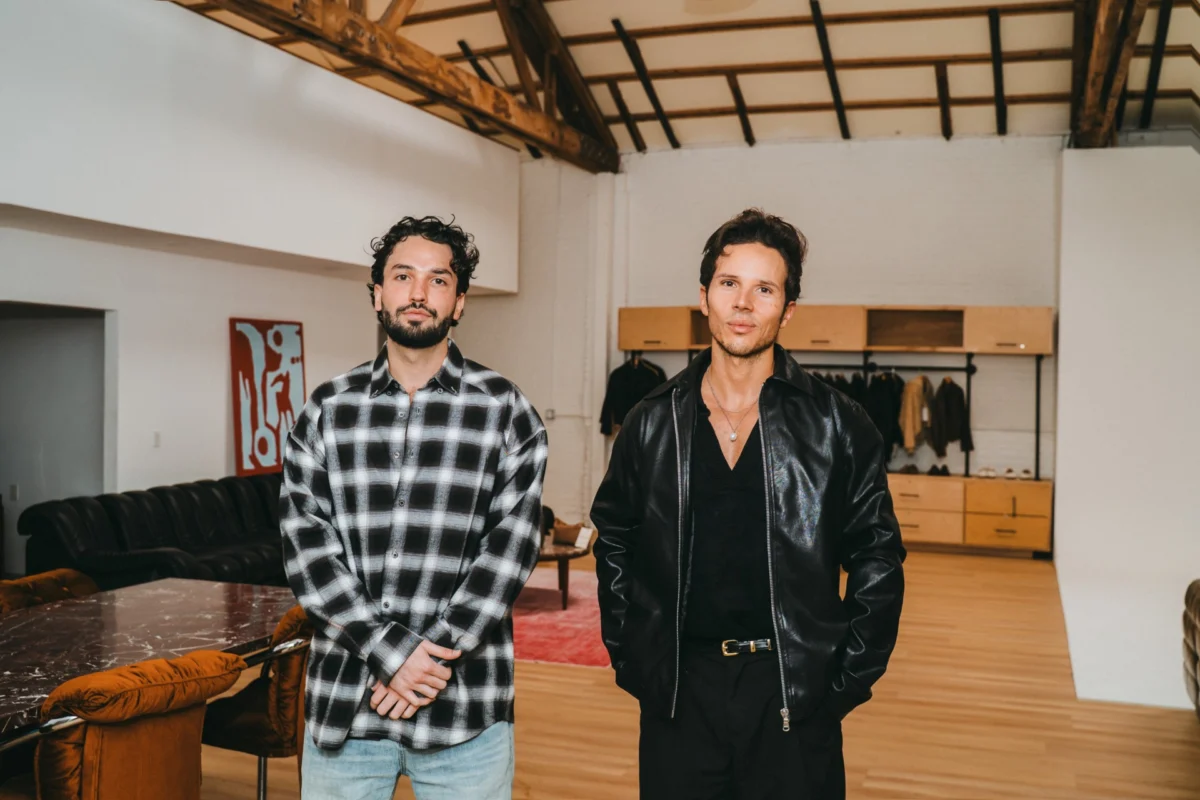
Atorie’s market debut is the brainchild of serial entrepreneur Redouane Ramdani and co-founder Luis Angulo. Ramdani’s journey to founding the startup is deeply rooted in personal history. Growing up in France within a family deeply embedded in luxury manufacturing, he maintained a lifelong fascination with the craftsmanship and artistry of high fashion.
Before launching Atorie, Ramdani built and scaled Snipfeed, a prominent creator monetization platform that was successfully acquired in 2024. Upon exiting Snipfeed, Ramdani turned his attention back to the luxury manufacturing sector, observing a landscape that had fundamentally transformed since his childhood.
Traditionally, the luxury manufacturing pipeline operated on a rigid, brand-driven model. High-end labels would supply proprietary designs and materials to independent factories, which functioned solely as production hubs. This model forced brands to commit to massive minimum order quantities (MOQs), frequently resulting in severe overproduction. Concurrently, these manufacturing facilities were subjected to immense financial vulnerability, relying heavily on a tiny roster of massive corporate clients. If a major fashion house canceled an order or if seasonal inventory failed to move, the factories absorbed the financial blow.
Over time, however, the capabilities of elite manufacturing facilities evolved. Leading factories began developing their own independent design and product-development infrastructures. Rather than acting strictly as contract manufacturers, these facilities acquired the agility to conceptualize products, adapt rapidly to shifting market tastes, and execute smaller production batches.
Recognizing this paradigm shift, Ramdani and Angulo envisioned a direct-to-consumer (D2C) model that would bridge these advanced manufacturers directly with everyday shoppers, eliminating the heavy markups imposed by middleman luxury conglomerates.
Navigating the Rise of "Dupe Culture" and Sustainable Fashion
Atorie enters the retail market at a distinct cultural and economic crossroads. In recent years, macroeconomic pressures—including persistent inflation and rising costs of living—have fueled the explosive growth of "dupe culture." Particularly among Gen Z and millennial consumers, purchasing affordable, near-identical replications of luxury goods has evolved from a frugal compromise into a deliberate status symbol.
Despite operating in a similar consumer space, Ramdani is careful to distance Atorie from standard counterfeit or fast-fashion paradigms. The startup’s offerings are not unauthorized replicas, nor do they subscribe to the environmentally destructive practices characteristic of ultra-fast-fashion giants. Instead, Ramdani categorizes Atorie as a "slow fashion" alternative centered on material integrity and ethical production standards.
"It’s the same material, same craftsmanship," Ramdani noted regarding the company’s manufacturing partnerships. "It’s coming from the same factories."
By aligning its product philosophy with retailers like Quince—which has gained widespread market traction for offering luxury-grade cashmere, silk, and leather goods at accessible price points—Atorie is targeting a demographic that values both trend responsiveness and ethical manufacturing transparency. Consumers, increasingly alienated by the carbon footprint and disposable nature of fast fashion, are demanding durable goods that do not compromise on ethical or material standards.
Artificial Intelligence as an Operational and Consumer Engine

At the core of Atorie’s business model is a robust integration of artificial intelligence across both supply chain logistics and the customer experience. While legacy fashion houses have historically relied on intuition and rigid seasonal calendars to forecast trends, Atorie utilizes AI agents to optimize production and inventory management from the ground up.
On the supply chain front, Atorie’s backend systems analyze vast datasets to predict which product iterations, colors, and styles are most likely to achieve sell-out status before committing to manufacturing runs. This predictive capability minimizes overproduction, reduces inventory waste, and empowers partner factories to diversify their revenue streams beyond a small handful of dominant brand clients. Furthermore, AI agents monitor raw material availability, providing early warnings when specific fabrics or leathers face potential shortages so factories can proactively adjust their supply chains.
The consumer-facing interface similarly leverages advanced machine learning. Visitors to the Atorie website can interact with an AI-driven styling agent capable of constructing complete outfits based on user-provided inspirations, ranging from specific celebrity aesthetics to broader conceptual themes. As customers interact with the platform, the underlying algorithms continuously learn individual shopping behaviors and style preferences to deliver hyper-personalized product recommendations.
Notably, the startup is already observing tangible shifts in consumer discovery pathways. Ramdani reports a measurable uptick in sale referrals originating from conversational AI platforms such as OpenAI’s ChatGPT and Anthropic’s Claude, signaling that the future of e-commerce discovery may increasingly bypass traditional search engines in favor of conversational AI agents.
Rapid Financial Growth and Market Ambitions
Atorie’s operational model is translating into accelerated financial momentum. The company concluded the previous fiscal year with approximately $5 million in gross sales. Driven by surging demand and a widening product catalog, the startup is projected to achieve an annualized run rate exceeding $55 million by the close of the current year.
At present, the company maintains active partnerships with over 40 manufacturing facilities distributed globally. Its stated long-term ambition is to establish itself as a high-quality, ethically grounded alternative to legacy fast-fashion giants like Zara, successfully merging accessible price points with premium manufacturing standards.
Strategic Allocation of Seed Capital
The newly secured $9.5 million seed funding will be deployed across several strategic growth vectors designed to scale Atorie’s operations rapidly.
First, the capital will be directed toward strengthening global logistics and scaling production capacity with existing and prospective manufacturing partners. Second, the company plans to invest heavily in expanding its proprietary AI tooling suite, refining both its predictive supply chain models and its consumer-facing personalization engines.
Beyond direct-to-consumer sales, Atorie has outlined plans to broaden its business model. The startup intends to launch its own in-house branded line—drawing structural parallels to private-label ecosystems like Amazon Essentials. Additionally, Atorie will leverage its manufacturing network and technological infrastructure to collaborate with digital creators and social media influencers, enabling them to design, produce, and launch their own independent clothing lines with unprecedented speed and minimal financial risk.
Industry Implications and Outlook
The funding and market strategy of Atorie highlight a broader reconfiguration of the global retail and manufacturing landscape. For decades, traditional luxury conglomerates maintained a tight monopoly over high-end craftsmanship by leveraging exclusive factory contracts and enforcing prohibitive pricing structures.
However, as advanced manufacturing hubs gain independent design capabilities and leverage predictive AI to mitigate inventory risks, the traditional gatekeepers of luxury fashion face unprecedented disintermediation. By democratizing access to top-tier materials and ethical production facilities through digital-first, AI-driven platforms, startups like Atorie are signaling a permanent shift in how luxury-grade goods are conceptualized, manufactured, and consumed in the 21st century.