









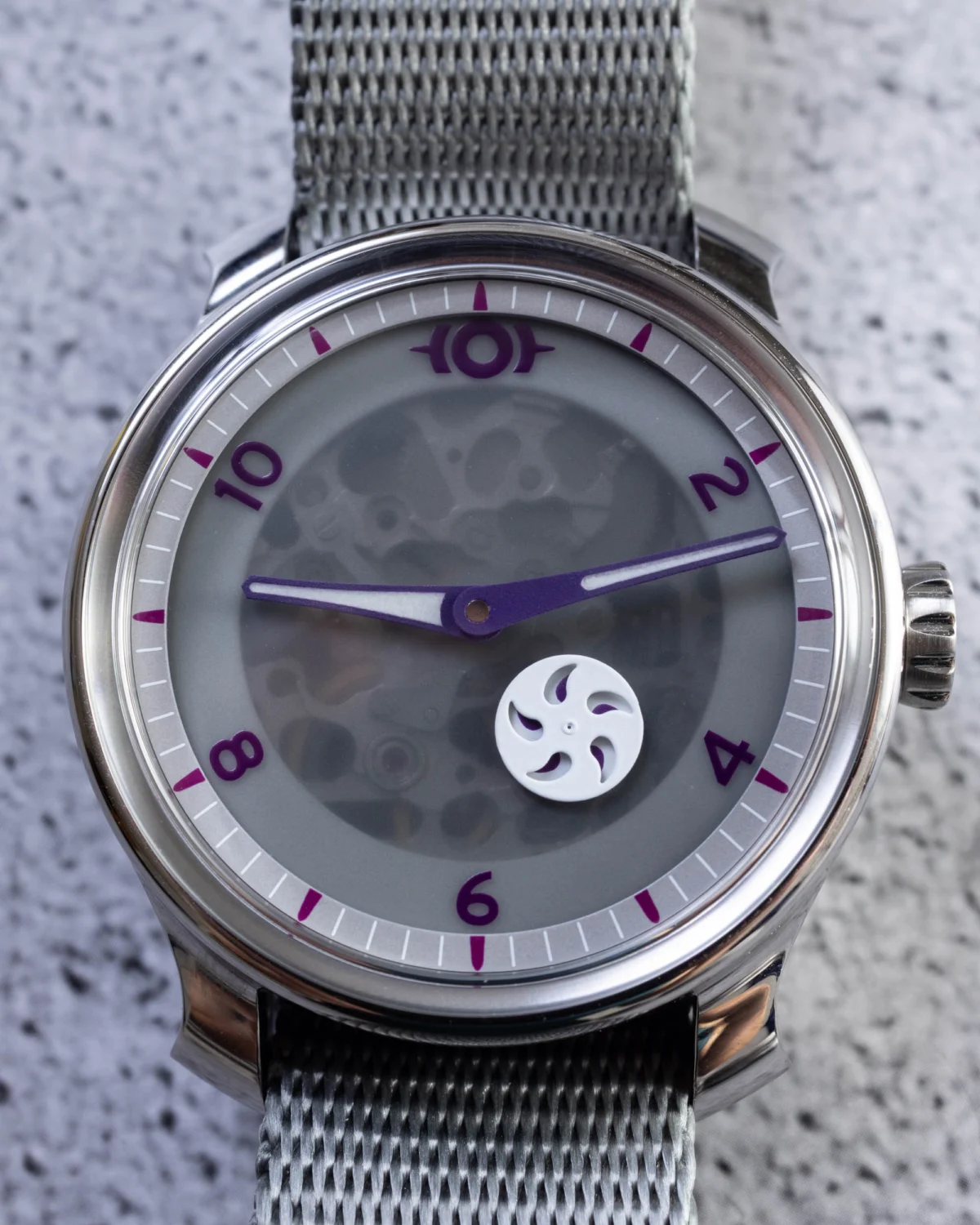
The horological landscape is witnessing a strategic shift as established independent watchmakers increasingly look to expand their market reach through the creation of sub-brands. The most recent development in this trend is the introduction of the Donut Watch Company (DWC), an initiative by the team behind the acclaimed Ming watch brand. Positioned as a platform for accessible, design-forward timepieces, DWC serves as a creative satellite to the parent brand, much in the same vein that M.A.D. Editions operates under the umbrella of MB&F. The debut of the "Glazed" model, a prototype that has begun circulating among industry observers, marks the first public-facing manifestation of this new venture.
The Evolution of Accessible Luxury
The strategy employed by the Donut Watch Company follows a well-documented trajectory in the watch industry, popularized by brands like SevenFriday in the early 2010s. SevenFriday successfully demonstrated that a combination of Swiss-influenced industrial design and efficient, high-quality Japanese movements—specifically the Miyota series—could capture a significant segment of the market that was previously priced out of the independent watchmaking sector.

By creating a secondary brand, Ming is addressing a common challenge among luxury manufacturers: how to engage a growing community of enthusiasts without diluting the exclusivity of their primary, high-end product lines. The DWC model appears designed to alleviate pressure on the flagship brand’s production capacity while providing a entry point for collectors who value the design language of Ming but find its flagship models, often retailing for several thousand dollars, beyond their immediate reach.
Chronology and Development
The gestation period for the Donut Watch Company dates back to at least 2025, the year marked on the caseback of the initial "Glazed" prototypes. This year-long internal development phase suggests that Ming has approached this launch with the same methodical rigor applied to their core collections.
The timeline of the project reflects a deliberate move toward "gamification" and controlled scarcity, a tactic mirrored by Max Büsser’s M.A.D. Editions. By utilizing a lottery system or limited, staggered releases, these brands aim to manage demand and prevent the market saturation that often plagues mass-produced, lower-priced watches. The current circulation of the Glazed model is an evaluation phase, designed to solicit feedback from the community before the brand commits to a wider commercial release.

Technical Specifications of the Glazed
The Glazed model represents a synthesis of Ming’s signature aesthetic—notably its flared lug geometry—and a more playful, experimental design ethos. The watch features a 35mm polished steel case. While 35mm is considered compact by contemporary standards, the watch maintains a substantial presence on the wrist due to its 12mm thickness and a pass-through woven nylon strap that elevates the case profile.
At the heart of the Glazed is the Miyota caliber 8N40, an automatic skeletonized movement. This choice of movement is significant; the 8N40 is a reliable, workhorse caliber that allows for the open-worked architecture necessary to achieve the "glazed" aesthetic. The movement operates at 3Hz (21,600 vibrations per hour) and provides a 42-hour power reserve. A key visual feature is the off-center subsidiary seconds indicator, re-imagined as a rotating disc with teardrop-shaped apertures that transition from white to purple, providing a dynamic visual indication of the watch’s status.
The dial design balances legibility with artistic flair, utilizing a semi-opaque layer that obscures the movement while allowing enough light to reveal the underlying architecture. The case is water-resistant to 50 meters, a standard specification for this category of lifestyle-oriented horology.

Branding and the "Toy" Aesthetic
The Donut Watch Company’s branding represents a departure from the minimalist, technical identity of Ming. The logo, which subtly depicts a donut held by two hands, signals a shift toward a more whimsical, dessert-themed identity. This playfulness extends to the presentation; the watch is delivered in a donut-shaped, zippered plush case, accompanied by a small figurine modeled after the Shima Enaga, or Japanese long-tailed tit.
This branding strategy acknowledges a shifting consumer demographic. Modern luxury watch buyers are increasingly comfortable with the idea that timepieces serve as "toys for adults"—objects of joy rather than purely utilitarian tools. By embracing this, DWC avoids the pretension that can often alienate younger collectors, instead positioning the watch as an accessory that prioritizes enjoyment and design identity.
Broader Market Implications
The emergence of DWC is emblematic of a larger trend among independent high-end watchmakers. Brands that have built their reputations on exclusivity and high-complication craftsmanship are now recognizing the value of a tiered product architecture. This approach serves three distinct functions:

- Market Diversification: By offering a product at an accessible price point—expected to be around $700 USD—the company captures a younger or more budget-conscious audience, effectively building brand loyalty that may eventually translate into a purchase of a flagship Ming watch.
- Operational Efficiency: Using established, high-volume movements like the Miyota 8N40 allows the brand to scale production without the massive R&D costs associated with developing in-house calibers.
- Risk Mitigation: A secondary brand provides a sandbox for creative experimentation. If a specific design language or color palette fails, the reputation of the primary brand remains insulated.
Industry analysts observe that this trend poses a direct challenge to mid-tier watch brands that have historically relied on name recognition rather than unique design. When a brand with the design pedigree of Ming enters the $700 segment, it raises the bar for value-driven watchmaking.
Future Outlook and Commercial Viability
While the Donut Watch Company has not yet confirmed the exact date for the first public-facing batch, industry indicators suggest a release in the coming weeks. The brand has been careful to manage expectations, noting that the Glazed model is a precursor to a wider range of products. It is highly probable that future iterations will follow the "limited edition" model, where the case architecture remains consistent while dial colors, textures, and donut-themed motifs are updated.
The success of the Donut Watch Company will ultimately depend on its ability to maintain the "Ming" quality standard at a significantly lower price point. For collectors, the draw will be the intersection of high-level industrial design and the accessible, reliable mechanical heart of the Miyota movement. If the Glazed model is any indication, the Donut Watch Company is well-positioned to carve out a permanent niche in the enthusiast market, bridging the gap between high horology and the everyday, wearable timepiece.

As the industry watches to see if other high-end manufacturers—such as URWERK or similar boutique firms—will adopt similar sub-brand strategies, the DWC launch serves as a bellwether for the future of independent watchmaking. It is a calculated move that prioritizes community engagement and design accessibility, proving that even the most serious watch brands can find space for, and value in, a little bit of fun.