









The global fashion industry, currently grappling with unprecedented pressure to shorten production cycles and meet the demands of a "real-time" retail economy, has found a new technological ally in Raspberry AI. The New York-based startup announced today that it has successfully closed a $24 million Series A funding round led by the prominent venture capital firm Andreessen Horowitz (a16z). This latest infusion of capital comes just ten months after the company secured a $4.5 million seed round, signaling intense investor confidence in the intersection of generative artificial intelligence and verticalized retail software. Participation in the round also included existing backers Greycroft, Correlation Ventures, and MVP Ventures, bringing the company’s total known funding to approximately $28.5 million.
Founded just two years ago, Raspberry AI aims to solve one of the most persistent bottlenecks in the apparel industry: the gap between creative conception and physical realization. By leveraging advanced text-to-image and sketch-to-image technology, the platform allows designers to visualize, iterate, and refine garment concepts in seconds rather than weeks. This shift is particularly critical as traditional retailers attempt to compete with "ultra-fast fashion" giants like Shein, which reportedly adds thousands of new items to its catalog daily. To remain relevant, legacy brands are increasingly turning to tools that can compress the product development lifecycle from several months to a matter of days.
The Technological Shift in Creative Workflows
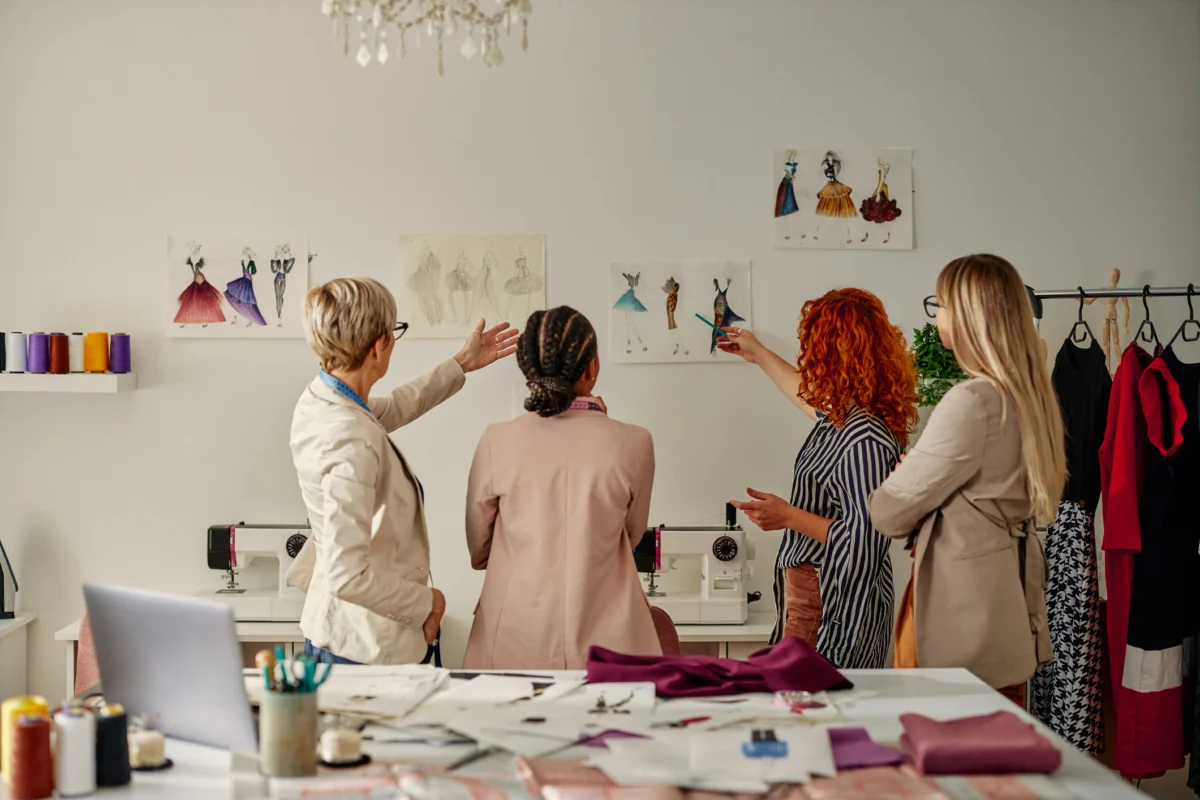
Historically, the fashion design process has relied on a combination of hand-drawn sketches, basic computer-aided design (CAD) software, and the production of physical samples. The latter represents a significant drain on resources; a single garment might go through several iterations of physical prototyping, with each sample requiring fabric sourcing, pattern making, and international shipping. This process is not only expensive but environmentally taxing.
Raspberry AI’s platform offers a digital alternative that produces photo-realistic images of garments as they would appear on a professional e-commerce website. According to founder Cheryl Liu, the platform enables designers to see a foundational design rendered in dozens of different materials, prints, and colorways instantly. "No company is going to order 50 different sample iterations for one single product, but now they can see 50 different iterations of a single design," Liu noted. This capability allows merchandising teams to make data-driven decisions about which products to move into production before a single piece of fabric is cut.
The emergence of generative AI models like OpenAI’s DALL-E 3 and Stability AI’s Stable Diffusion in late 2022 served as the catalyst for Raspberry AI’s inception. While these general-purpose models demonstrated the potential of AI-generated imagery, they often lacked the nuance required for professional fashion design. Raspberry AI differentiates itself by training its models to understand the specific nomenclature of the industry. For example, while a general AI might struggle with the technical differences between various knit patterns or fabric weights, Raspberry’s platform is designed to interpret complex industry terminology—such as specific "fuzzy sweater" textures or draping characteristics—with high fidelity.
Strategic Background and Leadership
The rapid ascent of Raspberry AI is inextricably linked to the background of its founder, Cheryl Liu. Before entering the startup ecosystem, Liu served as a private equity analyst at KKR, where her primary focus was the retail sector. Her subsequent roles at Amazon and DoorDash provided her with a deep understanding of logistical efficiency and consumer behavior. This unique combination of financial scrutiny and operational experience allowed Liu to identify a specific market gap: while the consumer-facing side of fashion (e-commerce and digital marketing) had been digitized, the "back-end" of creative design remained largely manual and fragmented.
Liu’s transition into the AI space occurred precisely as the first wave of sophisticated image models became accessible. Recognizing that the fashion industry operates on visual cues and rapid trend cycles, she pivoted from the analytical side of retail to the generative side of design. This vision resonated with Andreessen Horowitz, a firm that has been vocal about its "AI-first" investment thesis. Bryan Kim, a partner at a16z, indicated that the firm had evaluated numerous companies in the space before selecting Raspberry AI. Kim highlighted Liu’s strategic approach to building a company and the platform’s ability to attract "marquee clients" as the primary drivers for the investment.
Market Traction and Client Portfolio
Despite its relatively short time in operation, Raspberry AI has already secured 70 enterprise customers, ranging from high-performance athletic brands to luxury fashion houses. Notable clients include Under Armour, the American sportswear giant, and MCM Worldwide, a luxury brand known for its high-end leather goods and apparel. The platform’s reach also extends to major international manufacturers such as Gruppo Teddy. Based in Italy, Gruppo Teddy operates a massive retail footprint with 8,840 stores across 39 countries, illustrating the scale at which Raspberry AI’s technology is being integrated into global supply chains.

The adoption of the platform by these diverse entities underscores a broader industry trend: the move toward "digital-first" product development. For a brand like Under Armour, the ability to rapidly iterate on technical apparel designs can lead to faster innovation in performance wear. For a manufacturer like Gruppo Teddy, the technology serves as a bridge between creative design and mass production, allowing for a more streamlined communication flow between designers in Europe and manufacturing hubs worldwide.
A Timeline of the Generative AI Revolution in Fashion
The trajectory of Raspberry AI mirrors the broader timeline of generative AI’s integration into the enterprise sector:
- Late 2022: Public release of DALL-E and Stable Diffusion. Cheryl Liu identifies the opportunity for verticalized fashion AI.
- Early 2023: Raspberry AI is founded, focusing on training models on fashion-specific datasets and industry terminology.
- Early 2024: The company closes a $4.5 million seed round as it begins to sign its first major enterprise clients.
- Mid-2024: The platform expands its feature set to include sketch-to-image capabilities, allowing designers to maintain creative control while using AI for rendering.
- January 2025: Raspberry AI announces its $24 million Series A funding, marking its intention to expand beyond apparel.
Industry Implications and Competitive Landscape
The success of Raspberry AI comes at a time when traditional design software providers are also racing to integrate AI. Legacy tools like Adobe Photoshop (with its Firefly AI) and specialized CAD software like Browzwear have long been the industry standards. However, these tools are often viewed as "additive" to a slow process rather than transformative. Raspberry AI’s "AI-native" approach positions it as a disruptive force that seeks to replace, rather than merely supplement, older workflows.
While the company faces competition from general-purpose AI tools like Midjourney, the specialized nature of the fashion industry provides a significant moat. General AI models often struggle with "spatial consistency"—the ability to show the same garment from multiple angles or maintain the integrity of a pattern across different poses. Raspberry AI’s focus on professional-grade output ensures that the generated images are not just artistic inspirations but viable blueprints for production.
Furthermore, the environmental implications of this technology cannot be overstated. The fashion industry is responsible for approximately 10% of global carbon emissions, a significant portion of which stems from overproduction and waste in the sampling phase. By reducing the reliance on physical prototypes, Raspberry AI provides a path toward a more sustainable design process, aligning with the growing ESG (Environmental, Social, and Governance) mandates of major global retailers.
Future Expansion and Strategic Objectives
With the new $24 million in capital, Raspberry AI plans to embark on a significant expansion of its workforce and product offerings. A primary focus will be the recruitment of high-level engineering talent to further refine its proprietary models, as well as sales and marketing professionals to capture a larger share of the international market.
Perhaps more significantly, the company has announced plans to expand its platform into adjacent industries, including home decor, furniture, and cosmetics. The underlying logic remains the same: these are industries driven by visual trends and high-volume product cycles where the cost of physical sampling is high. A furniture designer, for instance, could use the platform to visualize a sofa in various upholstery fabrics and wood finishes, while a cosmetics brand could iterate on packaging designs and color palettes with the same speed currently enjoyed by Raspberry’s fashion clients.
As generative AI continues to mature, the focus of the technology is shifting from novelty to utility. Raspberry AI represents a new generation of startups that are not just "using AI" but are re-architecting specific industries around it. For the fashion world, this means a future where the distance between a designer’s imagination and a consumer’s wardrobe is shorter than ever before. In an industry defined by change, the ability to move at the speed of thought is no longer a luxury—it is a competitive necessity.