










The global fashion industry is currently grappling with an unprecedented inventory crisis, characterized by billions of dollars in unsold stock and a growing environmental backlash against traditional disposal methods. While major brands in the United Kingdom and the United States often avoid liquidating excess inventory in their primary markets to prevent brand dilution and market cannibalization, the surplus remains a significant logistical and financial burden. Concurrently, emerging markets, particularly in Africa, have long served as the destination for global secondhand clothing exports. However, this system is fraught with inefficiency, as approximately 30% to 40% of imported secondhand items arrive in a condition deemed unusable, ending up in landfills and contributing to severe environmental degradation.
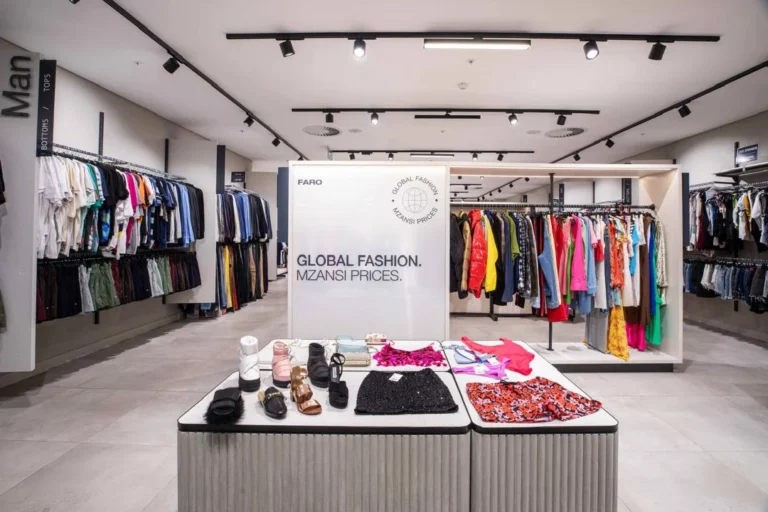
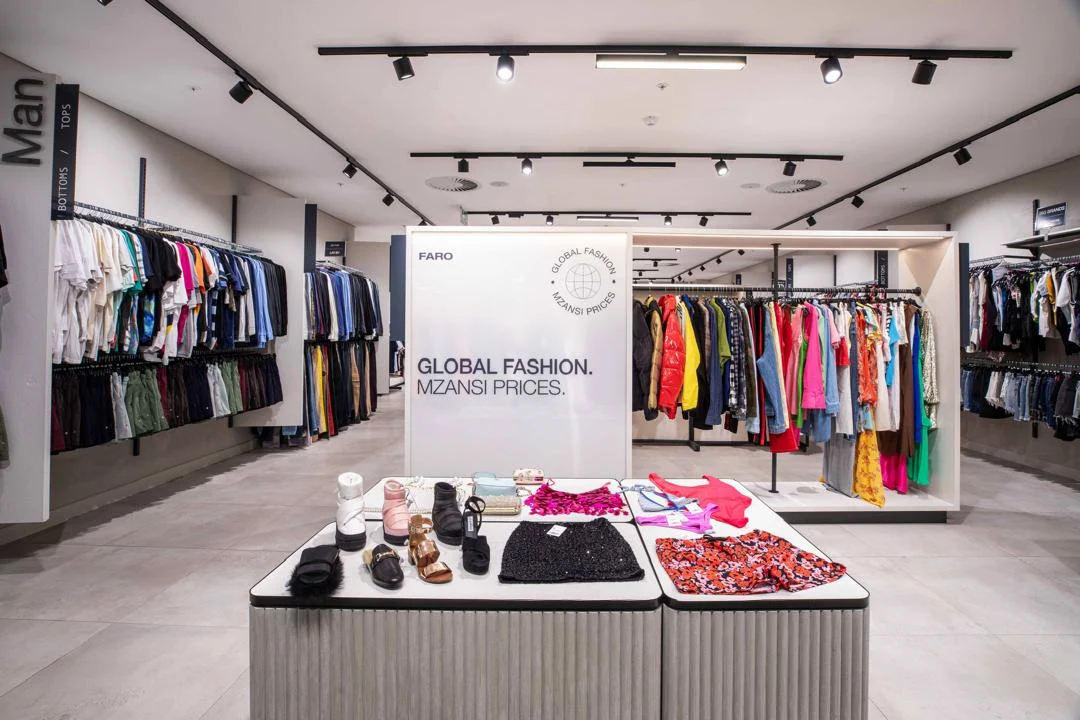
Within this landscape of waste and logistical inefficiency, FARO, a South African startup, has secured $6 million in a recent funding round to scale its "recommerce" model. The company aims to bridge the gap between the surplus of high-quality, unsold goods in developed nations and the high demand for affordable, authentic branded apparel in emerging economies. By positioning itself as a sophisticated intermediary that refurbishes and resells inventory, FARO is targeting a global resale market projected to reach $350 billion by 2027.
The Global Inventory Crisis and Environmental Toll
The fashion industry produces an estimated 100 billion garments annually, a significant portion of which never reaches a consumer. Large-scale retailers such as ASOS, H&M, and Zara face constant pressure to clear warehouse space for new collections. Traditionally, excess stock that could not be sold through seasonal discounts was either incinerated, shredded, or shipped to developing nations as part of "deadstock" bundles. This practice has come under intense scrutiny from environmental regulators and ESG (Environmental, Social, and Governance) investors who demand more sustainable circular economy practices.
In Africa, the reliance on these imports has created a secondary crisis. While the "Mitumba" (secondhand) trade provides affordable clothing for millions, the quality of these imports has declined as fast fashion becomes more prevalent. The result is a flood of low-quality synthetic textiles that cannot be repaired or resold, overwhelming local waste management systems in countries like Ghana, Kenya, and South Africa. FARO’s entry into the market seeks to professionalize this flow of goods, ensuring that what enters the continent is not waste, but value-added inventory.
The FARO Business Model: Reconditioning and Fixed Margins
FARO operates at the intersection of retail and industrial processing. Unlike traditional secondhand wholesalers who sell unsorted bales, FARO focuses on two primary streams: overstock and consumer returns with minor defects. These items are often sourced from major global partners, including ASOS, Boohoo, G-Star, Jack & Jones, and Levi’s.
The startup’s competitive advantage lies in its refurbishment capabilities. FARO operates specialized facilities equipped with industrial laundries, steam tunnels, and repair stations. By utilizing affordable labor in South Africa to restore items that would be too costly to repair in Europe or North America, the company can acquire inventory at ultra-low price points—sometimes as low as £1 per piece.
The company employs a transparent fixed-margin model. David Torr, co-founder and co-CEO of FARO, indicates that the business targets a 45% margin after all operational costs, including processing and new branding tags. Rather than maximizing profit on individual high-value items, the company reinvests excess margins into lowering prices for the consumer. This strategy allows FARO to offer authentic premium brands, such as Tommy Hilfiger and Calvin Klein, at discounts of up to 70% off original retail prices, making them accessible to the burgeoning middle class in South Africa.
Technological Innovation: AI Agents Replacing Traditional Retail Workflows
One of the primary hurdles in the off-price retail sector is the complexity of managing "broken" inventory—stock that consists of single items in varying sizes and conditions rather than uniform bulk shipments. This complexity has historically kept the off-price market offline, as the cost of photographing, cataloging, and listing individual returned items for e-commerce often exceeds the item’s value.
To address this, FARO is developing proprietary AI-powered agents designed to automate the procurement and inventory management process. In traditional retail, massive manifests are often handled manually via Excel spreadsheets by large teams of planners. Torr notes that some major brands employ thousands of people at the head-office level specifically for data manipulation.
FARO’s AI models are designed to ingest these complex manifests and execute "buy models" in seconds rather than hours. These agents can predict regional demand and price sensitivity, allowing the company to make more accurate purchasing decisions. Furthermore, the company plans to integrate personalized shopping tools that notify customers when specific brands or styles arrive at their local store, bridging the gap between the tactile experience of physical retail and the data-driven convenience of modern e-commerce.
Financial Milestones and the $6 Million Investment
The recent $6 million funding round reflects strong investor confidence in the recommerce sector. The investment was led by JP Zammitt, President of Bloomberg, and saw participation from a diverse group of venture capital firms and angel investors. Notable participants include Presight Capital, Gharage Ventures, and E4E Africa. Individual investors from major global platforms such as Flink, Cars24, and Razor Group also joined the round.
This capital injection follows a period of rapid growth for the startup. FARO began its journey in early 2023 with a single experimental pop-up store in South Africa, which generated $100,000 in revenue within its first month. While initial projections suggested the company would need seven stores to reach an annual revenue of $2 million, FARO surpassed this milestone, achieving $2.3 million in revenue with only four locations. This represents a 20-fold revenue increase over the previous year. For 2024, the company is aiming for a fivefold growth trajectory.
Chronology of Development and Scaling
The timeline of FARO’s development illustrates a strategic shift from a proof-of-concept experiment to a scalable retail operation:
- Early 2023: FARO launches with an initial founding team including David Torr, Will McCarren, Chris Makhanya, and Amber Penney-Young, bringing experience from Amazon, Jumia, and Superbalist.
- Q1 2023: The first pop-up store opens in South Africa, testing consumer appetite for refurbished "grade A" returns.
- Mid-2023: The company establishes its industrial processing center to handle large-scale cleaning and repairs.
- Late 2023: FARO hits the $2.3 million revenue mark and begins developing its AI procurement tools.
- Q4 2024: Completion of the $6 million funding round to fuel continental and international expansion.
The Road to 1,000 Stores: Strategic Scaling
FARO’s long-term vision is highly ambitious, targeting the establishment of 1,000 stores over the next decade. The expansion strategy focuses on "aspirational buyers" in emerging markets across Africa, South America, Asia, and the Middle East. These consumers value the status and quality of international brands but are often priced out of traditional high-end retail.
The company’s decision to focus on physical retail rather than a pure-play e-commerce model is a calculated response to the logistical realities of the African market. High last-mile delivery costs, lower internet penetration in some regions, and the consumer preference for trying on clothing before purchase make physical stores a more viable path to scale. South Africa, with its highly developed shopping center infrastructure (over 2,000 malls), provides an ideal launchpad for this model.
However, expansion into regions like Kenya or Nigeria will require significant localization. Consumer preferences, sizing standards, and brand perceptions vary widely across the continent. FARO plans to use its AI tools to build localized "price profiles" that adjust inventory mix and pricing based on real-time regional demand data.
Navigating the Competitive Landscape
FARO enters the market at a time when the retail sector is being disrupted by ultra-fast fashion giants like Shein and Temu. These platforms have gained significant traction in South Africa by offering low prices that appeal to price-sensitive consumers. However, FARO’s leadership believes that the "status" associated with established brands like Levi’s or Tommy Hilfiger provides a moat that ultra-cheap, unbranded alternatives cannot easily cross.
Furthermore, traditional off-price giants like TJX (parent company of T.J. Maxx and TK Maxx) have largely ignored the African market, focusing instead on North America and Europe. This leaves a significant vacuum that FARO intends to fill. By combining the "treasure hunt" experience of off-price retail with a technology-first approach to inventory, the startup aims to create a more efficient version of the models that have succeeded in the West.
Broader Implications and Impact Analysis
The success of FARO could signal a major shift in how the global fashion industry handles waste. If the recommerce model can be proven at scale in emerging markets, it provides a financially viable alternative to landfilling and incineration. For brands, it offers a way to recoup value from returns while fulfilling sustainability mandates.
For the South African economy, FARO represents a source of job creation in both the retail and industrial sectors. The labor-intensive nature of refurbishing clothing provides employment opportunities that are often lost in fully automated supply chains.
Ultimately, the FARO model highlights a transition from "charity-based" clothing exports to "value-based" retail. By treating African consumers as discerning customers rather than recipients of global cast-offs, the startup is attempting to build a sustainable business that addresses one of the fashion industry’s most persistent problems. The coming years will determine if the company’s AI-driven approach can manage the immense complexity of a 1,000-store global footprint.