







The mid-point of the 79th annual Cannes Film Festival has solidified the event’s reputation as the premier global stage for both cinematic excellence and high-fashion strategy. As the second week of premieres commenced at the Palais des Festivals et des Congrès, the red carpet transitioned from traditional high-glamour ballgowns toward a more diverse array of silhouettes, ranging from avant-garde athletic-inspired luxury to poignant personal milestones. The most significant headline of the week emerged not from a film’s plot, but from a calculated sartorial reveal by Hungarian model Barbara Palvin, who utilized the festival’s unparalleled media reach to announce her pregnancy.
The Strategic Power of the Red Carpet Reveal
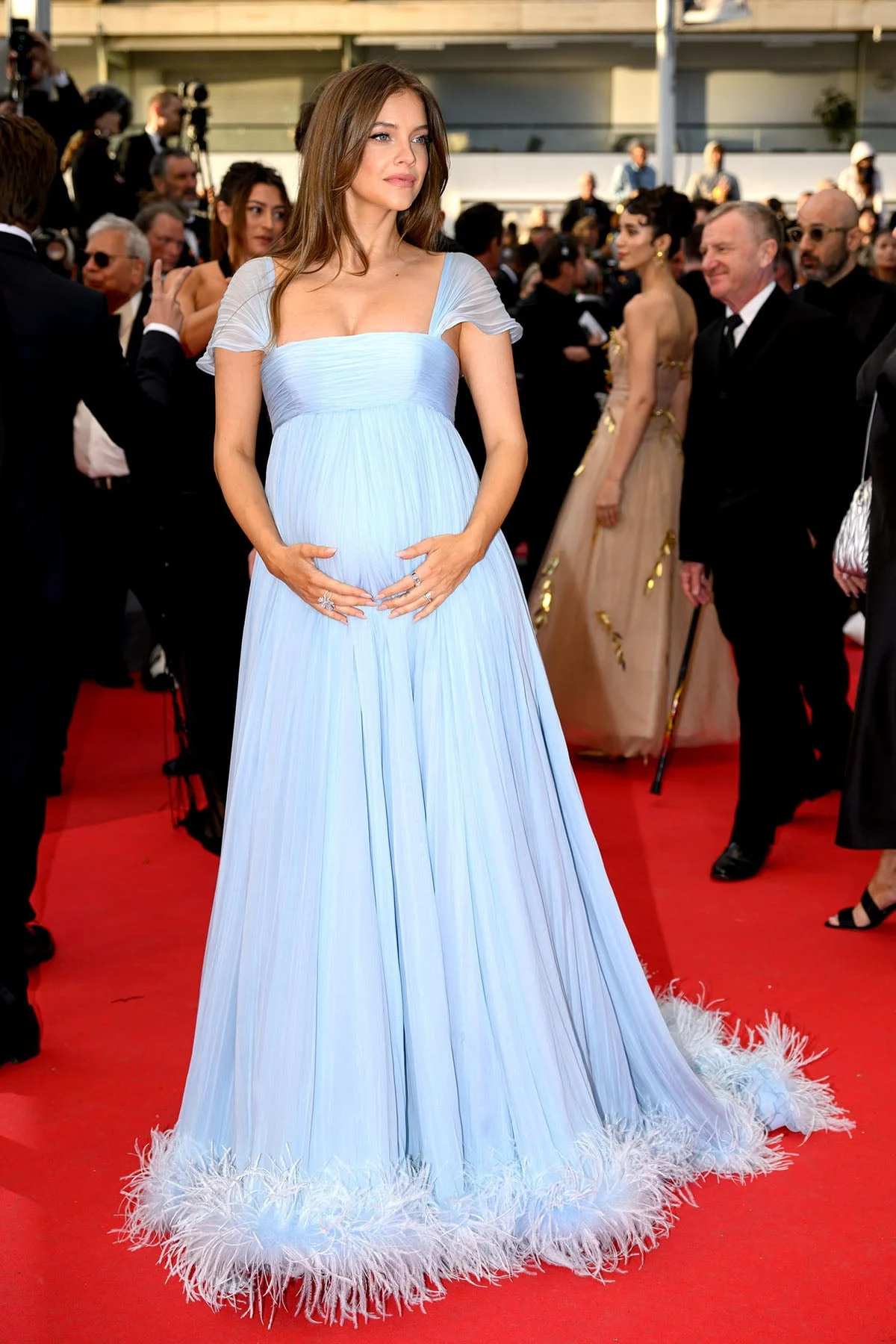
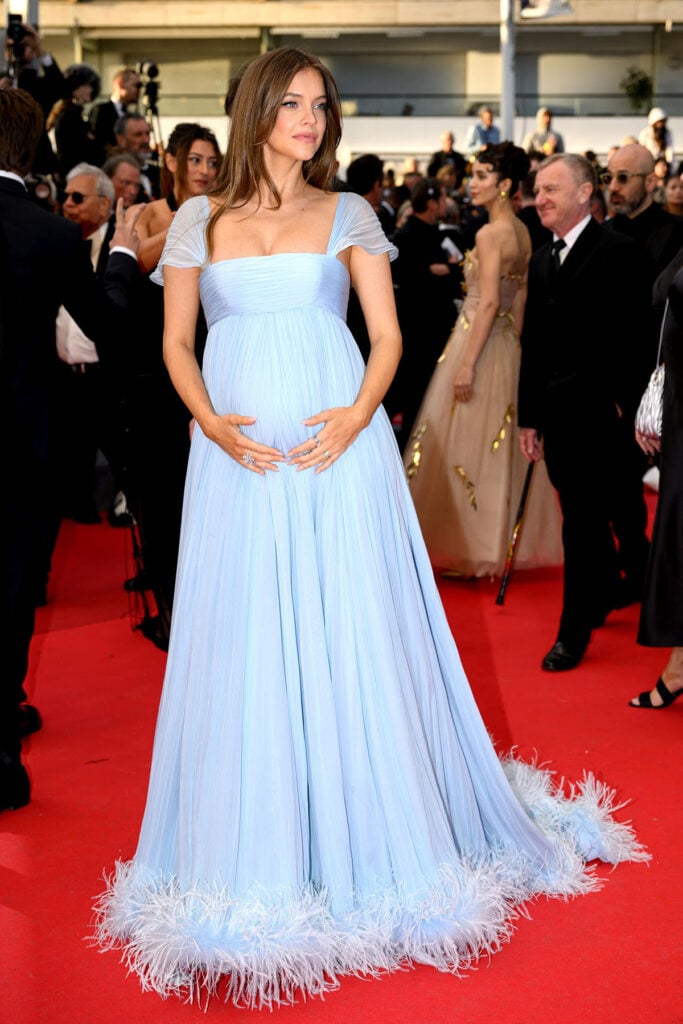
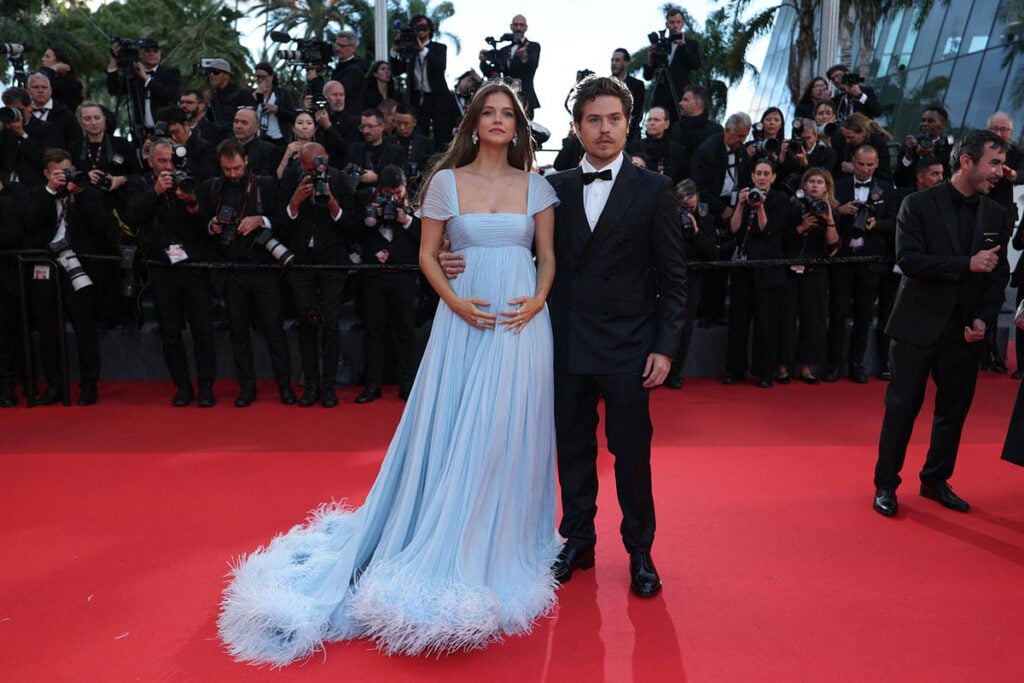
Barbara Palvin’s appearance at the premiere of one of the week’s most anticipated competition films served as a masterclass in modern celebrity branding. Stepping onto the red carpet alongside her husband, actor Dylan Sprouse, Palvin wore a custom pale blue Miu Miu plissé gown. The choice of color—a delicate powder blue—immediately ignited global social media speculation regarding the sex of the child, a testament to the communicative power of red carpet fashion.
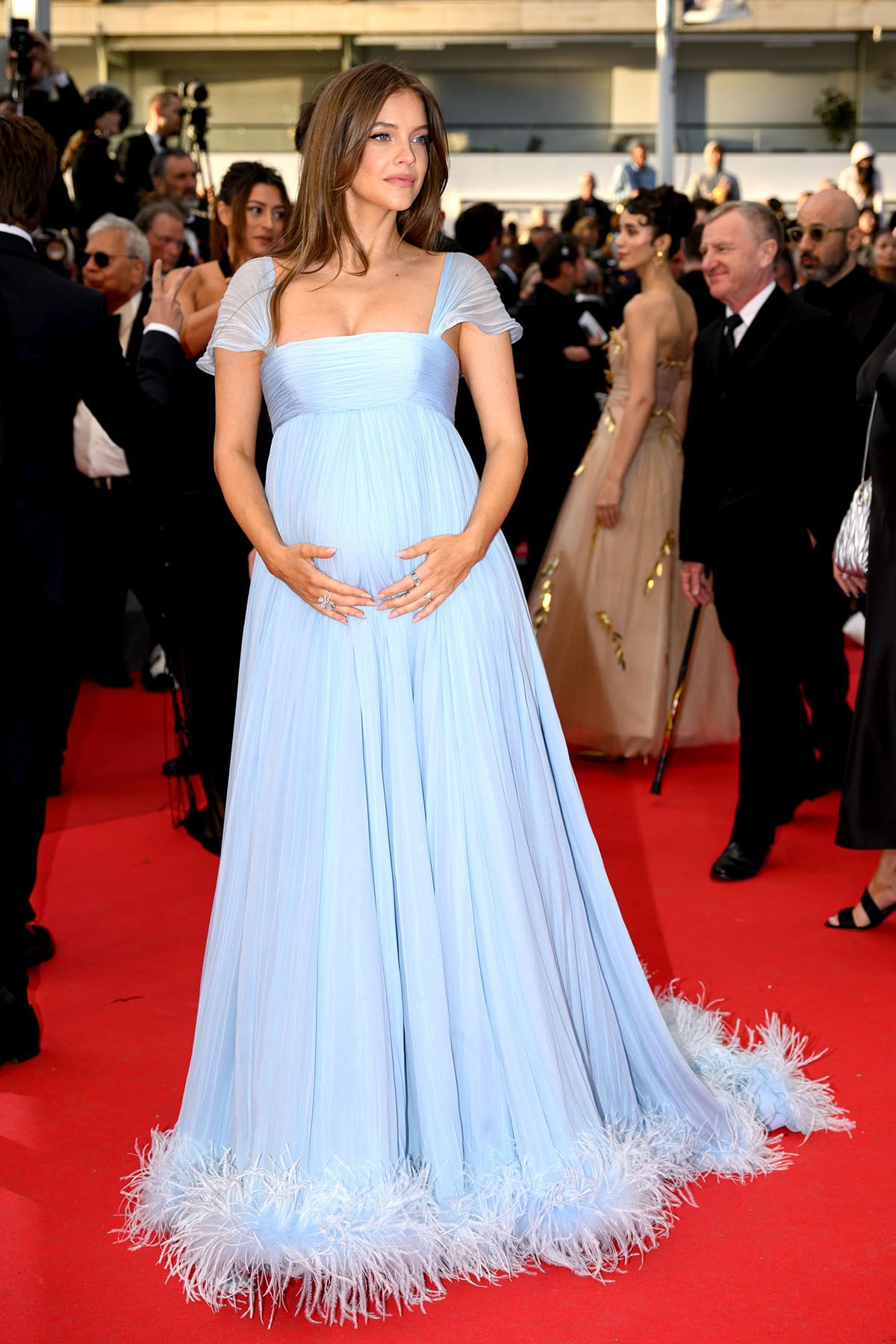
The gown itself featured intricate plissé pleating, a technique synonymous with Miu Miu’s commitment to texture and movement. The soft, floaty silhouette was accented with delicate feather detailing along the trim, providing a romantic aesthetic that balanced the high-stakes environment of the Croisette. Palvin’s ensemble was completed with high-jewelry pieces from Chopard, the festival’s official partner since 1998.
Industry analysts note that "red carpet reveals" have become an essential tool for celebrities to control their personal narratives. By choosing Cannes—an event that attracts over 4,000 accredited journalists and millions of digital impressions—Palvin ensured her announcement would achieve maximum global visibility. Miu Miu, a brand under the Prada Group umbrella, has seen a significant surge in "Brand Heat" over the last fiscal year, and this high-profile placement is expected to further bolster its Earned Media Value (EMV).
Catherine Deneuve and the Subversion of Formal Protocol
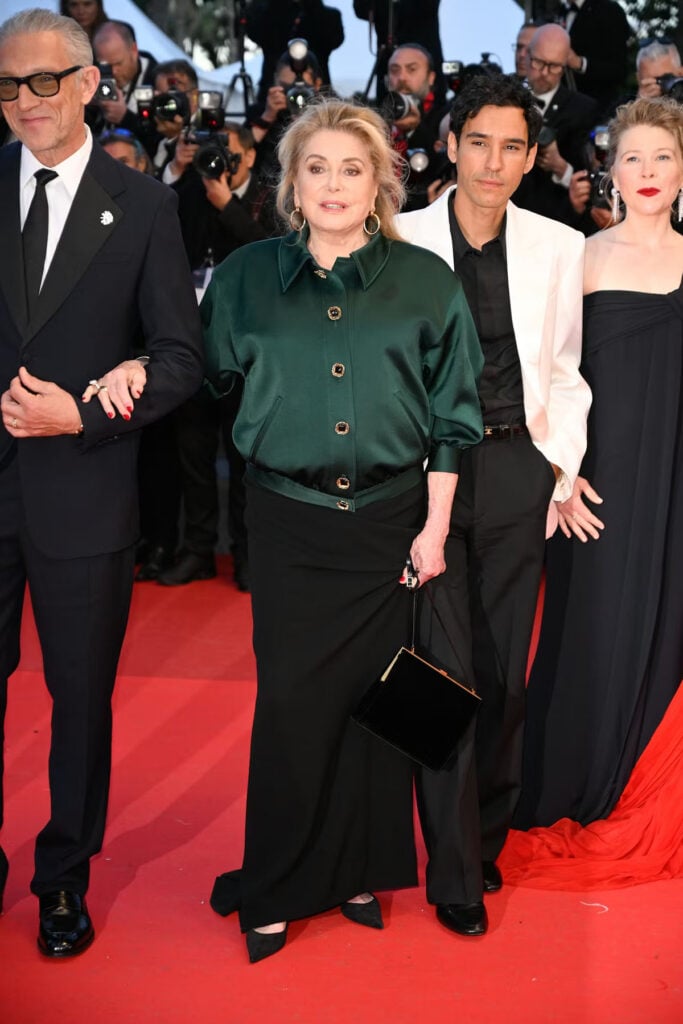
While Palvin represented the romantic side of the festival, French cinema icon Catherine Deneuve provided a lesson in subversive elegance. Deneuve, a long-time muse of the house of Saint Laurent, challenged the traditionally rigid Cannes dress code by opting for a satin bomber jacket in a deep emerald hue.
The inclusion of a bomber jacket—a garment typically associated with casual or athletic wear—on the steps of the Palais is a rare occurrence. However, under the creative direction of Anthony Vaccarello, Saint Laurent has increasingly blended "Rive Gauche" effortless cool with red carpet sophistication. The jacket’s rich silk-satin finish and structured yet relaxed silhouette were paired with a black column skirt, maintaining the necessary formality for a premiere.
Deneuve’s look was finished with the Saint Laurent "Le Anne-Marie" bag in black velvet, a choice that emphasized the contrast between textures. Historians of the festival point out that Deneuve has a decades-long history of defining French style at Cannes, dating back to her collaborations with Yves Saint Laurent himself. This latest appearance reinforces the trend of "mature chic," where established icons prioritize personal style and comfort over the restrictive silhouettes often demanded by the "Montée des Marches" (the climb of the stairs).
The Saint Laurent Aesthetic and the Rise of the Schneider Brothers
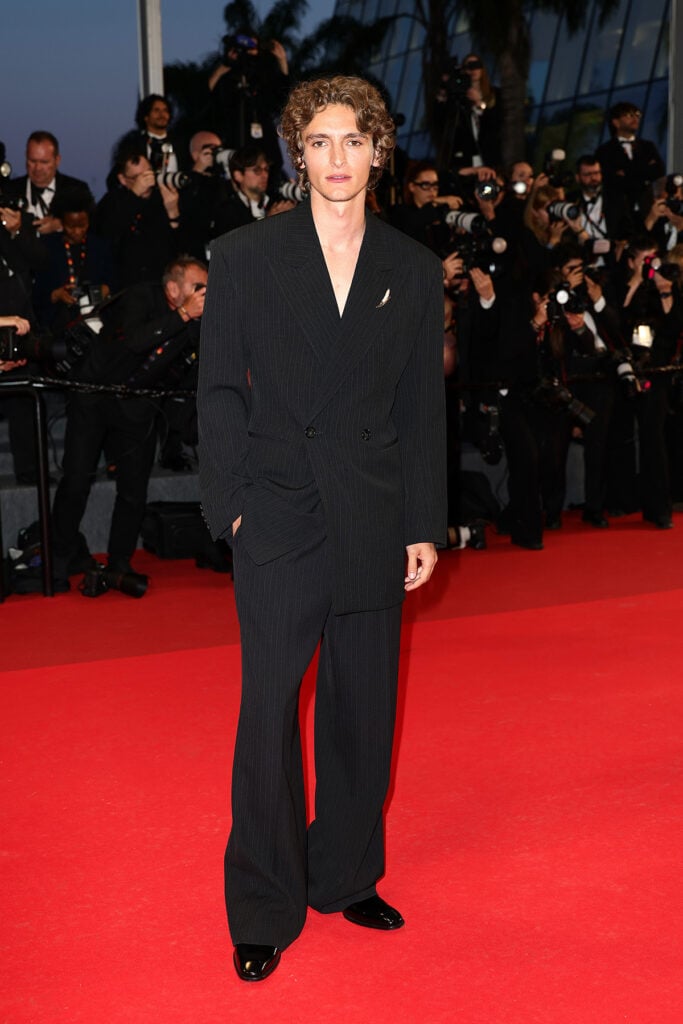
The influence of Saint Laurent extended throughout the week’s menswear and womenswear selections. Vassili Schneider, part of the emerging dynasty of the Schneider brothers who have become fixtures of French cinema, demonstrated the brand’s mastery of the modern suit. Schneider appeared in a black flared pinstripe suit that drew inspiration from 1970s tailoring while remaining firmly contemporary.
The suit featured exaggerated proportions and a soft pinstripe pattern, worn with an open neckline that eschewed the traditional tuxedo tie. This "relaxed sharpness" has become a hallmark of the Schneider brothers’ appearances at the festival, reflecting a broader shift in menswear toward fluid tailoring and retro influences.
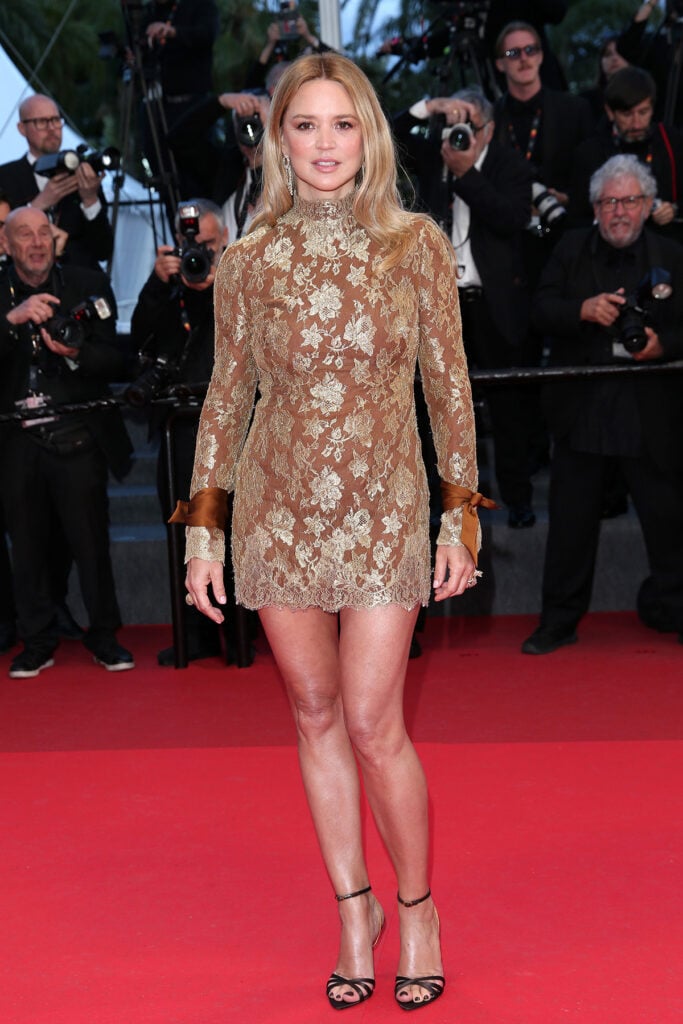
Simultaneously, Belgian actress Virginie Efira showcased a different facet of the Saint Laurent identity. Efira wore a gold metallic gown that emphasized the house’s focus on high-octane glamour and body-conscious draping. The look was paired with brown Saint Laurent "Melody" sandals. While the ensemble adhered to the festival’s requirements for metallic brilliance, critics compared the look to Efira’s previous high-water mark at the festival—her 2021 appearance in Christian Dior Haute Couture. This comparison highlights the intense pressure placed on regular festival attendees to consistently surpass previous sartorial successes.
Schiaparelli and the Return of Sculptural Simplicity
Narah Baptista and Vincent Cassel provided a stark contrast to the metallic and pastel trends by embracing the timeless appeal of black-tie attire, albeit with a sculptural twist. Baptista opted for a black gown by Schiaparelli, a house currently undergoing a renaissance under Daniel Roseberry.
Schiaparelli’s recent collections have focused on "hyper-chic" minimalism combined with surrealist hardware. Baptista’s gown relied on a precise, sculpted fit to make an impact, accessorized with jewelry from Akillis. Beside her, Vincent Cassel maintained a classic profile in a Prada tuxedo, accented by an Audemars Piguet timepiece. Their coordinated appearance underscored a return to classicism that often follows periods of experimental fashion at the festival.
Economic and Cultural Context of Cannes Fashion
The fashion showcased during this week of the festival is part of a larger economic ecosystem. The Cannes Film Festival is estimated to generate over €200 million in revenue for the city of Cannes annually. For luxury brands, the "red carpet" serves as a live-action billboard. According to data from Launchmetrics, a single high-profile red carpet appearance at Cannes can generate an MIV (Media Impact Value) of upwards of $1 million for a brand within 24 hours.
The 2026 festival has seen a particular emphasis on "Brand-Ambassador" relationships. Unlike in previous decades, where stars might borrow gowns from various houses, the modern festival is dominated by exclusive contracts. The heavy presence of Saint Laurent, Miu Miu, and Prada this week reflects the consolidated power of major luxury conglomerates like Kering and LVMH in the entertainment space.
Chronology of the Week’s Events
The progression of fashion this week followed a distinct chronological arc:
- Opening Days: Characterized by high-volume tulle and traditional "Cinderella" gowns intended to capture the initial surge of media attention.
- Mid-Week (The "Palvin Reveal"): A shift toward personal storytelling and brand-specific "moments" that utilize celebrity life events to drive engagement.
- Late-Week Transition: A move toward "Cool-Girl" and "Cool-Guy" aesthetics, led by Saint Laurent, which prioritizes Parisian nonchalance over Hollywood theatricality.
Broader Implications for the Fashion Industry
The looks presented by Palvin, Deneuve, and the Schneider brothers suggest a diversifying definition of "prestige" on the red carpet. The acceptance of a bomber jacket on Catherine Deneuve and a flared, tie-less suit on Vassili Schneider indicates that the Cannes Film Festival’s famously strict dress code is evolving. While the "black tie" requirement remains technically in place, the interpretation of that requirement is becoming more inclusive of contemporary fashion movements.
Furthermore, the "Baby Blue" reveal by Barbara Palvin highlights the festival’s role as a platform for life-cycle marketing. As celebrities become brands in their own right, the red carpet is no longer just about promoting a film; it is about the holistic management of a public persona.
As the week closes and the festival moves toward the final award ceremony, the industry’s focus will shift from the "Montée des Marches" to the winners of the Palme d’Or. However, the images of the past few days—ranging from Palvin’s romantic plissé to Deneuve’s emerald satin—will remain the primary visual legacy of the 2026 festival in the global fashion consciousness. The intersection of film, celebrity, and commerce at Cannes remains the most potent marketing event in the luxury calendar, with this week’s appearances serving as a definitive guide to the current state of high fashion.