








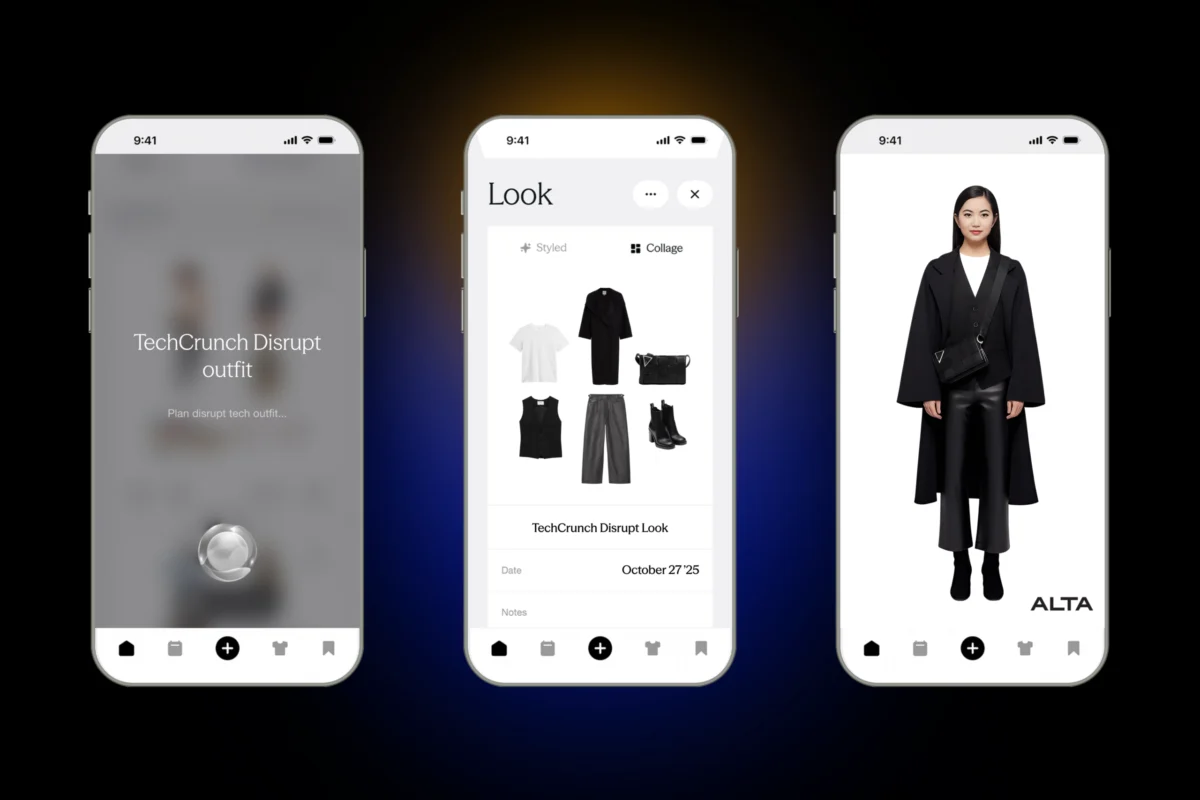
Alta, a burgeoning artificial intelligence startup focused on personal styling and digital wardrobe management, has successfully closed an $11 million seed funding round led by Menlo Ventures, signaling a significant shift in the intersection of generative AI and the global fashion industry. Founded by 28-year-old Harvard-trained engineer Jenny Wang, the platform aims to bridge the gap between high-end personal styling and the average consumer through a sophisticated AI agent that offers outfit recommendations based on a user’s specific budget, lifestyle, local weather patterns, and personal calendar. The funding marks a pivotal moment for the New York-based company as it seeks to scale its technical infrastructure and expand its footprint across international markets, including Europe and Oceania.
The Evolution of the Digital Stylist: From Concept to Reality
The launch of Alta represents the culmination of a decade-long vision for Jenny Wang. Throughout her career in technology and venture capital, Wang frequently returned to the concept of a digital styling agent. However, she notes that the primary obstacle was the maturity of underlying technologies. While early iterations of fashion technology relied on basic filters and keyword-based search algorithms, the current era of large language models (LLMs) and advanced computer vision has finally provided the tools necessary to simulate the nuanced decision-making of a human stylist.
Alta functions as a comprehensive personal shopper and wardrobe coordinator. Drawing inspiration from the iconic computerized closet seen in the 1990s film "Clueless," the platform allows users to create a virtual representation of their existing wardrobe. This is achieved through three primary methods: uploading photos of garments, forwarding digital purchase receipts, or selecting items from Alta’s extensive existing database of retail products. Once a digital closet is established, users can interact with the AI to generate looks for specific events. For instance, a user might request an ensemble suitable for a high-stakes professional conference, and the AI will synthesize a "lookbook" of options, integrating items the user already owns with new suggestions available for purchase.
A key differentiator for Alta is its "try-on" feature. Utilizing personalized virtual avatars, users can visualize how new garments might pair with their current wardrobe before making a financial commitment. This hybrid approach to shopping—mixing old and new—addresses a significant pain point in the fashion industry: the "disconnected closet" syndrome, where consumers purchase items that do not integrate well with their existing attire.
A Strategic Powerhouse of Investors and Advisors
The $11 million seed round is notably large for the current venture capital climate, reflecting high investor confidence in Wang’s technical background and the startup’s strategic positioning. Beyond the lead investment from Menlo Ventures, the round drew participation from an elite roster of institutional and angel investors.
Key institutional backers include:
- Benchstrength: Known for its focus on transformative consumer technology.
- Aglaé Ventures: The investment firm backed by the Arnault family, the owners of the LVMH luxury conglomerate. Their involvement suggests a high level of interest from the traditional luxury sector in Alta’s technological capabilities.
- Phenomenal Ventures: Founded by Meena Harris, focusing on diverse and impactful consumer brands.
- Anthology Fund: The venture arm of Anthropic, emphasizing the "AI-first" nature of Alta’s architecture.
The list of angel investors further underscores Alta’s deep roots in both the tech and fashion worlds. Notable contributors include DoorDash CEO and co-founder Tony Xu, supermodels Karlie Kloss and Jasmine Tookes, Rent the Runway co-founder Jenny Fleiss, and Poshmark CEO Manish Chandra. Wang’s ability to assemble such a diverse group of backers is attributed to her extensive professional network, which includes a prior internship at DoorDash and volunteer work for Kloss’s "Kode With Klossy" initiative.
Furthermore, the AI’s training has been informed by high-level industry expertise. Meredith Koop, renowned for her work as Michelle Obama’s stylist, played a direct role in training Alta’s models. This ensures that the AI’s recommendations are not merely based on data trends but are grounded in the principles of professional styling, color theory, and occasion-appropriate dressing.
Comparative Market Analysis and Technical Architecture
The AI styling space is becoming increasingly competitive, with players like Whering and Cladwell offering digital wardrobe solutions. Additionally, tech giants such as Google and Pinterest have introduced "Shop the Look" features and AI-powered visual search tools. However, Wang argues that the next generation of consumer AI requires a fundamental departure from existing user interfaces.
"The experiences that consumers will crave and use in the future will need to be built with new technical architectures," Wang stated. While traditional platforms often prioritize advertising revenue and broad search results, Alta is designed as a "proactive agent." This means the system does not wait for a search query; instead, it analyzes a user’s calendar and the local weather to offer suggestions before the user even realizes they have a styling need.
From a technical perspective, Alta is leveraging a multi-modal approach. By combining natural language processing (NLP) to understand user requests with computer vision to analyze garment silhouettes and textures, the platform attempts to solve the complex problem of "fit and feel" in a digital environment. The company remains in a state of continuous research and development, with Wang herself still actively involved in the codebase.
Global Expansion and Strategic Partnerships
In a move to solidify its influence within the fashion establishment, Alta has already secured a partnership with the Council of Fashion Designers of America (CFDA). This collaboration provides Alta access to a vast network of designers and industry insiders, potentially creating a pipeline for exclusive digital integrations and retail partnerships.
Geographic strategy also plays a vital role in Alta’s roadmap. Wang recently relocated the company’s headquarters from San Francisco to New York City. This move was strategic, placing the company in the heart of the American fashion industry while providing easier access to European markets. The influence of the Arnault family and tech influencer Zita d’Hauteville is expected to facilitate Alta’s entry into the Parisian fashion scene.
Furthermore, Alta is expanding its reach into Oceania and the Pacific through a partnership with Marie Kondo. Known globally for her "KonMari" method of organization, Kondo’s involvement suggests that Alta will also focus on the "wardrobe decluttering" aspect of its service, helping users identify which items "spark joy" and which should be cycled out of their rotation.
Industry Implications: Sustainability and the Retail Feedback Loop
Beyond the convenience of personal styling, Alta’s technology carries broader implications for the fashion industry’s sustainability and efficiency. The global fashion industry is currently plagued by high return rates, particularly in e-commerce, where an estimated 20% to 30% of items are returned due to poor fit or style mismatch. By allowing users to virtually "try on" clothes and see how they fit within their existing wardrobe, Alta could significantly reduce the carbon footprint associated with shipping and returns.
Additionally, the data generated by Alta—anonymized and aggregated—could provide retailers with unprecedented insights into how consumers actually use their products. Understanding which items are frequently paired together or which "wish list" items are never actually purchased could help brands optimize their inventory and reduce overproduction.
As Alta moves forward, the $11 million in fresh capital will be directed toward expanding the engineering team and deepening retail integrations. The ultimate goal is to move beyond a standalone app and become an integrated layer of the global shopping experience, where every purchase is informed by the user’s digital twin and existing wardrobe.
Conclusion
The emergence of Alta marks a definitive shift in the consumer AI landscape. By moving away from general-purpose assistants toward highly specialized, domain-specific agents, the company is betting that the future of the internet is personal. With the backing of both Silicon Valley heavyweights and the titans of the French fashion world, Alta is positioned to transform the "Clueless" closet from a cinematic fantasy into a standard utility for the modern consumer. As the company continues to refine its models and expand its global partnerships, the fashion industry will be watching closely to see if AI can truly master the art of personal style.