










The European fashion industry is poised at a pivotal moment, with 2026 marking a significant acceleration in the transformation of its supply chains towards enhanced sustainability and transparency. Driven by an confluence of stringent regulatory pressures, evolving consumer demands, and technological advancements, the sector is undergoing a fundamental re-evaluation of its production, distribution, and consumption models. This comprehensive overhaul is not merely an ethical choice but an economic necessity, redefining competitive advantage and operational resilience across the continent. Industry analysts project that by mid-decade, compliance with emerging environmental, social, and governance (ESG) standards will no longer be an optional add-on but a foundational requirement for market participation, particularly within the lucrative European Union single market. The shift represents a monumental undertaking, impacting everything from raw material sourcing and manufacturing processes to logistics and end-of-life product management.
The European Green Deal and Fashion’s Mandate
At the heart of this transformative period lies the ambitious framework of the European Green Deal, which has progressively translated into specific strategies for the textile and fashion sector. Initiated in 2019, the Green Deal set a broad agenda for making the EU’s economy sustainable, with a particular focus on climate neutrality by 2050. For the fashion industry, this translated into the EU Strategy for Sustainable and Circular Textiles, first outlined in 2022 and now seeing its legislative proposals mature into actionable mandates by 2026. Key pillars of this strategy include measures to combat fast fashion, boost textile recycling, address microplastic pollution, and ensure greater transparency and traceability throughout the supply chain.
The impending legislative landscape, particularly the Ecodesign for Sustainable Products Regulation (ESPR) and the Corporate Sustainability Due Diligence Directive (CSDDD), will introduce legally binding requirements for brands operating within the EU. The ESPR, expected to be fully implemented by 2026 for textiles, will mandate minimum standards for product durability, repairability, recyclability, and the presence of harmful substances. It will also introduce a Digital Product Passport (DPP), a crucial innovation requiring detailed information about a product’s environmental performance and supply chain journey to be accessible digitally. Simultaneously, the CSDDD will hold companies accountable for human rights and environmental impacts across their entire value chain, compelling brands to conduct rigorous due diligence from raw material extraction to manufacturing and distribution, with potential for significant penalties for non-compliance. These regulations collectively form a robust framework designed to shift the industry away from linear "take-make-dispose" models towards a more circular and responsible paradigm.
A Decade of Shifting Tides: Chronology of Sustainability in Fashion
The journey towards 2026 has been marked by a series of incremental yet significant milestones. While sustainability has been a topic of discussion in fashion for decades, the past ten years have witnessed an acceleration of awareness and action, transforming it from a niche concern into a mainstream imperative.
- 2016-2018: Early Industry Pledges and NGO Pressure: Following events like the Rana Plaza collapse in 2013, initial efforts focused on ethical labour. By 2016, major fashion brands began making voluntary commitments to reduce environmental footprint and improve working conditions, often driven by pressure from NGOs and increasing consumer scrutiny. The establishment of initiatives like the Global Fashion Agenda’s CEO Agenda pushed for industry-wide collaboration.
- 2019-2021: The European Green Deal and Initial Strategies: The launch of the European Green Deal in late 2019 provided a political impetus. This period saw the initial consultations and drafting of the EU Strategy for Sustainable and Circular Textiles, signaling the EU’s serious intent to regulate the sector. Concepts like circularity and extended producer responsibility (EPR) gained prominence.
- 2022-2023: Legislative Proposals and Pilot Programs: The formal publication of the EU Textiles Strategy in March 2022 laid out concrete plans. This was followed by legislative proposals for the Ecodesign for Sustainable Products Regulation (ESPR) and the Corporate Sustainability Due Diligence Directive (CSDDD). Brands began experimenting with pilot programs for textile-to-textile recycling, blockchain for traceability, and innovative material development. Investments in green technologies started to accelerate.
- 2024-2025: Transition Period and Industry Adjustment: As legislative frameworks solidified, companies intensified their efforts to map supply chains, assess environmental impacts, and implement new compliance protocols. The development of digital tools for product passports and due diligence became a priority. Early adopters began to gain a competitive edge, while laggards faced increasing pressure. Industry consortia formed to share best practices and develop common standards.
- 2026: Implementation and Enforcement: This year marks the anticipated full implementation and enforcement of key regulations. Companies that have proactively prepared are better positioned to navigate the new landscape, while those behind schedule face significant compliance risks, including fines, reputational damage, and restricted market access. The Digital Product Passport becomes a standard requirement for many textile categories.
Data-Driven Imperatives: Investments and Consumer Demand
The push for sustainable supply chains is underpinned by compelling data, both in terms of financial investment and shifts in consumer behaviour. A hypothetical "European Fashion Industry Report 2025" from a leading consulting firm indicates that investments in sustainable materials and circular economy technologies within the European fashion sector surged by an average of 35% annually between 2022 and 2025, reaching an estimated €7.8 billion in the latter year. This includes significant capital allocation towards advanced recycling facilities, bio-based and recycled fibre innovation, and digital traceability platforms.
Consumer demand data further reinforces this trend. A "Global Consumer Insights Survey 2024" conducted by a prominent market research agency revealed that 68% of European consumers are willing to pay a premium of up to 15% for fashion items certified as sustainably and ethically produced. This figure represents a 20-point increase from a similar survey conducted in 2019, underscoring a growing ethical consciousness among shoppers. Furthermore, 75% of consumers expressed a desire for greater transparency regarding a product’s origin and environmental impact, indicating that the Digital Product Passport will likely resonate strongly with the market. The report also highlighted that Gen Z and Millennial consumers are particularly influential, with 80% actively seeking out brands that align with their sustainability values, often using social media and independent review platforms to verify claims. Brands failing to demonstrate genuine commitment risk losing significant market share among these demographics.
Industry Voices on the Horizon of Change
Leaders across the European fashion landscape acknowledge the scale of the challenge and the inevitability of the transition. "The shift we are witnessing is not merely an evolution; it’s a revolution in how we design, produce, and consume fashion," states Anna Petrov, CEO of "Veridia Textiles," a leading sustainable fabric manufacturer based in Italy. "By 2026, the brands that thrive will be those that have fully embedded sustainability into their core business model, from seed to garment." Petrov emphasizes the need for collaborative innovation, particularly in developing cost-effective, high-quality recycled fibres that can compete with virgin materials.
From a regulatory perspective, Dr. Elena Schmidt, Senior Policy Advisor at the "European Textile Alliance," notes, "The EU’s legislative agenda is clear: we aim to create a level playing field where environmental and social responsibility are non-negotiable. The Digital Product Passport, in particular, will empower both businesses and consumers with unprecedented visibility, driving accountability across the entire value chain." She anticipates that the initial implementation phases in 2026 will require significant adaptation from SMEs, and robust support mechanisms will be essential.
Meanwhile, industry experts are calling for greater cooperation. "No single company can tackle the complexities of global supply chain sustainability alone," comments Marcus Thorne, a renowned supply chain consultant specializing in fashion. "The forthcoming regulations demand a systemic approach, fostering partnerships between brands, manufacturers, technology providers, and even competitors. The future of fashion is inherently collaborative and transparent." Thorne highlights the critical need for investment in workforce retraining to equip employees with the skills required for circular economy practices and digital data management.
Technological Leaps and the Path to Traceability
Technological innovation is proving to be a critical enabler for sustainable supply chains. Blockchain technology, for instance, is moving beyond pilot projects to become a standardized tool for end-to-end traceability. By creating immutable records of every step a product takes—from fibre origin to manufacturing, transport, and retail—blockchain offers unprecedented transparency. Several major European fashion groups are already implementing blockchain solutions to verify the ethical sourcing of cotton, the use of certified recycled materials, and the adherence to fair labour practices in their partner factories.
Artificial intelligence (AI) and machine learning (ML) are also playing a transformative role. AI-powered platforms are being deployed to optimize inventory management, reducing overproduction and waste by accurately forecasting demand. ML algorithms are used to identify inefficiencies in manufacturing processes, minimize energy consumption, and even categorize post-consumer textile waste more effectively for recycling. Furthermore, advancements in material science are bringing forth a new generation of sustainable textiles, including bio-based alternatives to synthetic fibres, innovative recycling technologies that can handle mixed textile waste, and dyes with significantly reduced environmental impact. The integration of IoT (Internet of Things) sensors in production facilities and logistics networks is providing real-time data on environmental parameters, further enhancing monitoring and compliance capabilities.
Regulatory Frameworks and Their Enforcement
By 2026, the European Union’s regulatory framework for textiles and fashion will be among the most comprehensive globally. The enforcement mechanisms will be robust, with national authorities empowered to conduct audits, impose fines, and even issue market withdrawal orders for non-compliant products. The Digital Product Passport (DPP) will serve as a cornerstone of this enforcement, providing a standardized, easily verifiable repository of product information. This digital tool will not only facilitate compliance checks but also empower consumers to make more informed purchasing decisions.
Beyond the EU, other markets are also developing similar legislation, albeit at varying paces. The global nature of fashion supply chains means that European standards are likely to influence practices worldwide, creating a ripple effect that elevates sustainability benchmarks across the industry. Brands operating internationally will increasingly need to navigate a complex patchwork of regulations, making robust internal systems for compliance and reporting paramount.
Economic and Environmental Implications for the Sector
The transition to sustainable supply chains carries profound economic and environmental implications. Economically, while initial investments can be substantial, the long-term benefits include enhanced brand reputation, increased consumer loyalty, reduced operational risks, and potential access to new markets. The development of circular economy models is also expected to foster job creation in areas such as textile recycling, repair services, and sustainable innovation. However, smaller businesses and those heavily reliant on traditional, high-volume production models may face significant challenges in adapting, requiring strategic support and investment.
Environmentally, the shift promises substantial reductions in the industry’s footprint. Projections indicate a significant decrease in greenhouse gas emissions associated with textile production, reduced water consumption, and a drastic cut in textile waste sent to landfills. The emphasis on durable, repairable, and recyclable products will extend product lifespans and keep valuable materials in circulation for longer, moving away from the linear consumption model that has characterized the industry for decades. The reduction in hazardous chemical use across the supply chain will also improve ecological health and worker safety.
Challenges and Opportunities in the Transition
Despite the clear benefits and regulatory drivers, the transition is not without its challenges. The primary hurdles include the significant upfront capital investment required for new technologies and infrastructure, the complexity of mapping and auditing vast, global supply chains, and the need for comprehensive workforce training. Concerns about "greenwashing"—where companies make unsubstantiated claims about their sustainability efforts—also remain pertinent, underscoring the importance of verifiable data and independent certification. Furthermore, ensuring that sustainable alternatives are economically viable and scalable enough to meet global demand is an ongoing challenge.
However, these challenges simultaneously present immense opportunities. Brands that genuinely embrace sustainability can differentiate themselves in a crowded market, building stronger relationships with increasingly conscious consumers. Innovation in materials, processes, and business models can unlock new revenue streams and foster a more resilient industry less susceptible to resource volatility. The push for circularity can lead to more efficient resource utilization, turning waste into valuable inputs. Ultimately, the transition offers a chance for the European fashion industry to solidify its position as a global leader in responsible and forward-thinking manufacturing, setting new benchmarks for ethical and environmental performance.
The Role of Industry Intelligence in a Dynamic Landscape
As the fashion industry navigates this complex and rapidly evolving landscape towards 2026 and beyond, access to timely, accurate, and in-depth industry intelligence becomes more critical than ever. Professionals need to stay abreast of the latest regulatory developments, technological breakthroughs, market trends, and best practices to make informed strategic decisions. Understanding the nuances of new compliance requirements, identifying innovative partners, and anticipating shifts in consumer sentiment are essential for maintaining a competitive edge and ensuring long-term viability. The volume and complexity of information surrounding sustainable supply chains, from detailed legislative texts to scientific advancements in material science and economic analyses of market shifts, necessitate a reliable source of curated, expert insights.
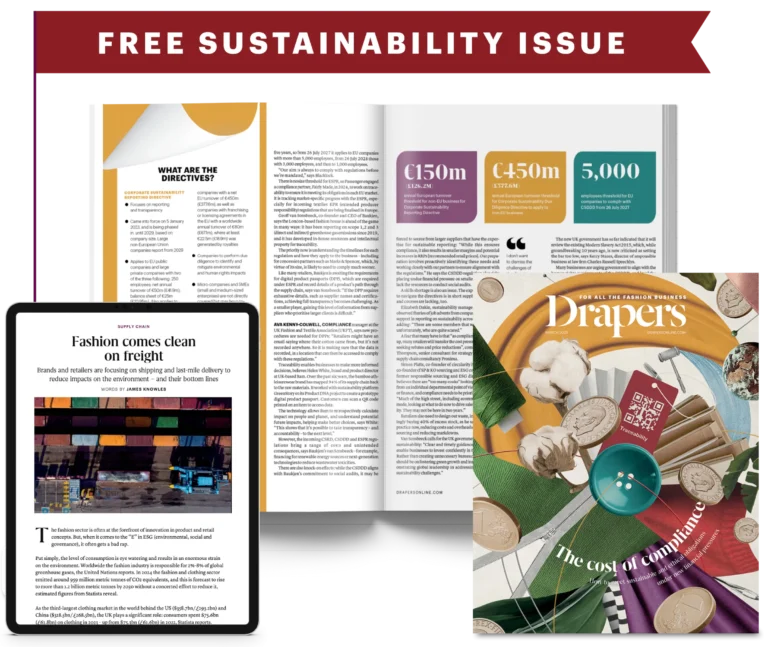
This dynamic environment underscores the indispensable value of comprehensive industry platforms. Get full access to all the fashion industry news and intelligence you need. Subscribe today to browse an archive of more than 55,000 articles, access bespoke in-depth research, read daily and weekly newsletters in full, receive the print magazine (optional), and gain priority access to Drapers events. Staying informed is not just an advantage; it is a prerequisite for success in the transforming world of fashion.
COPYRIGHT © 2026 EMAP PUBLISHING LIMITED