

The 2026 Met Gala, held at the Metropolitan Museum of Art in New York City, witnessed a strategic shift in the red carpet presence of Louis Vuitton, one of the world’s most prominent luxury fashion houses. While the brand has historically utilized the event to showcase an extensive roster of global ambassadors and celebrities—often appearing as a unified "squad" under the direction of Creative Directors Nicolas Ghesquière and Pharrell Williams—the 2026 iteration saw a more restrained approach. For this year’s theme, "Costume Art," Louis Vuitton dressed only four high-profile guests, focusing on a narrative of technical precision, sculptural leatherwork, and heritage-inspired menswear. This curated selection marked a notable departure from previous years, and the absence of the house’s newest ambassador, Chase Infiniti, who instead made her debut in Thom Browne, sparked significant discussion among industry analysts regarding the evolving nature of brand-ambassador contracts in the mid-2020s.
The 2026 Theme: Costume Art and the Louis Vuitton Interpretation
The Metropolitan Museum of Art’s Costume Institute designated "Costume Art" as the central theme for 2026, an exploration of the intersection between traditional garment construction and fine art sculpture. The exhibition aimed to highlight how contemporary designers utilize materials typically reserved for architecture or industrial design to create wearable forms. For Louis Vuitton, a house built on the foundation of trunk-making and structural leather goods, the theme provided a natural platform to showcase its artisanal capabilities.
Under the dual leadership of Nicolas Ghesquière for womenswear and Pharrell Williams for menswear, the house presented a cohesive aesthetic that prioritized texture and form over overt branding. The decision to limit the guest list to four individuals allowed for a more concentrated focus on the intricate craftsmanship of each custom piece, aligning with a broader luxury market trend toward "quiet excellence" and exclusivity.
Sculptural Innovation: Hoyeon and the Evolution of Leather
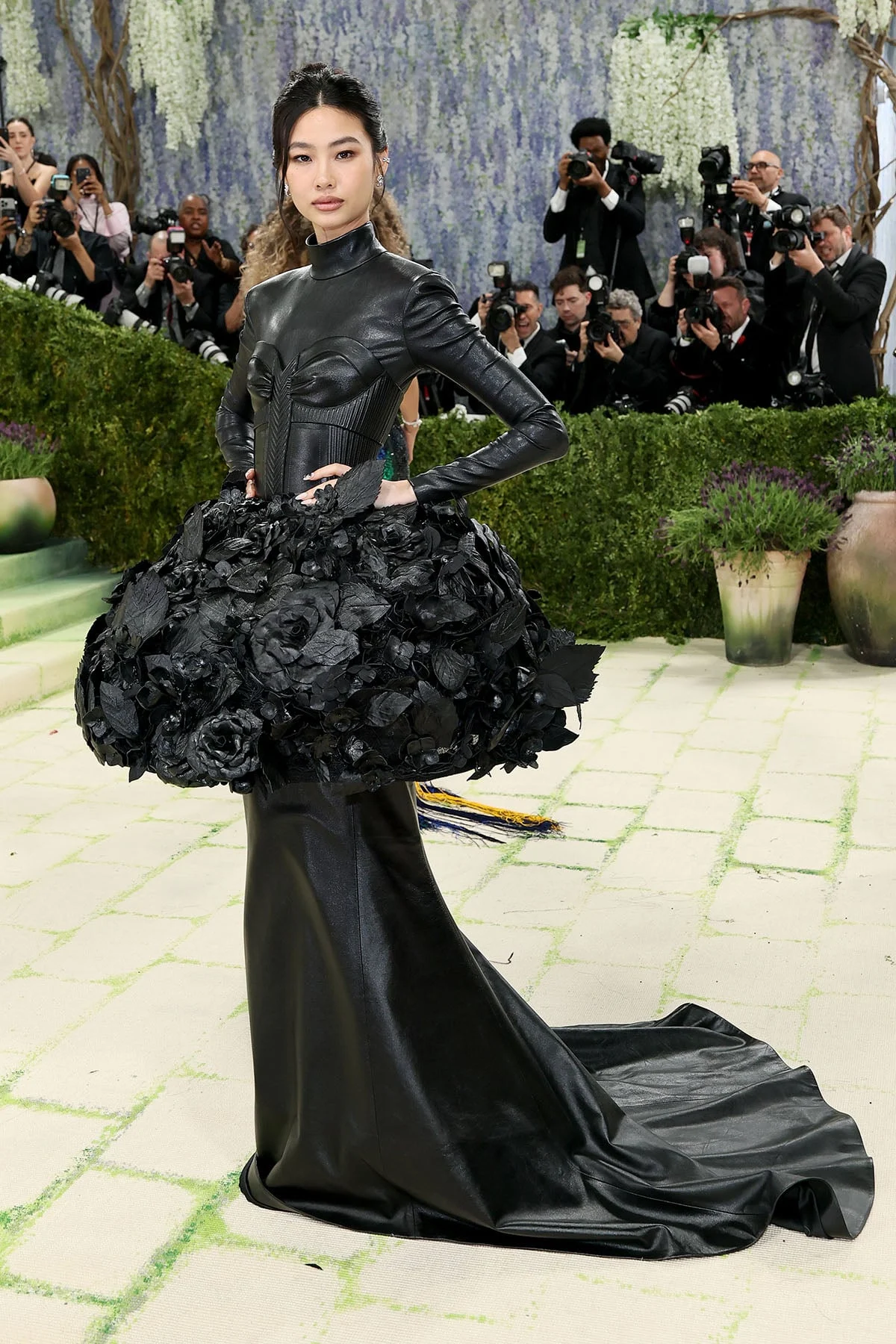
Leading the Louis Vuitton delegation was South Korean actress and global brand ambassador Hoyeon. Her ensemble was widely regarded by critics as the most direct and successful interpretation of the "Costume Art" theme within the group. The custom look centered on a black leather gown that functioned as both a garment and a sculptural installation.

The foundation of the look was a precision-fitted leather bodysuit, which provided a streamlined silhouette beneath a structured bustier gown. The most striking element was the cage-structured overskirt, a technical feat of engineering that utilized rigid leather strips to create a voluminous, architectural frame. This "cage" was embellished with hand-cut leather flowers, effectively turning structural components into decorative art. The use of leather—a material synonymous with the house’s heritage—served as a bridge between the brand’s history as a malletier and Ghesquière’s futuristic design language. To complete the look, Hoyeon wore pieces from the Louis Vuitton High Jewelry collection, emphasizing the brand’s continued expansion into the ultra-luxury jewelry sector, which has become a significant revenue driver for the LVMH group.
Contemporary Sophistication: Alysa Liu and the Deep Palette Trend
In a move that highlighted the brand’s connection to the world of sports and youth culture, Louis Vuitton dressed American figure skater Alysa Liu. Liu’s presence on the red carpet underscored the house’s strategy of aligning with athletes who possess significant cultural influence beyond their professional disciplines.
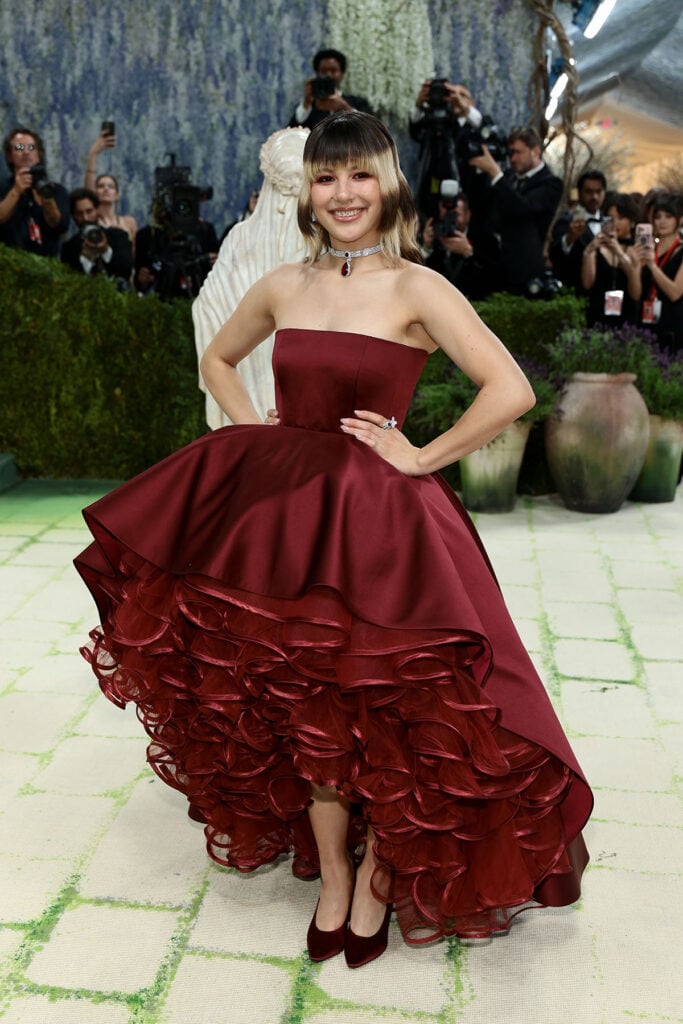
Liu appeared in a custom burgundy bustier gown, a color choice that aligned with the dominant palette of the 2026 Spring/Summer season. The gown featured a voluminous, tiered skirt that added a sense of classical drama to a modern, minimalist bodice. The tiered construction required dozens of meters of silk faille, meticulously pleated to ensure the skirt maintained its shape while in motion. The look was accessorized with matching satin pumps and a Pasquale Bruni "Heart to Earth" choker, featuring a prominent ruby. While the garment itself was a masterclass in traditional dressmaking, the overall styling choice reflected a transition for Liu from the athletic arena to the heights of high-fashion circles.
Menswear and Surface Detail: Tyriq Withers and the Raindrop Illusion
The menswear offerings from Louis Vuitton at the 2026 Met Gala reflected the influence of Pharrell Williams, who has consistently integrated street-style sensibilities with high-fashion artisanal techniques since his appointment. Actor Tyriq Withers represented this modern masculine aesthetic through an ensemble that focused on surface manipulation and optical illusion.
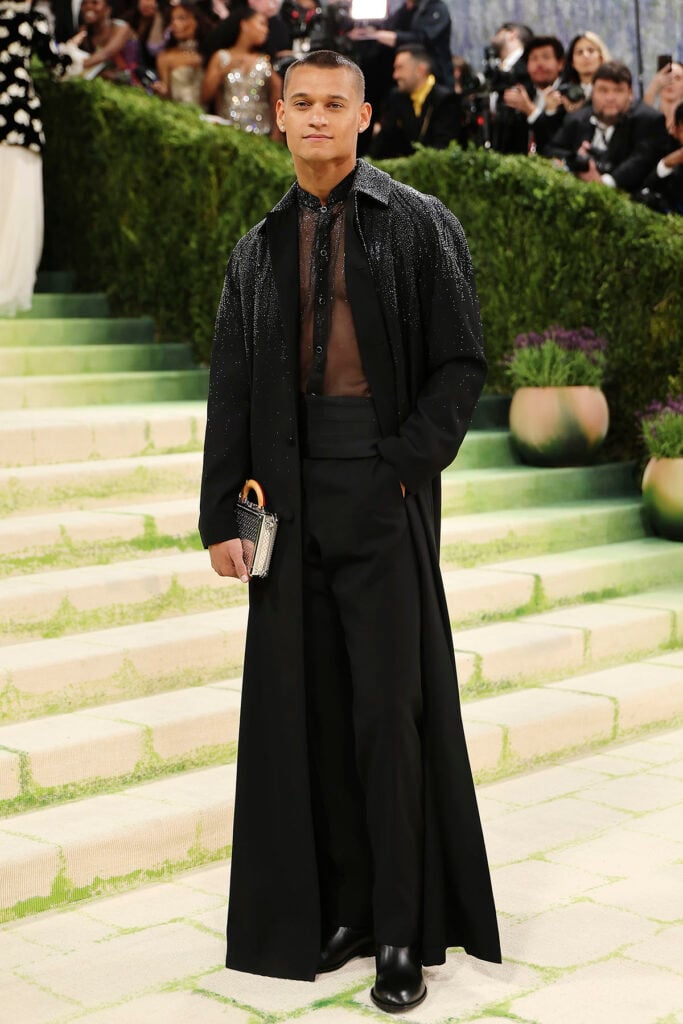
Withers’ look featured a classic silhouette elevated by a "raindrop" effect, created through the application of thousands of micro-crystals scattered across the fabric. This technique, which created a shimmering, wet-look finish under the flashbulbs of the paparazzi, drew comparisons to the high-craft techniques seen in Robert Wun’s acclaimed Spring 2023 Couture collection.

In addition to the suit, Withers carried a custom Louis Vuitton mini metal trunk, a direct nod to the company’s 1854 origins. These "Petite Malle" accessories have become staples of the house’s red carpet strategy, serving as a portable embodiment of the brand’s DNA. The look was grounded by black leather LV Rider boots, a design that blends rugged utility with luxury materials, signaling the brand’s commitment to versatile, high-end footwear.
Formal Heritage: Jay-Z and the Co-Chair Accompanying Role
The final member of the Louis Vuitton quartet was Jay-Z, who attended the gala alongside his wife, Beyoncé, a co-chair of the 2026 event. As a long-time collaborator and friend of Pharrell Williams, Jay-Z’s choice of Louis Vuitton was a logical extension of his existing relationship with the house.
Jay-Z opted for a traditional peak-lapel tailcoat tuxedo, a silhouette that honored the formal nature of the Met Gala while maintaining a refined, understated profile. The tuxedo was characterized by its impeccable tailoring, featuring a slim fit and high-contrast textures between the wool-mohair blend of the suit and the silk satin of the lapels. The ensemble was accented with a white flower brooch and black patent leather LV Premiere Oxfords. In an evening often defined by avant-garde experimentation, Jay-Z’s look provided a necessary anchor in classical formalwear, demonstrating the house’s ability to cater to the traditional luxury consumer while simultaneously pushing boundaries with other ambassadors.
Strategic Omission: The Case of Chase Infiniti
One of the most discussed aspects of Louis Vuitton’s 2026 Met Gala presence was the absence of Chase Infiniti from the house’s guest list. As a newly appointed ambassador, Infiniti’s debut at the Met Gala was highly anticipated. However, the actress appeared in a design by Thom Browne, a move that prompted questions regarding the exclusivity of her contract.
Industry experts suggest that this may be a deliberate strategy by LVMH to allow their ambassadors more creative freedom, thereby increasing their "fashion credibility" by not appearing solely in one brand. Alternatively, it may reflect a logistical decision based on the theme; Thom Browne’s aesthetic is often deeply aligned with the "Costume Art" concept, and the placement of Infiniti in his designs may have been seen as a more effective way to garner media attention for the actress during a high-stakes event. Regardless of the reasoning, the move highlights the complex negotiation of image and brand loyalty in the modern celebrity ecosystem.
Comparative Data: Louis Vuitton’s Met Gala History
To understand the significance of this year’s four-person guest list, it is necessary to examine Louis Vuitton’s historical data at the event. In 2022, for the "Gilded Glamour" theme, the house famously dressed over 15 celebrities, many of whom wore archival or reworked pieces to emphasize sustainability. In 2024, the number remained high, with approximately 10 ambassadors appearing in custom Ghesquière designs.
The reduction to four guests in 2026 suggests a pivot toward a "quality over quantity" model. By reducing the number of attendees, the brand ensures that each look receives a higher percentage of media coverage and social media engagement. According to data from digital marketing analysts, a smaller, more curated presence can often lead to higher "Earned Media Value" (EMV) per outfit, as the narrative around each garment is more focused and less diluted by a large group appearance.
Broader Impact and Industry Implications
The 2026 Met Gala served as a barometer for the current state of the luxury fashion industry. Louis Vuitton’s emphasis on sculptural leather and technical detail reflects a broader movement toward "artisanal luxury," where the value of a garment is derived from its construction and material innovation rather than just the visibility of a logo.
Furthermore, the integration of high jewelry into almost every look signals the brand’s intent to dominate the "total look" market. By providing everything from the footwear and trunks to the necklaces and gowns, Louis Vuitton positions itself as a singular destination for the global elite.
The house’s performance at the 2026 gala also underscores the stability of the Ghesquière-Williams era. Despite the ever-changing nature of fashion leadership, the synergy between the women’s and men’s universes at Louis Vuitton appears to be a key driver of the brand’s cultural relevance. As the "Costume Art" exhibition opens to the public, the garments worn by Hoyeon, Alysa Liu, Tyriq Withers, and Jay-Z will likely be cited as definitive examples of how 21st-century luxury brands successfully navigated the line between commercial viability and artistic expression.
In conclusion, while the Louis Vuitton presence was numerically smaller than in previous years, its impact was amplified through precise styling, technical innovation, and strategic celebrity alignment. The 2026 Met Gala reinforced the house’s position as a leader in the intersection of fashion and art, proving that even in a reduced capacity, the influence of the LV monogram remains a central pillar of the global fashion landscape.