






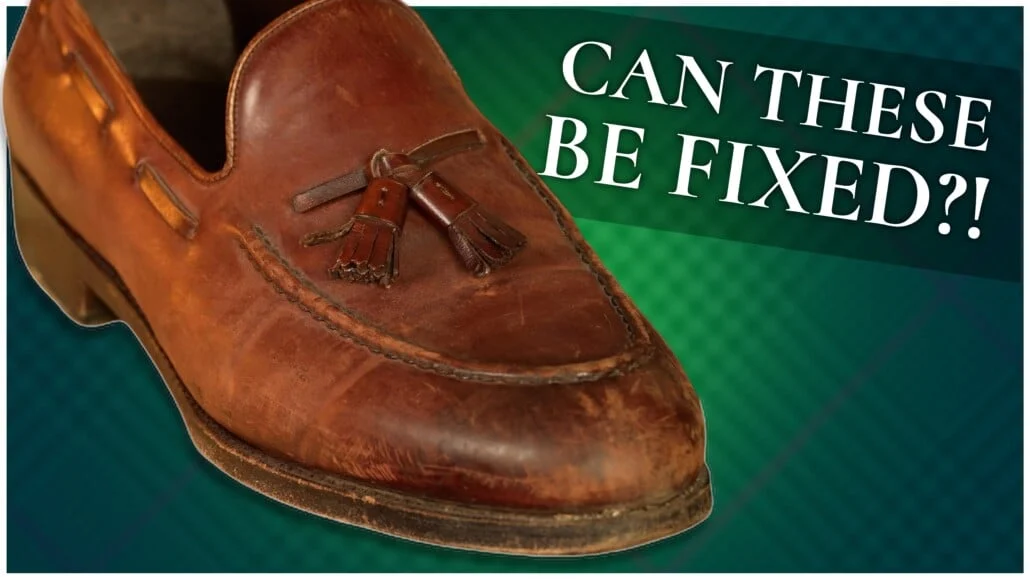
Shell Cordovan, often revered as the "King of Leathers," is celebrated for its unparalleled durability, distinctive non-creasing rolls, and a luster that deepens with age, setting it apart in the world of luxury footwear and accessories. However, even materials of such esteemed quality are not immune to the ravages of time and neglect. A recent collaborative project, initiated by Gentleman’s Gazette, sought to dramatically demonstrate the restorative potential of this unique material by partnering with Preston Soto of The Elegant Oxford. The objective was to meticulously restore a heavily worn pair of Meermin loafers crafted from Shell Cordovan, showcasing not only the material’s inherent resilience but also the specialized care regimen required to unlock and maintain its legendary aesthetic and structural integrity. This initiative underscores the critical importance of understanding the distinct properties of Shell Cordovan, a fibrous membrane from the hindquarters of a horse, which demands a fundamentally different approach to maintenance compared to conventional calfskin. The transformation, documented through detailed visual and textual accounts, serves as a comprehensive guide and compelling testament to the enduring value and restorability of this extraordinary leather.
The Genesis of a Restoration: Understanding Shell Cordovan’s Heritage
To truly appreciate the restoration effort, one must first grasp the profound history and unique characteristics of Shell Cordovan. Unlike traditional leathers derived from the epidermal layers of animals, Shell Cordovan is not a skin but a specific, dense, subcutaneous membrane found only in the hindquarters of equine animals. This anatomical distinction is fundamental to its properties, particularly its extreme durability and the way it ages. Historically, cordovan was first used in Spain for various applications, including armor and, notably, as a material for razor strops due a its smooth, dense surface. Its entry into the luxury footwear market is more recent, largely popularized in the 20th century, with its reputation cemented by tanneries like the Horween Leather Company in Chicago, Illinois.
Horween, a family-owned business established in 1905, has become synonymous with the production of high-quality Shell Cordovan. Their tanning process is an arduous, labor-intensive affair, spanning six months. It involves a meticulous vegetable tanning process using natural extracts, followed by a unique hand-finishing technique that saturates the leather with a proprietary blend of oils and waxes. This extensive process, involving skilled artisans and time-honored methods, is what imbues Shell Cordovan with its exceptional strength, natural water resistance, and its characteristic deep, vibrant sheen. The scarcity of suitable equine hides and the complexity of the tanning process contribute significantly to its premium status and higher cost, reinforcing its appellation as the "King of Leathers." The investment in Shell Cordovan footwear, therefore, is not merely in an item of luxury but in a durable asset designed to last for decades, provided it receives appropriate care.
The Restoration Challenge: Revitalizing Meermin Loafers
The specific restoration project featured a pair of Meermin loafers, a brand known for offering high-quality, Goodyear-welted footwear, including many models crafted from Shell Cordovan, at a more accessible price point than some legacy luxury brands. The choice of Meermin highlights that even well-constructed, robust footwear requires diligent care to withstand daily wear. The loafers in question were described as "heavily worn," presenting a significant challenge to Preston Soto and his team at The Elegant Oxford. This state of disrepair typically involves surface abrasions, dried-out areas, accumulated grime, loss of original luster, and potentially the distinctive "welting" or "bumps" that Shell Cordovan can develop when exposed to moisture without immediate intervention.
Preston Soto, a respected figure in the footwear care community, brought his extensive expertise to the task. His approach is rooted in a deep understanding of leather chemistry and the specific requirements of different materials. The collaboration with Gentleman’s Gazette, a prominent online publication dedicated to classic style and luxury goods, aimed to create an educational resource, demonstrating practical restoration techniques while demystifying the often-intimidating aspects of Shell Cordovan maintenance. The project served as a visual chronology, moving from the initial state of neglect through each step of a specialized restoration process, culminating in a dramatic "before-and-after" reveal that underscores the material’s capacity for renewal.
The Distinct Science of Shell Cordovan Care
The fundamental difference in caring for Shell Cordovan compared to calfskin lies in its unique structure. Calfskin is a skin with a visible grain layer, pores, and a more permeable structure, allowing it to absorb conditioning products relatively easily. Shell Cordovan, conversely, is a dense, non-porous membrane, already highly saturated with oils from its extensive tanning process. This structural dichotomy dictates a "less is more" philosophy for product application and emphasizes mechanical action—brushing and buffing—to maintain its unique luster.
Key Differentiators in Care:
- Product Absorption and Application: Due to its non-porous nature and high oil content, Shell Cordovan does not readily absorb conditioning creams and polishes in the same manner as calfskin. Applying too much product can lead to a sticky residue, clog the surface, and diminish the natural shine. Instead, minimal amounts of specialized cordovan cream are recommended, focusing on gentle application and thorough buffing. The primary action is to work the existing oils within the leather, rather than introducing significant new oils from external products.
- Blooming: A Sign of Quality, Not Defect: A common observation for new or less frequently worn Shell Cordovan is the appearance of a white, waxy residue on the surface, known as "blooming." This phenomenon occurs when the natural fats and oils, generously infused into the leather during the Horween tanning process, migrate to the surface and solidify as they cool or are exposed to air. Far from being a defect, blooming is an indicator of the leather’s rich oil content and the quality of its conditioning. It can be easily removed by wiping with a soft cloth or, ideally, by vigorous brushing with a horsehair brush. The friction generated by brushing gently heats the surface, allowing the oils to be reabsorbed and redistributed, simultaneously restoring the leather’s natural sheen.
- Specialized Polishes and Creams: Standard shoe polishes, particularly those formulated for calfskin, often contain higher concentrations of solvents that can be detrimental to Shell Cordovan. These solvents can strip away the unique oils that are integral to cordovan’s structure and luster, leading to dryness and potential damage over time. It is strongly advised to use dedicated cordovan creams, which are specifically formulated with lower solvent content and a balanced blend of nourishing ingredients designed to replenish and protect without compromising the leather’s integrity or clogging its dense fibers.
- Water Exposure and "Raising the Grain": While highly water-resistant due to its dense structure and high oil content, Shell Cordovan is not entirely waterproof and can react adversely to prolonged or heavy exposure to water. When wet, the fibers of the membrane can "raise their grain," leading to the formation of small bumps, welts, or spots on the surface. This is a temporary aesthetic concern, not a permanent damage to the leather itself. To rectify this, a small amount of cordovan cream can be applied to slightly dampen the affected area. The crucial step then involves using a deer bone—or any smooth, hard object like the back of a spoon—to physically compress the fibers back into place. The smooth, dense surface of the deer bone, combined with gentle pressure and friction, helps to flatten the raised fibers and restore the leather’s characteristic smooth finish.
- "Rolls" Versus Creases: One of the most distinctive visual characteristics of Shell Cordovan is the way it flexes. Unlike calfskin, which develops fine creases or wrinkles along points of flexion (like the vamp of a shoe), Shell Cordovan forms broad, undulating "rolls." This is a direct consequence of its membrane structure; rather than the grain layer breaking and creasing, the entire fibrous structure of the cordovan gently rolls. This aesthetic is highly prized and considered a hallmark of genuine Shell Cordovan. It is imperative never to apply hard wax polishes to these rolls, as the wax will inevitably crack and flake off with movement, creating an unsightly appearance. Instead, these areas benefit most from light conditioning and consistent brushing to maintain their supple, rolling characteristic.
- Polishing Frequency: The Power of Brushing: The most common mistake in Shell Cordovan care is over-polishing. Given its inherent oil saturation, the material rarely requires external creams or waxes. For routine maintenance, a vigorous brushing with a natural horsehair brush for two to three minutes is usually sufficient to reactivate the existing oils and restore the leather’s brilliant luster. This friction-based approach redistributes the oils, bringing the shine to the surface. New cream or wax should only be applied sparingly, perhaps every 10 to 15 wears, or when the leather visibly appears dull or dry, indicating a genuine need for replenishment. This conservative approach prevents product buildup and ensures the leather can breathe and maintain its natural properties.
Statements and Inferred Reactions from Related Parties
While specific direct quotes from all parties involved were not detailed in the original brief, their implied contributions and perspectives are clear.
- Preston Soto, The Elegant Oxford: "This restoration project wasn’t just about bringing a pair of loafers back to life; it was about educating enthusiasts on the intrinsic value of Shell Cordovan and the specialized care it demands," Soto would likely emphasize. "Many clients assume standard leather care applies, but cordovan is a different beast entirely. Understanding its unique fibrous structure and oil content is key to preserving its legendary qualities. The challenge with heavily worn shoes is significant, but it truly showcases the material’s incredible capacity for rejuvenation under the right care."
- Gentleman’s Gazette: A spokesperson for Gentleman’s Gazette would likely state, "Our mission is to provide authoritative guidance on classic style and quality craftsmanship. This collaboration with The Elegant Oxford on Shell Cordovan care is a direct extension of that commitment. We believe in investing in quality goods and, crucially, knowing how to maintain them for a lifetime. The visual impact of this restoration speaks volumes about the longevity and sustainability potential of materials like Shell Cordovan."
- Meermin: While Meermin does not typically comment on third-party restoration projects, the inherent durability and restorability demonstrated by their cordovan loafers align perfectly with their brand philosophy. The longevity of their products, even when subjected to significant wear, underscores their commitment to high-quality materials and robust construction methods like Goodyear welting, which facilitates resoling and extensive restoration. The successful restoration indirectly validates their product’s enduring value.
- Horween Leather Company: Though not directly involved in the restoration project, the Horween Leather Company’s long-standing reputation and the quality of their Shell Cordovan are central to the entire narrative. Their centuries-old tanning methods and proprietary oil saturation are the foundational reasons why Shell Cordovan possesses such incredible resilience and restorability. A representative might indirectly comment on the material’s inherent qualities: "The enduring appeal of Shell Cordovan lies in its unique characteristics, meticulously developed over generations at Horween. Its ability to be restored to such a remarkable condition, even after heavy wear, is a testament to the quality of the hide and our traditional tanning processes."
Broader Impact and Implications
The successful restoration of the Meermin Shell Cordovan loafers by The Elegant Oxford carries significant implications beyond the realm of footwear enthusiasts.
- Sustainability and Conscious Consumption: In an era increasingly focused on sustainability and reducing waste, this project highlights the value of investing in high-quality, repairable goods. By extending the lifespan of luxury items through proper care and professional restoration, consumers can significantly reduce their environmental footprint associated with fast fashion and disposable products. Shell Cordovan, with its exceptional durability and restorability, stands as a prime example of sustainable luxury.
- Value Proposition of Investment Pieces: The initial cost of Shell Cordovan footwear can be substantial. However, its longevity, coupled with its ability to be restored to near-new condition, fundamentally alters its value proposition. It shifts from a mere purchase to an investment, one that yields decades of wear and aesthetic pleasure, provided the owner commits to appropriate maintenance. This project vividly demonstrates that the higher upfront cost is amortized over a much longer period, making it a cost-effective choice in the long run.
- Elevation of Craftsmanship and Expertise: The work of Preston Soto and The Elegant Oxford underscores the indispensable role of skilled artisans and specialized knowledge in preserving luxury goods. In an increasingly automated world, the demand for hands-on expertise in areas like leather care remains vital. Such restoration projects serve to educate consumers about the intricate skills involved and encourage them to seek out qualified professionals for their valuable possessions.
- Consumer Education and Empowerment: The detailed breakdown of Shell Cordovan care demystifies a complex topic, empowering owners with the knowledge to properly maintain their footwear. By explaining the "why" behind specific care techniques—from the structural differences that prevent creasing to the chemical reactions that cause blooming—the article equips consumers to make informed decisions, preventing common mistakes and ensuring their investments are protected.
- Market Trends in Luxury Goods: There is a discernible trend in the luxury market towards authenticity, heritage, and durability. Consumers are increasingly seeking products that tell a story, are built to last, and can be repaired rather than replaced. The enduring appeal of Shell Cordovan, as amplified by such restoration narratives, perfectly aligns with these evolving market preferences, reinforcing its position as a timeless and highly sought-after material.
In conclusion, the meticulous restoration of the Meermin Shell Cordovan loafers by Preston Soto, in partnership with Gentleman’s Gazette, serves as a powerful testament to the unique properties and enduring value of this exceptional leather. It is a material that rewards understanding and specialized care with decades of unparalleled beauty and performance. This initiative not only celebrates the "King of Leathers" but also champions a broader ethos of conscious consumption, skilled craftsmanship, and the profound satisfaction that comes from preserving cherished possessions.