









The global fashion industry is currently grappling with a systemic inventory crisis, with major international brands holding billions of dollars in unsold stock. To protect brand equity and avoid market cannibalization in primary Western hubs like the United Kingdom and the United States, these corporations frequently restrict the resale of excess inventory within their domestic markets. This surplus often finds its way to emerging markets, particularly in Africa, through the secondhand clothing trade. However, this traditional supply chain is fraught with inefficiency; industry data suggests that 30% to 40% of imported secondhand items arrive in a condition deemed unusable, ending up in landfills and contributing to significant environmental degradation.
Against this backdrop of ecological and logistical challenges, FARO, a South African recommerce startup, has announced the successful closing of a $6 million investment round. Led by JP Zammitt, the president of Bloomberg, the funding is earmarked to scale a business model that transforms the surplus of the developed world into high-value retail opportunities for African consumers. The investment round saw participation from a diverse group of venture capital firms and private investors, including Presight Capital, Gharage Ventures, E4E Africa, and individual backers such as Mato Perić, Leonard Stiegeler, and Vikram Chopra.
The Recommerce Opportunity and the Arbitrage of Excess
The global resale market, or "recommerce," is projected to reach an estimated valuation of $350 billion by 2027. This growth is driven by a dual demand for sustainability and affordability. FARO’s strategy centers on a unique arbitrage opportunity: the mismatch between the oversupply of premium fashion in the West and the underserved demand for authentic, high-quality apparel in emerging economies.
While markets across the African continent often lack the per capita purchasing power to support traditional full-price flagship stores for brands like Zara, Tommy Hilfiger, or Calvin Klein, the consumer appetite for these "aspirational" brands remains high. FARO bridges this gap by sourcing excess stock—primarily consumer returns and overstock items—and redirecting them to South Africa.
According to David Torr, co-founder and co-CEO of FARO, the startup specifically targets items that brands would otherwise discard or incinerate. These items often include consumer returns with minor, repairable defects. In many Western economies, the high cost of labor makes the inspection, cleaning, and repair of a returned garment more expensive than the value of the item itself. FARO leverages South Africa’s more competitive labor costs and its own industrial processing facilities—equipped with industrial laundries and steam tunnels—to recondition these garments to a "like-new" state.
A Chronology of Rapid Scaling
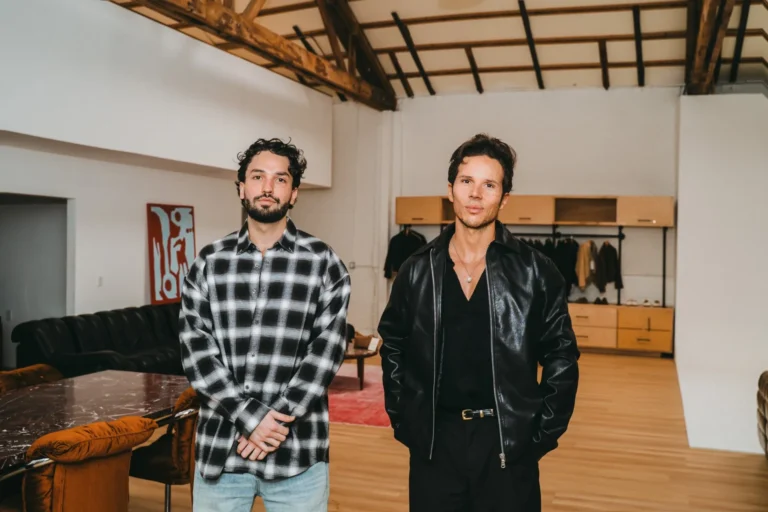
FARO’s journey from a conceptual startup to a multi-million-dollar revenue generator has been remarkably swift. The company was launched in 2023 by a founding team with deep roots in the global and African tech ecosystems. David Torr, who previously founded the food-tech company UCOOK, joined forces with Will McCarren, Chris Makhanya, and Amber Penney-Young. The team brought combined experience from major industry players including Amazon, Jumia, Superbalist, and Zumi.
The company’s proof-of-concept began with an experimental pop-up store in South Africa in early 2023. The results were immediate, with the single location generating $100,000 in revenue within its first month. Initial internal projections suggested that the company would require seven physical stores to reach an annual revenue milestone of $2 million. However, the demand for affordable, branded fashion far exceeded expectations.
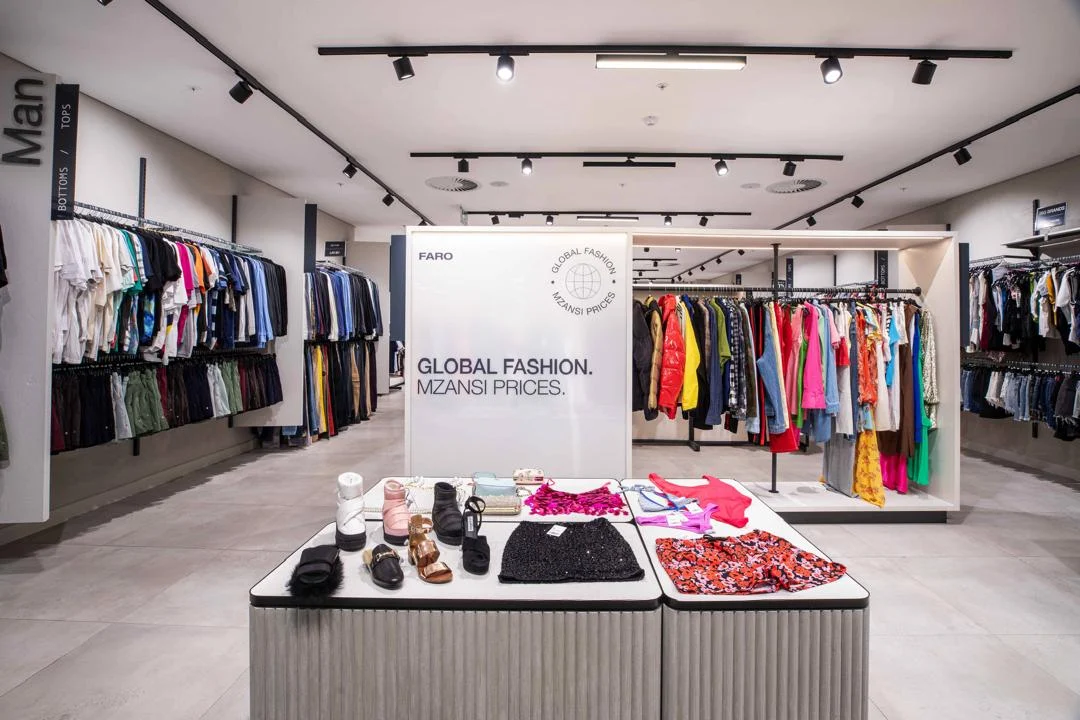
By the end of its first full year of operation, FARO reached $2.3 million in revenue with only four physical locations. This represented a 20-fold growth rate over the calendar year. Currently, the company’s inventory is a mix of approximately 40% reconditioned consumer returns and 60% traditional overstock. Through partnerships with global retailers such as ASOS, Boohoo, G-Star, and Levi’s, FARO is able to offer products at discounts of up to 70% off their original retail price.
Technological Innovation: Moving Beyond the Spreadsheet
One of the primary hurdles in the off-price retail sector is the complexity of inventory management. Unlike traditional retail, where a buyer might order 10,000 units of a single SKU, recommerce involves "single-item" inventory. Every returned item may have a different defect, a different size, or belong to a different season.
Torr notes that even global giants in the off-price space, such as TJX (the parent company of T.J. Maxx and TK Maxx), remain heavily reliant on manual processes. In many corporate head offices, thousands of employees spend their workdays manipulating massive manifests in Microsoft Excel to track inventory. This labor-intensive workflow is not only slow but prone to human error.
To solve this, FARO is developing proprietary AI-powered agents designed to automate the buying and logistical workflow. "Some brands have over 15,000 people employed at a head office level who are just manipulating data on Excel," Torr explained. "We’ve started deploying our first buy models that could do this—not in a matter of hours, in a matter of seconds. And its accuracy will be infinitely better than the human being that would otherwise be doing that."
By automating the categorization and valuation of thousands of unique items, FARO can maintain a lean operation while scaling its inventory. This technological edge is also expected to enhance the customer experience. The startup plans to introduce personalized shopping tools that notify customers when specific brands or styles arrive at their local store, creating a digital layer over a primarily physical retail experience.
Market Dynamics: Why Physical Retail Trumps E-Commerce
While the global trend has leaned toward e-commerce, FARO is intentionally prioritizing a physical "brick-and-mortar" footprint. This decision is driven by two factors: the nature of off-price inventory and the specific logistical landscape of South Africa.
First, the cost of digitizing a "one-of-one" item—photographing it, writing a description, and listing it online—often exceeds the margin available on a discounted garment. Physical retail allows consumers to browse through unique items without the high overhead of digital cataloging.
Second, the South African market is uniquely suited for physical off-price distribution. With over 2,000 shopping centers, the country has a highly developed retail infrastructure compared to many of its neighbors. This allows FARO to operate in urban hubs and mid-market centers where foot traffic is high. Furthermore, while e-commerce platforms like Jumia and Takealot have made inroads, they face increasing pressure from ultra-fast-fashion giants like Shein and Temu. By focusing on high-quality, branded "bricks" rather than cheap "clicks," FARO aims to capture the segment of the market that values brand status and tactile quality over the disposable nature of ultra-cheap imports.
Environmental Impact and Global Expansion Plans
The environmental implications of FARO’s model are significant. The fashion industry is responsible for approximately 10% of global carbon emissions and is a major consumer of water. By extending the lifecycle of garments that were destined for incineration or landfill, FARO provides a practical solution to the industry’s waste problem.
The startup’s "fixed-margin" model also reflects a shift toward more sustainable business ethics. Targeting a 45% margin after all processing and labor costs, the company chooses to pass additional savings to the consumer rather than inflating profits when sourcing prices drop. This "customer-centric" approach is intended to build long-term loyalty in price-sensitive markets.
Looking ahead, FARO has set an ambitious target of opening 1,000 stores over the next decade. While South Africa serves as the current base of operations, the company is eyeing expansion into other emerging markets across Africa, South America, Asia, and the Middle East. However, the leadership acknowledges that expansion will require localized strategies. Consumer preferences in Kenya or Nigeria may differ vastly from those in South Africa, necessitating the development of localized "price profiles" and brand assortments.
As the $6 million injection facilitates this expansion, FARO stands as a case study in how technology and strategic logistics can turn a global waste crisis into a profitable, sustainable, and socially impactful business model. By treating "waste" as a resource, the startup is not only dressing a continent in premium apparel but also challenging the traditional lifecycle of global fashion.