







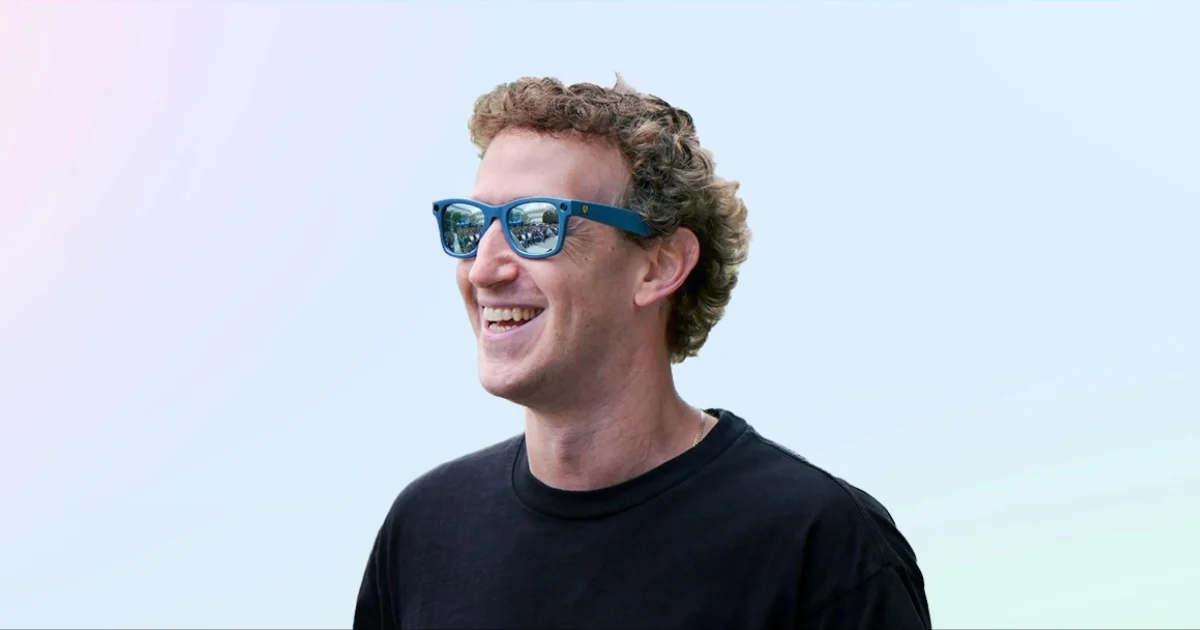
The presence of Meta Platforms CEO Mark Zuckerberg and his wife, Priscilla Chan, in the front row of Prada’s Fall/Winter 2026 Fashion Week show in Milan on Thursday has intensified industry speculation regarding a high-fashion expansion of Meta’s wearable technology lineup. Zuckerberg was observed in close conversation with Lorenzo Bertelli, Prada Group’s Chief Merchandising Officer and the son of lead designer Miuccia Prada, suggesting that the long-rumored collaboration between the Silicon Valley giant and the Italian luxury house may be nearing a formal unveiling. While Meta has transitioned its hardware focus toward augmented reality and artificial intelligence, the move into the luxury sector represents a calculated effort to transform smart glasses from niche tech gadgets into essential fashion accessories.
High-Fashion Meets High-Tech in Milan
The sighting in Milan occurs at a pivotal moment for Meta’s hardware division, Reality Labs. Zuckerberg’s appearance at the Prada show is widely viewed by market analysts not merely as a social engagement, but as a strategic branding exercise. Over the past year, Zuckerberg has undergone a public-facing image transformation, often referred to as a "rebrand," shifting away from his traditional grey t-shirts in favor of designer apparel and streetwear. This personal evolution aligns with Meta’s broader corporate objective: making wearable technology aesthetically desirable to a demographic that prioritizes style over technical specifications.
The potential partnership with Prada would follow the blueprint established by Meta’s existing relationship with EssilorLuxottica, the parent company of Ray-Ban and Oakley. By integrating Meta’s AI-driven hardware into Prada’s signature frames, the company aims to capture the "ultra-premium" segment of the eyewear market. Industry insiders suggest that a Prada-branded version of the Meta AI glasses would likely command a significant price premium, positioning the device as a status symbol rather than just a utility tool.
Evolution of the Meta Wearables Ecosystem: A Chronology
Meta’s journey into the smart glasses market has been characterized by iterative improvements and strategic pivots in branding and functionality.
- September 2021: Meta (then Facebook) launches "Ray-Ban Stories" in partnership with EssilorLuxottica. The device focused primarily on photo and video capture but faced criticism for limited battery life and a lack of integrated display or advanced AI.
- September 2023: The second-generation "Ray-Ban Meta Smart Glasses" are introduced. This version integrated Meta AI, allowing for "Look and Ask" multimodal capabilities, improved audio, and better camera quality.
- June 2025: Reports emerge from CNBC and other outlets indicating that Meta is expanding its portfolio to include luxury and performance brands under the EssilorLuxottica umbrella.
- July 2025: Meta officially unveils the Oakley Meta glasses, targeting the athletic and outdoor enthusiast market with rugged designs and specialized lens technology.
- February 2026: Mark Zuckerberg’s high-profile attendance at Prada’s Milan show serves as the strongest indicator to date that the luxury tier of the product line is imminent.
This timeline demonstrates a clear trajectory from experimental hardware to a multi-tiered lifestyle product line. By diversifying its brand partners, Meta is effectively segmenting the market: Ray-Ban for the general consumer, Oakley for the athlete, and potentially Prada for the luxury fashion enthusiast.
The Strategic Alliance: The Role of EssilorLuxottica
Central to Meta’s success in the eyewear space is its deep-rooted partnership with EssilorLuxottica. The French-Italian eyewear conglomerate holds the licenses for nearly every major luxury brand, including Prada, Miu Miu, Armani, and Versace. This existing infrastructure allows Meta to bypass the difficulties of designing and distributing eyewear, focusing instead on the miniaturization of sensors and the optimization of AI software.
In early 2026, EssilorLuxottica and the Prada Group announced a ten-year renewal of their licensing agreement, extending their partnership through 2030 with an option for another five-year extension. This long-term stability provides the necessary runway for Meta to develop multiple generations of Prada-branded AI glasses. For EssilorLuxottica, the integration of Meta’s technology offers a way to revitalize the traditional eyewear market, which has seen stagnant growth in recent years compared to the consumer electronics sector.
Market Performance and the Shift to Mainstream Adoption
Data released in early 2026 indicates that Meta’s smart glasses are no longer a fringe product. EssilorLuxottica reported sales of over 7 million units of Meta-integrated AI glasses in 2025, a substantial increase from the 2 million units sold in 2024. This 250% year-over-year growth suggests that the "smart glasses" category is finally reaching a tipping point toward mainstream adoption.
Several factors have contributed to this surge:
- AI Integration: The shift from "camera glasses" to "AI glasses" changed the value proposition. Users now utilize the glasses for real-time translation, object identification, and hands-free information retrieval.
- Form Factor: Unlike bulky VR headsets or previous iterations of AR glasses (such as Google Glass), the Meta-Ray-Ban and Meta-Oakley frames are indistinguishable from standard eyewear.
- Social Acceptance: As the devices become more common, the social stigma associated with wearing a camera on one’s face has begun to wane, though privacy concerns remain a significant hurdle.
A Prada collaboration would likely further accelerate these sales figures by tapping into the brand’s loyal global following and its dominance in the Asian and European luxury markets.
The Surveillance Backlash and Ethical Considerations
Despite the commercial success of Meta’s smart glasses, the prospect of a luxury version comes amid a growing societal backlash against persistent surveillance. The rise of "always-on" recording devices has sparked a counter-movement of consumers who prioritize privacy and the "right to be unobserved."
Recent reports have highlighted incidents where citizens have actively dismantled surveillance infrastructure, such as Ring doorbells and Flock safety cameras, citing concerns over data privacy and the erosion of public anonymity. Meta’s reported plans to introduce facial recognition features to its smart glasses—as detailed in a recent New York Times investigation—have added fuel to this controversy.
In response to these concerns, developers have begun creating tools to protect the public. One such application notifies users via their smartphones if a pair of smart glasses is detected in their immediate vicinity by scanning for specific Bluetooth or Wi-Fi signatures associated with Meta’s hardware. If Meta proceeds with a Prada collaboration, the company will have to navigate the delicate balance between high-fashion exclusivity and the public’s increasing sensitivity to being recorded in private or semi-private spaces.
Technical Integration and AI Capabilities
A Prada version of Meta’s glasses would likely feature the most advanced version of the "Meta AI" suite. Analysts expect the luxury model to include:
- Custom Frame Materials: Moving beyond standard acetate to high-grade materials consistent with Prada’s runway collections.
- Enhanced Multimodal AI: The ability for the glasses to "see" what the wearer sees and provide sophisticated stylistic advice, real-time navigation in luxury retail environments, or instant translation of foreign languages.
- Augmented Reality (AR) HUD: While current Meta glasses lack a heads-up display, there is speculation that the next generation—potentially debuting with the Prada line—could include micro-LED displays for basic notifications or AR overlays.
The integration of AI into fashion is not just about the hardware; it is about the software ecosystem. Meta has been working on "Project Aria," a research initiative to understand how people interact with the world through wearables. Data from this project is likely being used to refine the user interface for the upcoming Prada devices, ensuring that the technology feels intuitive rather than intrusive.
Broader Impact and Industry Implications
The potential Meta-Prada partnership signals a broader trend where technology companies are increasingly acting like fashion houses, and vice versa. As smartphones reach a plateau in innovation, the "battle for the face" has become the new frontier for Big Tech. Apple’s Vision Pro, while technically superior in display capabilities, lacks the portability and style of Meta’s glasses. By focusing on the "wearability" aspect first, Meta has secured a lead in the everyday AR market.
For the fashion industry, this collaboration represents a necessary evolution. Luxury brands are constantly seeking ways to remain relevant to younger, tech-savvy "Gen Z" and "Alpha" consumers. By partnering with Meta, Prada positions itself at the intersection of heritage craftsmanship and future-forward technology.
However, the success of this venture will ultimately depend on whether Meta can convince consumers that the utility of the AI and the prestige of the Prada brand outweigh the privacy risks. If Zuckerberg’s Milan visit is indeed the precursor to a product launch, the tech and fashion worlds may be on the verge of a new era in personal computing—one where our most powerful digital tools are also our most stylish accessories. Meta’s ability to scale this luxury segment will be a critical indicator of whether smart glasses can truly replace the smartphone as the primary interface for our digital lives.