







Pfäffikon, Switzerland — Stäubli Textile, a global leader in high-speed weaving and shedding technologies, has officially confirmed its participation in the International Textile Machinery Exhibition (ITM) 2026, scheduled to take place in Istanbul, Turkey. Positioned as a cornerstone event for the global textile industry, ITM 2026 serves as a vital platform for manufacturers from Europe, the Middle East, and Central Asia to converge and explore the latest technological breakthroughs. Stäubli will host visitors in Hall 8, Stand 803, where it intends to demonstrate a comprehensive ecosystem of machinery designed to address the increasing demand for automation, energy efficiency, and high-performance fabric production.
The announcement, released from the company’s headquarters in Pfäffikon, highlights a strategic focus on the Turkish textile sector, which remains one of the most resilient and fast-evolving markets in the world. As global supply chains continue to reorganize around the concept of "near-shoring," Turkey’s proximity to European fashion hubs and its robust manufacturing infrastructure have positioned it as a primary beneficiary of shifted production volumes. Stäubli’s presence at ITM 2026 is intended to reinforce its long-standing partnership with Turkish weavers, offering solutions that bridge the gap between traditional craftsmanship and Industry 4.0 standards.

The Strategic Role of the Turkish Textile Industry
Turkey’s textile and apparel sector is not merely a regional player but a global powerhouse, consistently ranking among the top five exporters of textiles worldwide. The industry is characterized by its diversity, spanning high-quality denim production, home textiles, carpets, and increasingly, technical fabrics for the automotive and aerospace sectors. According to data from the Istanbul Textile and Raw Materials Exporters Association (İTHİB), the country’s textile exports have shown remarkable resilience, driven by a reputation for quality and the ability to meet short lead times required by European retailers.
The "near-shoring" trend has further catalyzed investment within the region. Brands that previously relied on long-haul logistics from East Asia are now looking toward the Anatolian peninsula to reduce their carbon footprint and mitigate shipping risks. However, to maintain this competitive edge, Turkish manufacturers are facing pressure to modernize. Rising energy costs and a tightening labor market have made automation a necessity rather than an option. Stäubli’s exhibition at ITM 2026 is specifically curated to address these macro-economic shifts, focusing on machinery that reduces manual intervention and optimizes raw material usage.
Chronology of Innovation: Stäubli’s Path to ITM 2026
The lead-up to ITM 2026 follows a period of intense research and development for Stäubli. Following the 2024 exhibition cycle, the company shifted its focus toward the refinement of "Active Warp Control" (AWC) technologies and the integration of digital service platforms.
- Early 2025: Stäubli initiated a series of field tests for the SAFIR PRO S47 in high-volume denim mills, focusing on the machine’s ability to handle recycled yarns, which often present challenges due to varying thread strengths.
- Late 2025: The company expanded its digital footprint with the global rollout of the MyStäubli portal, integrating AI-driven spare parts identification and predictive maintenance alerts.
- May 2026: The official announcement of the ITM lineup, marking the first time several of these specific configurations will be demonstrated live in the Turkish market.
This timeline reflects a broader industry movement toward "intelligent weaving," where the machine’s ability to self-correct and communicate with the operator is as important as its mechanical speed.
High-Performance Weaving Preparation: The SAFIR and TIEPRO Series
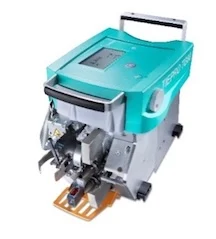
A significant portion of the Stäubli stand will be dedicated to weaving preparation, a critical phase that determines the overall efficiency of the weaving shed. The SAFIR PRO S47 automatic drawing-in machine will be a centerpiece of the display. Engineered for versatility, the S47 is designed to handle everything from standard cotton weaves to complex technical fabrics and glass fibers.
A key technical highlight of the SAFIR PRO S47 is the Active Warp Control 2.0 system. This technology utilizes advanced optical sensors to manage yarn layers, preventing double ends or misplaced threads even when operating at speeds of up to 190 ends per minute. For the Turkish denim industry—a sector that produces millions of meters of fabric annually—this level of precision is essential for maintaining "A-grade" quality and reducing downstream waste.

Complementing the drawing-in solutions is the TIEPRO warp knotting machine. Unlike traditional knotting systems that rely on separating needles, the TIEPRO utilizes a unique yarn separation process that minimizes wear on the warp threads. This innovation makes it an economical choice for mills processing a wide variety of yarn counts, as it eliminates the need for frequent needle changes and adjustments.
Advanced Shedding Technologies: Dobby and Cam Motions
In the realm of shedding systems, Stäubli will showcase its latest generation of electronic rotary dobbies and cam motions. The S1792 cam motion is built for the rigors of continuous, high-speed operation. Capable of reaching speeds of up to 1,400 rpm, it is specifically designed for air-jet weaving machines producing plain weaves. Its robust design ensures that even at extreme speeds, vibration is minimized, thereby extending the lifespan of both the shedding motion and the weaving machine itself.
For more complex patterns, the S3060 and S3280 electronic rotary dobbies offer unparalleled flexibility. The S3060 is recognized for its reliability in producing high-quality apparel and home textile fabrics. Meanwhile, the S3280 is optimized for heavy-duty applications, such as high-speed denim weaving on rapier machines. These systems are engineered with a focus on "stable shed formation," a technical requirement that ensures every pick is inserted with absolute precision, regardless of the loom speed or fabric complexity.

Jacquard Innovation and Technical Fabric Solutions
Stäubli remains a pioneer in Jacquard weaving, and at ITM 2026, the SX PRO Jacquard machine will demonstrate its capabilities in the premium fabric segment. The SX PRO is designed to produce intricate patterns for upholstery, tapestry, and silk, as well as technical fabrics like car seat covers. By integrating the MX PRO electronic module, the machine achieves high energy efficiency while maintaining the lifting capacity required for heavy-duty weaving.
Furthermore, Stäubli will highlight the GA500 Jacquard harness. The harness is the vital link between the Jacquard machine and the warp threads; the GA500 is engineered for geometric stability and long-term durability. For Turkish weavers specializing in luxury home textiles and towels, the GA500 provides the consistency needed to produce flawless patterns over long production runs.
Specialized solutions for velvet and technical fabrics will also be featured, including the SX PRO V, LX PRO V, and LXL PRO V series. These machines are built to withstand high stress and provide vibration-free shedding, which is critical when weaving high-value materials that are sensitive to tension fluctuations.

The Digital Service Hub: MyStäubli and Industry 4.0
Beyond hardware, Stäubli is positioning itself as a service partner through its MyStäubli digital platform. In a newsroom briefing, company representatives emphasized that modern textile manufacturing is no longer just about the "iron and steel" of the machines but about the data they generate.
The MyStäubli platform allows mill managers to access technical documentation, identify spare parts through an intuitive interface, and track service requests in real-time. This digital ecosystem is designed to maximize the "uptime" of the machinery, ensuring that Turkish manufacturers can meet the rigorous delivery schedules demanded by global fashion brands. By centralizing machine data, MyStäubli also assists in training new operators, a vital feature in an industry where skilled labor is becoming increasingly scarce.
Analysis: Implications for the Global Textile Landscape
The technologies Stäubli is bringing to ITM 2026 represent more than just incremental upgrades; they reflect a fundamental shift in how textiles are produced. The emphasis on energy efficiency—visible in the low-friction designs of the S1792 and the optimized power consumption of the SX PRO—aligns with the European Union’s upcoming "Strategy for Sustainable and Circular Textiles." As Turkey is a major supplier to the EU, its manufacturers must adopt these "green" technologies to comply with future carbon border adjustment mechanisms.

Industry analysts suggest that the integration of drawing-in automation, like the SAFIR series, will be the deciding factor for mills looking to survive the next decade. Manual drawing-in is slow and prone to errors that can ruin entire rolls of fabric. By automating this process, mills can switch styles faster—a necessity in the era of "ultra-fast fashion"—while significantly lowering their cost per meter.
Official Outlook and Future Projections
While official statements from the Turkish Ministry of Industry and Technology often emphasize the need for "domestic and national" production, there is a clear recognition that partnership with international technology leaders like Stäubli is essential for the modernization of the 50,000+ textile enterprises operating in the country.
"Stäubli’s commitment to ITM 2026 underscores the enduring importance of Istanbul as a bridge between the technological innovators of the West and the massive production hubs of the East," noted a regional industry consultant. "Their focus on high-speed, reliable automation is exactly what the Turkish market requires to maintain its lead over emerging competitors in North Africa and Southeast Asia."

As the textile industry moves toward a more sustainable and digitally integrated future, Stäubli’s showcase at ITM 2026 serves as a roadmap for manufacturers. By combining mechanical excellence with digital intelligence, the company aims to provide the tools necessary for the next generation of weaving, ensuring that the "Made in Türkiye" label remains synonymous with quality, efficiency, and innovation. Visitors to Hall 8, Stand 803, will witness firsthand how these technologies are being deployed to reshape the fabric of the global economy.