





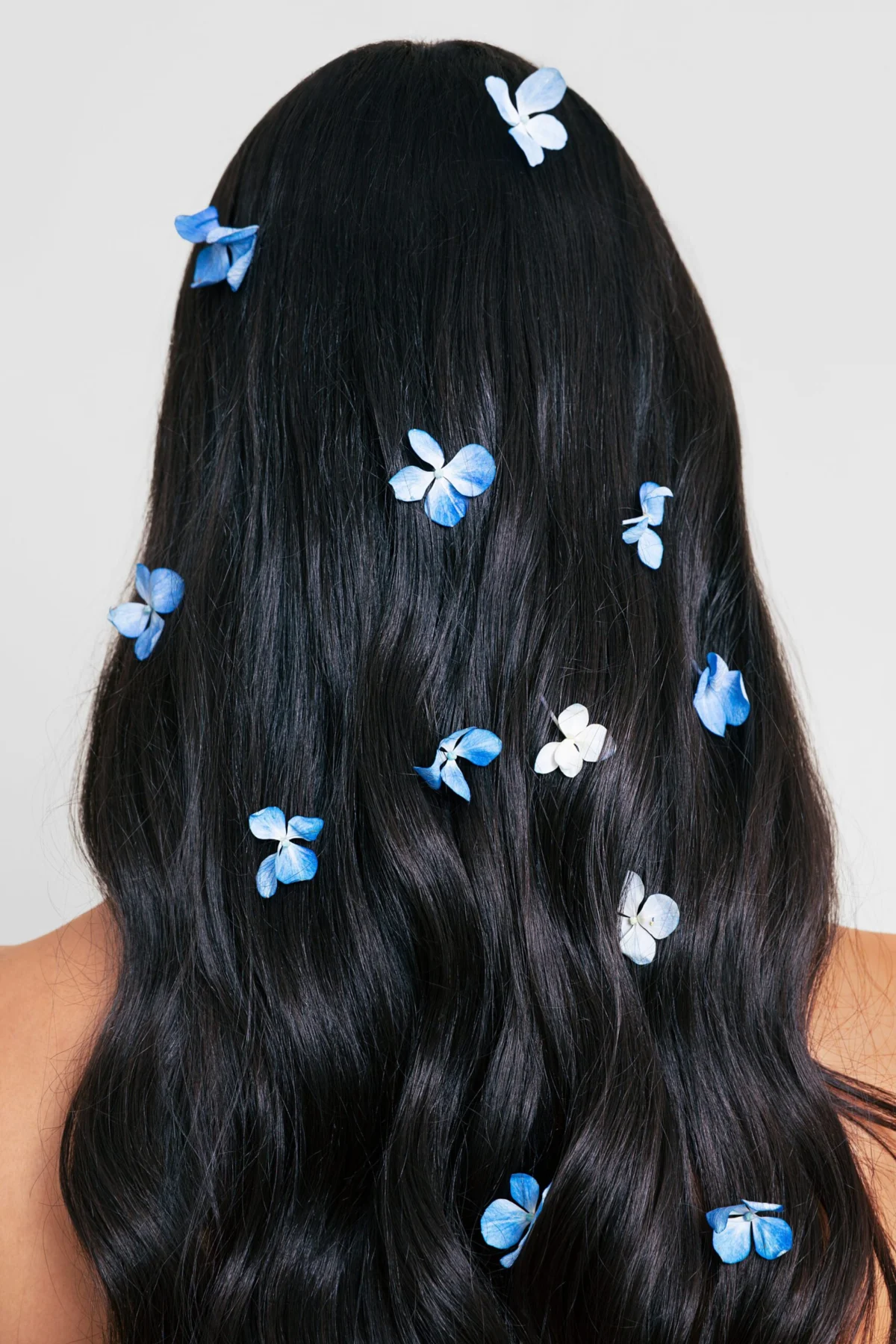
The enduring power of fragrance has always been rooted in its ability to communicate identity. Whether one gravitates towards the enigmatic allure of woody notes, the refreshing simplicity of citrus, or the comforting embrace of florals, a signature scent acts as a personal brand, a subtle yet potent declaration of self. In today’s consumer landscape, this desire to imbue one’s identity with scent has expanded far beyond traditional perfume applications. Consumers are seeking ways to integrate their preferred aromas into every facet of their lives, from the ambient scent of their homes with candles and air fresheners to the very fabric of their clothing through fragranced detergents. Now, this olfactory extension is making a significant impact in the realm of hair care.
While the concept of pleasantly scented shampoos is not novel—recalling the iconic, fragrant lather of 1990s Herbal Essences—the contemporary consumer is demanding a far more sophisticated and multi-sensory experience from their haircare routines. As economic uncertainties persist, the demand for products that deliver enhanced value and a premium sensory journey is escalating. It is no longer sufficient for high-end hair products to merely improve the look and feel of hair; they must also offer an exceptional olfactory dimension, effectively becoming an integral part of a personal scent strategy.
The burgeoning trend of hair scenting is being significantly amplified by social media platforms, particularly TikTok. Amy Rueckl, marketing director of fine fragrance at International Flavors and Fragrances (IFF), a global leader in scent and flavor creation, observes, "PerfumeTok is normalizing scent rituals like layering perfumes, mists, oils, and hair scents as tools for identity and self-expression." This digital cultural shift underscores a growing consumer desire to project specific personas through scent – whether it’s the "cool and beachy" vibe, the "rich and unbothered" aura, or the "earthy and bohemian" aesthetic. Rueckl notes a remarkable double-digit market growth in hair and body mists observed in early 2025, a clear indicator of the consumer appetite for lighter, re-applicable scent formats that function as daily, portable accessories.
Hair care represents a natural and logical progression for the fragrance industry. For individuals looking to cultivate a comprehensive scent wardrobe that extends beyond the conventional application on pulse points, hair offers an accessible and familiar entry point. The very act of styling and caring for one’s hair provides a natural canvas for scent. The market is witnessing a surge of innovation as both established fragrance houses and haircare brands alike seek to capitalize on this expanding territory.
Leading fragrance brands, such as Fulton & Roark and Byredo, are strategically releasing their own hair care lines, embedding their signature olfactory profiles into shampoos, conditioners, and styling products. Concurrently, many successful haircare brands, including Ceremonia, Ouai, and Kerastase, are leveraging their beloved eau de parfums and transforming them into all-over hair and body mists, allowing consumers to fully immerse themselves in their established scent identities. Further collaborations are emerging, exemplified by the partnership between K18 and Future Society for a molecular repair hair mask, and the highly anticipated limited-edition Ellis Brooklyn and Amika Miami Nectar Dry Shampoo bundle from the previous year. These strategic alliances highlight the industry’s recognition of the synergistic potential between haircare efficacy and desirable fragrance.
The Science Behind Scented Hair: Why Hair is the Perfect Diffuser
The increasing popularity of hair fragrances is not merely a fleeting trend; it is underpinned by compelling scientific principles that make hair an exceptionally effective medium for scent diffusion. Kevin Keller, cofounder of Fulton & Roark, explains, "Hair is a fantastic [fragrance] diffuser. It tends to project more dynamically than on skin because of the relative movement." This inherent characteristic of hair, combined with its structural composition, allows fragrances to linger and emanate more powerfully.
Beyond its dynamic projection, hair possesses a remarkable capacity to retain scent over extended periods. Dr. Hallie McDonald, a board-certified dermatologist based in Austin, Texas, elaborates on this phenomenon: "Hair is composed primarily of keratin, a fibrous protein with a complex structure that can bind and trap fragrance molecules. The cuticle, which is the outermost layer of the hair shaft, has overlapping scales that create small spaces where compounds can settle." This porous, protein-rich structure acts like a natural reservoir for fragrance molecules.
In contrast, skin, while also interacting with fragrance, is a more dynamic and metabolically active surface. "Skin produces sweat and sebum and is constantly shedding cells. That contributes to more rapid fragrance evaporation and breakdown," Dr. McDonald notes. Furthermore, the warmer surface temperature of the skin accelerates the evaporation process of fragrance components, leading to a shorter scent longevity compared to hair. The implication for consumers is clear: for a truly lasting olfactory impression, hair serves as an optimal vehicle.
The Pitfalls of Using Perfume in Hair: Understanding Alcohol Content
A common question arises: can one simply spray their eau de parfum or eau de toilette directly onto their hair? While technically feasible, this practice is generally not recommended and can potentially lead to adverse effects. Dr. McDonald cautions against this, drawing an analogy to using an air freshener as a personal fragrance. The primary concern lies in the high alcohol content prevalent in traditional perfumes.
"Fragrance itself does not inherently hurt the cuticle, but the combination of high alcohol content and repeated exposure can exacerbate dryness and brittleness," Dr. McDonald states. Alcohol, while crucial for scent dispersal in traditional perfumes due to its rapid evaporation, can also strip the hair of its natural lipids and moisture. This can compromise the hair’s integrity, leading to increased fragility and a dull appearance over time. Moreover, spraying alcohol-based fragrances onto the scalp can be particularly problematic for individuals with sensitive scalps or pre-existing conditions such as eczema, psoriasis, or seborrheic dermatitis. Certain ingredients, like cold-pressed citrus oils, can also pose a risk of photosensitivity in high concentrations, although this is considered uncommon.
Patty Hidalgo, vice president perfumer for IFF, highlights the fundamental difference: "The fundamental difference comes down to alcohol content. Hair mists and hair perfumes are formulated with low to no alcohol to avoid drying out or damaging the hair." This formulation difference is critical. Beyond alcohol content, the complex chemical environments of haircare products differ significantly from those of fine fragrances. Darryl Do, a New York-based perfumer, explains that formulas stable in alcohol may not be compatible with oil or cream bases commonly found in haircare. Furthermore, regulatory considerations and ingredient exposure limits differ across product categories, making direct substitution impractical and potentially harmful.
Emma, a fragrance influencer and perfumer student behind the social media account @perfumerism, emphasizes the distinct challenges: "Making a perfume smell good in alcohol is completely different from making a shampoo smell good. The chemical environments are completely different." This highlights the specialized expertise required to formulate effective and pleasant-smelling hair fragrances.

In addition to the scent itself, modern consumers expect hair care products to offer tangible benefits. Dr. McDonald recommends seeking out hair fragrances formulated with nourishing ingredients. Humectants like glycerin and panthenol are valuable for moisture retention, while conditioning silicones such as dimethicone can smooth the hair cuticle. Lightweight oils, like the argan oil found in Gisou’s hair perfume, contribute to softness and manageability.
The Art of Translation: Reimagining Fragrances for Hair
The successful transition of a signature scent from an eau de parfum (EDP) or eau de toilette (EDT) to a hair fragrance requires considerable expertise and a deep understanding of fragrance chemistry and consumer perception. Kevin Keller articulates the core challenge: "Every fragrance is unique and has its own opportunities for ancillary development. When translating a fragrance that is a signature EDT or EDP, we might soften the top notes or rebalance the heavier base notes, for example, but perfumers approach each fragrance individually as a work of art and science to make sure that the result is as close as possible to the original."
This process is not simply a matter of dilution or replication; it involves a nuanced reinterpretation to ensure the scent performs optimally within the unique matrix of a hair product. Certain fragrance notes are inherently better suited to the hair medium. "Musks cling to the hair, and woods and ambers can maintain a presence without alcohol lift," notes Darryl Do. He also points out that synthetic florals often possess greater stability and resilience to heat and styling processes compared to delicate natural materials.
Conversely, volatile notes such as citrus or certain natural absolutes can be challenging. They may be prone to discoloration of the product base or may not be economically viable for inclusion in haircare formulations. Emma provides a specific example: "Vanilla is an example of something that performs well in fine fragrance, but struggles in hair care. Vanillin is a long-lasting base note in the perfume world, but since it has a low LogP (the measure of the ability of a chemical compound to dissolve in fats and oils) of 1, it is one of the least long-lasting in a hair product." This illustrates the intricate balance perfumers must strike to maintain the "fragrance DNA" while adapting it for a different application.
The objective is not necessarily to achieve an identical scent profile but to capture the essence, character, and emotional resonance of the original. This requires significant creative and technical skill. Diptyque’s Orphéon Hair Mist, for instance, may present a slightly different olfactory experience compared to its EDT or EDP versions, but all evoke the same vintage ambiance. Similarly, Byredo’s Bal D’Afrique Hair Perfume offers a lighter, more ethereal rendition of its EDP counterpart, yet both retain the signature creamy, floral character. Patty Hidalgo emphasizes that the goal is to translate the "feeling and character of the original—the emotional impression."
Building Your Olfactory Identity: Strategies for a Hair Fragrance Wardrobe
For consumers, integrating hair fragrances into their routines offers a powerful avenue to deepen their personal scent expression. It is not typically intended to entirely replace their daily application of fine fragrance, but rather to serve as an extension and enhancement of their existing scent wardrobe. This approach allows for a more immersive and personalized olfactory experience, creating a unique "fragrance bubble."
"Each product adds a different layer," explains Darryl Do. "You are building your own fragrance bubble at that point, individualizing it more and more." For those new to the world of fragrance, hair perfumes can serve as an accessible and gentle introduction to scent exploration.
For those seeking to layer scents intentionally, strategic choices are paramount. Rachael Larsen, associate fragrance development manager at DSM-Firmenich, advises, "To avoid overwhelming the senses, it’s best to apply hair perfume lightly, focusing on mid-lengths to ends, and to select scents from complementary fragrance families so they harmonize rather than compete." She also recommends combing the product through the hair to ensure even distribution, fostering a cohesive and multidimensional scent experience.
For individuals who prefer a more straightforward approach, adhering to a single signature scent across multiple product formats offers a reliable way to avoid olfactory clashes. Kevin Keller explains, "The most reliable way to avoid clashing entirely is to layer with the same scent across product formats. That’s a core reason why we offer our fragrances across multiple formats—solid cologne, oil, bar soap, deodorant. You’re not just adding fragrance, you’re building depth because each format releases scent differently and at different rates, so the cumulative effect is richer and longer-lasting than any single product could achieve alone. And because everything is working from the same olfactory blueprint, nothing competes."
Brands like Athena Club facilitate this complete immersion by offering hair and body mists designed for dual application, alongside matching lotions and deodorants, often sold in trios. This allows consumers to fully embrace a specific fragrance line. Similarly, consumers who adore the signature scent of Moroccanoil hair products can extend this experience by following their shampoo and conditioner with the brand’s Eau de Parfum on their wrists.
The art of layering can also involve complementary fragrance families. Hidalgo suggests pairing a "clean musk" with other notes. While "clean" evokes freshness and brightness, musk provides a warmer, earthier undertone. When combined thoughtfully, these notes can build upon each other, with a heavier musk forming a foundational layer. For those unfamiliar with fragrance terminology, examining the notes of beloved perfumes can provide valuable insights into successful pairings.
Ultimately, the creation of a personal hair fragrance wardrobe is an exploration of individual preferences. As Emma aptly states, "There are no firm rules." The journey of scent discovery is deeply personal, allowing each individual to curate an olfactory identity that resonates with their unique style and essence.