
The glittering expanse of the Met Gala carpet, a stage where haute couture meets celebrity, traditionally answers the question, "Who are you wearing?" with a roll call of prestigious fashion houses like Yves Saint Laurent, Chanel, and Prada. However, in a striking evolution of red carpet sponsorship, the answer this year also included the unexpected mention of OxiClean, the household brand famed for its ubiquitous Y2K infomercials. This shift signals a significant recalibration of how celebrities, their glam squads, and brands are navigating the increasingly complex economic landscape of high-profile events.
According to a press release issued by OxiClean, makeup artist Jen Tioseco, responsible for actor Camila Mendes’s red carpet look, reportedly kept the brand’s $6 stain pen on hand. The rationale, as communicated by the company, was to be prepared to "work instantly to remove a tough stain" should any mascara or blush mar Mendes’s Manish Malhotra couture gown. While this particular instance might seem like an outlier, it represents a broader trend that has been subtly, and now overtly, infiltrating the exclusive world of celebrity styling.
The Rise of the "Huh?" Brand on the Red Carpet
The Met Gala isn’t the first occasion where unexpected, everyday items have been conspicuously integrated into celebrity press narratives surrounding major events. Previously, a post-Golden Globes press release highlighted Jeannie Mai "sipping ARMRA Colostrum while getting glam." Yet, the 2026 Met Gala appears to have marked a peak in this phenomenon, with a cascade of brands, far removed from traditional fashion and beauty, seeking a moment in the spotlight.
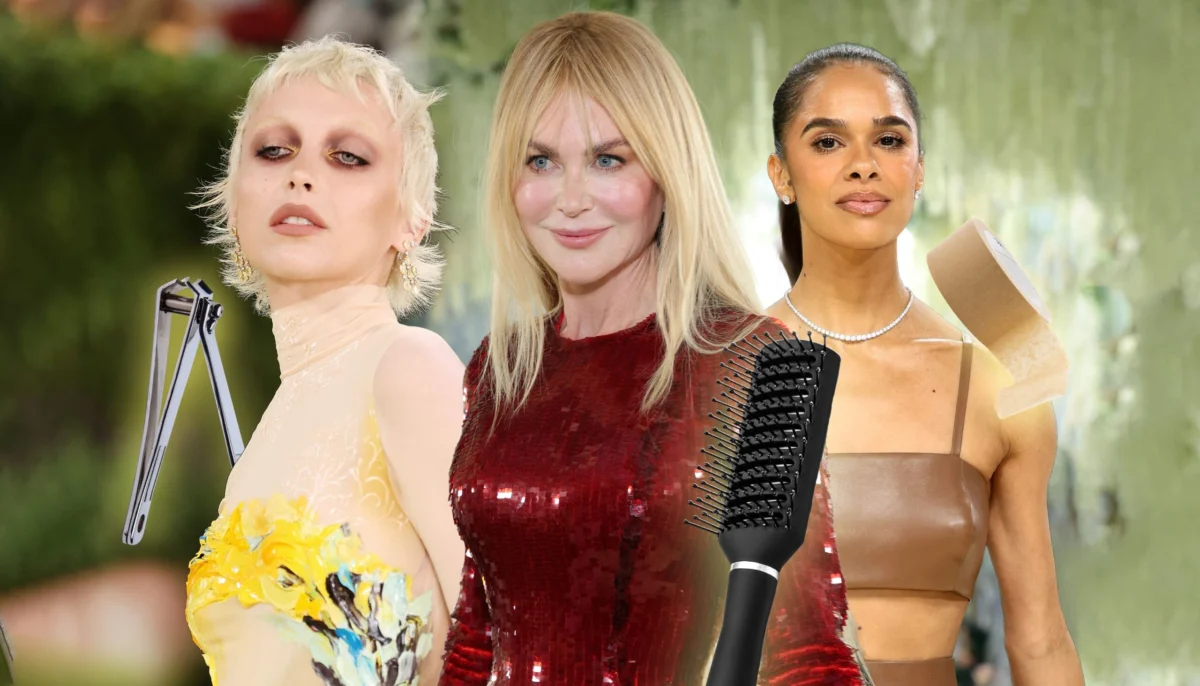
Designer Alexander Wang, for instance, launched his new energy drink, Real:ly, while standing on the carpet alongside his date, Irina Shayk. While the brand’s tagline might have been a missed opportunity for a witty pun, the act itself underscored the evolving nature of celebrity endorsements. Simultaneously, Tweezerman issued a press release detailing how Emma Chamberlain’s nail artist, Tom Bachik, utilized its $8 nail clippers during her pre-Met manicure. Complementing Chamberlain’s look, her hair was styled with a $200 La Bonne Brosse hairbrush.
The proliferation of such endorsements extended across various categories. Nicole Kidman’s voluminous, butt-length extensions required the use of two separate Denman brushes. Misty Copeland was reported to be wearing Cakes boob tape, while Tate McRae prepared her hands with $7 "collagen gloves" from Voesh Pro, described as akin to fingerless foil mittens. Hair fragrance also became a point of brand integration, with Gabrielle Union and Eileen Gu’s hair being scented by Parfums de Marly, and Tyla’s by Initio Parfums Privé. Adding another layer, Union and her husband reportedly "opted to sip on a THC-infused beverage" from Cann while preparing for the event. Paige Bueckers’s blonde hair was attributed to Madison Reed’s demi-permanent dye in UConnic Blonde. Even subtle facial contouring was linked to an LED gua sha from ORA Method, used by Sarah Pidgeon, Ayo Edebiri, and Daisy Edgar-Jones, suggesting a move towards promoting wellness and beauty tools that promise a "lymphatically drained" appearance. This comprehensive integration of diverse products and services has indeed propelled the red carpet economy into what can be described as its "final-boss level," where every observable element holds the potential for monetization.
A Shift in the Economic Landscape for Glam Squads
The increasing prevalence of these unexpected brand integrations is intrinsically linked to a significant economic pressure point for the professionals who craft the red carpet looks: the glam squad. An A-list makeup artist, who requested anonymity to avoid jeopardizing client relationships, explained the financial stakes. "After the Oscars and the Golden Globes, the Met Gala has the most potential to lock down a five-figure night for us," they stated via text, candidly adding, "I don’t want to be dumped by my clients and broke." This sentiment highlights the precarious nature of their income, where securing substantial earnings for these high-profile events is paramount.
Historically, a single makeup sponsorship for a gala and its associated after-parties could yield between $5,000 and $20,000. This figure varied based on the extent of social media promotion required and the celebrity’s star power, with major figures like Zendaya commanding higher fees than emerging talents such as Rachel Sennott. However, the economic climate has shifted dramatically. The dominance of platforms like TikTok Shop as a primary sales channel has diminished the exclusive impact of celebrity endorsements. Consequently, "those contracts might not be as lucrative" as they were in the pre-COVID era, according to the anonymous glam squad member.
Compounding this challenge, major film studios have significantly restructured their promotional budgets. Except for tentpole releases—blockbusters akin to a hypothetical "The Devil Wears Prada 2," "Wicked," or "Barbie"—investment in traditional red carpet star promotion has waned. The pervasive influence of social media has also placed new demands on even the most established stars and their teams. Studios now require a constant stream of fresh content and "spontaneous" moments across numerous platforms, effectively asking for more work from beauty artisans and fashion stylists without a commensurate increase in compensation. This situation underscores a growing disparity where skilled professionals are being "paid less to do more work," a trend that necessitates new avenues for financial support to match their talent and dedication.
The Strategic Pivot: From High Fashion to Household Names
Enter the stain pens, nail clippers, nutritional supplements, and LED gua shas. These items, seemingly disparate, serve a crucial economic function: bolstering the bottom lines of artists, their agents, and often, the talent themselves. The arrangement, as confirmed by an anonymous beauty publicist, typically flows through the glam teams, but frequently includes talent compensation for cross-promotion. "There’s also a scenario where talent teams will ask the brand to pay for the beauty services in exchange for the access [to their celebrity client]," the publicist revealed.
In certain instances, such as Paige Bueckers’s hair dye or Alexander Wang’s energy drink, the connection is more direct. Bueckers maintains a standing contract with Madison Reed, while Wang is the founder of Real:ly, a beverage brand that, despite initial skepticism, appears to be a genuine venture. These cases represent a distinct facet of this phenomenon, where personal brands and entrepreneurial ventures intersect with red carpet appearances.
Analysis: The Evolving Definition of Red Carpet Value
While the economic realities driving these partnerships are understandable, the integration of such varied brands undeniably alters the perception of the red carpet. The "getting-ready ritual" can appear, at best, quirky and, at worst, somewhat desperate. Consumers, particularly those who follow beauty trends closely, are not oblivious to the dual motivations behind product mentions. They understand that when a celebrity like Hailey Bieber promotes Rhode blush, it’s not solely due to its efficacy (though its quality is often acknowledged); it’s also because she owns the company. Similarly, an energy drink mention on the red carpet is unlikely to stem solely from genuine enthusiasm for its flavor.
The proliferation of hair fragrances, for example, presents a particular challenge. Without the ability to physically experience the scents, the claims made in press releases often lack tangible proof for the audience. This raises questions about the authenticity of endorsements when the product’s primary benefit is intangible and unprovable through media consumption. The "emperor has no scented ponytail" accurately captures this disconnect between advertised benefit and verifiable impact.
The Enduring Trend: Personal Brands and Extended Aura
Despite these critiques, the current wave of red carpet product integrations appears to be a sustained trend, driven by the inherent promotional value of these high-visibility events. Personal care brands, in particular, are adept at leveraging such opportunities for strategic stunts. Red carpets, in essence, have become analogous to the scene in "Finding Nemo" where smaller fish hitch a ride on larger sea creatures. Every brand seeks to attach itself to the extended aura of a celebrity, an aura that now encompasses their highly visible glam squads, who themselves are increasingly becoming recognizable figures. This phenomenon is exemplified by the trajectory of makeup artist Charlotte Tilbury, who transitioned from being known as "Kate Moss’s makeup artist" to commanding a social media following significantly larger than the supermodel’s.
As events like the Tony Awards approach, it is a reasonable prediction that similar brand integrations will continue. The prospect of a celebrity carrying a Judith Leiber clutch shaped like a thermos, sponsored by a throat-soothing tea, is a plausible, albeit whimsical, extrapolation of this trend.
Conclusion: A Pragmatic Approach to a Changing Industry
Ultimately, while the overt commercialization of the red carpet can feel jarring, it’s difficult to condemn. The reality is that the beauty and fashion industries, particularly the freelance and service-based sectors, operate under significant economic pressures. The ability of behind-the-scenes professionals to find innovative ways to remain solvent in an uncertain economic climate is commendable. In a world where unexpected spills are a constant threat to a designer gown, the presence of a readily available stain pen, provided by a brand that now has a vested interest in the event’s success, offers a practical, albeit unconventional, form of preparedness. This evolving landscape reflects a pragmatic adaptation to the economic realities of the modern entertainment and media industries.