

Carlijn Jacobs’ ‘Making Faces’ Photo Book Explores the Transformative Power of Face Paint, Recalling Childhood Innocence
The renowned Dutch photographer Carlijn Jacobs is set to unveil her latest artistic endeavor, "Making Faces," a limited-edition photo book that delves into the profound and often overlooked transformative power of face paint, drawing direct inspiration from her own cherished childhood memories. Scheduled for an exclusive launch at Nuovo, Paris, on May 7, 2026, from 7 pm to 10 pm, the publication promises a unique exploration of identity, imagination, and the liberating experience of temporary metamorphosis. Far from a mere aesthetic exercise, Jacobs’ work in "Making Faces" transcends conventional notions of beauty, instead championing the unadulterated freedom and creativity inherent in adopting a new, painted persona. This project represents a poignant return to the elemental joy of play, reminding both children and adults of the profound innocence found in becoming "something else, even if only for a moment."
The Genesis of an Artistic Vision: A Childhood Revelation
At the core of "Making Faces" lies a deeply personal recollection from Carlijn Jacobs’ upbringing in the Netherlands. She recounts frequent visits to a local pancake house, a quintessential Dutch experience, where children were offered the whimsical opportunity to have their faces painted. This seemingly simple childhood activity left an indelible mark on Jacobs, sparking a lifelong fascination with the concepts of transformation and disguise. "It began with a childhood memory," Jacobs reflects, articulating the profound impact of those early experiences. "Growing up in the Netherlands, I often went to a pancake house where children could have their faces painted. I was fascinated by it; I could be someone else, a transformation, I felt beautiful and free." This sentiment of feeling "beautiful and free" through an altered appearance is a potent force, one that Jacobs has meticulously explored throughout her distinguished career, yet never before with such direct and nostalgic clarity.
This early exposure to the magic of face paint directly informed her developing artistic sensibility. Jacobs’ professional oeuvre is widely recognized for its surrealist bent, its intricate dance with artifice, and its sophisticated interrogation of beauty and identity. From her compelling fashion editorials to her celebrated art photography, a consistent thread has been her ability to construct elaborate visual narratives that blur the lines between reality and illusion. Projects like her "Sleeping Beauty" exhibition at Foam Amsterdam, which explored themes of dormancy, awakening, and constructed realities, hinted at this fascination with altered states and hidden identities. "Making Faces," however, explicitly draws the connection between her mature artistic concerns and the primal, uninhibited joy of childhood play, offering viewers a foundational insight into the origins of her unique photographic perspective.
Carlijn Jacobs: A Luminary in Contemporary Photography
Carlijn Jacobs has cemented her reputation as one of the most compelling and innovative photographers working today. Her distinctive style, characterized by its sharp, often surreal aesthetic and a meticulous approach to composition and lighting, has garnered her commissions from leading international fashion houses, prominent art institutions, and high-profile publications. Known for her ability to create images that are at once provocative and exquisitely beautiful, Jacobs often employs elements of disguise, theatricality, and a heightened sense of reality to challenge conventional perceptions of beauty and femininity. Her work frequently features stylized portraiture, elaborate sets, and a bold use of color and texture, creating dreamlike narratives that captivate and disorient.
Her portfolio extends across high fashion editorials for influential magazines such as Vogue, Dazed, and AnOther Magazine, as well as campaigns for luxury brands. Through these platforms, Jacobs has consistently pushed the boundaries of traditional fashion photography, infusing her commercial work with an artistic depth and conceptual rigor usually reserved for gallery spaces. This cross-pollination between the commercial and fine art worlds is a hallmark of her career, positioning her as a thought leader in visual culture. "Making Faces" is a natural progression for an artist so deeply invested in the layers of self and presentation. It serves as both a retrospective nod to her formative influences and a fresh articulation of her ongoing dialogue with themes of transformation and the authentic self, albeit through the lens of childlike wonder.
The Art of Collaboration: Weaving Identities
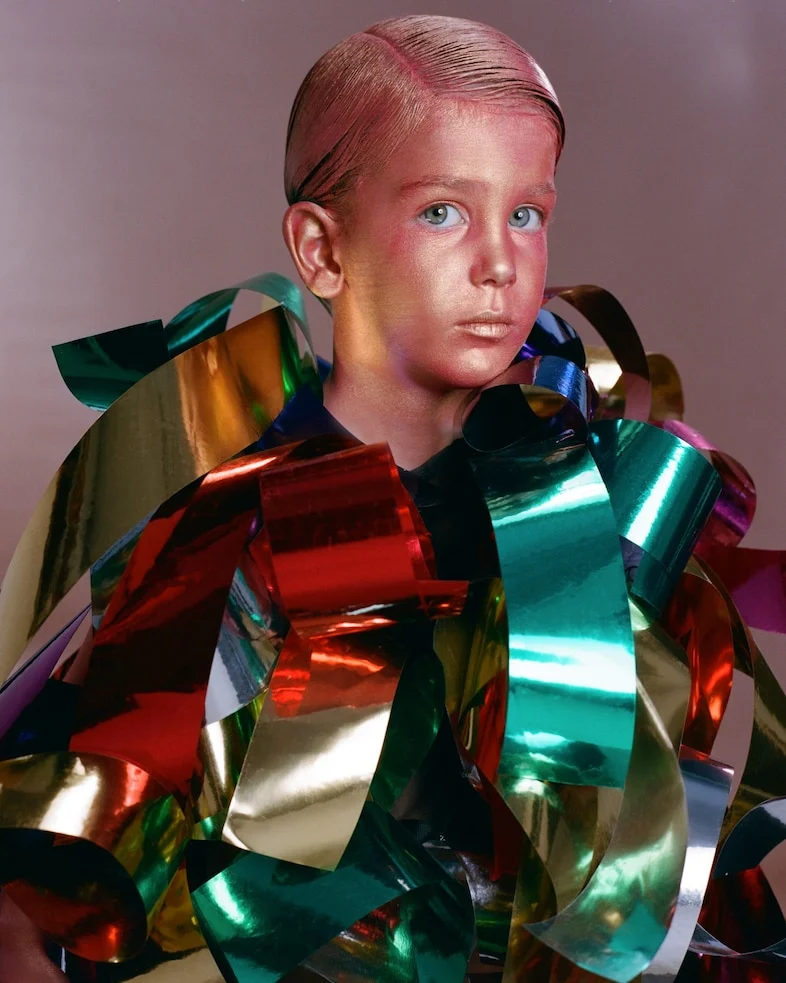
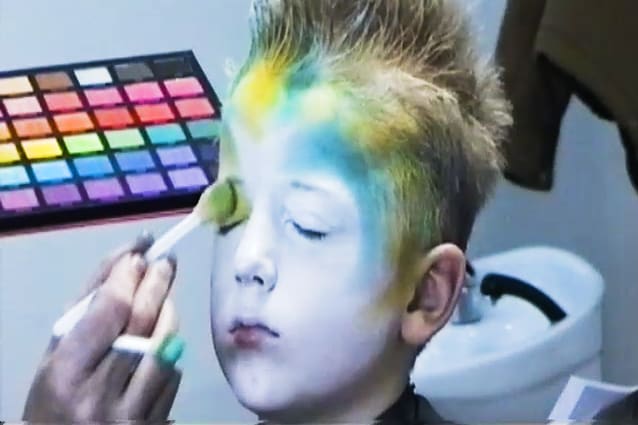
The creation of "Making Faces" is a testament to the power of artistic collaboration, bringing together a formidable team to realize Jacobs’ vision. Central to the book’s aesthetic is the exquisite face painting artistry of Yvonne Zonneberg. Zonneberg’s skill transforms the children’s faces into fantastical characters – from fierce lions and enigmatic witches to vibrant tropical sunsets – with a level of detail and imaginative flair that elevates the temporary art form to a sculptural quality. Her work is not merely decorative; it is foundational to the identity each child temporarily inhabits, acting as the primary catalyst for their transformation.
Complementing Zonneberg’s intricate paintwork are the costumes, masterfully styled by the acclaimed Robbie Spencer. Spencer, renowned for his innovative and often avant-garde approach to fashion styling, meticulously curates ensembles that extend the ephemeral face paint into fully realized, three-dimensional characters. His contribution ensures that each child’s disguise is holistic, building out their temporary painted faces into "full-blown identities." Spencer’s expertise in narrative styling adds layers of storytelling to each image, transforming a simple portrait into a window into a child’s imagined world. The synergy between Zonneberg’s detailed face art and Spencer’s imaginative styling creates a rich tapestry of visual storytelling, where every element contributes to the narrative of transformation.
Further enhancing the book’s overall impact is the meticulous design and editing by Christopher Simmonds Ltd. Their role is crucial in shaping the visual flow and narrative coherence of the publication, ensuring that each photograph is presented within a context that maximizes its artistic and conceptual resonance. The selection and sequencing of images, combined with thoughtful typographic choices, craft an immersive experience for the reader. Olivier Schawalder’s hair styling and Julia Lange’s casting also play vital roles, ensuring that every detail, from the texture of a child’s hair to the expressive quality of their gaze, contributes to the overarching artistic vision. This collective effort underscores the comprehensive nature of the project, where every collaborator is essential in translating Jacobs’ deeply personal inspiration into a universally resonant artistic statement.
Beyond Conventional Beauty: A Philosophical Undercurrent
"Making Faces" is more than a collection of striking photographs; it is a profound philosophical statement on the nature of identity and the pursuit of freedom. Jacobs explicitly states, "The makeup in this book is not about beauty. It is about imagination, experimentation and the innocence of becoming something else, even if only for a moment." This declaration challenges the prevailing paradigm within the fashion and beauty industries, which frequently prioritize perfection, aspirational ideals, and often, an unattainable standard of aesthetic flawlessness. In a world saturated with filters, digital enhancements, and an incessant pressure to conform to specific beauty norms, Jacobs offers a refreshing counter-narrative.
The book reclaims makeup from its often-adult-centric, commercialized context and re-situates it within the realm of pure play and creative expression. For children, face paint is not about concealment or enhancement in the adult sense; it is about embodying a fantasy, exploring different facets of self, and engaging in imaginative role-playing. This act of "becoming something else" provides a temporary escape from the mundane, a liberation from everyday constraints, and an opportunity for uninhibited self-expression. The images in "Making Faces" capture the unfiltered joy, curiosity, and sometimes even solemnity that accompanies these transformations, reflecting a deep emotional landscape within each child.
This exploration has significant implications for adults as well. In an increasingly complex and demanding world, the book serves as a potent reminder of the value of embracing imagination, experimentation, and the sheer joy of temporary escape. It encourages viewers to reflect on their own relationship with identity and presentation, and perhaps, to reconnect with the playful, unburdened spirit of their own childhoods. It subtly critiques the rigidities of adult self-perception, advocating for a fluidity and openness to transformation that can foster mental and emotional well-being.
The Enduring Cultural Significance of Face Painting
To fully appreciate the depth of "Making Faces," it is important to consider the rich and multifaceted cultural history of face painting. Far from being a mere modern pastime for children, face painting has ancient roots, serving diverse functions across civilizations and epochs. In indigenous cultures worldwide, face and body painting were, and in many cases still are, integral to rituals, ceremonies, and expressions of tribal identity. These practices often carry deep spiritual significance, marking rites of passage, signifying status, or invoking protective spirits. The colors and patterns used are typically imbued with symbolic meanings, communicating complex narratives and social hierarchies.
In theatrical traditions, face paint evolved into stage makeup, allowing performers to embody characters, exaggerate emotions, and be visible to large audiences. From ancient Greek theatre to Japanese Kabuki and Noh, makeup has been a crucial tool for transformation, enabling actors to transcend their individual selves and inhabit mythical or archetypal roles. This tradition underscores the power of facial alteration to communicate meaning and facilitate storytelling.
Even in contemporary subcultures, face paint continues to thrive as a powerful tool for identity expression. Goths, punks, and participants in cosplay communities often use elaborate makeup to signify allegiance, express individuality, or embody beloved characters. This demonstrates a continuous human impulse to use the face as a canvas for self-definition and external communication. By tapping into this universal human impulse, Jacobs’ book transcends the specific context of childhood birthday parties, connecting it to a much broader narrative of human expression, ritual, and the quest for identity through visual means. It underscores how face painting, in all its forms, provides a temporary yet powerful vehicle for psychological and social transformation.
The Photo Book as a Curated Experience
The decision to present "Making Faces" as a limited-edition photo book is a deliberate artistic choice that enhances its impact. In an era dominated by fleeting digital images, a physical photo book offers a tangible, immersive, and intimate experience. The curated sequence of images, the tactile quality of the paper, and the absence of digital distractions allow readers to engage with Jacobs’ work on a deeper, more reflective level. The format itself becomes part of the artistic statement, emphasizing the value of considered contemplation over instantaneous consumption.
Limited-edition photo books often become collector’s items, appreciated for their artistic merit, production quality, and scarcity. This positions "Making Faces" not just as a visual narrative but as an artifact, a piece of art in its own right. It encourages a slower, more deliberate viewing process, inviting readers to linger over each image, absorbing the intricate details of the face paint, the expressions of the children, and the carefully constructed worlds they inhabit. This physical manifestation ensures that the message of imagination, experimentation, and freedom is communicated with an enduring presence, making a lasting impression that transcends the fleeting nature of digital content.
Launch and Anticipated Impact
The launch of "Making Faces" at Nuovo, Paris, is poised to be a significant event in the art and fashion photography calendar. Nuovo, known for its discerning curation of contemporary art and culture, provides an ideal backdrop for a book that challenges conventional artistic boundaries. The event offers an opportunity for art enthusiasts, critics, and industry professionals to engage directly with Jacobs’ latest work and the collaborators who brought it to life.
The book is expected to resonate widely, prompting discussions about the role of play in art, the evolving definitions of beauty, and the psychological impact of disguise. Critics are likely to praise Jacobs’ unique ability to blend personal narrative with broader cultural commentary, solidifying her position as an artist who consistently innovates and provokes thought. "Making Faces" has the potential to influence future photographic projects, inspiring artists to look inward for creative impetus and to challenge the commercial pressures that often dictate artistic output. By celebrating the unadulterated joy of transformation and the liberating power of imagination, Jacobs offers a timely and poignant reminder of the enduring human need for creative expression and temporary escape. Her latest work is not just a photo book; it is an invitation to rediscover the innocent wonder of becoming something new, even if only for a moment.