










Apple has officially expanded its portfolio of high-end accessories with the introduction of the iPhone Pocket, a minimalist textile sling designed in collaboration with the renowned Japanese fashion house Issey Miyake. The product, which debuted on the Apple Store in late 2025, represents a significant intersection of functional technology and "haute couture" sensibilities. Retailing at $149.95 for the short "handheld" version and $229.95 for the long crossbody iteration, the iPhone Pocket is positioned as a luxury lifestyle product rather than a standard protective case. The release follows Apple’s established pattern of offering premium, high-margin textile products, such as the $19 polishing cloth released in 2021 and the various Hermès Apple Watch bands that have become staples of the company’s wearable line.
Design Philosophy and the APOC Concept
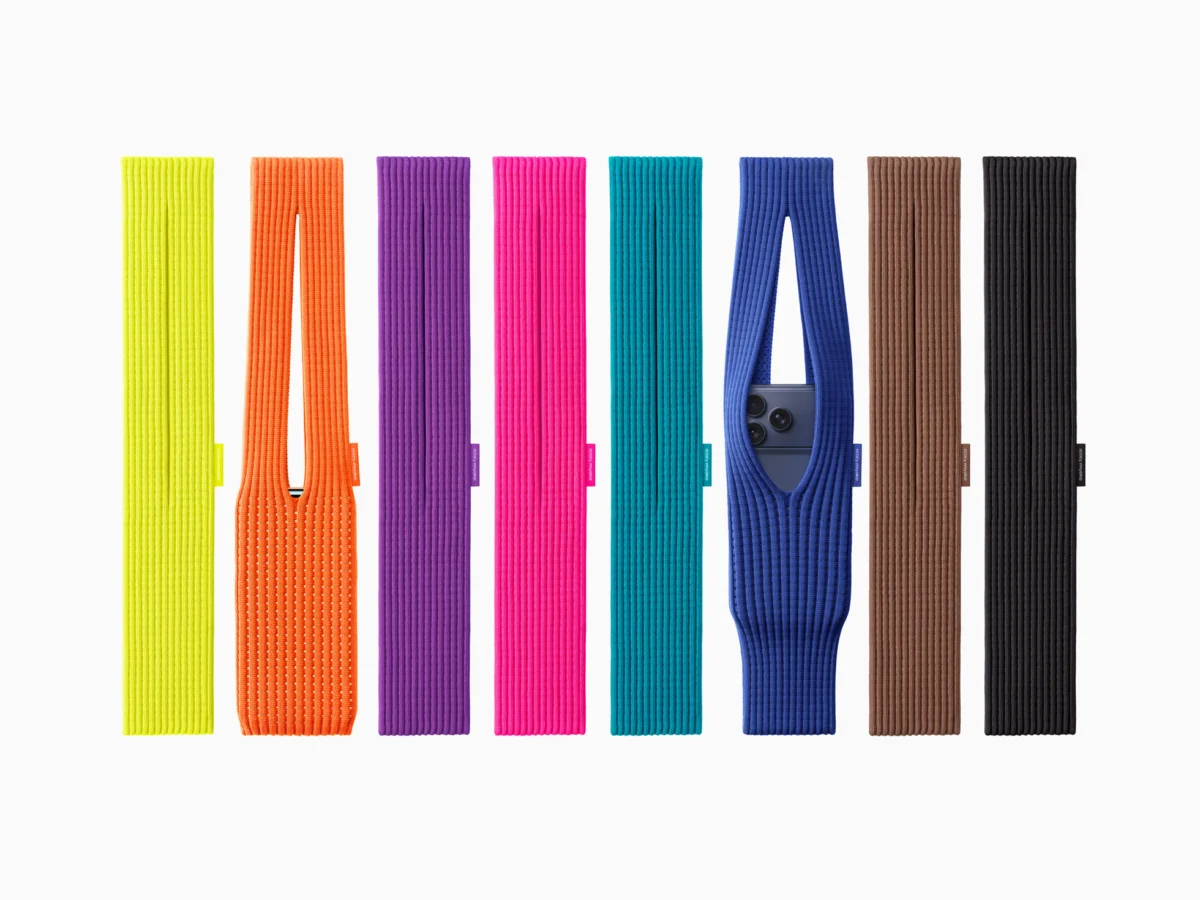
The iPhone Pocket is rooted in a specific design philosophy pioneered by the late Issey Miyake known as APOC, or "A Piece of Cloth." This concept, first introduced in 1997, revolutionized garment manufacturing by using a single thread to create a whole piece of fabric in a continuous process. According to Apple’s product description, the iPhone Pocket utilizes a ribbed mesh structure that echoes the signature pleats for which the Miyake brand is globally recognized.
The technical execution of the fabric allows for a unique user experience. The textile is engineered to be highly elastic; when the phone is inserted, the weave stretches, subtly revealing the device’s display and the Apple logo through the open mesh. This "peek-a-boo" effect is intended to allow users to check notifications or the time without removing the device from the pocket. The design also emphasizes sustainability, as the single-piece construction significantly reduces fabric waste during the manufacturing process, aligning with Apple’s stated goal of achieving carbon neutrality across its entire product life cycle by 2030.
A Historical Synergy: The Jobs and Miyake Legacy
While the iPhone Pocket marks a formal product collaboration between Apple and the Issey Miyake label, the relationship between the two entities dates back decades. In the early 1980s, Apple co-founder Steve Jobs visited Sony’s factories in Japan and was impressed by the uniforms designed by Issey Miyake. Jobs initially attempted to implement a similar uniform policy at Apple, though the idea was met with resistance from employees.
Despite the setback, Jobs and Miyake developed a close personal friendship and professional rapport. This bond led to the creation of Jobs’ iconic personal uniform: the black mockneck sweater. Miyake reportedly provided Jobs with hundreds of these sweaters, which became a permanent fixture of the tech mogul’s public identity and a symbol of Apple’s minimalist aesthetic. Although Issey Miyake passed away in 2022, the current design team at the Miyake label has continued to uphold the founder’s tech-forward approach to fashion, making this collaboration a natural, if delayed, evolution of a historical partnership.

Product Specifications and Market Positioning
The iPhone Pocket is available in two distinct configurations, catering to different modes of utility and fashion:
- The Short Pocket ($149.95): Designed with a shorter loop, this version is intended to be attached to larger handbags, backpacks, or belt loops. It is available in a wide array of vibrant colors, including "Lemon," "Azalea," and "Electric Blue," targeting consumers who view their technology as a modular component of their outfit.
- The Crossbody Pocket ($229.95): This version features a longer, integrated strap designed to be worn across the torso. It is marketed as a standalone accessory for users who prefer "minimalist carry" solutions. This model is offered in a more restricted palette of neutral tones, emphasizing a sleek, professional look.
The pricing strategy places the iPhone Pocket in direct competition with luxury fashion houses like Prada, Gucci, and Bottega Veneta, which offer leather phone slings ranging from $400 to $1,200. By pricing the Miyake collaboration between $150 and $230, Apple is effectively capturing the "entry-level luxury" market—consumers who may find traditional luxury brands inaccessible but are willing to pay a premium for the prestige associated with both Apple and Issey Miyake.
Contextualizing the "Accessory for Accessories" Trend
The launch of the iPhone Pocket arrives amidst a broader cultural shift toward "accessorizing the accessory." Market analysts have noted the rise of products that serve no primary function other than to decorate or carry another primary item. This trend is exemplified by the global craze for Labubu—monster-themed plush keychains that can retail for thousands of dollars on the secondary market—and the phenomenon of "Stanley Cup charms," where users attach tiny bags and trinkets to their hydration vessels.
In the luxury sector, brands like Telfar and Baggu have seen immense success with "micro-bags" that are often too small to hold anything more than a smartphone or a lipstick. Apple’s iPhone Pocket fits squarely into this "small-bag" economy. As "Tap to Pay" technology and digital car keys reduce the need for physical wallets and keyrings, the smartphone has become the only essential item for many urban commuters. Consequently, the market for specialized phone-carrying solutions has expanded significantly.
Chronology of Apple’s Premium Accessory Evolution
To understand the strategic importance of the iPhone Pocket, one must look at the timeline of Apple’s venture into high-margin, low-complexity accessories:
- 2015: Apple partners with Hermès to launch the Apple Watch Hermès, marking its first major foray into the luxury fashion market.
- 2021: The launch of the $19 Polishing Cloth. Despite widespread internet derision regarding its price, the product sold out almost instantly, proving that the Apple brand could command a premium even for basic textile goods.
- 2023: Apple transitions away from leather in its accessories, introducing "FineWoven" fabric. While the material faced mixed reviews, it signaled Apple’s intent to innovate in the textile space.
- 2024: The release of a $59 dedicated crossbody strap for the iPhone, which served as a functional precursor to the more stylistic Miyake Pocket.
- 2025: The debut of the iPhone Pocket by Issey Miyake, merging the company’s history with a high-fashion pedigree.
Industry Reactions and Economic Implications
Industry analysts suggest that the iPhone Pocket is a "halo product"—an item designed to generate conversation and elevate brand prestige rather than drive the majority of the company’s revenue. According to retail data, the profit margins on textile accessories are significantly higher than those on complex hardware like the iPhone or MacBook. While an iPhone requires a global supply chain of rare minerals, semiconductors, and precision assembly, a textile pocket relies on advanced knitting technology and brand licensing.

"Apple is no longer just a hardware company; they are a luxury ecosystem," says Marcus Thorne, a senior retail analyst. "By collaborating with a label like Issey Miyake, they are signaling to the market that the iPhone is not just a tool, but a piece of wearable art. This justifies the high price point to a specific segment of loyalists and fashion enthusiasts."
Logistically, the limited-edition nature of the iPhone Pocket is expected to drive demand through "scarcity marketing." Similar to the seasonal drops common in the streetwear world, the iPhone Pocket is likely to maintain high resale value on platforms like StockX or eBay, further cementing its status as a collectible.
Broader Impact on the Tech-Fashion Landscape
The collaboration may set a precedent for future partnerships between Silicon Valley and the fashion capitals of the world. As wearable technology becomes more integrated into daily life, the "form factor" of tech accessories is becoming as important as the specs of the hardware itself. The iPhone Pocket demonstrates that there is a viable market for products that prioritize aesthetic philosophy and historical narrative alongside utility.
For the Issey Miyake label, the partnership provides a platform to showcase the APOC technology to a massive, global audience that may not regularly follow Paris Fashion Week. For Apple, it reinforces the "designed in California" ethos of elegance and simplicity by linking it to the "quiet genius" of Japanese minimalism.
As the holiday season approaches, the iPhone Pocket is poised to become a litmus test for consumer appetite in the luxury tech sector. Whether it remains a niche collector’s item or becomes a mainstream fashion staple, it stands as a testament to Apple’s ability to turn a simple "piece of cloth" into a high-stakes cultural statement.