










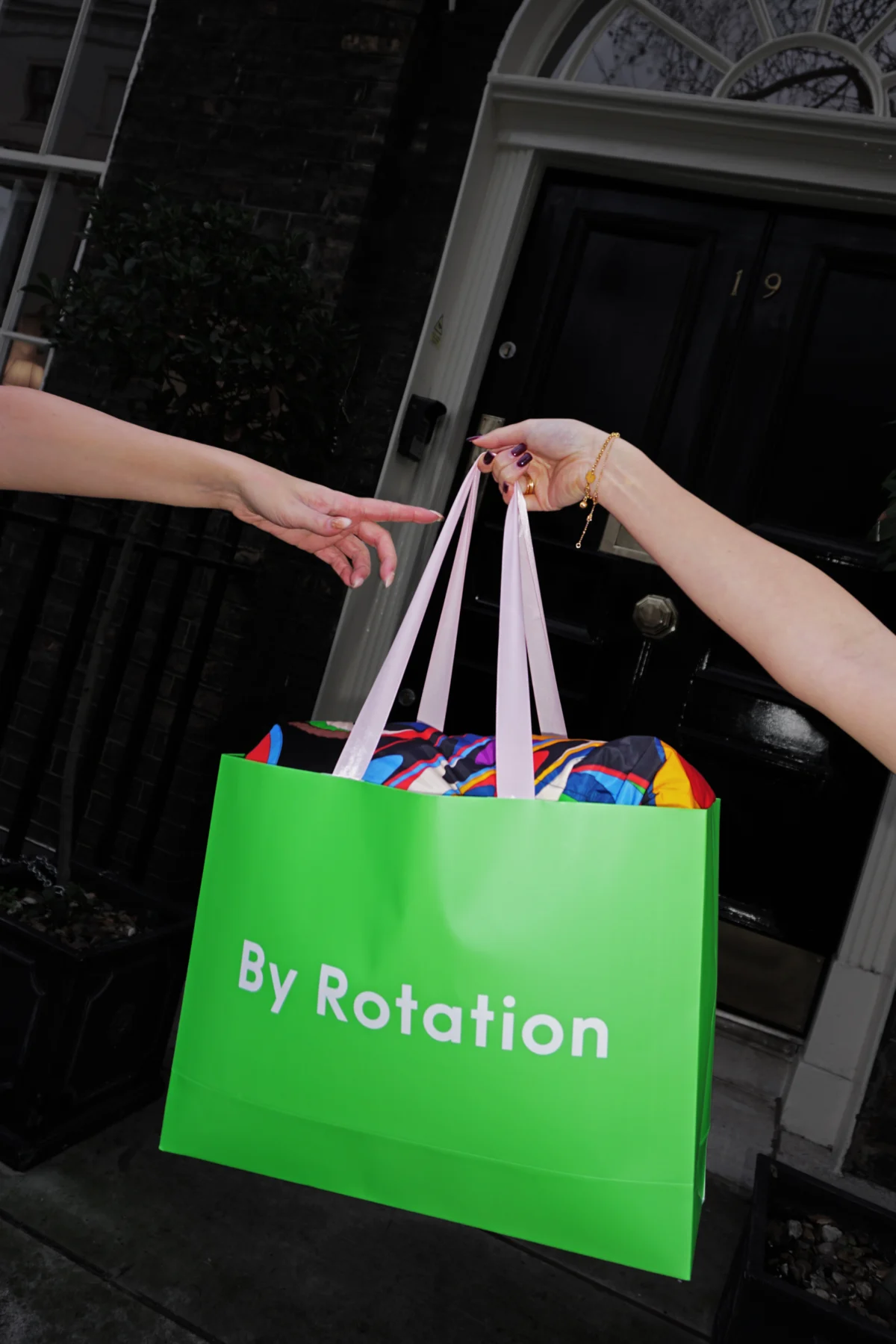
The landscape of the circular economy in the United Kingdom reached a significant milestone this Wednesday as By Rotation, the nation’s leading peer-to-peer fashion rental platform, announced a strategic partnership with the global ride-sharing and logistics giant Uber. This collaboration aims to bridge the gap between sustainable fashion and the high-speed demands of modern e-commerce by offering a 60-minute delivery window for rented garments. Available to users across the U.K. through May 31, the initiative specifically targets the logistical challenges associated with high-value, bulky items such as ski wear, providing a 10% discount on deliveries facilitated through the Uber network.
The partnership represents a convergence of two major trends in the consumer market: the rise of the "sharing economy" and the increasing expectation for "hyper-local" delivery speeds. By integrating Uber’s robust courier infrastructure, By Rotation is positioning itself to capture the "emergency economy"—a segment of the market driven by last-minute consumer needs that have historically been serviced by fast-fashion retailers capable of immediate, over-the-counter sales.
Addressing the Logistical Friction of Sustainable Fashion
Since its inception, the fashion rental industry has grappled with the inherent friction of logistics. While the environmental benefits of renting versus buying are well-documented, the physical exchange of goods between individual lenders and renters often involves time-consuming coordination or reliance on traditional postal services, which may take several days.
Eshita Kabra-Davies, the founder and CEO of By Rotation, identified this as a primary barrier to growth. Internal data from the platform reveals that approximately 25% of all rental requests are made within 48 hours of an event. This phenomenon, which Kabra-Davies describes as "sartorial panic," often leads consumers to abandon sustainable options in favor of "panic purchases" from fast-fashion outlets.
"With one in four rentals made within 48 hours of an event, logistics was the final friction point," Kabra-Davies stated. By partnering with Uber, the platform effectively removes this hurdle, allowing a high-quality, pre-owned garment to reach a customer’s door with the same—or greater—speed as a newly manufactured item from a traditional retailer. This shift is intended to move the consumer mindset from "fast fashion" to what industry experts call "on-demand slow fashion."
The Strategic Focus on the Ski Wear Market
While the 60-minute delivery service is available for all categories of clothing on the By Rotation app, the partnership is strategically timed and marketed toward the winter sports season. Ski gear represents a unique challenge in the rental market due to its physical volume and high retail price point. A high-performance ski jacket and trousers set can easily cost upward of £800, making it a prime candidate for the rental model, especially for occasional skiers.
By Rotation reported that 30% of its ski gear renters specifically seek same-day pickup. The logistical burden of transporting heavy salopettes, thermal layers, and bulky outerwear across urban centers like London or Manchester often discourages peer-to-peer exchanges. The Uber partnership alleviates this "annoyance of lugging," as the Uber Courier service handles the transit directly from the lender’s doorstep to the renter’s location.
The demand for ski wear has seen a notable uptick in Europe. Recent industry reports from SAM (Ski Area Management) indicate that U.K. skier numbers rose by approximately 7% in the last season. Furthermore, the "Apres-Ski" aesthetic has become a dominant trend on social media platforms like TikTok and Instagram, driving younger demographics to seek out designer ski labels such as Moncler, Perfect Moment, and Moon Boot—brands that are heavily represented in the By Rotation inventory.
Integration and User Experience
The technical integration of the service is designed to be seamless for the end-user. When a renter in the U.K. selects an item from a lender within their neighborhood, the checkout process will trigger a pop-up banner for "Uber Courier." By selecting this option, the By Rotation discount is automatically applied, and a courier is dispatched to facilitate the 60-minute transfer.
This move mirrors a broader trend within Uber’s business model. Under the leadership of CEO Dara Khosrowshahi, Uber has aggressively expanded beyond its core ride-hailing business into "Uber Direct" and "Uber Connect." These white-label delivery solutions allow retailers and marketplaces to utilize Uber’s fleet of millions of drivers and couriers to fulfill last-mile deliveries. By partnering with a peer-to-peer fashion app, Uber is diversifying its portfolio into the luxury and circular economy sectors, which are seeing higher resilience during economic fluctuations compared to standard retail.
A Chronology of Innovation: By Rotation’s Market Expansion
The partnership with Uber is not By Rotation’s first foray into creative cross-industry collaborations. The company has a history of identifying consumer pain points and partnering with established platforms to solve them.
- 2019: Eshita Kabra-Davies launches By Rotation as a side project after being inspired by the textile waste she witnessed in her home country of India.
- 2021-2022: The platform experiences exponential growth during the post-pandemic "wedding boom," raising several million dollars in seed funding to expand its technical capabilities.
- April 2022: By Rotation officially launches in New York City, marking its first major international expansion and tapping into the competitive U.S. fashion market.
- Early 2024: The company partners with Airbnb to offer "curated wardrobes" for destination wedding guests. This collaboration allowed travelers to rent outfits that were delivered directly to their Airbnb host’s location, reducing luggage weight and promoting sustainable travel.
- Late 2024: The platform announces it has surpassed 1 million registered users and manages a total inventory value exceeding $100 million.
The company’s trajectory suggests a move toward becoming a global lifestyle brand rather than just a clothing app. Kabra-Davies has noted that the platform’s ambition is global, with the United Arab Emirates (UAE) cited as the next target for expansion.
Economic and Environmental Impact Analysis
The implications of this partnership extend beyond mere convenience. The fashion industry remains one of the world’s most significant polluters, responsible for an estimated 10% of global carbon emissions and 20% of global wastewater. The circular economy—which emphasizes the reuse, repair, and sharing of existing items—is viewed by environmental economists as a vital tool in mitigating this impact.
By making the rental process as fast as a "Quick Commerce" delivery (like those offered by Deliveroo or Getir), By Rotation and Uber are challenging the dominance of the "linear" consumption model (buy, wear, discard).
From an economic perspective, the platform is also creating new revenue streams for its users. Kabra-Davies highlighted a case where a top lender on the platform used her earnings to fund her IVF journey, which eventually led to a successful surrogacy. This "wardrobe monetization" allows individuals to treat their clothing as an asset class, potentially offsetting the high cost of living in urban centers.
Industry Reactions and Future Outlook
Market analysts view this move as a direct challenge to traditional high-street retailers who have struggled to implement effective same-day delivery for online orders. While retailers like Zara and H&M have experimented with in-store pickup and next-day delivery, the ability to deliver a peer-to-peer rental in under an hour sets a new benchmark for the industry.
"This is about the luxury of choice," Kabra-Davies emphasized. "Our community can now secure a high-quality, high-value piece over a disposable garment, simply because it can reach their door just as quickly."
As the pilot program continues through the end of May, the industry will be watching closely to see if the "Uberization" of fashion rental can be scaled globally. If successful, it could signal a permanent shift in how consumers view ownership. In a world where space is at a premium and sustainability is a growing priority for Gen Z and Millennial shoppers, the "shared wardrobe" model—powered by the world’s most efficient logistics networks—may well become the new standard for fashion consumption.
The collaboration also highlights a maturing of the startup ecosystem, where niche "sharing" platforms are no longer operating in silos but are instead integrating with massive infrastructure providers to compete with traditional corporate giants. For Uber, it is another step toward becoming the "operating system for everyday life," and for By Rotation, it is a significant leap toward making the "rotating wardrobe" a ubiquitous reality.