










Fibre Extrusion Technology (FET), a Leeds-based specialist in process machinery, has been officially named the recipient of the Techtextil 2026 New Production Technology Innovation Award. The announcement, made on April 15, 2026, precedes the prestigious Techtextil exhibition in Frankfurt, Germany, where the company will be formally honored during the event’s opening cycle from April 21 to 24. This recognition highlights a significant leap in the sustainable manufacture of ultra-high-molecular-weight polyethylene (UHMWPE), a material critical to the defense, medical, and maritime industries.
The award-winning innovation, designated as the FET-500, represents a first-of-its-kind small-scale gel spinning system designed to eliminate the use of toxic solvents in the production of high-performance fibers. By leveraging supercritical carbon dioxide (scCO2) technology, FET has addressed a long-standing environmental bottleneck in the textile industry, offering a cleaner, more flexible alternative to traditional industrial-scale manufacturing processes.
Technical Context: The Evolution of UHMWPE Production
Ultra-high-molecular-weight polyethylene is a subset of the thermoplastic polyethylene. It is characterized by extremely long chains, with a molecular mass usually between 3.5 and 7.5 million amu. The longer chain serves to transfer load more effectively to the polymer backbone by strengthening intermolecular interactions. This results in a material that is incredibly tough, possessing the highest impact strength of any thermoplastic currently made.
Historically, the production of UHMWPE fibers has relied on the "gel spinning" process. In this method, the polymer is dissolved in a solvent—typically mineral oil or paraffin oil—to create a gel-like substance. This gel is then extruded through a spinneret. To achieve the necessary fiber orientation and strength, the solvent must be extracted. In conventional systems, this extraction requires the use of volatile organic compounds (VOCs) such as hexane or dichloromethane.
The environmental cost of this process is substantial. Industry data indicates that for every kilogram of UHMWPE yarn produced, approximately 100 kilograms of these toxic solvents are required. While much of this is recycled in large-scale plants, the sheer volume of hazardous material handling poses significant risks to worker safety and the environment, while also demanding massive infrastructure for solvent recovery and purification.
The FET-500 Innovation: Supercritical CO2 Integration
The breakthrough achieved by Fibre Extrusion Technology lies in the replacement of these hazardous solvents with supercritical carbon dioxide (scCO2). Carbon dioxide reaches a supercritical state when it is held at or above its critical temperature and pressure. In this state, it adopts properties of both a gas and a liquid, making it an ideal, non-toxic solvent for specific industrial applications.
The FET-500 system utilizes scCO2 to process the UHMWPE gel. Because scCO2 is non-flammable, chemically inert, and leaves no residue, the environmental footprint of the extrusion process is reduced to a fraction of its former scale. Furthermore, the CO2 used in these systems is often captured as a by-product of other industrial processes, effectively contributing to a circular economy model.
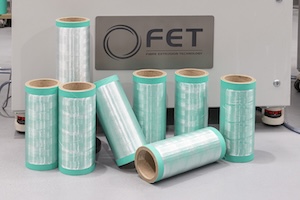
According to FET’s technical documentation, the FET-500 is specifically designed for laboratory and small-scale production. This addresses a critical gap in the market. Traditionally, UHMWPE production has been dominated by massive, high-volume facilities that are optimized for commodity-scale output. These facilities are often too rigid for the development of bespoke fibers or the small-batch requirements of the biomedical sector.
Strategic Significance for the Biomedical and Defense Sectors
The implications of the FET-500 system extend far beyond environmental compliance. The ability to produce UHMWPE in smaller, customizable quantities is expected to revolutionize the biomedical market. UHMWPE is the material of choice for high-strength surgical sutures and orthopedic implants due to its biocompatibility and resistance to fatigue.
Richard Slack, Managing Director of FET, emphasized the demand for specialized production capabilities. "We have supplied many extrusion systems to the biomedical market, most notably for the production of both resorbable and non-absorbable sutures," Slack stated. "In exploring what else we could do to assist these customers, it became clear that there was a need for smaller quantities of UHMWPE fibres in bespoke sizes."
In the defense and industrial sectors, UHMWPE is valued for being up to 15 times stronger than steel on a weight-for-weight basis. It is a primary component in the manufacturing of ballistic-rated body armor, cut-resistant gloves, and heavy-duty offshore mooring ropes. The flexibility of the FET-500 allows researchers to experiment with different fiber profiles and additives without the prohibitive costs associated with stopping and restarting large-scale industrial lines.
Chronology of Development and Market Introduction
The development of the FET-500 system is the result of several years of intensive research and development at the company’s Leeds headquarters.
- Early Research Phase (2022-2023): FET identified the market need for a sustainable, small-scale gel spinning solution, focusing on the limitations of current solvent-based systems.
- Prototype Testing (2024): The company successfully integrated scCO2 technology into a pilot-scale extrusion line, verifying that the resulting UHMWPE fibers maintained the necessary tensile strength and molecular orientation.
- Commercial Refinement (2025): The system was refined into the FET-500 series, optimizing the footprint and user interface for laboratory environments and specialized manufacturing hubs.
- Official Launch (April 2026): Techtextil 2026 marks the global debut of the FET-500. The system is currently in its first commercial phase, with the Techtextil Innovation Award serving as a major validation of its technological readiness.
Jonny Hunter, Research and Development Manager at FET, noted the inflexibility of the existing supply chain as a primary motivator for the project. "The current systems for manufacturing UHMWPE filament yarns are on a huge scale, with very complex processing routes," Hunter explained. "This means the supply chain is currently very inflexible with minimal opportunity for new product development. These disadvantages have been fully addressed in the development of our new FET-500 series."
Industry Response and Economic Impact
The British Textile Machinery Association (BTMA) has lauded the achievement as a testament to the resilience and innovative capacity of the UK’s textile machinery sector. Jason Kent, CEO of the BTMA, highlighted the broader context of the award within the UK’s industrial landscape.
"This award illustrates the current vibrancy of the UK’s textile technology sector," Kent said. "From the careful handling of ultra-high value yarns to the forensic inspection of finished fabrics, the BTMA members at Techtextil and Texprocess this year collectively represent a complete chain of innovation spanning processing, monitoring, and quality assurance."
Industry analysts suggest that the introduction of the FET-500 could decentralize certain aspects of the high-performance fiber market. By lowering the barrier to entry for producing UHMWPE, smaller research institutions and specialized manufacturers can engage in high-level material science that was previously the exclusive domain of multi-national chemical giants. This decentralization is expected to accelerate the pace of innovation in "smart" textiles and advanced composites.
Environmental and Safety Standards
The shift toward supercritical CO2 aligns with tightening global regulations regarding VOC emissions and hazardous waste management. Both the European REACH (Registration, Evaluation, Authorisation and Restriction of Chemicals) regulations and the US Environmental Protection Agency (EPA) have placed increasing scrutiny on solvents like dichloromethane, which is classified as a potential carcinogen and a significant contributor to air pollution.
By eliminating these substances from the production cycle, FET not only reduces the operational cost associated with solvent procurement and disposal but also simplifies the regulatory compliance process for manufacturers. The "waterless" nature of scCO2 processing also mirrors trends in the dyeing industry, where CO2-based dyeing has become a gold standard for reducing water consumption and wastewater treatment needs.
Looking Ahead: Techtextil 2026 in Frankfurt
As the textile industry prepares for Techtextil 2026, the spotlight on FET-500 underscores a shift toward "Technical Textiles 4.0"—a movement characterized by precision, sustainability, and digitalization. The Frankfurt event is expected to host over 1,500 exhibitors from across the globe, with the Innovation Awards serving as the centerpiece of the technological showcase.
For Fibre Extrusion Technology, the award is more than a trophy; it is a strategic advantage. "We are proud that the Techtextil Innovation Award has recognised our intensive work ahead of the exhibition," Richard Slack added. "This shows that we are at the forefront of technological developments supporting the textiles of tomorrow."
The FET-500 system will be on display at the FET stand during the exhibition, where the company plans to provide live demonstrations and technical briefings to prospective partners from the aerospace, medical, and defense sectors. As the global demand for high-performance fibers continues to grow—projected to reach a multi-billion dollar valuation by the end of the decade—technologies like the FET-500 will be instrumental in ensuring that this growth is both sustainable and technologically diverse.