








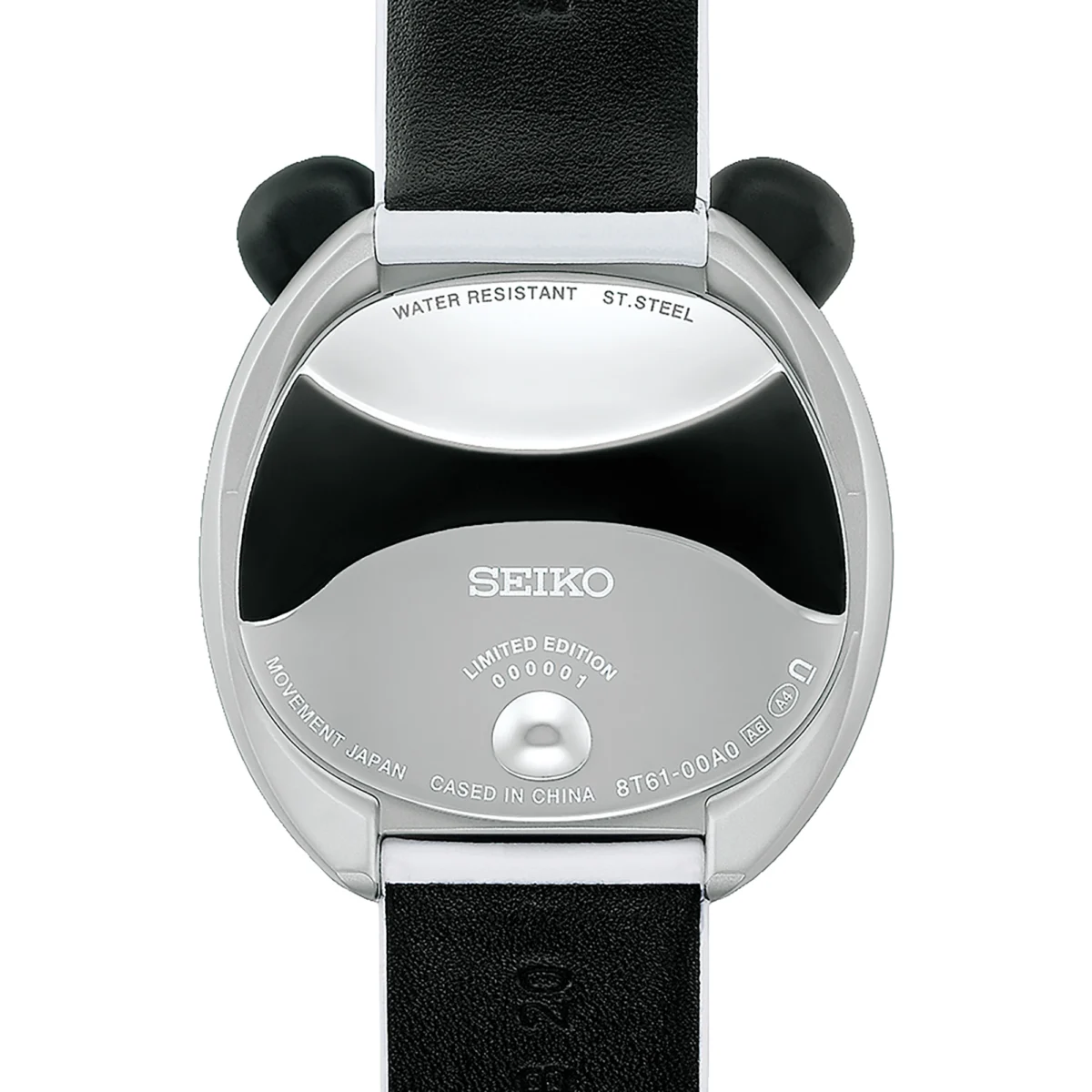
The release of the Seiko Power Design Project Collection 2, specifically the HHK001 and HHK002 limited-edition chronographs, marks a significant departure from the brand’s traditionally conservative design language. By commercializing a concept piece originally unveiled at the 2024 Incredibly Specialized Watch Exhibition, Seiko is testing the market’s appetite for whimsical, high-concept horology. These timepieces are the latest output from the long-running Power Design Project, an internal incubator established in 2001 that encourages Seiko’s engineering and design teams to transcend standard market constraints and explore the outer limits of aesthetic experimentation.
A History of the Power Design Project
Since its inception in 2001, the Seiko Power Design Project has served as a crucible for innovation. While many major watch manufacturers maintain strict, heritage-focused design codes, Seiko has consistently utilized this project to allow its designers a "creative sandbox." Over the past two decades, the initiative has yielded dozens of conceptual prototypes that, in most instances, remain within the archives of the company’s Tokyo headquarters.

The transition of the "Panda" concept from a one-off exhibition piece to a production model is a rarity in the industry. During the 2024 exhibition, the watch was presented as a literal interpretation of the term "panda dial"—a horological colloquialism usually reserved for black sub-dials on a white background. The concept piece challenged this convention by molding the watch case and dial elements into the physical representation of a panda bear’s head. Its reception at the exhibition was reportedly strong enough to trigger a feasibility study, eventually leading to the green light for the HHK001 and HHK002 production run.
Design and Physical Specifications
The Seiko HHK001 and HHK002 are substantial timepieces, designed to draw attention through their unique geometry. Each watch is housed in a stainless steel case measuring 43mm in diameter and 14.6mm in thickness. The architectural choice to incorporate chronograph pushers as ear-like appendages at the 12 o’clock position is a radical deviation from standard watch casing, creating a silhouette that is instantly recognizable.
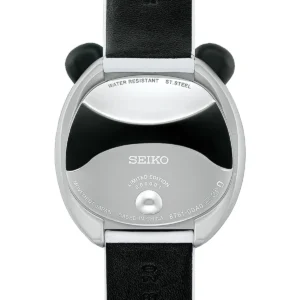
The case construction is reinforced with Hardlex crystal, a proprietary Seiko material known for its impact resistance compared to standard mineral glass. The caseback serves as a continuation of the theme, featuring a stylized black stripe and a subtle tail detail, ensuring that the panda motif is maintained across the entire 360-degree profile of the watch.

The two models offer distinct color palettes:
- HHK001: Adheres most closely to the 2024 prototype, featuring a textured white dial that mimics the fur of a giant panda, complemented by a white leather strap.
- HHK002: Represents an imaginative "newborn" variant, utilizing a pink color scheme that deviates from the traditional monochromatic panda palette to appeal to collectors seeking a more stylized or unconventional aesthetic.
Technical Performance and the "Sasameter"
Beneath the unconventional exterior lies the reliable Caliber 8T61 quartz movement. This movement is a workhorse within the Seiko catalog, offering a 60-minute chronograph function and maintaining a battery life of approximately three years. The accuracy of the movement is typical of Seiko’s high-precision quartz manufacturing, providing a stable foundation for a watch that otherwise prioritizes aesthetic storytelling over tool-watch functionality.
Perhaps the most charming technical detail is the modification of the tachymeter scale. In standard chronographs, this scale is used to measure speed over a set distance. In the HHK001 and HHK002, Seiko has rebranded this as the "Sasameter," a nod to the Japanese word sasa, meaning bamboo. Given that bamboo constitutes approximately 99% of a panda’s diet, the inclusion of this term reinforces the narrative cohesion of the design.

Evolution from Concept to Production
There are notable differences between the 2024 exhibition concept and the current 2026 production models, reflecting the practical adjustments required for retail manufacturing. The most prominent change is the removal of the word "Pandagraph" from the dial. On the original concept, this word was printed in a stylized manner to form the "mouth" of the panda. For the retail versions, Seiko opted for a cleaner, more minimalist mouth graphic below the nose, likely to ensure the dial remains legible and to avoid potential trademark or stylistic clutter issues.
Additionally, the sub-dial markings—which represent the eyes of the panda—have been adjusted. In the 2024 concept, these markings were rendered in a tone-on-tone aesthetic, which, while visually fluid, posed challenges for legibility. The production models, HHK001 and HHK002, feature high-contrast white markings within these registers, significantly improving the wearer’s ability to read elapsed time in various lighting conditions.
Market Strategy and Scarcity
The production numbers for the collection are strictly capped, highlighting the niche nature of the release. Seiko has announced a limited run of 3,000 units for the HHK001 and 2,000 units for the HHK002. This supply limitation is consistent with the brand’s strategy for its "Specialized" collections, which are targeted toward enthusiast demographics and long-term collectors.

By limiting the availability, Seiko creates a sense of exclusivity that balances the whimsical nature of the watch with the prestige of a limited-edition offering. This is a common tactic in the modern watch market, used to drive interest among collectors who prioritize unique design elements and limited manufacturing runs over pure utility.
Broader Implications for Seiko
The release of the HHK001 and HHK002 signals a potential shift in how Seiko views its "Power Design" output. For years, these concepts were viewed as purely academic or internal morale-boosting exercises. By moving to a commercialized model, the company is demonstrating a new level of confidence in its design team’s ability to predict market trends.
From an analytical perspective, this project serves as a low-risk, high-reward experiment. Because the watches utilize the proven 8T61 quartz platform, the research and development costs are largely focused on the case design and external components rather than the development of a new movement. This allows Seiko to innovate aesthetically without the massive overhead associated with new mechanical movements.

Furthermore, this release places Seiko in a unique position within the luxury and mid-tier market. While competitors like Swatch have found massive success with the "MoonSwatch" and other collaborative, high-concept, low-cost watches, Seiko is proving that it can leverage its own internal history and brand assets to create similar excitement without relying on outside partnerships.
Conclusion
The Seiko Power Design Project Collection 2 is more than just a novelty; it is a testament to the brand’s willingness to challenge its own corporate image. By successfully bridging the gap between a whimsical 2024 exhibition concept and a viable 2026 retail product, Seiko has demonstrated that it can adapt to the shifting tastes of the modern collector. Whether these watches become future "cult classics" remains to be seen, but their arrival on the market serves as a reminder that even the most established manufacturers can benefit from embracing the unconventional. For the consumer, the HHK001 and HHK002 represent a rare opportunity to own a piece of horological history—a watch that began as a dream on a designer’s desk and ended as a tangible, wearable manifestation of that creativity.