










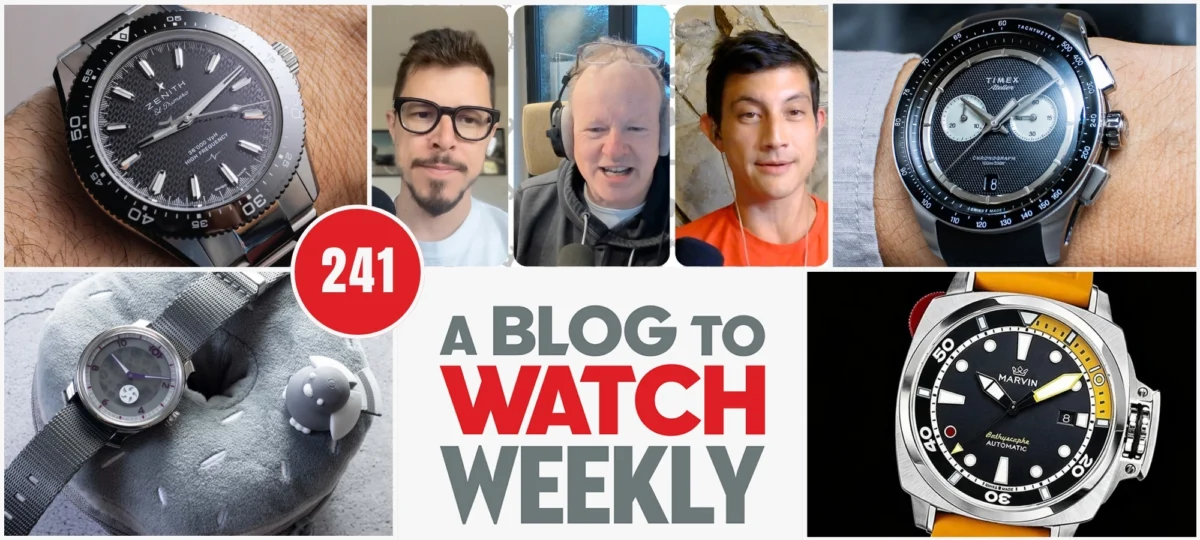
The latest installment of the aBlogtoWatch Weekly podcast, Episode 241, marks a notable departure from the program’s standard format as regular host Ariel Adams steps away, leaving a panel composed of Rick, David, and Ripley to dissect the current volatility in the luxury and entry-level timepiece markets. The episode centers on the fundamental tension between perceived brand value, manufacturing costs, and consumer price sensitivity, utilizing three distinct case studies to illustrate the broader instability currently plaguing the horological industry. As the watch market faces a cooling period following the post-pandemic boom, the panel’s analysis provides a window into the consumer’s growing skepticism regarding price-to-value propositions across both historic manufacturers and independent newcomers.
The Zenith Paradigm: Balancing Heritage and Market Positioning
The discussion opens with a critical examination of Zenith, a brand with significant historical weight—most notably the 1969 introduction of the El Primero chronograph—yet one that continues to grapple with inconsistent market performance. The panel’s critique highlights a recurring industry dilemma: how does a legacy manufacturer maintain its premium brand equity when retail pricing appears increasingly detached from broader market expectations?
Zenith, currently operating under the LVMH umbrella, has spent the last decade attempting to pivot from a specialist movement manufacturer to a luxury lifestyle brand. However, as the panel notes, this transition has been hampered by a lack of cohesive identity. When a brand’s flagship products face sluggish movement at the retail level, the resulting discounting practices often erode the very exclusivity the brand seeks to cultivate. The panel posits that Zenith’s current struggle is indicative of a broader trend: consumers are becoming increasingly sophisticated, prioritizing mechanical innovation and long-term value retention over brand heritage alone. The data suggests that for Zenith, the challenge is not the technical prowess of its El Primero caliber, but rather the internal alignment of its marketing strategy with a consumer base that is increasingly wary of the "luxury premium" applied to high-production-volume timepieces.
The Donut Watch Company: Disruption or Derivative Design?
Shifting from established legacy brands to the independent sector, the panel pivots to the Donut Watch Company. This venture represents a fascinating case study in brand extension, as it utilizes the design DNA associated with Ming—a boutique brand lauded for its minimalist, avant-garde aesthetics—to target the entry-level enthusiast segment.
Priced at approximately $700, the Donut Watch Company project leverages a Miyota-based movement and emphasizes high-intensity lume, catering to the growing demand for accessible, high-design timepieces. The philosophical conflict here is twofold: first, does the use of "Ming-adjacent" design language provide legitimacy to a new brand, or does it stifle the creation of a truly original identity? Second, the panel raises the question of whether "tasting" a luxury design at an entry-level price point serves to onboard new collectors, or if it diminishes the prestige of the primary brand that inspired it.
The implications for the independent watch market are significant. Over the past five years, the rise of the "microbrand" has democratized high-end design. However, as the market reaches a saturation point, companies that rely on the established aesthetic of successful predecessors may find that they lack the brand longevity required to survive a correction. The $700 price point remains a "sweet spot" for enthusiasts, but it also necessitates a standard of finishing and reliability that can be difficult to maintain when margins are thin and R&D is outsourced to established design houses.
The Timex Atelier Chronograph: Reversing the Luxury Trend
In a direct counterpoint to the Donut Watch Company, the panel discusses the Timex Atelier Chronograph Quartz M1q. If the Donut Watch Company represents the attempt to bring luxury aesthetics to the masses, the Timex Atelier collection represents the attempt to move a traditionally mass-market brand into the luxury conversation.
Timex, historically a provider of utilitarian, affordable watches, has made a concerted effort to climb the "value ladder" through its Atelier division. With a price point hovering around $700, the M1q challenges the consumer’s psychological barrier regarding the brand. The debate among the hosts highlights a recurring theme in modern horology: brand equity versus objective quality. Can a brand known for its $50 digital watches command a $700 price tag simply by improving finishing and sourcing better materials?

This movement toward "premiumizing" the affordable segment has been observed across the industry, with brands like Seiko and Tissot similarly pushing into higher price brackets. The success of this strategy relies heavily on the manufacturer’s ability to communicate the "value-add"—be it superior case finishing, enhanced water resistance, or high-grade quartz movements—to a consumer who has long associated the brand with bargain-bin pricing.
Omega Corner: Strategic Mystery and Brand Anticipation
The final segment of the podcast turns to the "Omega Corner," where the panelists shift their focus to the intersection of cinema and horology. A discovery on Omega’s official website—a hidden SPECTRE logo—has ignited speculation regarding the brand’s ongoing relationship with the James Bond franchise.
Omega has been the official watch partner of the 007 film series since 1995. This partnership has proven to be one of the most effective marketing strategies in the history of the watch industry. The introduction of "Bond watches" has allowed Omega to maintain high visibility and consistent demand for its Seamaster line. However, the mystery surrounding the potential release of a new, limited-edition timepiece raises questions about the "exhaustion" of the partnership.
While limited editions often drive short-term sales and create hype, they also run the risk of diluting the Seamaster’s identity as a serious tool watch. The panel’s observation that Omega is hiding "Easter eggs" on its website suggests a shift toward digital-first engagement, aimed at keeping younger, internet-savvy collectors actively searching for the next release. This strategy is indicative of the broader industry’s move away from traditional retail marketing toward engagement-based digital experiences.
Broader Market Implications: What Lies Ahead?
The synthesis of these topics reveals a market in transition. The common thread connecting Zenith’s pricing struggles, the Donut Watch Company’s derivative design, the Timex Atelier’s move upmarket, and Omega’s digital mystery is the search for relevance in a crowded, uncertain economy.
Data from recent market reports indicates that while the "hype" phase of the watch industry—driven by pandemic-era liquidity—has slowed, the demand for quality remains high. However, the definition of "quality" is shifting. Collectors are moving away from speculative investments and toward products that offer tangible utility and a clear, defensible price-to-performance ratio.
As the industry moves into the final quarter of 2026, the brands that succeed will be those that can successfully navigate these three pillars:
- Pricing Integrity: Moving away from aggressive discounting and toward sustainable retail pricing that reflects the true cost of manufacturing.
- Brand Autonomy: Establishing a clear, original design language that does not rely solely on the success of others or the nostalgia of the past.
- Consumer Transparency: Communicating clearly why a watch costs what it does, whether it is a $700 quartz piece or a high-complication mechanical chronograph.
The lack of Ariel Adams in this week’s session allowed the remaining panel members to take a more raw, unfiltered approach to these questions. Their conversation serves as a microcosm of the debates happening in boardrooms across Switzerland, Japan, and the United States. Ultimately, the watch market is moving into an era of accountability, where the "brand story" is no longer enough to justify a price tag; the watch itself must deliver on its promise. Whether the path forward lies in the democratization of design, the elevation of entry-level brands, or the maintenance of cinematic legacy, the upcoming months will be a crucial testing ground for the entire sector. As the crew concluded their discussion, the consensus remained clear: in a market full of noise, the brands that focus on the substance of their craft, rather than the perception of their name, are the ones likely to endure.