






In a significant intersection of cultural tradition and advanced robotics, the technology startup HaloBraid has announced the successful closing of a $7 million seed funding round. Led by Seven Seven Six, the venture capital firm founded by Reddit co-founder Alexis Ohanian, the investment marks a pivotal moment for an industry that has remained largely manual for millennia. HaloBraid aims to revolutionize the professional hair salon experience by introducing automated solutions for textured hair, specifically targeting the time-intensive process of braiding. The startup’s first product, a robotic braiding assistant, is designed to drastically reduce the time clients spend in salon chairs while alleviating the physical strain on professional stylists.
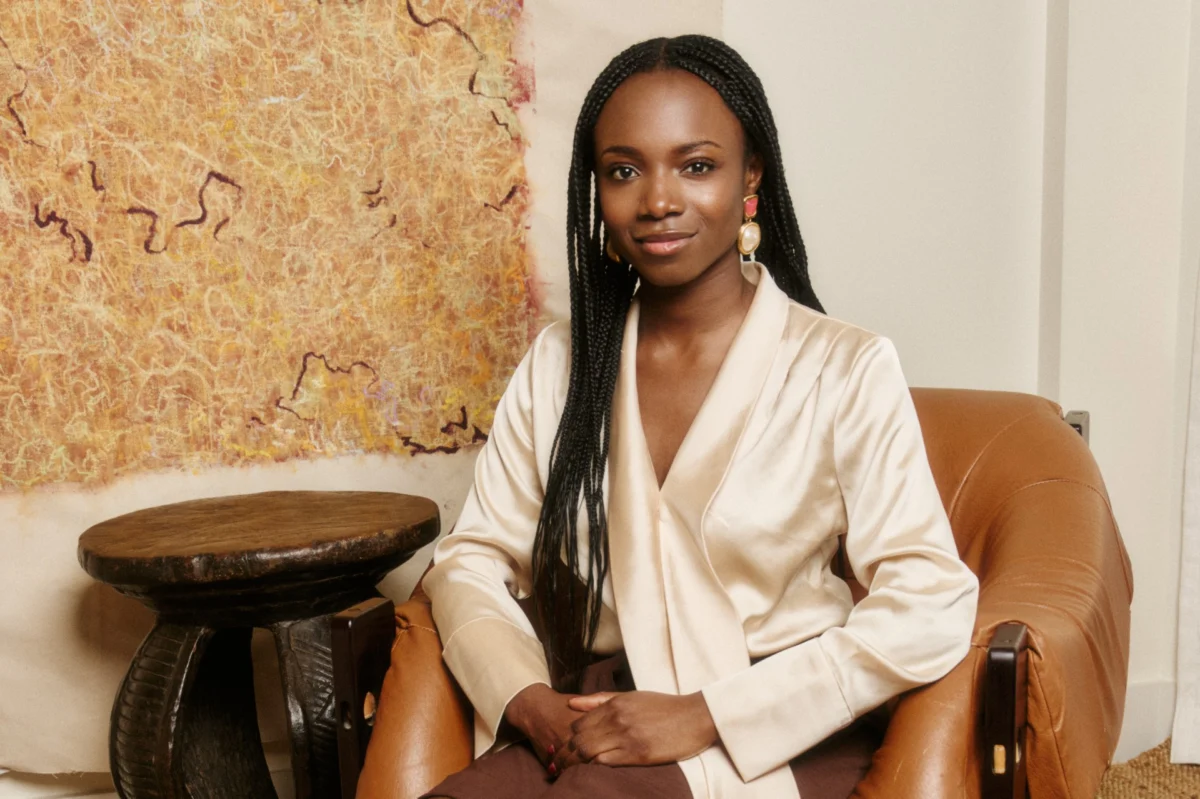
The company was founded by Yinka Ogunbiyi, an engineer with a Master of Science from Harvard University and an MBA, who previously ventured into the tech space with a smart cooking appliance company. The inspiration for HaloBraid emerged from a personal challenge during the COVID-19 pandemic. While isolated in her London apartment, Ogunbiyi attempted to braid her own hair, a task that took her four consecutive days to complete. Recognizing the inefficiency of a process that is central to the lives of millions of Black women, she began to view hair braiding not just as a cultural ritual, but as a complex technical problem requiring a sophisticated engineering solution.
The Engineering Challenge of Textured Hair
Hair braiding is an intricate craft involving the interlacing of three or more strands of hair. Popular styles such as box braids, boho braids, and knotless braids are staples of Black hair care, offering both aesthetic versatility and protection for textured hair. However, the manual nature of the work means that a single session can last anywhere from six to twelve hours. For stylists, this translates to grueling workdays characterized by repetitive motions that often lead to chronic health issues, including carpal tunnel syndrome, tendonitis, and arthritis.
From a technical perspective, automating this process has long been considered a formidable hurdle in the field of robotics. Ogunbiyi describes hair as one of the "trickiest substrates in the world to manipulate." Unlike rigid materials used in traditional manufacturing, hair is flexible, varied in texture, and sensitive to tension and friction. To develop a functional prototype, Ogunbiyi and her team of approximately 15 specialists had to draw upon diverse scientific disciplines, including material science and principles derived from inkjet printing technology.
The resulting device is designed to act as a collaborative tool rather than a total replacement for human skill. In practice, a professional stylist initiates the braid manually to ensure the tension at the scalp is comfortable and the pattern is correctly established. Once the foundation is set, the stylist hands the process off to the HaloBraid device, which completes the remainder of the braid in a matter of seconds. This hybrid approach preserves the artistry and scalp-health considerations of the stylist while offloading the most repetitive and time-consuming portion of the task to the machine.
Investment Strategy and Market Potential
The $7 million seed round saw participation from prominent investment firms including AlleyCorp and Bling Capital, in addition to the lead investment from Seven Seven Six. For Alexis Ohanian, the decision to back HaloBraid was informed by both market data and personal observation. Ohanian, who is married to tennis legend Serena Williams and is the father of two daughters, has witnessed firsthand the logistical demands of braiding. He noted that while his oldest daughter enjoys the ritual initially, the exhaustion that sets in by the ninth or tenth hour is a universal pain point for families and individuals.
Ohanian’s investment thesis highlights a significant gap in the beauty technology market. While companies like Dyson have successfully disrupted the high-end hair tool market with advanced blow dryers and stylers, those innovations have largely focused on straight or wavy hair types. Textured hair care, despite being backed by a consumer base known for high brand loyalty and significant spending power, has seen comparatively little investment in specialized hardware.
"This is hardware’s moment," Ohanian stated, drawing parallels between HaloBraid and his other "deep tech" investments in industries like rocket manufacturing and asteroid mining. He emphasized that an automated braider is an "eminently buildable" product with a clearly differentiated value proposition and a defined go-to-market strategy. The startup intends to use the fresh capital to finalize product development, scale manufacturing, and establish formal partnerships with professional salons ahead of a commercial launch slated for later this year.

Quantifying the Opportunity: Data and Research
Before seeking venture capital, Ogunbiyi conducted extensive research to validate the market demand for automated braiding. Her findings suggest a massive, underserved economy. According to her research, an estimated 8 billion hours are spent globally on braiding hair every year. In a survey of 2,000 consumers, a staggering 95% of respondents indicated they would choose to get their hair braided more frequently if the duration of the appointment could be significantly reduced.
This data suggests that the current length of braiding sessions acts as a barrier to consumption. By shortening a twelve-hour appointment to a fraction of that time, salons could potentially triple or quadruple their daily client throughput. This shift would not only increase revenue for salon owners but also make protective styling more accessible to professional women and students who may currently struggle to find an entire day to dedicate to hair maintenance.
Furthermore, the economic implications extend to the labor force. The "standing all day" requirement of the braiding profession limits the career longevity of many talented stylists. By introducing ergonomic assistance, HaloBraid could extend the working years of professionals in the industry and reduce the long-term healthcare costs associated with repetitive strain injuries.
A Chronology of Innovation in Hair Care
The journey of HaloBraid reflects a broader timeline of technological evolution in the beauty industry, which has slowly moved from manual tools to motorized appliances and now toward robotics and AI.
- Pre-Industrial Era: Braiding remains a purely manual, social, and cultural activity passed down through generations.
- 20th Century: The introduction of electric hair dryers and basic motorized styling tools begins to change salon workflows, though braiding remains untouched by automation.
- 2010s: The "Natural Hair Movement" leads to a surge in demand for specialized products and protective styles, highlighting the lack of professional tools for textured hair.
- 2020-2021: The global pandemic forces a DIY approach to hair care, exposing the extreme inefficiency of manual braiding for non-professionals and sparking the idea for HaloBraid.
- 2022-2023: Yinka Ogunbiyi transitions from the smart appliance sector to hair robotics, conducting R&D and securing initial patents for the "handoff" mechanism between human and machine.
- 2024: HaloBraid emerges from stealth with $7 million in funding, positioning itself as a leader in the nascent "hair-tech" robotics category.
Industry Reactions and Broader Implications
The announcement has sparked a range of reactions within the beauty and tech communities. Industry analysts suggest that HaloBraid’s success could pave the way for a new category of "Assisted Beauty Robotics." While there are few direct competitors—Braidiant being the most notable—the entry of a well-funded player like HaloBraid is expected to accelerate interest in the sector.
Professional stylists have expressed a mix of curiosity and cautious optimism. While there is always a concern regarding automation displacing human labor, the design of HaloBraid as an "assistant" rather than a standalone kiosk suggests a future where the stylist’s role evolves from manual laborer to a "creative director" of the machine. By handling the scalp-level precision and the artistic pattern design, the stylist retains the most critical parts of the service that require human judgment and empathy.
The broader implications for the venture capital landscape are also notable. For years, VC firms have favored software-as-a-service (SaaS) models due to their low overhead and scalability. However, the "Hardware Renaissance" mentioned by Ohanian suggests a return to investing in physical products that solve tangible, real-world problems. HaloBraid serves as a case study for how "niche" cultural problems can represent massive, untapped global markets when viewed through an engineering lens.
Looking Ahead: The Future of Textured Hair Tech
While the current focus is on the launch of the braiding assistant, Ogunbiyi’s vision for HaloBraid extends far beyond a single device. The company is already exploring the development of technology to automate the "take-down" process. Undoing braids can often be as time-consuming and tedious as the installation itself, and a robotic solution for removal would complete the lifecycle of the protective styling experience.
"HaloBraid is our first product, but our larger vision is to create breakthrough technology that makes textured hair care faster, easier, more comfortable, and more joyful," Ogunbiyi said. As the startup moves toward its late-2024 launch, the beauty industry will be watching closely to see if robotics can truly master the delicate, ancient art of the braid. If successful, HaloBraid may not only change how Black women manage their hair but also redefine the boundaries of what modern robotics can achieve in the service of daily human rituals.