











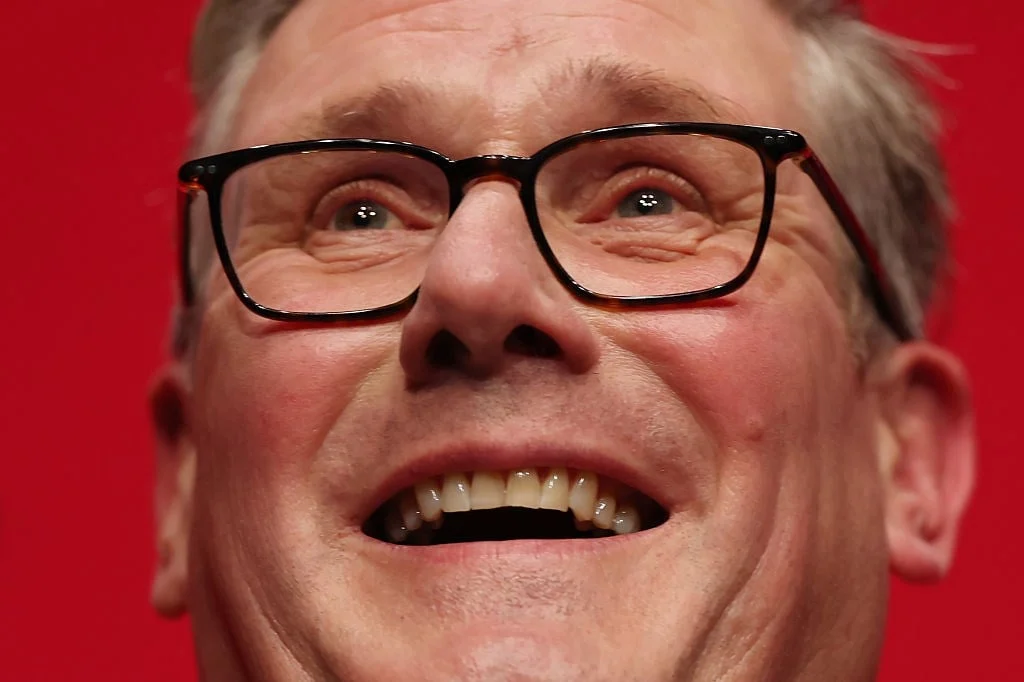
Keir Starmer has announced his resignation as Prime Minister and leader of the Labour Party, concluding a six-year tenure as party leader, two of which were spent in Downing Street. His departure follows weeks of intensifying political pressure, culminating in the recent Makerfield by-election where Manchester Mayor Andy Burnham secured the seat for Labour with a significant 55 percent majority, effectively sidelining candidates from the Reform and Restore parties. Burnham’s victory, bolstered by his reputation as a "man of the people" and strong regional ties, has immediately ignited speculation about his potential to lead the Labour Party and challenge the rising influence of the Reform Party across the UK political landscape.
Starmer’s resignation marks a pivotal moment for British politics, prompting immediate discussions about the future direction of the Labour Party and the broader political climate. While the specific timing of his successor’s appointment remains to be confirmed, political analysts widely anticipate a leadership contest that could reshape the party’s platform and public image. His premiership, though relatively brief, was characterised by a series of policy decisions and pronouncements that drew considerable criticism from various segments of the political spectrum, particularly from left-leaning factions within his own party and beyond. Critics frequently pointed to shifts in policy on issues ranging from immigration and human rights to economic pledges and civil liberties, arguing that these actions often diverged from traditional Labour values and alienated core supporters.
The Road to Resignation: Makerfield and Mounting Pressure
The Makerfield by-election, held on [insert hypothetical date e.g., June 20, 2026], served as the immediate catalyst for Starmer’s resignation. The constituency, traditionally a Labour stronghold, had seen fluctuating support in recent years, making it a critical barometer of public sentiment. Andy Burnham’s decisive victory, not merely a hold but an emphatic win against a backdrop of national disquiet, underscored a growing disconnect between Starmer’s leadership and segments of the electorate, particularly in the North. Burnham, known for his robust advocacy for regional devolution and public services, campaigned on a platform that resonated strongly with local concerns, contrasting with the national government’s perceived detachment.
For several months prior to the by-election, Starmer had faced increasing internal dissent and external criticism. Public approval ratings for his government had reportedly declined, influenced by a combination of domestic policy challenges, a struggling economy, and contentious foreign policy decisions. Key among these were ongoing debates about the cost of living, the state of the National Health Service, and the government’s approach to international conflicts. The strong performance of the Reform Party in national polls further exacerbated pressure on Starmer, as Labour struggled to present a clear alternative vision that could unify its traditional voter base and appeal to swing voters. The Makerfield result, therefore, was not an isolated event but rather the culmination of these sustained pressures, signalling a critical loss of confidence in Starmer’s ability to lead the party effectively into the next general election.
Key Policy Decisions and Controversies During Starmer’s Tenure
Starmer’s time as Prime Minister and Labour leader was punctuated by several policy decisions and public statements that generated significant debate and often drew the ire of human rights organisations, civil liberties advocates, and segments of the Labour Party’s traditional base.
Immigration and Refugee Policy: The Gazan Refugee Scheme
In February 2025, the Starmer government faced considerable scrutiny for its decision to block Palestinians from entering the UK through the existing Ukrainian refugee sponsorship scheme. This policy change came after a Palestinian family from Gaza successfully utilised the "Homes for Ukraine" programme, arguing that the absence of a dedicated pathway for Gazan refugees left them with no alternative to escape conflict. Judges initially sided with the family, noting the "high risk of death or serious injury daily" faced by young children in Gaza. However, Starmer maintained that the Ukrainian scheme was specifically designed for those fleeing the conflict in Ukraine and vowed to close what he termed a "loophole."
This decision drew sharp condemnation from humanitarian organisations, who argued it was discriminatory and failed to uphold the UK’s international obligations to refugees. Critics highlighted the severe humanitarian crisis in Gaza and the perceived double standard in refugee policy. The government defended its stance by emphasising the need for clear, distinct immigration routes tailored to specific crises, asserting that maintaining the integrity of the Ukraine scheme was paramount. However, the move contributed to a perception among some that Starmer’s government was adopting a more restrictive stance on immigration, potentially aligning with sentiments expressed by right-wing parties.
Foreign Policy: Stance on the Israel-Gaza Conflict
A significant point of contention arose from Starmer’s initial statements and subsequent policy regarding the Israel-Gaza conflict, particularly in the aftermath of October 7. Speaking on LBC shortly after the events, Starmer initially remarked that Israel "has the right" to cut off water and electricity to Gaza, adding "obviously everything should be done within international law." These comments were widely criticised, with many international legal experts and human rights groups asserting that such actions could constitute war crimes under international humanitarian law.
While Starmer later issued clarifications, emphasising the importance of adherence to international law, his initial remarks set a tone that proved difficult to shake. Throughout the subsequent two years, his government often called for all parties to abide by international law but was frequently accused by critics of failing to unequivocally condemn specific actions that appeared to violate these principles. Beyond rhetoric, the UK, under Starmer’s leadership, provided direct military support to Israel. Reports from organisations such as Campaign Against Arms Trade (CAAT) indicated an increase in arms exports to Israel during the initial months of his premiership. Furthermore, investigations by Declassified UK revealed that Britain conducted over 500 surveillance flights over Gaza, reportedly on Israel’s behalf, further implicating the UK in the conflict and drawing protests from civil liberties groups and anti-war activists. This policy stance became one of the most significant stains on his legacy for many, fuelling widespread protests across the UK.
Social Justice: Black Lives Matter and Transgender Rights
Starmer’s approach to social justice movements also generated internal and external criticism. Following the murder of George Floyd in Minneapolis in 2020, and in the context of global Black Lives Matter (BLM) protests, Starmer, then newly elected Labour leader, stated that "nobody should be saying anything about defunding the police" and referred to BLM as a "moment." These comments were seen by some as dismissive of the systemic issues raised by the movement and an over-reliance on law enforcement as a solution. After facing considerable backlash, he participated in unconscious bias training and was photographed kneeling with Angela Rayner in a parliamentary office, an action widely interpreted as an attempt to reassert his solidarity with anti-racism efforts.
Similarly, his government’s position on transgender rights drew strong criticism. Following a Supreme Court ruling clarifying the meaning of "sex" in the Equality Act, Starmer adjusted his previously stated position that "trans women are women." He subsequently insisted that "a woman is an adult female, the court has made that absolutely clear," aligning with the court’s interpretation. He also withdrew prior support for trans people’s right to self-identification and publicly spoke out against "gender ideology" being taught in schools, mirroring rhetoric often used by anti-trans movements. LGBTQ+ advocacy groups argued that these shifts represented a significant regression in the UK’s approach to trans rights, positioning his government as less supportive than some conservative predecessors on these specific issues.
Economic and Domestic Policy: Tuition Fees and the Two-Child Benefit Cap
Starmer’s economic pledges, particularly concerning higher education, underwent significant reversals. During his campaign for Labour leadership, he promised to abolish university tuition fees. However, upon becoming Prime Minister, this promise was abandoned, with Starmer citing the need to "tackle the NHS crisis" as a priority. In May 2024, he stated on BBC Radio 4, "Looking at the costing for tuition fees or abolishing them, looking at the money we need to put into the NHS, I’ve taken the decision that we can’t do both." Furthermore, in 2025, his government increased tuition fees by £285, the first such increase in seven years, drawing considerable anger from student organisations and young voters who felt betrayed by the reversal of a key promise.
Another contentious issue was Starmer’s handling of the two-child benefit cap. Initially, he maintained the policy, which limits child tax credit and universal credit to two children per family, a measure widely criticised for contributing to child poverty. In a display of party discipline, he removed the whip from seven Labour MPs who voted against the cap. However, two years later, his government reversed course, scrapping the cap and presenting it as a major policy achievement. Critics pointed to the irony of his previous disciplinary actions against MPs who had advocated for the same policy, highlighting a perceived opportunism and a rigid approach to party unity.
Civil Liberties: Repression of Protest Rights
Starmer’s government also faced accusations of authoritarian tendencies regarding civil liberties, particularly the right to protest. In May 2026, he suggested on BBC Radio 4 that he might ban certain forms of protest, following calls for a suspension of pro-Palestine marches, and proposed tougher policing around the language used at demonstrations. During his premiership, Starmer’s government supported the proscription of Palestine Action, a direct action group protesting weapons supply to Israel. In April [insert hypothetical year e.g., 2026], his government oversaw the arrest of hundreds of individuals for holding signs in support of the proscribed organisation, actions that civil liberties groups denounced as a severe attack on fundamental democratic rights in recent British history.
The "Island of Strangers" Controversy
In May 2025, Starmer delivered a press conference accompanying a White Paper on immigration, where he stated: "Nations depend on rules — fair rules […] Without them, we risk becoming an island of strangers, not a nation that walks forward together." This specific phrase drew immediate and widespread condemnation for its striking resemblance to Enoch Powell’s infamous 1968 "Rivers of Blood" speech, in which Powell spoke of Britons finding themselves "made strangers in their own country." Critics from across the political spectrum, including many within Labour, accused Starmer of pandering to anti-immigration sentiment and echoing divisive rhetoric. The backlash was so intense that Starmer issued a retraction, stating: "that particular phrase — no — it wasn’t right. I’ll give you the honest truth: I deeply regret using it." This incident highlighted the tightrope walk Starmer attempted between appealing to a broad electorate and maintaining the Labour Party’s traditional values on diversity and inclusion.
Appointments: The Peter Mandelson Controversy
A notable controversy concerning appointments arose with Starmer’s decision to appoint Peter Mandelson as the UK’s Ambassador to the United States in 2024. Despite public knowledge of Mandelson’s long-standing friendship with Jeffrey Epstein, a convicted sex offender and financier, the appointment proceeded. While Starmer later claimed to have been blindsided by the extent of Mandelson’s association, photographic evidence of their interactions was widely available at the time of the appointment. Critics argued that such a high-profile diplomatic role should not be given to someone with even tangential ties to Epstein, particularly given the ongoing political sensitivity surrounding Epstein’s activities in US politics.
The appointment was viewed by many, especially on the left wing of the Labour Party, as an arrogant and antagonistic move by Starmer, perceived as an attempt to assert authority and disregard dissenting voices. Although the initial scandal did not immediately lead to Starmer’s downfall, it contributed to a narrative of his leadership as being out of touch with public sentiment and overly dismissive of legitimate concerns regarding ethical standards in public office. The incident highlighted internal party divisions and reinforced a perception of Starmer as prioritising loyalty and political expediency over transparency and accountability.
Andy Burnham and the Future of Labour
The victory of Andy Burnham in Makerfield has thrust him into the national spotlight as a leading contender for the Labour leadership. Burnham’s political trajectory, from MP to Secretary of State in various portfolios under previous Labour governments, and more recently as the popular Mayor of Greater Manchester, has cultivated an image of a pragmatic, socially conscious politician deeply connected to working-class communities. His vocal advocacy for regional development, public transport, and a robust National Health Service has resonated widely, particularly in the North of England.
Commentators are now actively discussing whether Burnham possesses the broad appeal and strategic acumen to halt the rise of the Reform Party, which has increasingly capitalised on voter disillusionment with mainstream politics. His potential leadership would likely signal a shift towards a more populist economic agenda, a stronger emphasis on social welfare, and potentially a more nuanced approach to cultural issues, aiming to reconnect with voters who feel left behind by traditional political establishments.
Legacy and Implications for British Politics
Keir Starmer’s resignation leaves a complex legacy. He took over a Labour Party reeling from significant electoral defeat and oversaw its return to power, albeit for a relatively short period. His premiership was characterised by a pragmatic, often cautious approach, attempting to steer the party back to the political centre after a period of more radical leadership. However, this strategy often alienated the party’s left wing and failed to consistently inspire a broad electorate.
The challenges for the next Labour leader are substantial. They must unify a party that has shown signs of internal fracture, define a clear and compelling vision for the country amidst economic uncertainty, and effectively counter the growing influence of the Reform Party. The outcome of the upcoming Labour leadership contest, and the subsequent direction of the party, will have profound implications not only for Labour’s electoral prospects but for the entire landscape of British politics in the years to come.