


This shift also marked a watering down of psyop’s original meaning. A portmanteau of ‘psychological operation’, the word ‘psyop’ emerged in the early 20th century to describe a shift towards covert operations and the use of soft power by governments attempting to control people and outcomes through subversive means. The recent Geese-gate discourse, then, reflects how similar techniques are now standard practice for marketing agencies in the digital age, subtly manipulating fans into following certain trends and artists. The crucial difference is that these campaigns are conducted for commercial, rather than political, goals.
However, the historical record is replete with allegations, some substantiated and others remaining in the realm of theory, that artists have been — knowingly or not — involved in genuine state-led psychological operations. These instances reveal a fascinating, often unsettling, intersection of art, culture, and covert statecraft, particularly prevalent during periods of geopolitical tension like the Cold War. Below, we delve into seven notable cases where musicians were alleged to have played a role in governmental influence campaigns, exploring the context, evidence, and lasting implications of these claims.
Jazz Diplomacy and the Fall of Patrice Lumumba: ‘JAZZ KILLED LUMUMBA’
In the crucible of post-colonial Africa in 1960, the newly independent Congo elected Patrice Lumumba as its first Prime Minister. Lumumba, a charismatic and ardent Pan-Africanist, envisioned a unified African continent that would safeguard its vast natural resources and political autonomy against renewed foreign exploitation. His vision posed an existential threat to the existing world order, particularly the Western powers vying for influence and access to Africa’s mineral wealth, especially the uranium and cobalt-rich Katanga province. The prospect of a united, non-aligned African voting bloc in the United Nations was a profound concern for both Washington and its European allies.
It is against this backdrop that a deeply controversial narrative unfolds, meticulously detailed in Johan Grimonprez’s 2024 documentary Soundtrack to a Coup d’Etat. In 1960, iconic American jazz musicians such as Dizzy Gillespie, Nina Simone, and Louis Armstrong embarked on State Department-sponsored tours of newly independent African nations. Officially, these "jazz ambassadors" were dispatched to "win the hearts and minds" of African peoples, projecting an image of American cultural richness and racial harmony. This cultural diplomacy aimed to counteract Soviet criticisms of American racism and prevent nascent African nations from aligning with the Eastern Bloc, thereby reinforcing Western influence.
However, the documentary, alongside declassified documents and historical accounts, suggests a far more sinister covert agenda operating beneath the veneer of cultural exchange. Unbeknownst to the participating artists, these performances allegedly served as a smokescreen for the Central Intelligence Agency’s (CIA) clandestine efforts to destabilize and ultimately overthrow Lumumba’s government.
Chronology of Allegations:
- June 1960: Congo gains independence from Belgium; Patrice Lumumba becomes Prime Minister.
- July-August 1960: Lumumba seeks UN and later Soviet assistance to quell secessionist movements, particularly in Katanga, alarming Western powers.
- August-September 1960: Louis Armstrong embarks on his African tour, including a stop in Congo. His host and "diplomat" handler is later identified as Larry Devlin, the CIA station chief in Congo. Devlin reportedly used Armstrong’s entourage as cover to move freely and gather intelligence in the strategically vital Katanga province.
- September 1960: President Eisenhower reportedly authorizes Lumumba’s assassination, citing him as a threat to US interests.
- December 1960: Lumumba is arrested and eventually transferred to Katanga.
- January 17, 1961: Patrice Lumumba is brutally murdered by Katangan secessionists, with significant evidence pointing to Belgian and CIA complicity. This occurred less than two months after Armstrong’s visit.
In the years following, the extent of CIA involvement gradually came to light. Larry Devlin himself later testified before the US Senate Intelligence Committee, admitting that "the coup […] was arranged and supported, and indeed, managed, by the CIA." While the jazz musicians were likely unwitting participants, their celebrated presence provided invaluable cover for covert operatives to conduct their destabilizing activities, illustrating a dark chapter where art was allegedly manipulated for geopolitical ends, with devastating consequences for a sovereign nation and its leader.
The Scorpions’ Anthem of Change: ‘WINDS OF CHANGE’ WAS WRITTEN BY THE CIA?
Moving closer to the realm of captivating conspiracy theory, Patrick Radden Keefe’s 2020 podcast documentary series, Winds of Change, delves into an intriguing rumor: that the German rock band Scorpions’ iconic 1991 power ballad, "Winds of Change," was not merely a spontaneous anthem of hope but a carefully orchestrated psychological operation by the CIA to hasten the fall of the Soviet Union.
The song, with its distinctive whistling melody and poignant lyrics like "The future’s in the air / I can feel it everywhere / Blowing with the wind of change," resonated profoundly with a world on the cusp of a new era. It explicitly referenced the new policy of glasnost (openness) in the Soviet Union and captured the prevailing optimism of the late Cold War period. "Winds of Change" achieved immense popularity within the USSR itself, despite official restrictions on Western music, becoming a cultural touchstone. German TV station ZDF even lauded it as the "song of the [20th] century."
Keefe’s investigative journey, while ultimately unable to definitively prove or disprove the theory (as CIA agents are, unsurprisingly, reluctant to disclose classified information), builds a compelling circumstantial case for potential CIA involvement. He highlights the agency’s established history of leveraging cultural products, such as the "jazz ambassadors" program in Congo, to influence foreign populations. This demonstrates a clear awareness within American intelligence circles of music’s potent ability to sway public sentiment and tip the precarious balance of ideological conflicts.
Chronology of Allegations & Context:
- 1985: Mikhail Gorbachev introduces glasnost and perestroika, initiating reforms within the Soviet Union.
- August 1989: The Moscow Music Peace Festival takes place, a watershed event broadcast globally by MTV, featuring prominent Western rock artists like Ozzy Osbourne, Jon Bon Jovi, Mötley Crüe, and the Scorpions. This festival, held in a country where such music was previously restricted, represented a significant cultural thaw.
- November 1989: The Berlin Wall falls, symbolizing the accelerating collapse of the Iron Curtain.
- 1990: Scorpions release "Winds of Change" on their album Crazy World. The song rapidly becomes a global hit, particularly in Eastern Europe and the Soviet Union.
- December 1991: The Soviet Union officially dissolves.
Keefe scrutinizes the Moscow Music Peace Festival, questioning whether it was merely an innocent celebration of music or a carefully managed soft power initiative. The festival provided an unprecedented platform for Western cultural penetration into the Soviet heartland, potentially sowing seeds of democratic aspiration. The theory posits that a song like "Winds of Change," imbued with messages of hope and political transformation, could have served as an ideal, non-attributable cultural weapon, subtly encouraging dissent and Westernization. While direct evidence of CIA authorship remains elusive, the episode underscores the enduring fascination with how cultural artifacts can become entangled with geopolitical strategies, leaving a legacy of questions about the true architects of iconic moments.
Britpop’s Political Embrace: ‘COOL BRITANNIA’ FOOLS THE WAVES
The mid-1990s witnessed the vibrant emergence of Britpop, a cultural movement that injected a jolt of optimism and swagger into a Britain recovering from years of Conservative rule. Bands like Oasis, Blur, Pulp, and Suede became synonymous with a new sense of national confidence, their anthems dominating the airwaves and shaping a generation’s identity. However, in 2013, My Bloody Valentine frontman Kevin Shields ignited a provocative debate with his ominous pronouncement: "Someday it would be interesting to read all the MI5 files on Britpop," he told The Guardian, adding, "The wool was pulled right over everyone’s eyes there."
Shields’ comments tapped into a long-simmering suspicion that the "Cool Britannia" phenomenon, far from being a purely organic cultural uprising, was at least partially co-opted and amplified by political forces, specifically Tony Blair’s New Labour party. New Labour, eager to shed the party’s old-fashioned image and project a modern, dynamic vision for Britain, found a ready-made cultural zeitgeist in Britpop to align itself with.
Chronology of Political Co-option:
- Early 1990s: Britpop emerges as a counter-cultural movement, celebrating British identity with catchy, guitar-driven music.
- 1994: Tony Blair becomes leader of the Labour Party, initiating the "New Labour" rebranding.
- 1996: The "Cool Britannia" label gains traction, describing a perceived resurgence of British pride and cultural influence. New Labour actively embraces this imagery.
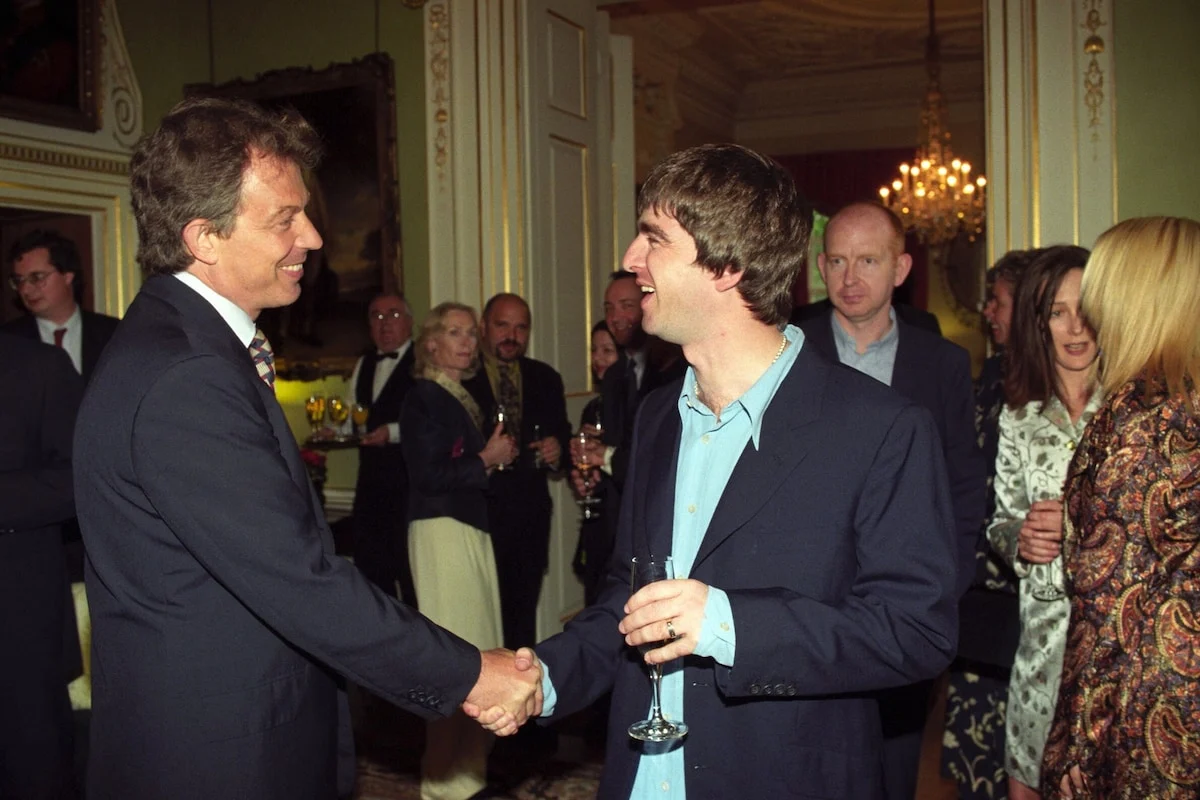
- July 1997: Following New Labour’s landslide victory in the May general election, a famous photograph captures Prime Minister Tony Blair hosting Noel Gallagher of Oasis at 10 Downing Street. This image, symbolizing the perceived alliance between popular culture and political power, became iconic.
- Pre-1997 General Election: Damon Albarn of Blur, another Britpop giant, was reportedly present at "strategic meetings" with Blair and his communications director Alastair Campbell. These interactions suggested a deliberate effort by New Labour to leverage the popularity and cultural cachet of Britpop figures to sway the electorate and project an image of modernity and relevance.
While there is no definitive, declassified evidence of MI5 (the UK’s domestic intelligence agency) directly orchestrating Britpop songs or artists, the political machinery of New Labour undeniably "seized on" the movement. The goal was not mind control in a covert spy novel sense, but a sophisticated form of political marketing. By associating themselves with the era’s most popular cultural figures, New Labour aimed to present themselves as forward-thinking, in touch with youth culture, and capable of leading a vibrant, modern Britain.
The implication, as Shields suggested, is that the public was subtly manipulated into associating the feel-good factor of Britpop with the political agenda of New Labour. While artists like Damon Albarn later vocally opposed policies such as the Iraq War, demonstrating their own independent political consciousness, the initial synergy between Britpop and New Labour successfully served its purpose in forging a powerful public image that contributed to the party’s electoral success. The "Cool Britannia" phenomenon serves as a compelling case study of how political movements can strategically harness popular culture to shape public perception, blurring the lines between authentic cultural expression and state-sponsored image-making.
K-Pop as a Weapon: K-POP VS. KIM JONG-UN
In a stark departure from clandestine operations, the use of K-Pop as a psychological tool against North Korea stands out as a remarkably overt and acknowledged strategy. For over 70 years, South Korea has intermittently, and very publicly, employed giant loudspeaker systems positioned along the Demilitarized Zone (DMZ) to blast propaganda across the heavily fortified border into North Korea. This practice, initiated during the Korean War (1950-1953) where the American-backed capitalist South clashed with the Chinese and Soviet-backed communist North, has persisted long after the 1953 armistice established a fragile peace.
Initially, these broadcasts primarily consisted of speeches, news reports, and radio shows designed to highlight the failures of the North Korean regime and extol the virtues of capitalism and South Korean prosperity. However, in the last two decades, the content has evolved significantly, incorporating a powerful new weapon: K-Pop music. K-Pop, along with K-dramas, is officially banned in North Korea, condemned by the regime as "reactionary ideology" that threatens to corrupt its citizens and undermine its socialist principles.
Tactics and Chronology:
- 1950s-1990s: Initial propaganda broadcasts focus on political rhetoric, news, and defectors’ testimonials.
- 2000s: As K-Pop gains global traction, South Korea begins to experiment with incorporating popular music into its broadcasts.
- 2010s: The use of K-Pop intensifies, with broadcasts featuring tracks from first-generation K-Pop groups like APINK, BigBang, and solo artists such as IU. These songs, coupled with messages about South Korea’s vibrant culture and economic success, aim to create dissonance among North Korean listeners and expose them to an alternative reality.
- Beyond Loudspeakers: In addition to audio broadcasts, South Korean activists and, at times, government-backed groups have launched balloons loaded with USB drives containing K-Pop songs, K-dramas, and other forms of South Korean media directly into North Korea.
- North Korean Response: The North Korean regime has consistently condemned these broadcasts, threatening military action in response to what it views as a direct provocation. They have also implemented harsh penalties for citizens caught consuming or distributing South Korean media.
- August 2025 (Reported Future Event): According to the original article, these loudspeaker broadcasts were officially removed from the DMZ after incoming South Korean President Jae Myung decided to "recalibrate" his relations with the North. This suggests a potential shift in inter-Korean strategy, moving away from confrontational propaganda. (It is important to note this is a future-dated event as per the source material).
The effectiveness of this cultural psyop has been corroborated by numerous defectors from North Korea, who often cite exposure to South Korean media, particularly K-Pop and K-dramas, as a crucial factor in helping them "see through" North Korean propaganda and understand the realities beyond their isolated nation. These broadcasts serve not only as a psychological tool but also as a beacon of hope and a source of forbidden pleasure for those within North Korea.
Even with the reported future removal of the loudspeaker broadcasts, the spirit of cultural engagement as a means of promoting reunification and challenging the North Korean regime endures. South Korea’s yearly DMZ Peace Train festival, which books both local and international acts to perform near the border, continues this tradition, aiming to foster dialogue and connection through the universal language of music, albeit in a less overtly confrontational manner. This unique case highlights the public, deliberate, and surprisingly effective deployment of popular culture in an ongoing geopolitical conflict.
The Counter-Culture Conspiracy: THE CIA FOUNDED THE HIPPIE MOVEMENT (AND TRAINED CHARLES MANSON)?
Among the most enduring and controversial musical conspiracy theories is the persistent claim that the 1960s hippie movement – the crucible of modern music festivals, psychedelic rock, and widespread recreational drug use – was not an organic uprising but rather a covert operation orchestrated by the CIA. The alleged goal? To pacify America’s burgeoning anti-war protest movement and broader societal dissent with a deluge of hallucinogens and marijuana.
This complex theory manifests in various forms, but a central tenet revolves around the role of LSD. The CIA had extensively researched and stockpiled lysergic acid diethylamide during its notorious MK-Ultra mind-control experiments in the 1950s. A decade later, LSD mysteriously resurfaced at the very heart of the emerging hippie counter-culture.
Key Allegations and Evidence:
- MK-Ultra and LSD: The CIA’s Project MK-Ultra, a highly secretive and illegal program, involved experiments on human subjects (often unwitting) to develop mind-control techniques, including the use of LSD for interrogation, psychological manipulation, and behavioral modification. The widespread availability of LSD in the 1960s, despite its previous clandestine use, fuels suspicions about its origins and distribution.
- Charles Manson’s Connections: Investigative journalist Tom O’Neill, author of Chaos: Charles Manson, the CIA, and the Secret History of the Sixties, has presented evidence linking cult leader and musician Charles Manson to the MK-Ultra program. O’Neill’s research suggests that Manson’s horrifying murder spree in 1969 – notable for his ability to persuade others to commit heinous acts on his behalf – might have been connected to US covert operations and the brainwashing techniques developed by the CIA. This theory posits Manson as a potential unwitting (or even witting) agent of chaos, serving a broader, insidious agenda to discredit or control the counter-culture.
- Family Backgrounds of Icons: Another facet of the theory points to the surprising backgrounds of several prominent hippie icons. Jim Morrison, the enigmatic frontman of The Doors, was the son of Admiral George Stephen Morrison, a high-ranking naval officer involved in the Gulf of Tonkin incident. Frank Zappa, a highly influential and often satirical musician who critiqued the establishment, was the son of a chemist and mathematician who worked in the defense industry, including for a company that developed chemical weapons. While these familial connections do not inherently prove direct CIA involvement, they are cited by proponents of the theory as curious coincidences within a movement ostensibly against the military-industrial complex.
- Discrediting Dissent: The broader hypothesis suggests that by promoting drug use and a hedonistic, escapist lifestyle, the CIA aimed to dilute the political potency of the anti-war and civil rights movements. A "stoned" populace, the theory argues, would be less organized, less confrontational, and ultimately less threatening to the established order.
While the overarching theory that the entire 1960s counter-culture was a CIA psyop has never been proven in its entirety, and individual artists are not necessarily defined by their parents’ professions, the persistent surfacing of evidence regarding CIA meddling in social movements and drug distribution continues to fuel skepticism. The declassified files on MK-Ultra confirm the CIA’s willingness to experiment with psychological manipulation and illicit substances on a grand scale, lending a chilling plausibility to at least some aspects of this sprawling conspiracy. The lasting implication is a deep-seated public distrust in governmental agencies and a perpetual questioning of the true origins of significant social shifts.
Hip-Hop, Incarceration, and Profit: HIP-HOP WAS A PROFIT-SEEKING PRODUCT OF THE PRISON SYSTEM
Hip-hop music has a long, foundational history rooted in social commentary and a critique of systemic injustice, particularly concerning the US prison system. From Grandmaster Flash and the Furious Five’s seminal 1982 track "The Message," which starkly depicted urban poverty and its consequences, hip-hop has often served as a voice for marginalized communities facing disproportionately high incarceration rates. However, a deeply unsettling urban legend, circulating since the 1990s and gaining significant traction around 2012 via music blogs, posits a far more cynical connection: what if the carceral state actively promoted the rise of certain strains of hip-hop to further its own profit-driven agenda?
This theory alleges a clandestine agreement between prisons and music industry executives. The most compelling piece of "evidence" for this conspiracy was an allegedly leaked letter, purportedly dating back to the early 1990s. This letter supposedly outlined a deal where prison higher-ups would encourage music executives to promote hip-hop music that glorified violence, crime, and a nihilistic lifestyle. In return, the prisons or affiliated entities would receive a financial stake in the burgeoning hip-hop business, creating a perverse symbiotic relationship where the normalization of criminal themes in music directly fueled the prison-industrial complex.
Points of Allegation and Context:
- US Incarceration Rates: The United States has the highest incarceration rate in the world. The period from the 1980s through the 2000s saw a dramatic expansion of the prison system, driven by tough-on-crime policies, the war on drugs, and private prison interests. This context is crucial to the theory, as it suggests a motive for the alleged manipulation.
- Rise of Gangsta Rap: The late 1980s and 1990s witnessed the mainstream explosion of gangsta rap, a subgenre often characterized by explicit lyrics depicting violence, drug dealing, and gang life. While undeniably a powerful artistic reflection of grim realities in many urban areas, its commercial success alongside rising incarceration rates raised questions for some.
- The "Leaked Letter": Although widely discussed, the authenticity of the alleged leaked letter has never been definitively proven, and it remains largely unsubstantiated by mainstream journalistic investigations. However, its existence as an urban legend highlights deep-seated public distrust in both the music industry and the carceral system.
- NPR Music’s Louder Than a Riot: This podcast extensively explores the intertwined histories of hip-hop and mass incarceration, touching upon this specific conspiracy theory. It delves into how the genre, despite its origins in social critique, became entangled with commercial forces that may have inadvertently or intentionally amplified themes that served the interests of the prison system.
- Rumors of CIA Approach: Rumors have swirled that even specific groups, such as Bone Thugs-n-Harmony, were allegedly approached by the CIA early in their career with offers to encourage them to rap about violent crime. While these specific claims lack concrete evidence, they reflect a broader anxiety about external forces attempting to shape artistic expression for ulterior motives.
While the theory of a direct, profit-sharing conspiracy between prisons and music executives remains largely unproven, it resonates because it touches upon uncomfortable truths. The commercialization of hip-hop, particularly certain subgenres, undeniably presented narratives that, regardless of artistic intent, could be perceived as reinforcing negative stereotypes and contributing to cycles of violence that feed the carceral system. However, attributing this entirely to a "psyop" risks underplaying the genuine agency of artists like Krayzie Bone, whose work often emerged as a raw, authentic reaction to the harsh socio-economic circumstances facing African-American communities, including systemic racism and police brutality. The truth, therefore, appears to be a complex interplay of systemic pressures, commercial exploitation, and authentic artistic expression, rather than a simple, one-sided conspiracy orchestrated by profit-seeking parties. This case highlights the intricate and often fraught relationship between art, commerce, and social control.
The Enduring Shadow of Influence
The evolution of the term "psyop" from a military doctrine to a contemporary label for digital marketing manipulation underscores a profound shift in how influence is exerted and perceived. While the Geese incident points to the pervasive, commercially driven algorithmic nudges of the modern era, the historical allegations surrounding musicians reveal a deeper, more insidious lineage of state-sponsored psychological operations. From the Cold War’s cultural battlegrounds in Africa and behind the Iron Curtain to the domestic social upheavals of the 1960s and the complex narrative of hip-hop and incarceration, these cases demonstrate that music, as a powerful shaper of culture and emotion, has frequently been viewed as a potent, albeit sometimes unwitting, tool in the arsenal of statecraft.
Whether through overt propaganda, covert infiltration, or subtle co-option, the alleged involvement of artists in these operations raises critical questions about the autonomy of artistic expression, the ethics of governmental influence, and the susceptibility of public consciousness to manipulation. While definitive proof for some of these claims remains elusive, the recurring patterns of suspicion and the occasional surfacing of declassified information suggest that the intersection of music and state-led psychological operations is far from a mere collection of fanciful theories. Instead, it represents a complex and often uncomfortable facet of our shared history, reminding us that the soundtrack of our lives may sometimes carry hidden messages from unexpected sources. As digital technologies further blur the lines between genuine cultural phenomena and orchestrated influence, understanding these historical precedents becomes ever more crucial in discerning the true architects of our collective narratives.