



The objectives of maximizing physical attractiveness, a pursuit now widely known as "looksmaxxing," are far from a novel phenomenon. For centuries, women have engaged in extensive cosmetic, fitness, and increasingly, surgical practices to align with prevailing beauty ideals. What marks a significant contemporary shift, however, is the recent and extreme adoption of these practices and their accompanying jargon by men, who have subsequently rebranded and systematized them. This male-driven discourse, initially emerging from the manosphere, is now being adopted by women, seeking to imbue their beauty routines with a newfound, seemingly objective legitimacy often denied to traditionally feminine aesthetic pursuits.
The Genesis of Looksmaxxing: A Hypermasculine Rebranding of Beauty
Looksmaxxing, at its core, aims for a "glow up"—a transformative improvement in appearance. However, its proponents, predominantly men, deliberately distance themselves from any perceived femininity, framing their efforts as a rigorous, "scientific," and "system-based" approach to self-improvement. This recontextualization avoids acknowledging that these behaviors mirror the very pressures women have long endured. Instead of subjective self-assessment, looksmaxxing introduces an array of quantifiable metrics: individuals are encouraged to calculate their "canthal tilt," "interpupillary distance," and "midface ratio." These measurements are then used to assign a numerical rating, such as on the "eight-point PSL scale," which categorizes men into hierarchical tiers based on their perceived attractiveness. Following this assessment, personalized advice is dispensed, often focusing on enhancing one’s "sexual market value (SMV)" through methods ranging from specialized "Zygopush" facial exercises designed to "snatch" the face, to more extreme and unregulated interventions.
Brynn Valentine, in a recent Dazed article, elucidated this phenomenon, noting that through hypermasculine language, economics-based metaphors, pseudo-scientific claims, and the promotion of unregulated or anti-establishment methods, men strive to dissociate their beauty practices from anything "culturally coded as feminine—and therefore ‘vain’ and ‘frivolous.’" This linguistic reframing elevates the mission of "fixing" insecurities from a "superficial" desire for aesthetic enhancement to a "serious clinical imperative." Ugliness, within this framework, is transmuted into a moral failing, demanding rectification by any means necessary. This ethos has, alarmingly, led to discussions about extreme measures, including the use of illicit substances like methamphetamine for weight loss or the injection of dissolvable collagen threads into genitalia. The ultimate goal, as articulated by proponents like "Clavicular" on a podcast, transcends mere sexual attraction, becoming a pursuit of "optimum humanoid" status, governed by "mathematics" and "objective measurements."
The Mainstreaming of Manosphere Aesthetics and Women’s Adaptation
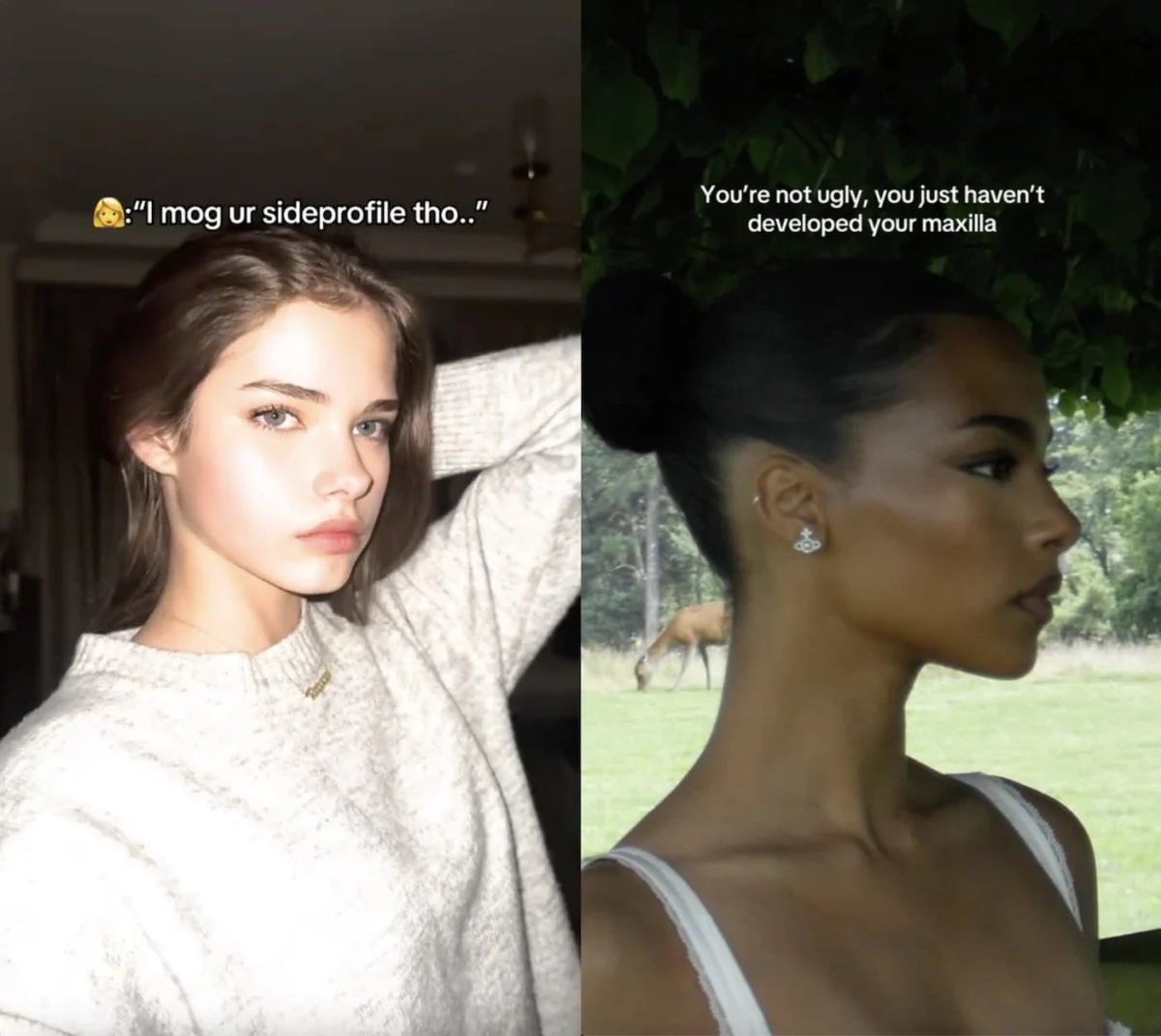
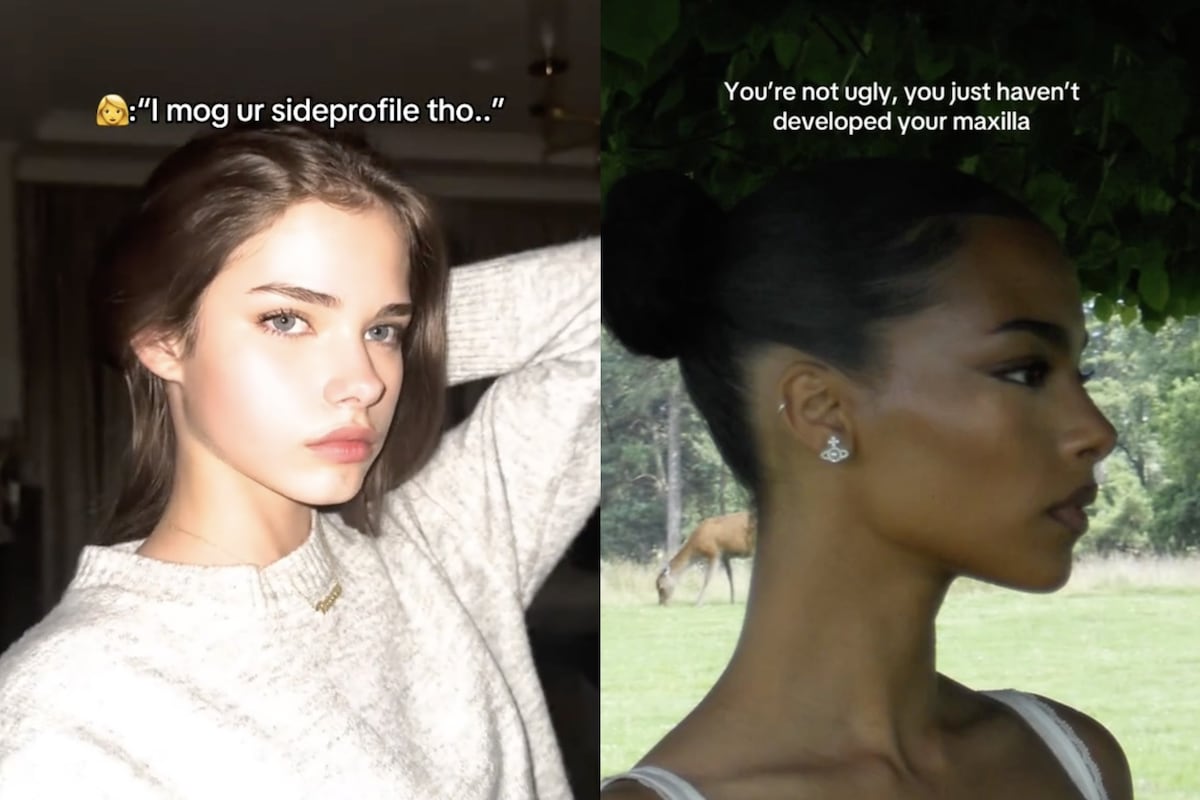
While looksmaxxing originated in the fringes of online manosphere communities, it has steadily permeated mainstream digital culture, particularly via platforms like TikTok and Discord. Here, its specialized vocabulary and methodologies are increasingly being adopted by women. Although women are not yet widely engaging in the most extreme, physically damaging practices like bone restructuring, the telltale signs of this linguistic and ideological crossover are undeniably evident. Social media feeds are now populated with female creators sharing "facial exercises" targeting specific anatomical features, such as the orbicularis oculi (eye muscles) and a recessed maxilla (the bone encompassing the upper jaw, cheeks, and under-eyes). Discussions around "corsetmaxxing" for waist reduction abound, and some content creators have even adopted the language of post-war eugenics, proudly proclaiming "Me feeling insecure then remembering I have a north atlantid phenotype" (referring to a perceived desirable white racial type). Even the familiar "pick-me girl" trope has evolved, transitioning from "here’s why girls hate me" to the looksmaxxing-inflected "I mog your side profile tho," indicating a shift in the perceived metrics of female social standing and desirability.
This appropriation by women is not accidental; it is a strategic response to persistent gender biases within the beauty discourse. Mala, a 26-year-old TikTok creator, explicitly stated her foray into looksmaxxing content and terminology was an attempt to be "taken more seriously" within the beauty sphere. She articulates a prevalent frustration: "I have no problem with men enhancing their looks; it’s natural to seek validation and admiration in that department, but why are women being treated so poorly for wanting those same things? When women care about their beauty, they are shallow and stupid, but if a man does, it’s self-care and improvement. Looksmaxxing is men once again taking over women’s spaces and claiming to have discovered them while also actively trying to kick us out."
The Quest for Legitimacy: When Vanity Becomes Biohacking
The strategic adoption of clinical, science-adjacent language by women is a direct consequence of witnessing how framing minor cosmetic insecurities as "medical anomalies" garners attention and respect. A vlog documenting lip filler injections might be dismissed as frivolous, yet undertaking facial exercises to "improve a recessed maxilla" suddenly sounds like a medically justifiable endeavor. This phenomenon begs the question of why women have increasingly embraced this "masculine" verbiage. Ellen Atlanta, a prominent beauty critic and author of Pixel Flesh: How Toxic Beauty Culture Harms Women, astutely observes, "It’s interesting to see what gets deemed as vanity and what gets lauded as biohacking." She highlights anti-aging as a prime example, noting its rebranding as "longevity science" since high-profile men like Bryan Johnson became involved, shifting its perception from a superficial concern to a serious scientific pursuit.
This societal tendency to trivialize matters associated with femininity extends far beyond beauty. Dr. Jordan Foster, an assistant professor in the Sociology Department at MacEwan University, posits that women’s turn to looksmaxxing language is "strategically wise." He suggests it may serve as "a shortcut for women […] who have always commented on beauty, but whose dialogue has gone without notice until now." Historically, beauty culture was largely relegated to the realm of "women’s business," and consequently, often dismissed as inconsequential or trivial. Dr. Foster emphasizes, "I think it is important to recognise that matters related to femininity are often dismissed as silly. For evidence of this, you can look to a range of women’s health issues that have been neglected by the press, by members of the public and by physicians and researchers alike. Beauty is not so different." The global beauty industry, valued at over $500 billion and projected to grow significantly, often operates under this gendered perception, where its economic power is acknowledged, but its cultural impact on women is frequently downplayed.
Historical Context: The Enduring Gendered Perception of Beauty
Throughout history, women’s efforts to enhance their appearance have been subject to intense scrutiny and moral judgment. From the elaborate corsetry of the Victorian era to the restrictive diets of the 20th century, female beauty practices have been simultaneously idealized, demanded, and condemned as vain. The paradox lies in society’s simultaneous expectation for women to be beautiful and its disparagement of the labor required to achieve it. This double standard creates an environment where women are constantly negotiating the fine line between acceptable self-care and perceived narcissism. The rise of looksmaxxing language, therefore, can be seen as a modern manifestation of this ongoing struggle, a desperate attempt to reframe an inherently feminine pursuit into something more palatable to a male-dominated discourse that values "logic" and "science" over "emotion" and "superficiality."
The emergence of "biohacking" in the early 21st century, often championed by tech-bros and Silicon Valley elites, provided a template for this re-gendering of self-optimization. Activities like intermittent fasting, cold plunges, and nootropics, while having roots in various health traditions, were repackaged with scientific-sounding terminology and framed as a rigorous, data-driven quest for peak human performance. This narrative successfully distanced these practices from traditional "wellness" or "beauty" categories, which were often seen as feminized and therefore less serious. Looksmaxxing simply applies this same re-branding strategy to physical aesthetics, particularly facial features and body composition, making it understandable why women would attempt to co-opt its language to legitimize their own long-standing beauty concerns.
Implications and Concerns: The Paradox of Seeking Legitimacy
While the adoption of looksmaxxing terminology might offer a temporary sense of validation for women, it comes at a significant cost. As Ellen Atlanta points out, it represents a "strange bargain because it concedes that beauty work only becomes serious when it stops sounding like something women do. The labour hasn’t changed." This concession reinforces the problematic notion that feminine concerns are inherently less important or less legitimate unless filtered through a masculine, pseudo-scientific lens. Moreover, the "more scientific or experimental treatments" often associated with looksmaxxing are financially inaccessible to the majority, perpetuating an exclusionary standard of beauty.
The psychological implications are also profound. Looksmaxxing, with its emphasis on objective measurements and "fixing" perceived flaws, can exacerbate body dysmorphia and insecurity. By reducing human attractiveness to a series of quantifiable metrics, it strips away individuality and promotes an unattainable ideal. The scene in Mean Girls, where the Plastics dissect their bodies with surgical precision, would not be inherently worse if Gretchen worried about her "long philtrum" instead of her hairline. The fundamental problem lies in the shift itself: it legitimizes a clinical, often dystopian, way of talking about appearance.
By adopting this tech-bro, optimization-focused language to describe their bodies, women risk reinforcing the very idea that feminine behaviors must be masculinized to be taken seriously. Vanity transforms into "optimization," insecurity into a "diagnosis," and beauty becomes yet another "problem to be solved." This paradigm fosters a culture where self-acceptance is sidelined in favor of relentless self-improvement driven by external, often arbitrary, standards. The vocabulary may have evolved, becoming more clinical and seemingly objective, but the underlying societal demand remains disturbingly constant: identify every conceivable flaw, and then relentlessly pursue its eradication. This perpetuates an endless cycle of self-scrutiny and dissatisfaction, regardless of the gendered language used to articulate it.
The broader societal impact extends to mental health, especially among younger generations exposed to these ideals on social media. Constant exposure to "optimized" faces and bodies, coupled with the detailed, pseudo-scientific breakdowns of perceived flaws, can lead to increased anxiety, depression, and disordered eating. The looksmaxxing community, both male and female, often operates in echo chambers where extreme measures are normalized and celebrated, making it difficult for individuals to maintain a healthy perspective on their own appearance. The beauty industry, ever-responsive to trends, is likely to capitalize on this new language, developing and marketing products and procedures that promise "maxilla improvement" or "canthal tilt correction," further embedding these concepts into the mainstream beauty narrative. This trajectory suggests a future where the pursuit of beauty is increasingly medicalized and depersonalized, driven by algorithms and objective scores rather than individual well-being or self-expression.