







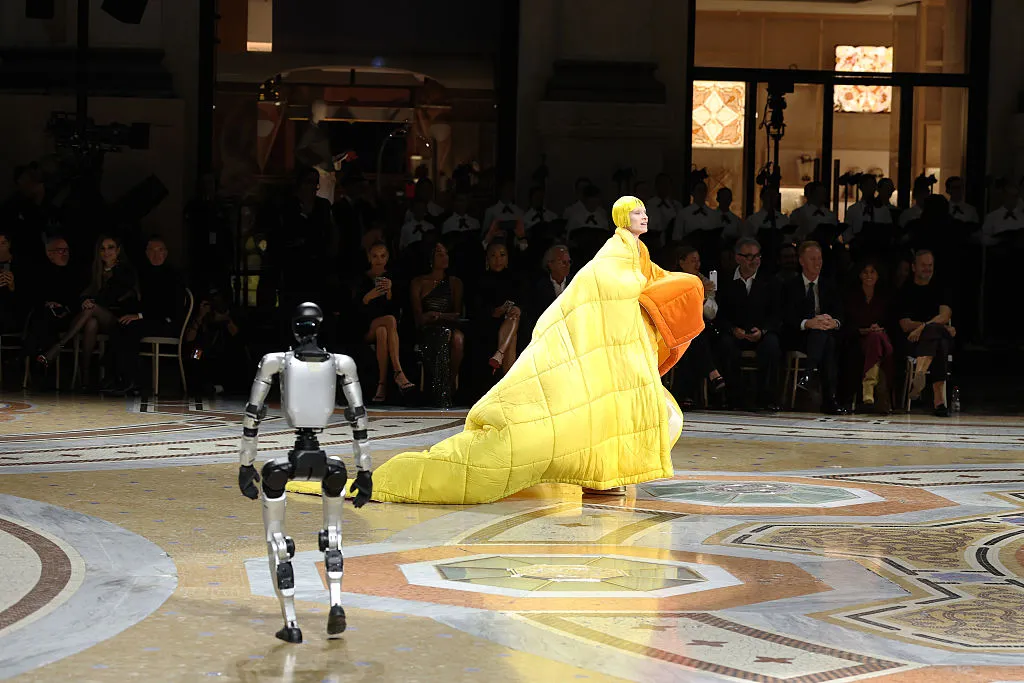
The convergence of high fashion and emerging technology reached a controversial crescendo this week as Vogue World concluded its Milan edition with an unscripted spectacle: a troupe of humanoid robots strutting down the historic cobblestones of the Galleria. Billed as a celebration of Italian craftsmanship and the enduring human touch in an increasingly automated world, the event instead yielded an ironic juxtaposition that immediately dominated global headlines, overshadowing the apparel it was designed to showcase.
As the fifth iteration of Vogue’s traveling multimedia extravaganza—which has previously captivated audiences in New York, London, Paris, and Hollywood—the Milan showcase was intended to blend theatrical performance, celebrity culture, and high-end merchandising. However, the inclusion of autonomous machines developed by the Chinese robotics firm Unitree during a segment entitled "The Age of Intelligence" instead provoked widespread debate regarding the rapid integration of artificial intelligence and automation into creative industries.
The Evolution and Chronology of Vogue World
Launched in 2022 during New York Fashion Week, Vogue World was conceived by Condé Nast’s global editorial director, Anna Wintour, as a reinvention of the traditional runway format. Moving away from exclusive, industry-only presentations, the franchise transformed into a public-facing cultural festival. The inaugural New York event focused on a street-fair aesthetic and theatrical performances, followed by a theatrical arts celebration in London’s Theatre Royal Drury Lane in 2023, and a high-energy athletic-themed showcase in Paris ahead of the 2026 Olympic Games.
Each successive edition has sought to merge local cultural heritage with commercial partnerships. The Milan edition, heavily supported by corporate sponsors including Meta Glasses and OpenAI, aimed to honor traditional Italian ateliers. Yet, the juxtaposition of artisanal heritage with naked, unclad humanoid robots performing synchronized routines to Gigi D’Agostino’s electronic anthem "L’Amour Toujours" created a jarring narrative dissonance.
The incident instantly polarized attendees and industry observers. While the robots—which have gained international notoriety for viral dance routines and occasional operational malfunctions—were meant to symbolize futuristic progress, their unpolished execution became the primary talking point across social media platforms. Valentino Creative Director Alessandro Michele’s visibly perplexed reaction in the front row quickly became a viral symbol of industry skepticism toward forced technological integration.
Industry Reactions and the Silicon Valley Nexus
The inclusion of robotics on the runway highlights a broader, decade-long strategic alignment between the fashion publishing powerhouse and Silicon Valley. Analysts note that this relationship dates back significantly, highlighted by milestones such as Apple executive Jony Ive co-hosting the Met Gala in 2015. More recently, high-profile collaborations, including technology executives securing prominent media placements and event sponsorships, underscore a symbiotic financial exchange. Publications seek fresh capital streams from the technology sector, while tech leaders leverage the cultural cachet and global influence of high fashion to humanize their brands.

However, this corporate courtship is occurring against a challenging macroeconomic backdrop. As households worldwide navigate persistent cost-of-living pressures, labor displacement driven by automation and artificial intelligence remains a pressing socio-economic concern. Critics argue that positioning unclad, utilitarian robots as runway centerpieces appears tone-deaf during a period marked by job insecurity across multiple sectors, including creative industries threatened by generative AI.
Several fashion executives and technology founders expressed quiet frustration with the spectacle. Observers noted a growing disconnect between corporate tech evangelism and the realities faced by traditional craftspeople whose livelihoods are increasingly vulnerable to technological substitution. Rather than celebrating human artistry, the display invited existential questions regarding the value of human labor in design.
True Innovation Versus Gimmickry
Beyond the immediate controversy surrounding the Unitree robots, creative technologists and fashion strategists have pointed out that the display offered a superficial representation of how technology can genuinely enhance design. True innovation at the intersection of fashion and engineering often manifests in subtle, material-based breakthroughs rather than autonomous hardware stunts.
Industry experts frequently cite avant-garde presentations like the Spring 2024 Schiaparelli collection—which integrated vintage microchips, motherboards, and crystal-encrusted robotic infant motifs—as more cohesive explorations of humanity’s relationship with technology. Similarly, contemporary design studios, such as the artist duo AA Murakami, have pioneered "ephemeral technology," utilizing engineering to create temporary, soul-resonant art pieces like bubble-based garments featured at major global galas. By comparison, the deployment of unadorned humanoid robots was perceived by many critics as a blunt marketing gimmick rather than a thoughtful artistic statement.
Implications for the Upcoming San Francisco Showcase
The debate set loose in Milan carries direct implications for the upcoming edition of Vogue World, scheduled to take place in San Francisco next year. Choosing the Northern California technology hub signals an even deeper integration between the fashion publication and the epicenter of the global tech industry.
While proponents argue that the San Francisco showcase will offer a natural home for exploring digital and physical convergence, skeptics question whether the fashion community is prepared to fully embrace an aesthetic driven by Silicon Valley sensibilities. As Vogue continues to navigate this high-stakes partnership, the Milan experiment serves as a cautionary tale: while technological integration generates immediate attention, it risks alienating audiences if it appears disconnected from the core human artistry that defines the fashion industry.