



The journey of a garment from raw material to finished product is fraught with significant resource consumption and environmental implications. Fabrics, ancient technologies perfected over millennia, often demand vast quantities of resources. Their life cycles can deplete oil reserves, occupy extensive agricultural land, consume staggering volumes of water, and necessitate the use of harmful pesticides, chemical agents, and synthetic dyes. Consider the transformation: how does a fluffy cotton boll, a dense tree, or crude oil become the soft, smooth, vibrant textiles that define our wardrobes? Beyond the material itself, the human element—the hands that cultivate, process, and construct these fabrics—is profoundly affected by manufacturing processes and resource extraction, often in ways that compromise health and labour rights.
For any individual embarking on or deepening their ethical fashion journey, understanding the fundamental impacts of material composition is an indispensable tool. The landscape is ever-evolving, with novel materials constantly emerging and industry standards shifting for established fibres. This dynamic environment can be overwhelming for conscious consumers striving to make informed investment decisions in ethically sound and environmentally responsible clothing.
The Environmental and Social Footprint of Fashion: A Deeper Dive
The fashion industry’s environmental footprint is vast and complex, making it one of the largest contributors to global pollution. Textile production alone accounts for an estimated 10% of global carbon emissions, surpassing the combined emissions of international flights and maritime shipping. Water consumption is another critical issue, with the industry using approximately 79 billion cubic meters annually. Moreover, textile waste continues to mount, with a significant portion ending up in landfills or incinerators, releasing greenhouse gases and toxic substances. In 2021, the United States alone generated 17 million tons of textile waste, with only a fraction being recycled.
Social implications are equally severe. Supply chains are frequently opaque, making it difficult to monitor labour practices. Reports of forced labour, child labour, and hazardous working conditions persist in various stages of textile production, particularly in regions with lax regulations. The human cost, from exposure to toxic chemicals in dyeing factories to exploitative wages, underscores the urgency of addressing sustainability comprehensively.
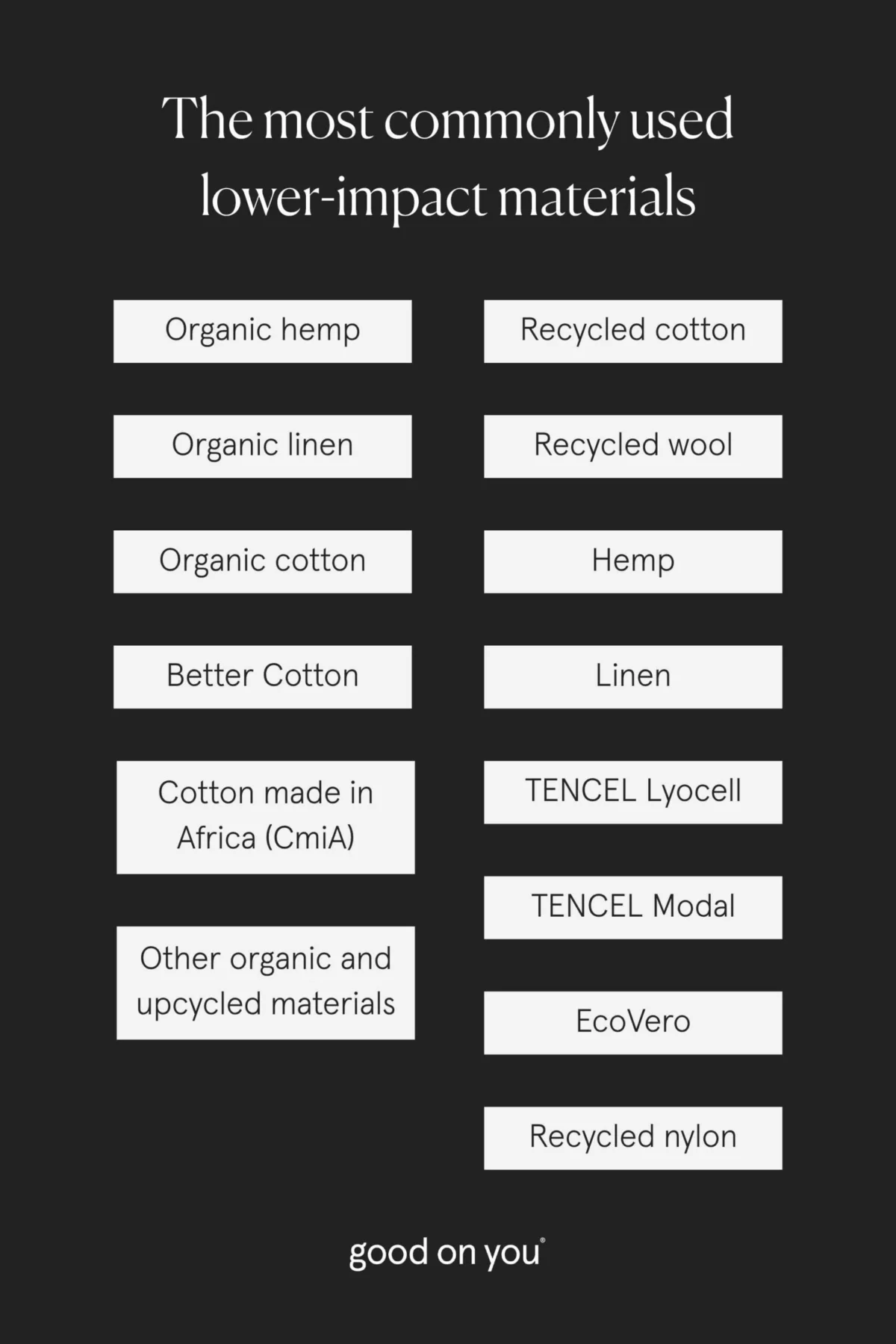
There is no universally accepted hierarchy of sustainability for fashion materials, and comparable life cycle analysis (LCA) data remains limited. Each material presents a unique set of trade-offs and impacts on the planet. This complexity necessitates a balanced approach, advocating for a diverse blend of preferred materials going forward. Independent organisations like Good On You strive to navigate this intricate world by analysing available information and consulting industry experts, acknowledging that a material’s impact can vary significantly based on its origin and production methods. They also embrace innovation in novel materials, rigorously assessing them against key environmental impact areas using robust scientific methodologies. Their list of responsible materials is dynamic, continuously updated as new research and data become available. Ultimately, the choice rests with the consumer, guided by personal values and comprehensive information.
It is crucial to recognise that material selection, while foundational, is not the sole determinant of a brand’s responsibility. A brand using organic cotton but neglecting greenhouse gas emissions, textile waste, or labour rights issues throughout its supply chain falls short of best practice. However, integrating lower-impact materials forms a vital base upon which a truly responsible brand can build.
Debunking the "Natural" Fibre Myth
A common misconception in sustainable fashion is the inherent superiority of "natural" fibres. Often, these fibres are neither genuinely natural in their processed state nor necessarily more sustainable. Conventional cotton, for instance, is a prime example of an environmentally harmful agricultural activity even before its transformation into cloth. Brands employing "all-natural" claims without demonstrating concrete steps to source materials produced with people, the planet, and animals in mind may be engaging in greenwashing.
Decoding Fabric Sustainability: A Material-by-Material Analysis
Plant-Based Fibres: A Spectrum of Impact
-
Cotton: A ubiquitous fibre, soft, light, and breathable, cotton is a staple in quality clothing. Untreated and unblended, it is entirely biodegradable. However, conventional cotton, whether genetically modified or not, is an exceptionally water-intensive crop. It accounts for a significant portion of global insecticide use by sales volume, often linked to child slavery and forced labour in its cultivation. The transformation of cotton bolls into coloured fabric requires extensive chemical processes for treating, dyeing, printing, and finishing, exacerbating its environmental burden.
- Sustainable Alternatives: Organic cotton mitigates many of these issues, grown without pesticides or GMO seeds. Organic farming enhances soil fertility and reduces chemical runoff. Certifications like Better Cotton and Cotton made in Africa (CmiA) promote more sustainable practices. However, vigilance is crucial due to past issues with organic cotton certification fraud, notably in India, where significant quantities sold as organic were found to be counterfeit.
- Verdict: Prioritise recycled or certified organic cotton, verifying the authenticity of certifications.
-
Denim: Primarily cotton-based, denim inherits cotton’s environmental credentials. Its production carries additional concerns: synthetic indigo dyes contribute to waterway pollution and pose health risks to workers. The "distressed" look, often achieved through sandblasting, presents severe health hazards to labourers due to fine dust inhalation. Blended denim, incorporating elastane for stretch, complicates recycling.
- Sustainable Alternatives: Opt for secondhand denim, certified organic cotton denim, or denim made with more sustainable indigo dye alternatives. The increasing use of TENCEL Lyocell in denim offers a promising, more sustainable option.
- Verdict: Seek out sustainable denim brands committed to responsible sourcing, focusing on organic cotton and eco-friendly dyeing.
-
Hemp: Derived from the cannabis plant, hemp is a bast fibre known for its sustainability, requiring minimal water and no pesticides. Organic hemp ensures the absence of harsh chemicals. The fabric offers natural advantages, including thermal regulation and UV protection, with a texture akin to linen.
- Verdict: A superior alternative to conventional cotton, with organic hemp being a top-tier choice.
-
Linen: One of fashion’s most biodegradable and stylish fabrics, linen is strong, naturally moth-resistant, and derived from flax plant fibres. Untreated, it is fully biodegradable. Linen is robust, moisture-absorbent, and becomes softer with each wash.
- Verdict: A highly recommended option. Choose naturally coloured linen (ivory, ecru, tan, grey) and avoid bright white, which requires intensive bleaching. Organic linen, free from harmful chemicals, is ideal.
-
Modal (TENCEL Modal): A man-made cellulosic fibre (MMCF) from beech wood pulp, Modal is breathable and silky, absorbing 50% more water than cotton. It’s colourfast and popular in underwear and activewear. Technically biodegradable and recyclable, its leading producer, Lenzing AG, markets its version as TENCEL Modal. While Lenzing’s production process is more sustainable and globally certified, they supply fibre to mills, meaning it can be blended with less responsible fabrics.
- Verdict: Choose brands with transparent production processes, ensuring 100% TENCEL Modal for the most ethical choice.
-
TENCEL Lyocell: Another Lenzing AG brand, TENCEL Lyocell is an MMCF made from eucalyptus, oak, and birch wood pulp. Lenzing sources wood from certified, responsibly-managed plantations and uses a closed-loop system, recycling 99% of chemical solvents, minimising waste. Its Refibra technology incorporates 30% pre- and post-consumer cotton scraps into the wood pulp, diverting textile waste from landfills.
- Verdict: An excellent alternative to cotton or silk, offering breathability, moisture absorption, and softness. Prefer TENCEL over less sustainable viscose and rayon.
-
Viscose/Rayon: Derived from cellulose (wood pulp from fast-growing trees or plants like bamboo), viscose production involves dissolving cellulose in a chemical solution. Despite its plant origin, viscose poses significant problems due to rapidly increasing demand driven by fast fashion. It is a major cause of deforestation, particularly of endangered or ancient forests, and its production often involves dumping hazardous chemicals into waterways, harming ecosystems and livelihoods.
- Sustainable Alternatives: Look for brands using FSC-certified forest inputs or partnering with Canopy NGO to protect forests. ECOVERO is a type of viscose made from controlled wood sources. TENCEL Lyocell, with its closed-loop system, is a preferable alternative.
- Verdict: Avoid viscose unless brands are transparent about FSC-certified sourcing or Canopy partnership.
-
Cupro: Described as "regenerated cellulose," Cupro is an MMCF made from cotton waste—specifically, the tiny linter fibres too small for spinning. These are dissolved in a cuprammonium solution, then spun into fibre.
- Current Assessment: While made from waste and using some renewable energy and a closed-loop chemical recovery system, water consumption data is unclear. More comprehensive Life Cycle Assessments (LCAs) are needed before it can be definitively classified as a lower-impact material by organisations like Good On You.
- Verdict: A promising material due to waste utilisation, but requires further scientific validation for its overall environmental impact.
-
Bamboo: A fast-growing crop requiring little water and no pesticides, bamboo has been promoted as a sustainable option. However, its processing into fabric varies significantly. Mechanically-made "bamboo linen" is more sustainable but coarse and less widely available. Most bamboo fabric uses the viscose process in China, raising concerns about responsible cultivation and chemical discharge into waterways.
- Verdict: Bamboo fabric holds potential, but only if brands are transparent about cultivation and processing methods. Otherwise, TENCEL Lyocell, with its 99% closed-loop system, is a safer bet.
Animal-Derived Materials: Ethics, Welfare, and Environment
-
Angora: A long, silky fibre from angora rabbits, prized for softness and warmth. Production practices came under severe scrutiny following PETA exposés revealing appalling conditions in Chinese factories, leading many major fashion labels to abandon its use.
- Verdict: Avoid entirely, as there is no recognised welfare standard ensuring pain-free harvesting.
-
Cashmere: A luxurious and rare fibre, cashmere is three times warmer than wool and long-lasting. However, increased demand has led to ethical and environmental crises. Goats, with minimal fat, risk freezing to death if shorn too early in winter. Growing herd sizes contribute to the desertification of Mongolian grasslands, exacerbated by climate change, affecting cashmere quality. Labour conditions for herders also raise concerns.
- Verdict: Opt for recycled or secondhand cashmere to mitigate its impact.
-
Fur: Historically practical for warmth, fur evolved into a symbol of luxury and status. The rise of fur farming led to commodification and inhumane practices, including animals being skinned alive. Beyond ethical objections, fur farming shares many environmental and labour issues with leather production.
- Indigenous Context: It’s important to acknowledge that for some remote indigenous populations, animal skins and furs are essential for income and survival, a context often overlooked by critiques focused on Western commercial practices.
- Verdict: New fur products should be avoided by ethical consumers. Secondhand fur, while not directly supporting new production, still normalises the wearing of animal skins. Many brands and countries have banned fur farming and distribution.
-
Leather: An iconic material, leather’s longevity and versatility are undeniable. However, it is animal skin (primarily livestock, but also exotic animals), raising significant animal welfare concerns. Production is highly resource-intensive, requiring extensive water and land. The tanning process, particularly chrome tanning, uses extremely harmful chemicals like chromium 6, polluting waterways and endangering workers. Vegetable tanning, while considered "more sustainable," is also under scrutiny for its true environmental impact.
- Sustainable Alternatives: Numerous innovative plant-based "leather" alternatives exist, from pineapple and cork to upcycled rubber. These are generally preferable to "faux leather" made from PVC or polyurethane (PU).
- Verdict: Depending on personal ethics, choose secondhand or recycled leather, or avoid it in favour of certified plant-based alternatives.
-
Silk: Spun from silkworm cocoons, silk production typically involves killing the silkworms to extract the long threads. Reports of child slave labour in Indian silk production highlight critical ethical concerns.
- Sustainable Alternatives: Ahimsa silk (or "peace silk") allows the moth to emerge from the cocoon before harvesting. However, its environmental benefits are debated. Vegan silk innovations, such as vegan spider silk, are emerging but not yet widely available.
- Verdict: Research sources carefully to avoid exploitation and environmental destruction when purchasing silk or its alternatives.
-
Wool: A breathable, renewable fibre from sheep, wool offers warmth and stain resistance, and can be biodegradable. However, the industry faces controversy over mulesing (skin removal to prevent flystrike, often without anaesthetic), which is banned in many countries but not Australia, a major merino wool producer. Industrial-scale grazing can lead to land degradation. "Superwashed" wool, infused with plastic, or blends with synthetics, compromise biodegradability.
- Sustainable Alternatives: Seek out pre-loved or vintage wool items. Certifications like the Responsible Wool Standard (RWS), ZQ Merino Standard, or Soil Association Organic Standards provide varying welfare guarantees.
- Verdict: Opt for certified wool, especially from brands committed to avoiding mulesing (e.g., via Four Paws’ directory), or choose secondhand to extend garment life.
-
Down: Often hidden within garments, down feathers come from ducks and geese, typically through live plucking while conscious, or as a byproduct of slaughter. This practice is inherently cruel.
- Environmental Impact: While down itself is biodegradable, it’s usually encased in non-biodegradable outer shells, preventing effective decomposition.
- Verdict: All new down originates from practices involving harm to birds. Even certifications like the Responsible Down Standard (RDS) do not guarantee an ethical life for the animals, which are still raised in factory farms and slaughtered. Choose pre-loved down or ethical synthetic alternatives like PrimaLoft P.U.R.E., PrimaLoft Bio, Thermore, or Flowerdown.
Synthetic Materials: The Microplastic Dilemma and Beyond
A critical consideration for all synthetic materials, whether virgin or recycled, is the release of non-biodegradable microfibres into the environment, particularly during washing. This contributes significantly to microplastic pollution in oceans and waterways.
-
Conventional Polyester: The most widely produced fibre globally, polyester is a plastic derived from petroleum. It is largely non-biodegradable, persisting for decades or centuries. Its reliance on fossil fuels makes it a major contributor to climate change.
- Recycled Polyester: While better than virgin polyester, it still sheds microplastics. Crucially, 98% of recycled polyester comes from plastic bottles, not textile-to-textile recycling, meaning it does not significantly contribute to a circular fashion economy for existing garments.
- Verdict: Avoid virgin polyester. Use recycled polyester only when no other options exist (e.g., swimwear) and for items washed infrequently.
-
Conventional Nylon: The first entirely synthetic fibre, nylon is a plastic derived from coal and crude oil, processed intensively with chemicals. Its manufacture has several direct negative environmental impacts.
- ECONYL: An innovative alternative from Aquafil, ECONYL recycles synthetic waste (industrial plastic, fabric scraps, fishing nets) into new nylon yarn of virgin quality through a closed-loop regeneration system. This process uses less water and generates less waste.
- Verdict: Avoid traditional nylon. Opt for ECONYL, but remain vigilant about microfibre shedding. For ECONYL, prefer items less frequently washed (like footwear) and use wash bags or filters for clothing.
-
Fleece: A synthetic insulating fabric, fleece is typically made from polyester (PET) or other synthetic fibres, derived from petrochemicals. While comfortable and lightweight, it relies on non-renewable resources and often requires chemical coatings for weather resistance. Recycled polyester fleece, while better, still sheds microfibres, especially with frequent washing.
- Verdict: Steer clear of fleece where possible. If chosen, ensure it’s recycled and follow strict care instructions to minimise microfibre shedding.
-
PVC (Polyvinyl Chloride): A petrochemical product, PVC is heavily processed and versatile, used in weather-resistant clothing, faux leather, and coatings. Its manufacture is energy-intensive and heavily reliant on fossil fuels. The addition of phthalates (plasticisers) poses potential health risks, and PVC contributes substantially to plastic waste.
- Verdict: Avoid PVC for a sustainable wardrobe.
-
Polyurethane (PU): A plastic material in rigid or flexible forms, PU is used in shoe soles, waterproof coatings, and as a common "vegan leather alternative." Derived from fossil fuels, it contributes to greenhouse gas emissions and climate change. Isocyanates used in its production can be toxic when heated or burned. PU is unlikely to biodegrade.
- Verdict: Avoid polyurethane. Explore plastic-free alternatives to animal-derived materials.
-
Faux Fur: While a response to the ethical issues of animal fur, mass-produced faux fur is typically plastic-based, contributing to plastic pollution. Disturbingly, reports indicate mislabelling, with some "faux fur" products, especially in fast fashion, containing real animal fur.
- Verdict: Avoid this plastic material. If desired, seek secondhand options.
-
Glitter: Predominantly tiny fragments of plastic (PET, coated in aluminium), glitter contributes directly to microplastic pollution when washed or rinsed from clothing and cosmetics. Even "biodegradable" glitter alternatives show dubious environmental benefits, with some studies suggesting similar harm to conventional glitter.
- Verdict: Avoid glitter in all products.
-
Velvet: A fabric type rather than a specific fibre, velvet can be woven from silk, viscose, polyester, or nylon. Modern fast fashion often uses synthetic velvet, which can be rough and unbreathable, contrasting with historically silk-woven velvet’s fluidity.
- Verdict: For sustainable velvet, shop secondhand or choose viscose-velvet certified from sustainably sourced forests, avoiding ancient or endangered forest destruction.
-
Rubber: A strong, stretchy material, rubber can be natural (from latex) or synthetic (chemically produced, like neoprene or SBR). Insufficient natural rubber supply leads to reliance on synthetic versions, with their associated chemical and fossil fuel impacts.
- Sustainable Alternatives: Recycled rubber is an excellent, more sustainable option.
- Verdict: New rubber, even natural, is not ideal. Prioritise recycled rubber or verify fair and responsible sourcing. Ensure end-of-life recycling where possible.
-
Acetate: A human-made, semi-synthetic material derived from cellulose, acetate mimics silk and is used in dresses, linings, and accessories. It’s often promoted as a plastic alternative for eyewear.
- Verdict: Acetate is considered "the better of two evils" compared to virgin plastics. Opt for "bio-acetate" or "bio-plastic" with higher plant-based content. Choose high-quality, long-lasting products to maximise circulation. Verify cellulose (wood pulp) from FSC or PEFC-certified, regulated sources.
The Role of ‘Deadstock’ and Circularity in Fashion
"Deadstock" refers to leftover fabric not used for its original purpose. While it can be a more sustainable option than virgin materials, contributing to industry circularity by diverting waste from landfills, its very existence highlights a deeper problem: overproduction and overconsumption within the fashion industry.
- Verdict: In the current system, supporting ethical brands that use quality deadstock fabric can be beneficial, provided they also implement comprehensive waste-reduction and climate change strategies. If deadstock use is their primary sustainability claim, it may indicate greenwashing.
Empowering the Conscious Consumer: Navigating Choices and Driving Change
The journey towards a more sustainable wardrobe is deeply personal, rooted in individual values concerning animal welfare, environmental impact, or labour ethics. However, informed choices are universally critical. Consumers are increasingly empowered by accessible information and the growing transparency demands placed on brands. Tools like Good On You’s directory provide comprehensive ratings of fashion and beauty brands’ impacts, enabling consumers to align their purchasing power with their values.
Understanding certifications (e.g., GOTS for organic textiles, FSC for forest products, RWS for wool) provides a level of assurance, though consumers must remain aware of potential fraud and the specific scope of each certification. Ultimately, conscious consumption involves a holistic approach: prioritising durability, repairing and reusing garments, embracing second-hand options, and demanding greater transparency and accountability from brands.
The Path Forward: Innovation, Regulation, and Collective Responsibility
The future of sustainable fashion hinges on continued innovation in material science, robust regulatory frameworks, and collective responsibility across the supply chain. Novel bio-materials derived from agricultural waste, algae, or fungi offer promising avenues to reduce reliance on conventional fibres. Advancements in textile-to-textile recycling are crucial for achieving true circularity, moving beyond bottle-to-textile recycling for synthetics.
Government policies, such as extended producer responsibility schemes and stricter environmental regulations, can incentivise sustainable practices and penalise polluters. Industry collaborations, like the Sustainable Apparel Coalition, aim to develop standardised tools for measuring environmental and social performance. However, these efforts must be matched by genuine commitment and independent verification to avoid tokenism.
Ultimately, shifting the fashion paradigm from a linear "take-make-dispose" model to a circular, regenerative one requires a concerted effort from designers, manufacturers, retailers, policymakers, and consumers. By making informed material choices, supporting ethical brands, and advocating for systemic change, we can collectively steer the fashion industry towards a more responsible and sustainable future.
Editor’s note
Good On You publishes the world’s most comprehensive ratings of fashion and beauty brands’ impact on people, the planet, and animals. Use our directory to search thousands of rated brands.
We updated this article on 9 June 2026: Our editors frequently make updates to articles to ensure they’re up to date. We updated the infographic and fabric information and reviewed the sources to ensure they are up to date.