










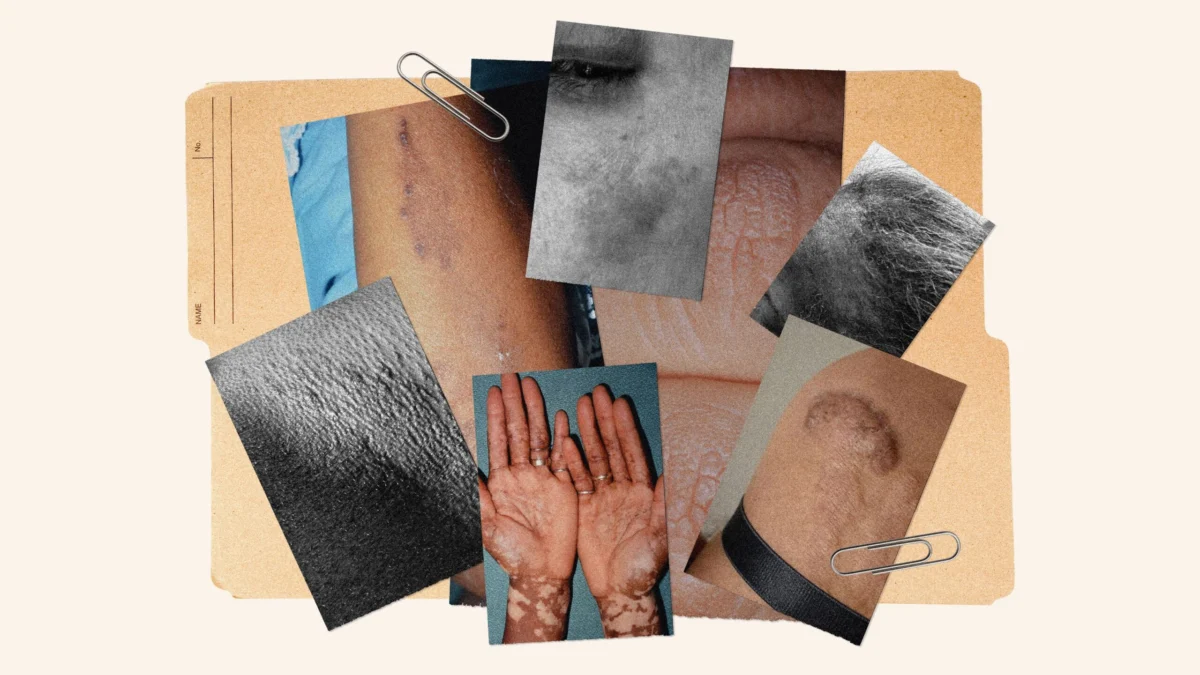
The experience of searching for information about a skin concern and finding an absence of representation for darker skin tones is a familiar one for many Black and Brown individuals. This lack of visual representation in dermatological resources can lead to confusion and delay in seeking appropriate care. Skin conditions manifest differently across all complexions, but certain issues are not only more prevalent in individuals with darker skin but also present with unique visual cues. Recognizing these differences is crucial for accurate diagnosis and effective treatment.
A 2025 publication in the Journal of European Academy of Dermatology and Venereology highlighted that conditions such as post-inflammatory hyperpigmentation and melasma are frequently observed and often more severe in individuals with skin of color. This underscores the urgent need for greater attention and tailored approaches to dermatological care for melanin-rich skin.
In response to this critical gap, Dr. Susan C. Taylor, a board-certified dermatologist based in Philadelphia, founded the Skin of Color Society in 2004. This organization is dedicated to enhancing the understanding and treatment of dermatologic health in individuals with darker skin tones through education for both healthcare providers and the public. Dr. Taylor emphasizes that as the United States grows more ethnically diverse, the dermatological community will continue to encounter and manage skin conditions that are either more common, present differently, or are unique to people of color. "Since [establishing the Skin of Color Society], we have made terrific inroads in terms of understanding skin of color a little bit better and prioritizing skin of color," Dr. Taylor stated, noting the organization’s success in fostering lectures, conferences, and increased representation in mainstream dermatology textbooks focused on melanated skin.
This article aims to further bridge this knowledge gap by providing a comprehensive guide to common skin conditions affecting individuals with darker skin, detailing their identification and treatment.
The Science of Melanin and Skin Health
Melanin is the pigment responsible for skin color, and it exists in two primary forms: eumelanin, which is brown, and pheomelanin, which is yellow. While the hashtags #melanin and #melaninqueen on social media often associate the term "melanin-rich skin" with darker tones, Dr. Jenna Lester, a board-certified dermatologist in San Francisco, clarifies that most individuals possess a balance of both types of melanin. The specific ratio determines an individual’s skin color, with eumelanin being more dominant in darker complexions. "So it’s not that people with dark skin have more melanin; they just have more of a different type of melanin," Dr. Lester explained.

Melanin is synthesized by specialized cells called melanocytes, located in the lower layers of the skin. These melanocytes package melanin into melanosomes, which are then transferred to skin cells. Beyond pigmentation, melanin, particularly eumelanin, offers a degree of protection against sun-induced burning.
How Skin Conditions Appear Differently on Darker Skin Tones
The higher concentration of eumelanin in Black and Brown skin means that certain dermatological conditions can present with distinct visual characteristics compared to lighter skin tones. For instance, post-acne marks that might appear as redness (post-inflammatory erythema) on fairer skin can manifest as brown or even purplish discoloration on darker skin. Dr. Esther Henebeng, a board-certified dermatologist with U.S. Dermatology Partners Fairfax, noted, "So if the photo that you’re seeing online is a stock photo on white skin, but when you look in the mirror, and you see Black skin, you might not identify the issue."
Pigmentation Disorders
Post-Inflammatory Hyperpigmentation (PIH)
PIH arises from skin injuries such as acne, burns, insect bites, or other forms of trauma. Dr. Michelle Henry, a board-certified dermatologist in New York City, explains that due to the higher pigment content in darker skin, the likelihood of PIH increases. "Those little melanosomes are full of pigments, and they’re so full that they’re almost bursting," Dr. Henry elaborated. "So that means anything can bump them and cause them to leak." This leakage of pigment results in hyperpigmentation—darker coloration—in the affected area, commonly seen as dark spots or marks left after a pimple has healed.
-
Signs and Symptoms: On darker skin, PIH can range from localized dark spots to broader areas of discoloration. Dr. Henebeng suggests a key differentiator for PIH is its location: "Wherever you get the pimple, [PIH] will usually be there, so you’ll have that correlation that something happened to the skin in that spot or area." PIH typically fades over time, unlike conditions such as melasma or vitiligo, which tend to be more persistent.
-
Treatment: Dr. Uchenna Okereke, a board-certified dermatologist in Massachusetts, emphasizes the significant role of consistent sunscreen use in mitigating PIH. "Consistent use of sunscreen is really the first step in treating hyperpigmentation," Dr. Okereke stated. "Sunscreens with physical blockers like zinc oxide and titanium dioxide help block harmful UV rays from the sun, which will prevent worsening of dark marks."

Several topical ingredients can also improve PIH, including glycolic acid, cystamine, kojic acid, azelaic acid, and alpha-arbutin. Consulting a dermatologist is recommended to determine the most suitable ingredients for individual needs. Over-the-counter options like Topicals Faded Brightening & Clearing Gel (containing kojic acid and licorice root) and CeraVe Resurfacing Retinol Serum (formulated with niacinamide and retinol) are also effective.
Melasma
Melasma is a common pigmentation disorder characterized by symmetrical, lacy patches of discoloration. Dr. Corey L. Hartman, a board-certified dermatologist, described it as "a pigmentary disorder that appears as lacy, [meshed] patches." Dr. Lester added that in individuals with melasma, "those pigment-producing cells are stimulated to create more pigment, resulting in darker discoloration."
Often referred to as the "mask of pregnancy," melasma is sometimes linked to hormonal fluctuations during pregnancy and menopause, as noted by Dr. Henry. However, it can affect individuals of any age, with genetics also playing a significant role, as Dr. Henebeng pointed out: "So if mom had it, you might have it."
-
Signs and Symptoms: Melasma typically appears as darkened patches on the face, particularly the forehead, cheeks, and upper lip. These specific locations can help distinguish it from other pigmentation issues, though a dermatologist’s diagnosis is essential.
-
Treatment: While some melasma patches may resolve spontaneously, persistent cases can be managed through several treatment avenues. Dr. Taylor reiterates the foundational importance of sun protection: "People with melasma want to block out [UVA and UVB light] and visible light. Those three wavelengths of light can worsen melasma, make it darker, and can prevent medications from being as effective as they can be."

Prescription topical treatments, such as Tri-Luma (a combination of hydroquinone, tretinoin, and fluocinolone acetonide), have demonstrated superior efficacy in lightening melasma. Over-the-counter options like SkinCeuticals Discoloration Defense Serum, formulated with kojic acid, tranexamic acid, and niacinamide, and the more affordable Melé Even Dark Spot Control Serum, containing niacinamide and pro-retinol, are also beneficial. Chemical peels can further aid in lightening melasma pigmentation.
Vitiligo
Vitiligo is an autoimmune condition where the skin loses its pigment, resulting in lighter patches. Dr. Yolanda Lenzy, a board-certified dermatologist in Massachusetts, explained, "It’s an autoimmune condition, which means your body is producing inflammatory T-cells that attack the melanocytes (the cells that produce pigment)." The exact cause is unknown, but a combination of genetic susceptibility and autoimmune triggers is suspected, according to Dr. Hope Mitchell, a board-certified dermatologist in Ohio. While vitiligo can occur in any individual, the loss of pigment is most visually striking on darker skin tones.
-
Signs and Symptoms: Vitiligo is characterized by white or lighter patches of skin that can appear anywhere on the body. These patches do not resolve on their own. The psychosocial impact of vitiligo can be significant due to its visibility, potentially leading to emotional distress and stigmatization.
-
Treatment: Treatment begins with addressing any underlying autoimmune conditions. Dr. Lenzy has found success with topical tacrolimus ointment, while Dr. Henebeng recommends Opzelura (ruxolitinib 1.5%). Sun protection is paramount, as the lack of melanin makes the skin more susceptible to sunburn. Dr. Mitchell also advises stress reduction, as stress can exacerbate inflammation and pigment loss. Phototherapy, or light therapy, is another effective treatment option conducted under medical supervision.
Scarring and Growth Conditions
Keloids

Keloids are an overgrowth of scar tissue that form thick, dense, hard lumps on the skin, often appearing after an injury such as a piercing, surgical incision, or acne lesion. Dr. Elizabeth Kiracofe, a board-certified dermatologist in Chicago, notes that keloids are most common in individuals with darker skin, with those of African descent being at the highest risk. Genetic predisposition is also a factor, with familial cases suggesting an autosomal-dominant inheritance pattern.
-
Signs and Symptoms: Keloids typically originate from a skin injury and can be accompanied by itching or pain. Their size and location can lead to aesthetic concerns or discomfort during movement.
-
Treatment: While complete prevention of recurrence can be challenging, keloids are treatable. Options include steroid injections, surgical removal, laser therapy, and cryotherapy (freezing the keloid with a cold spray). Dermatologists may recommend a combination of treatments for optimal results.
Dermatosis Papulosa Nigra (DPN)
DPN is a condition characterized by benign, mole-like growths that typically appear on the face, particularly the cheeks and around the eyes. Colloquially known as "Morgan Freeman spots," these raised growths are distinct from skin tags due to their morphology and location.
-
Signs and Symptoms: DPN lesions are darkly pigmented, flat-topped or minimally elevated, and symmetrically clustered on the face. They are often associated with a family history, suggesting a genetic predisposition. DPN is not dangerous and generally does not require treatment, though cosmetic removal is an option.

-
Treatment: The primary treatment for DPN is electrodesiccation, a procedure where a needle-shaped electrode uses a high-frequency electric current to "dry up the tissue" after the skin is numbed with topical lidocaine. While removal is permanent, new growths can develop over time.
Hair and Scalp Conditions
Pseudofolliculitis Barbae (PFB)
PFB, commonly known as razor bumps, is an inflammatory condition triggered by hair removal processes like shaving. Dr. Henry explains that PFB is more prevalent in darker skin tones due to the curved nature of hair follicles, which can cause hair to curl back and penetrate the skin. While often associated with men’s facial hair, PFB can also affect women in areas prone to hair removal.
-
Signs and Symptoms: PFB appears as small, pimple-like bumps and ingrown hairs in areas where hair has been removed. It can cause irritation and itching.
-
Treatment: Shaving in the direction of hair growth, using a sharp, multi-blade razor, and employing depilatory creams can help. Serums containing chemical exfoliants like glycolic or salicylic acid can also improve the appearance of razor bumps and address ingrown hairs by exfoliating the skin and preventing trapped hairs. Products like Kiehl’s Ingrown Hair and Tone-Correcting Intimate Drops and Fur Ingrown Eliminator Serum are recommended.
Traction Alopecia
%2520-%2520310%2520-%2520276.JPG)
Traction alopecia is a form of hair loss caused by prolonged pulling on the hair, often from hairstyles such as braids, weaves, cornrows, and tight ponytails. Dr. Henry notes that this can affect both natural and chemically relaxed hair.
-
Signs and Symptoms: In addition to hair thinning and loss, symptoms include scalp tenderness, pain, and pimple-like bumps at the points of highest tension. Traction alopecia typically begins at the hairline.
-
Treatment: The cornerstone of treatment is to alleviate the tension on the scalp. This involves rotating hairstyles to give the hair a break from prolonged stress. Topical anti-inflammatories, such as corticosteroids, and in some cases, intralesional steroid injections, can help reduce inflammation. Low-dose minoxidil may be used to thicken remaining hairs, and platelet-rich plasma (PRP) therapy shows promise in slowing disease progression.
Central Centrifugal Cicatricial Alopecia (CCCA)
CCCA is a form of scarring hair loss that begins at the crown of the head and spreads outwards. While certain hairstyling practices have been implicated, the exact cause remains unknown, with research suggesting a complex interplay of factors beyond just hairstyles. Dr. Lenzy notes that CCCA is the most common type of scarring hair loss among Black women, involving inflammation that leads to the destruction and eventual replacement of hair follicles with scar tissue.
-
Signs and Symptoms: CCCA is characterized by hair loss at the crown, often accompanied by inflammation and scarring. Early and accurate diagnosis is crucial, as scarred areas typically do not regrow hair.

-
Treatment: Treatment is initiated after a proper diagnosis, often confirmed by a scalp biopsy. Aggressive treatment is often necessary to control inflammation and potentially encourage the growth of stunted hairs. Options include oral antibiotics (for their anti-inflammatory properties), topical corticosteroids, minoxidil, and in more severe cases, oral metformin, tofacitinib, or adalimumab.
Seborrheic Dermatitis
Seborrheic dermatitis is an inflammatory condition of the skin caused by an overgrowth of malassezia, a yeast naturally present on the skin. Dr. Henebeng observes this condition commonly in Black women, sometimes linked to less frequent hair washing when wearing protective styles. Stress, high temperatures, and harsh detergents can also contribute.
-
Signs and Symptoms: Seborrheic dermatitis can manifest as dandruff, characterized by mild scalp scaling. More severe forms present as red patches with greasy scales in oily areas of the skin, including the scalp, face, chest, and back.
-
Treatment: Antifungal shampoos containing ingredients like zinc pyrithione or ketoconazole are primary treatments for scalp involvement. Salicylic acid can help remove scales. Over-the-counter options like DermaZinc Shampoo and prescription-strength shampoos are available. For facial or body involvement, topical anti-inflammatory creams and antifungal agents may be prescribed.
Conditions Potentially Signaling Underlying Health Concerns
Acanthosis Nigricans (AN)

AN is a skin condition characterized by velvety, darkened, and thickened patches, most commonly found in body folds like the armpits, groin, and neck. It is more prevalent in individuals with darker skin tones, and while the exact reason is not fully understood, it can be distressing for patients who may mistakenly believe their skin is dirty.
-
Signs and Symptoms: Visible signs include darkened, thickened skin with prominent skin lines. Itching and odor can also occur, and skin tags may be present. AN can be an indicator of underlying health issues such as obesity, insulin resistance, diabetes, thyroid disease, or PCOS.
-
Treatment: Treatment involves addressing any underlying medical conditions. Topical treatments may include clindamycin and antibacterial cleansers. Retinoids and exfoliating creams containing ingredients like salicylic acid, glycolic acid, lactic acid, and hydroquinone can also help improve the skin’s appearance. Drunk Elephant T.L.C. Framboos Glycolic Night Serum and La Roche-Posay Glycolic B5 10% Pure Glycolic Acid Serum are recommended for exfoliation and skin renewal.
Skin Cancer
Acral Lentiginous Melanoma
For individuals with darker skin, skin cancer, particularly acral lentiginous melanoma, often develops in areas typically shielded from the sun, such as the palms, soles, and under the nails.
-
Signs and Symptoms: This form of melanoma can begin as a discolored patch of skin or a dark streak on the nails. Unfortunately, Black individuals diagnosed with melanoma have historically had poorer survival rates, highlighting the importance of vigilance.

-
Treatment: Treatment varies based on severity but often involves surgical removal of the affected tissue. Radiation therapy and immunotherapy are also employed. Early detection through regular self-examination and professional dermatological check-ups is critical.
Frequently Asked Questions About Skin Conditions on Melanin-Rich Skin
What skin conditions are most common on dark skin?
Research indicates that pigmentation disorders are among the most frequent dermatological concerns for individuals with darker skin. This includes conditions like melasma, post-inflammatory hyperpigmentation, and vitiligo.
How to find a dermatologist specializing in skin of color?
While seeking a dermatologist who shares your skin color can be comforting, prioritizing a doctor with expertise in your specific condition is paramount. Online platforms like ZocDoc allow filtering by condition. Recommendations from friends and family are valuable. Additionally, resources like Allure’s Black dermatologist directory and the Black Derm Directory on Instagram can help identify qualified practitioners.
Are laser treatments safe on dark skin?

Historically, laser treatments posed risks for darker skin tones due to their melanin-targeting mechanisms. However, advancements have introduced safer options. Lasers such as Aerolase Neo Elite and Lumenis’ Splendor X utilize specific Nd:YAG lasers that deliver heat below the epidermis, minimizing damage to melanin and reducing the risk of post-inflammatory hyperpigmentation and scarring.