











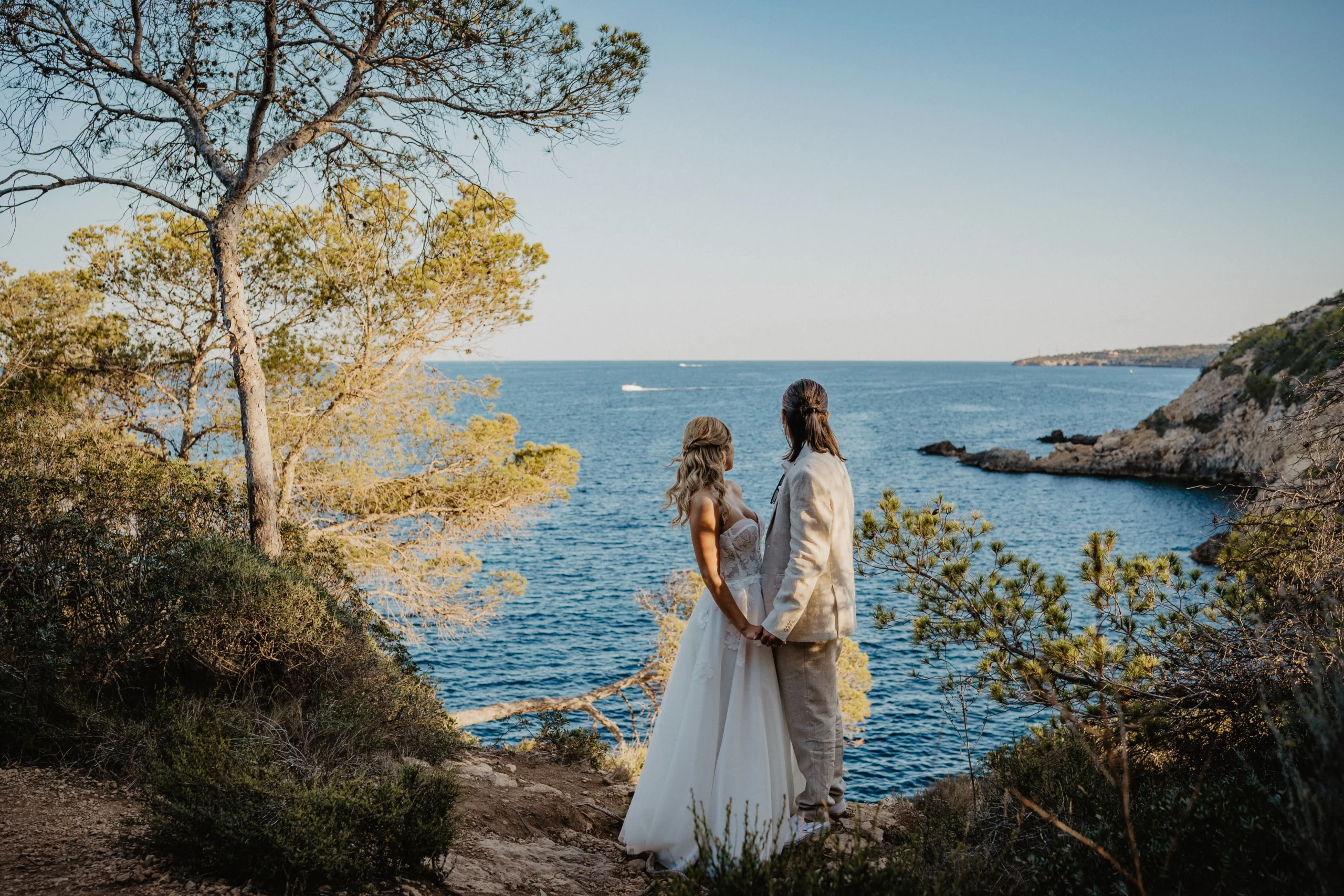
The Mediterranean island of Mallorca has emerged as one of the most sought-after destinations for British couples seeking a destination wedding. With its combination of historic stone fincas, rugged coastal landscapes, and a flight time of approximately two and a half hours from major UK airports, the island offers an accessible yet exotic backdrop for nuptials. However, the logistical transition from UK-based planning to executing a high-stakes event in a foreign jurisdiction requires a structured, data-driven approach to avoid common pitfalls.
The Landscape of Destination Planning
Data from recent wedding industry reports indicates that international weddings are rising in complexity, with couples increasingly moving away from "all-inclusive" hotel packages toward bespoke, multi-day experiences. For UK residents, the primary challenge is not the distance, but the regulatory and operational differences inherent in the Spanish hospitality sector. Magdalena Dybiec, a specialist in Mallorca-based weddings, notes that the success of these events often hinges on the initial "due diligence" phase—a period of 18 to 24 months before the event date where fundamental decisions regarding legal status and infrastructure are settled.
Legal Framework and Administrative Requirements
A critical point of confusion for many couples is the feasibility of a civil marriage in Spain. Under current Spanish law, at least one partner must be a resident of Spain or a Spanish national to perform a civil marriage. For the vast majority of UK couples, this legal requirement renders a civil ceremony impractical.
Consequently, the industry standard has shifted toward the "symbolic ceremony." In this model, couples complete the formal, legally binding paperwork in a UK registry office prior to their travel. This separation of legal and celebratory events provides greater flexibility, allowing couples to curate the Mallorca event—including vows, readings, and music—without being constrained by municipal civil schedules or local bureaucratic requirements.
Strategic Chronology for Event Execution
Effective planning requires a tiered approach to prevent logistical bottlenecks. Industry experts suggest the following timeline for couples:
- 18–24 Months Out: Define the macro-parameters. This includes setting a comprehensive budget, selecting a professional planner, and establishing a "must-have" list for the venue.
- 12–18 Months Out: Focus on the venue and core vendors, such as photographers and catering services. At this stage, it is vital to secure written agreements that clearly define the "Plan B" for inclement weather.
- 9–12 Months Out: Shift focus to the guest experience, including the dissemination of travel information, accommodation blocks, and the creation of a transport strategy.
- 6–9 Months Out: Finalize the creative elements, including menu design, aesthetic styling, and entertainment logistics.
- Final Weeks: Conduct rigorous operational checks, including confirming final guest counts and transport manifests.
Economic and Logistical Implications
Financial transparency is often cited as the most significant hurdle for couples planning from abroad. A common error involves failing to account for "hidden" costs, such as the Spanish IVA (Value Added Tax), security requirements for remote venues, and the logistical costs of bringing equipment to sites that lack basic infrastructure.
For a standard one-day celebration in Mallorca, a realistic starting investment—exclusive of guest travel—is often cited in the region of €35,000. It is essential to distinguish between a "quote" and an "estimate." A professional planner typically advises couples to demand itemized billing that explicitly includes or excludes taxes, service charges, cleaning fees, and overtime costs for staff.
The Role of Local Expertise
The involvement of a local wedding planner is frequently viewed as a risk-mitigation strategy rather than a luxury. A planner based in Mallorca acts as an on-the-ground agent, capable of conducting site inspections that look beyond the surface level of visual aesthetics.
A professional assessment of a venue must include:
- Access and Mobility: Can large coaches navigate the approach roads? Are there accessibility issues for elderly guests?
- Utility Capacity: Does the venue have sufficient power to support modern audio-visual equipment and lighting without requiring expensive, external generators?
- Regulatory Compliance: Are events legally permitted at the specific site? Many private villas in Mallorca have strict, enforced regulations regarding music decibel levels and finish times.
- Wet-Weather Contingency: Is the indoor alternative space actually functional for a full-scale event, or is it merely a storage area?
Managing Guest Logistics
The "destination wedding" model places a unique burden on the guests. To ensure a high attendance rate and a smooth experience, organizers recommend consolidating guest accommodation into a singular hub. By basing guests in one, or at most two, locations, the organizer significantly reduces the risk of transport delays and simplifies the communication of logistical details. It is also standard practice to provide clear, early documentation regarding the expected itinerary, ensuring that guests understand the scope of the events—whether it is a singular wedding day or a three-day "wedding weekend" experience.
Seasonal Factors and Environmental Planning
Mallorca’s climate is a significant draw, but it requires careful navigation. The "shoulder seasons" of May, June, and September are generally considered the optimal balance between favorable weather and logistical feasibility. July and August, while offering the most consistent sunshine, present significant challenges regarding extreme heat, which can negatively impact the comfort of guests and the freshness of floral arrangements or food.
When selecting a date, couples should evaluate the "micro-climate" of their chosen venue. A coastal site will behave differently than a mountain finca, with temperatures dropping more rapidly in the latter as the sun sets. A successful wedding plan accounts for these fluctuations by providing shade, hydration, and, if necessary, climate-controlled indoor spaces.
Final Due Diligence
Before any deposit is transferred, a contract should be reviewed with extreme scrutiny. Couples are advised to ensure that every verbal promise—such as the inclusion of furniture, the use of a specific area of the grounds, or the provision of parking—is explicitly stated in the written contract.
In the event of a dispute, international jurisdiction can make the recovery of deposits difficult. Therefore, working with established, local vendors who have a verified track record is a critical safeguard. By prioritizing practical logistics over purely aesthetic considerations, couples can ensure that their Mallorca wedding serves as a celebration of their union rather than an exercise in crisis management. As the industry continues to professionalize, the move toward data-backed, transparent planning remains the most effective path for those seeking to bridge the distance between their home in the UK and their dream celebration on the Balearic coast.