










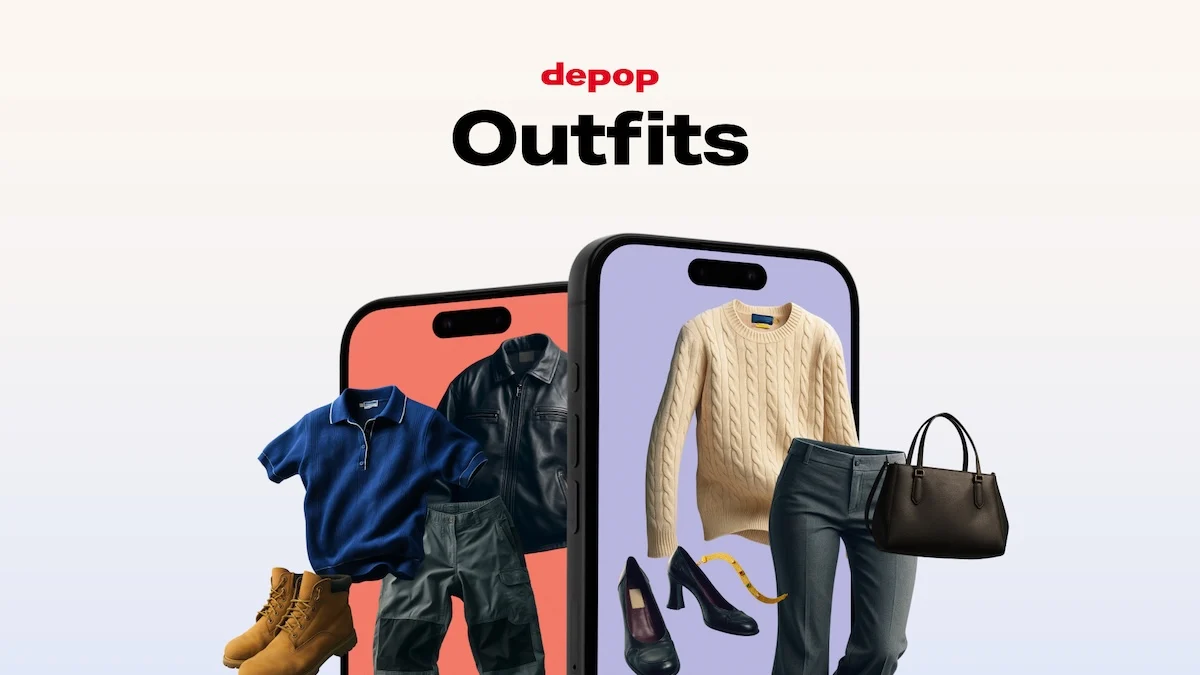
Fashion resale platform Depop announced on Wednesday the launch of a new styling and collaging tool, designed specifically for users who love creating fashion collages and mood boards to express their personal aesthetic. Named “Outfits,” the new feature provides a sophisticated, mood board-like interface, allowing users to design curated ensembles to share with their followers or to serve as a personal blueprint for their next look. This strategic move marks a significant evolution for the London-based company, transitioning it from a straightforward peer-to-peer marketplace into a comprehensive creative hub for digital fashion expression.
To utilize the feature, users navigate to an item they wish to style and engage the scissors icon located on the right side of the interface. This action triggers a suite of customization options, including image segmentation tools that allow users to isolate specific garments, add vibrant or textured backgrounds, and adjust the sizing and placement of various images within a single frame. For those seeking structural inspiration, the app provides a variety of pre-designed templates that serve as layout guides, ensuring that even novice stylists can produce professional-looking editorial content.
A critical component of the Outfits tool is its direct integration with Depop’s e-commerce engine. All items featured within a user-generated collage are immediately shoppable. In instances where a specific vintage or one-of-a-kind item has already been sold, the app’s algorithm automatically generates suggestions for similar alternatives currently available on the platform. This functionality not only maintains the utility of the collage as a shopping guide but also addresses the inherent inventory challenges of a secondary market where items are often unique and non-replenishable.
Strategic Alignment with Gen Z Visual Culture
The introduction of the Outfits tool is a calculated effort to deepen engagement with Depop’s primary demographic: Generation Z. For this cohort, fashion is less about individual transactions and more about the curation of a "vibe" or "aesthetic." Visual storytelling through collages has seen a massive resurgence in recent years, reminiscent of the early 2010s era of Polyvore, a pioneer in the digital styling space that was shuttered in 2018.
Depop is following a successful blueprint established by other major visual platforms. Pinterest, for example, launched its dedicated collage-making app, Shuffles, in 2022. Following its viral success on TikTok and other social media platforms, Pinterest integrated Shuffles’ core functionality directly into its main application. By providing these tools natively, Depop ensures that its users remain within its ecosystem to create the content they would otherwise produce using third-party editing software.
Furthermore, the Outfits feature encourages cross-platform visibility. Users are empowered to share static images of their curated designs across various social media platforms, including Pinterest and Instagram. This creates a powerful organic marketing loop: a user creates a collage on Depop, shares it to their Instagram Story or Pinterest board, and provides a direct pathway for new potential buyers to enter the Depop app to shop the look.
Financial Performance and Market Context
The timing of this product launch coincides with a period of robust financial growth for Depop and its parent company, Etsy. According to Etsy’s Q2 2025 earnings report, Depop’s Gross Merchandise Sales (GMS) surged by 34.7% year-over-year on a currency-neutral basis. This acceleration in growth is particularly notable given the broader headwinds facing the global e-commerce sector, suggesting that the resale market remains a resilient segment of the retail economy.
This recent performance puts Depop on a clear trajectory toward a $1 billion GMS run rate, a milestone that solidifies its position as a dominant player in the circular fashion economy. In comparison, rival marketplace Mercari reported a Gross Merchandise Value (GMV) of approximately $728 million for the fourth quarter of 2024. While the two platforms operate with slightly different regional focuses and category mixes, the data indicates that Depop’s social-first approach is yielding higher growth velocity among fashion-conscious consumers.
Etsy acquired Depop in 2021 for $1.62 billion, a move that was initially met with skepticism by some analysts who questioned the high valuation. However, the consistent double-digit growth and the successful integration of social-commerce features like "Outfits" suggest that Depop is successfully capturing the "social" aspect of shopping that traditional marketplaces often lack.

The Evolution of the Digital Marketplace
The "Outfits" tool represents a shift in the philosophy of digital marketplaces. Traditionally, e-commerce platforms have focused on "search and find" utility—optimizing for speed and efficiency in the transaction. However, the rise of social commerce indicates a shift toward "discovery and inspiration." By allowing sellers and stylists to create collages, Depop is enabling a form of "community-led merchandising."
For sellers, the tool provides a significant promotional advantage. Rather than listing a single pair of jeans, a seller can now create an "Outfit" that pairs those jeans with a vintage leather jacket, a designer handbag, and specific accessories—all of which might be available in their shop. This "bundle-style" marketing encourages larger basket sizes and helps buyers visualize how disparate items can form a cohesive wardrobe.
From a technical perspective, the "scissors" tool likely utilizes advanced image processing and background removal technology. This allows for the "sticker" effect that has become popular in mobile OS updates, such as Apple’s iOS 16 and later, which allows users to lift subjects out of photos. By bringing this technology into a specialized fashion context, Depop is lowering the barrier to entry for high-quality content creation.
Competitive Landscape and Future Outlook
The resale market is becoming increasingly crowded, with platforms like Vinted, Poshmark, and The RealReal all vying for market share. Additionally, ultra-fast fashion giants like Shein have launched their own integrated resale platforms. To remain competitive, Depop is leaning into its identity as a cultural tastemaker rather than just a utility.
Industry analysts suggest that the future of fashion e-commerce lies in the intersection of sustainability and entertainment. As consumers become more conscious of the environmental impact of "throwaway" fashion, the appeal of a circular economy grows. However, for a platform to thrive, it must provide an experience that is as engaging as scrolling through a social media feed.
The introduction of "Outfits" is likely just the beginning of a broader rollout of creative tools. As Depop approaches the $1 billion GMS mark, the focus will likely shift toward further monetizing these creative interactions, perhaps through sponsored collages or enhanced "pro" tools for high-volume sellers.
Implications for the Circular Economy
The success of Depop’s new features also has broader implications for the circular economy. By making the process of styling second-hand clothing more "aspirational" and "curated," Depop is helping to remove the stigma sometimes associated with used apparel. The ability to suggest "similar alternatives" when an item is sold out is a particularly sophisticated use of AI and metadata, ensuring that the momentum of a purchase isn’t lost simply because of the unique nature of vintage inventory.
As of today, the Outfits feature is available to all users within the Depop app globally. The company has indicated that it will continue to monitor user feedback to refine the tool, with potential updates including video-based collages or augmented reality (AR) try-on integrations in the future.
In conclusion, Depop’s launch of the "Outfits" tool is more than a simple UI update; it is a strategic maneuver designed to capitalize on the convergence of social media, creative expression, and sustainable commerce. With a 34.7% year-over-year growth rate and a clear lead over several key competitors, Depop is demonstrating that in the modern retail landscape, the ability to inspire a purchase is just as valuable as the ability to process one.