







To a true connoisseur, the fabric is the soul of the garment. In the nuanced world of classic menswear, the selection of cloth extends far beyond the surface-level appreciation of color. It is an exercise in engineering, where the weave, the fiber weight, and the way light interacts with the material determine the garment’s performance, longevity, and appropriateness for specific climates and occasions. Understanding these fifty essential fabrics is not merely an academic pursuit; it is a practical necessity for anyone looking to build a functional and timeless wardrobe.

The Science and Engineering of Textile Selection
The history of textile production in menswear is a narrative of human adaptation to environment. From the heavy, water-repellent felts developed in the Alpine regions to the airy, high-twist wools favored in Mediterranean tailoring, fabric choice has always been the primary determinant of comfort. In contemporary tailoring, the distinction between worsted and woolen yarns remains the foundational knowledge for the consumer. Worsted cloth, created through a process of combing that removes short fibers, results in a smoother, more durable, and more lustrous material. Conversely, woolen fabrics retain these shorter fibers, producing a softer, fuzzier hand that offers superior thermal insulation but sacrifices some structural integrity and abrasion resistance.
Warm Weather Performance: Managing Heat and Humidity
In environments where temperatures rise, the primary goal of the tailor is to maximize airflow while maintaining the structural drape required for formal or business settings.
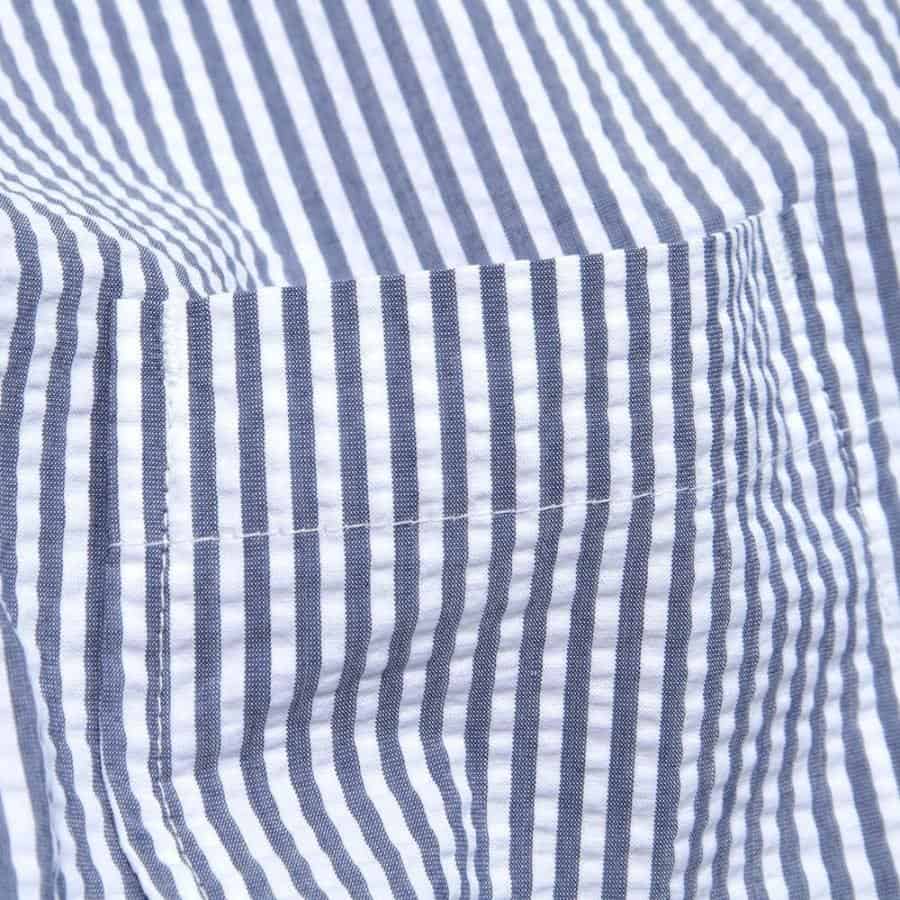
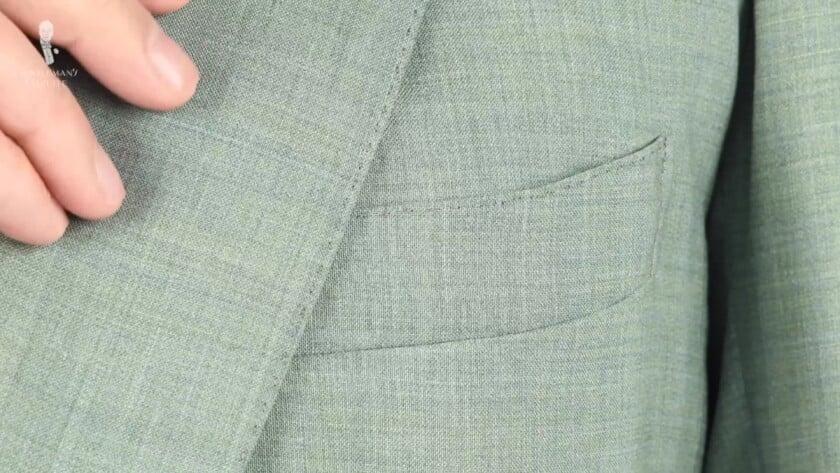
High Twist Wool, frequently marketed under the name Fresco, stands as the industry benchmark for summer suiting. By tightly twisting the yarn, manufacturers create a porous, crisp cloth that resists wrinkling and promotes constant ventilation. Typically produced in weights between 9 and 11 ounces, it provides a tailored silhouette without the heat retention of standard wools.

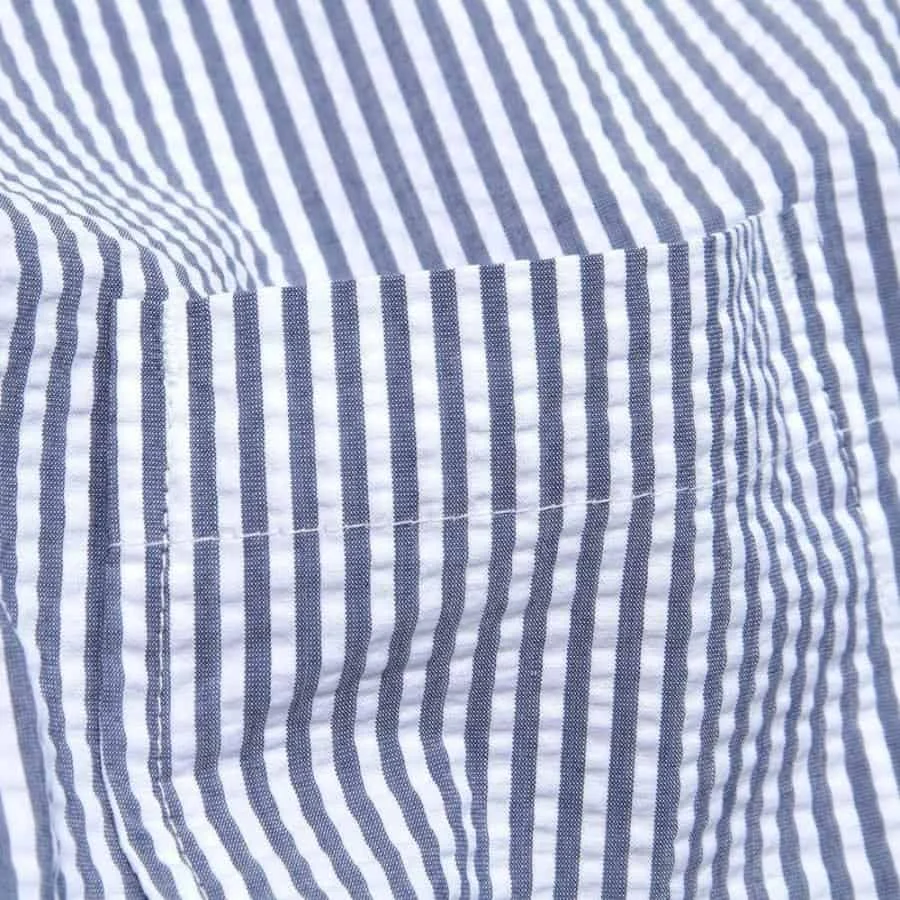
Similarly, Tropical Wool, weighing between 7 and 9 ounces, serves as a staple for warm-weather business attire. While it lacks the extreme breathability of high-twist wool, its lightweight plain weave makes it an essential component for those operating in humid office environments. For more casual applications, Irish Linen remains the gold standard. While it is prone to creasing, this characteristic is viewed by purists as an inherent, aristocratic feature of the material. Seersucker, with its signature puckered surface, utilizes a high-twist construction to keep the fabric away from the skin, naturally facilitating air circulation without the need for synthetic cooling treatments.
Cold Weather Protection: Insulation and Density
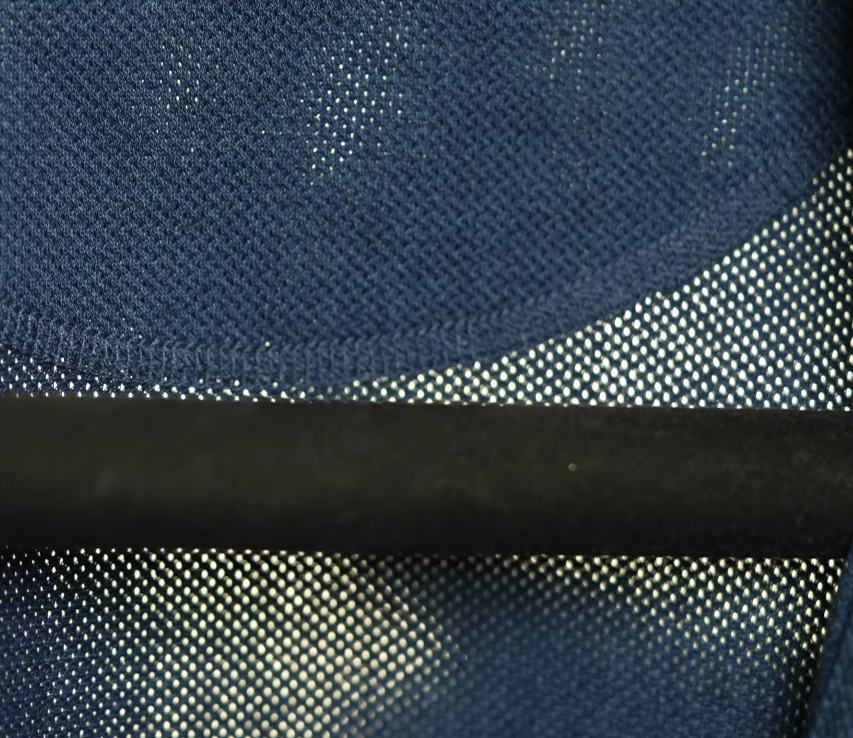
As the climate shifts toward the colder months, the focus transitions from breathability to thermal regulation and wind resistance. Melton Wool, a heavily felted fabric, represents the zenith of protection against winter elements. The felting process is so extreme that the individual weave structure is obscured, creating a dense, windproof barrier that has historically been the standard for naval peacoats and heavy overcoats.

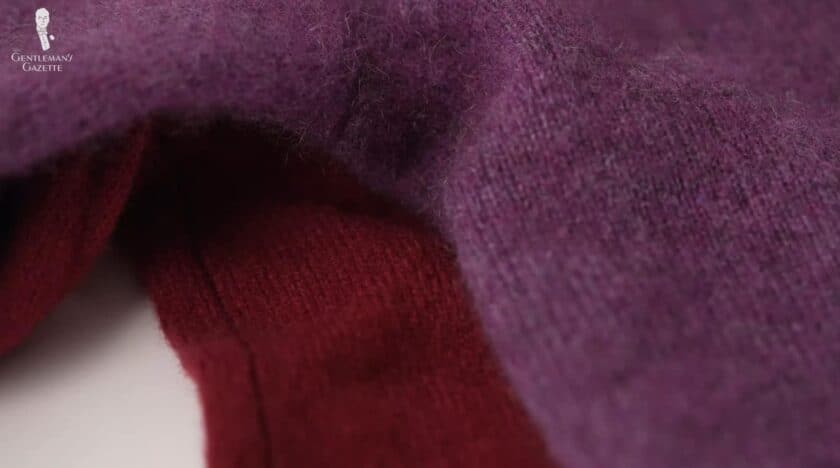
Luxury fibers such as Cashmere and Vicuña offer significant thermal advantages, though they require careful maintenance. Cashmere, sourced from the undercoat of the Kashmir goat, is prized for its extreme softness and insulation—roughly eight times that of standard wool. However, due to its delicate nature, it is susceptible to pilling under high-friction conditions. Vicuña, the rarest and most expensive fiber in the world, is reserved for high-end investment pieces. Its extreme rarity and fineness make it unsuitable for everyday wear, serving instead as a status symbol of heritage and material excellence.

Tweeds and the Countryside Tradition
The history of tweed is intrinsically linked to the rugged landscapes of the British Isles. Harris Tweed, defined by its handwoven production in the Outer Hebrides, is characterized by its heavy, durable, and almost impenetrable nature. It is a material designed for longevity and protection, rather than softness. Donegal Tweed, by contrast, is recognized for its colorful, multi-hued nepps—small flecks of wool woven into the base. This aesthetic has moved beyond its rural origins to become a cornerstone of casual autumn and winter sport coats.

Technical cloths such as Ventile and Waxed Cotton continue to serve specialized roles in outerwear. Ventile, a dense long-staple cotton, relies on the natural swelling of fibers when wet to provide water resistance. This innovation, developed for military aviation, remains a testament to the effectiveness of natural fibers when engineered correctly. Waxed cotton, while iconic, requires specific maintenance to prevent the transfer of wax to other surfaces, underscoring the trade-off between performance and convenience.
The Architecture of Business Suiting
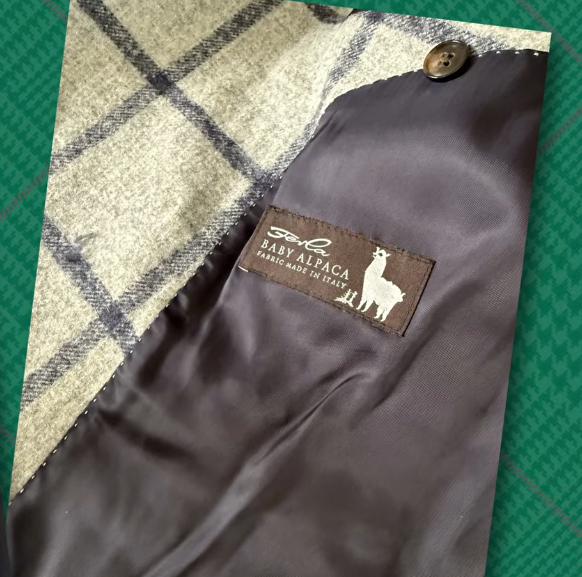
For the modern professional, the selection of a suit fabric is a decision based on the balance between aesthetic versatility and durability. Twill, a broad category encompassing diagonal-weave fabrics, provides the structural foundation for the majority of professional menswear. Hopsack, with its open basket weave, has become the modern standard for the navy blazer, offering a wrinkle-resistant, breathable option that thrives in business casual environments.

Specialized weaves like Bird’s Eye and Sharkskin offer the wearer an opportunity for visual distinction. Bird’s Eye provides depth and texture without the distraction of a bold pattern, while Sharkskin—often created with a pick-and-pick weaving technique—introduces a subtle, shimmering two-tone effect. Both fabrics require careful tailoring to ensure the weave pattern aligns correctly, a testament to the skill required in high-end garment construction.
The Role of Shirtings and Accessories
The shirt is the most frequently laundered item in a man’s wardrobe, necessitating fabrics that can withstand significant wear. Oxford cloth, particularly the button-down variety, serves as the definitive business-casual textile. Its basket weave offers a softer, more relaxed appearance than the formal Poplin or Broadcloth. Broadcloth, characterized by a tight, smooth, matte finish, remains the prerequisite for formal evening shirts, where the goal is a clean, uniform surface under artificial light.
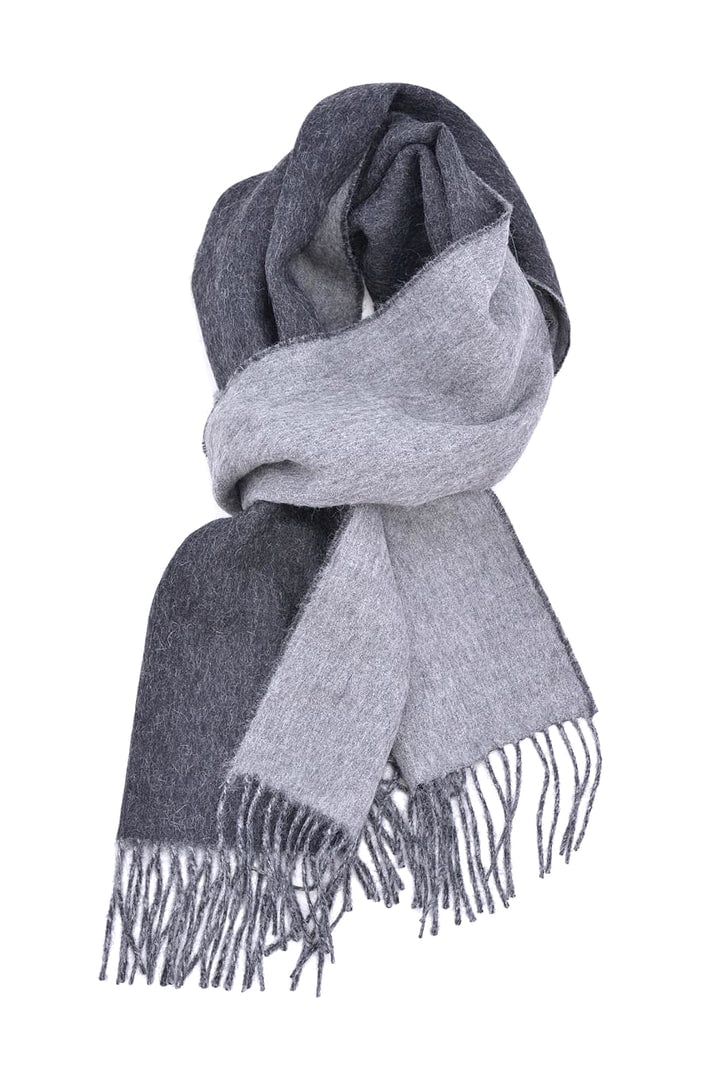
Neckwear fabrics like Grenadine and Madder highlight the importance of texture in accessories. Grenadine, with its intricate, hole-riddled weave, provides a level of visual interest that solid-color silk cannot match. Madder, which involves a complex process of printing and washing, produces a chalky, matte finish that is highly sought after for its muted, sophisticated color palette. These accessories demonstrate that even in the smallest details of a wardrobe, the choice of fabric remains the primary driver of style.
Implications for the Modern Wardrobe
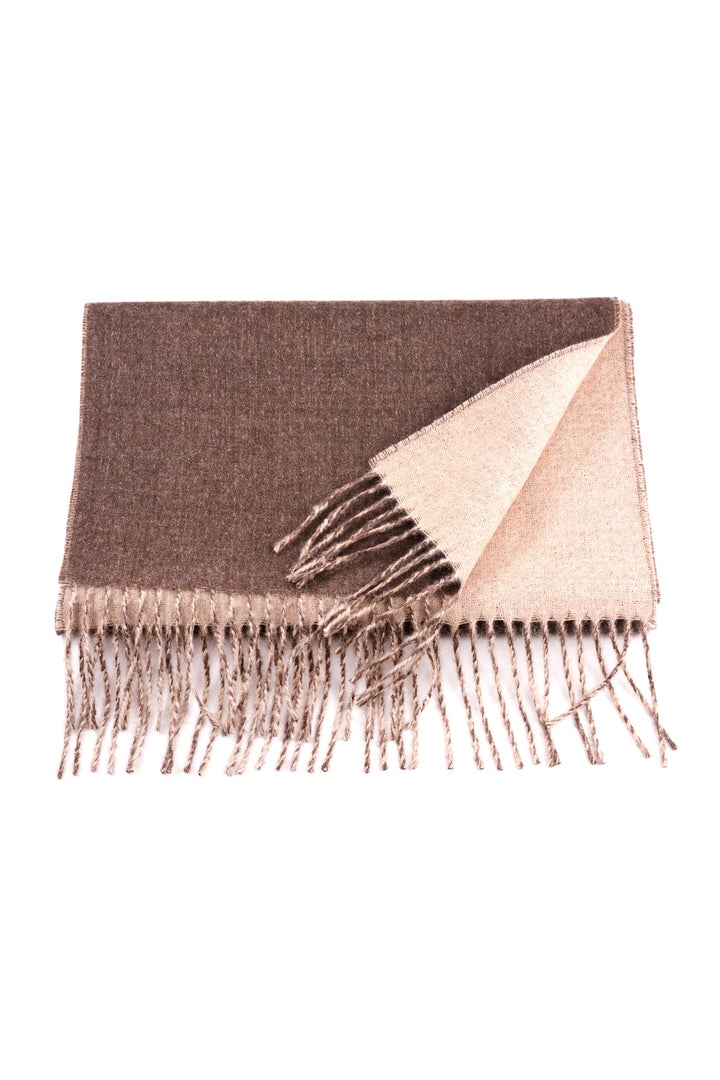
The enduring relevance of these fifty fabrics lies in their specialized functionality. A wardrobe built on the principles of material science is one that is both sustainable and aesthetically consistent. By prioritizing natural fibers like wool, cotton, and silk, and selecting weaves appropriate for the intended environment, the modern wearer can ensure that their garments not only look appropriate for the occasion but also retain their value over decades.
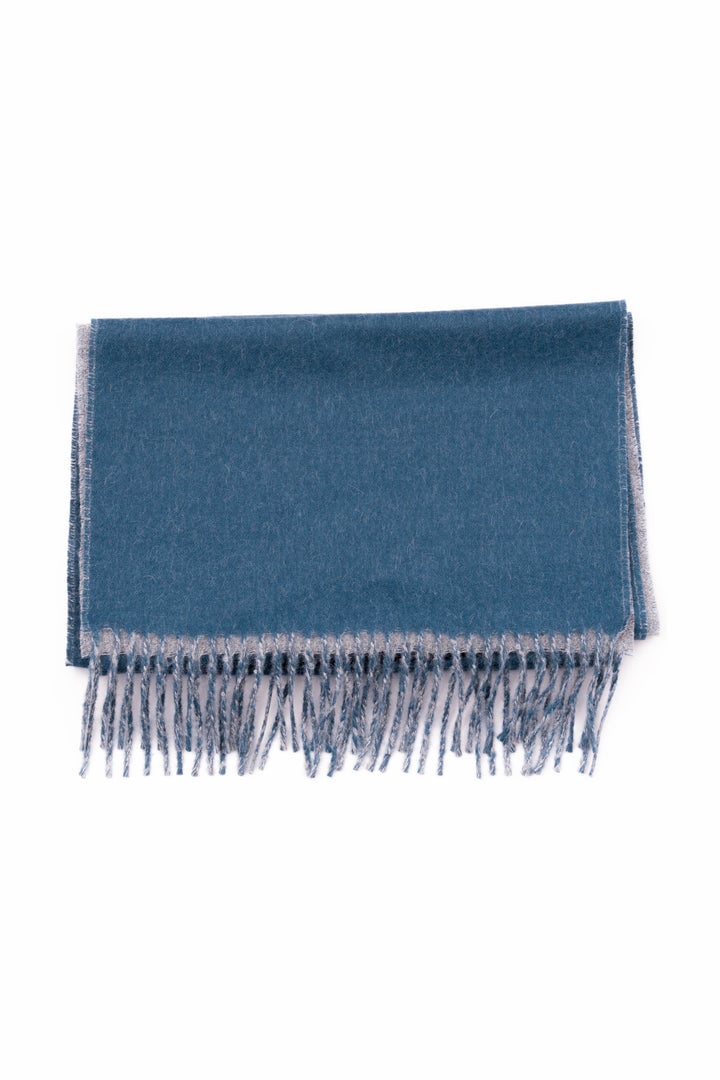
As the industry faces increasing pressure to prioritize fast fashion, the return to understanding fabric quality serves as a corrective measure. A navy hopsack blazer paired with gray flannel trousers remains the most versatile combination in menswear, not by coincidence, but because the physical properties of these two fabrics—breathability, drape, and durability—perfectly complement the requirements of a dynamic, modern lifestyle. For those beginning their journey into classic style, the lesson is clear: invest in the fiber, study the weave, and respect the purpose for which the cloth was created.