



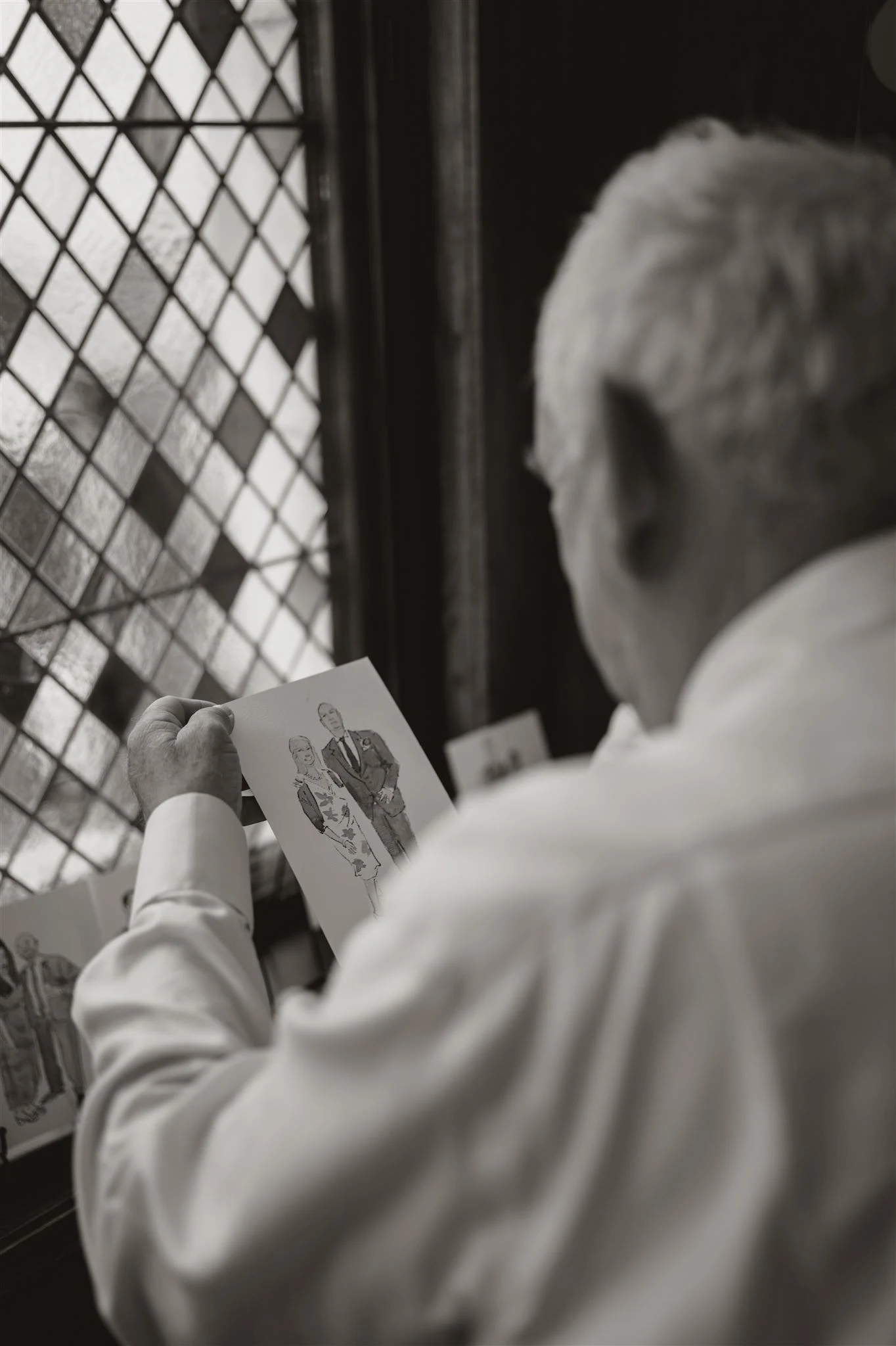
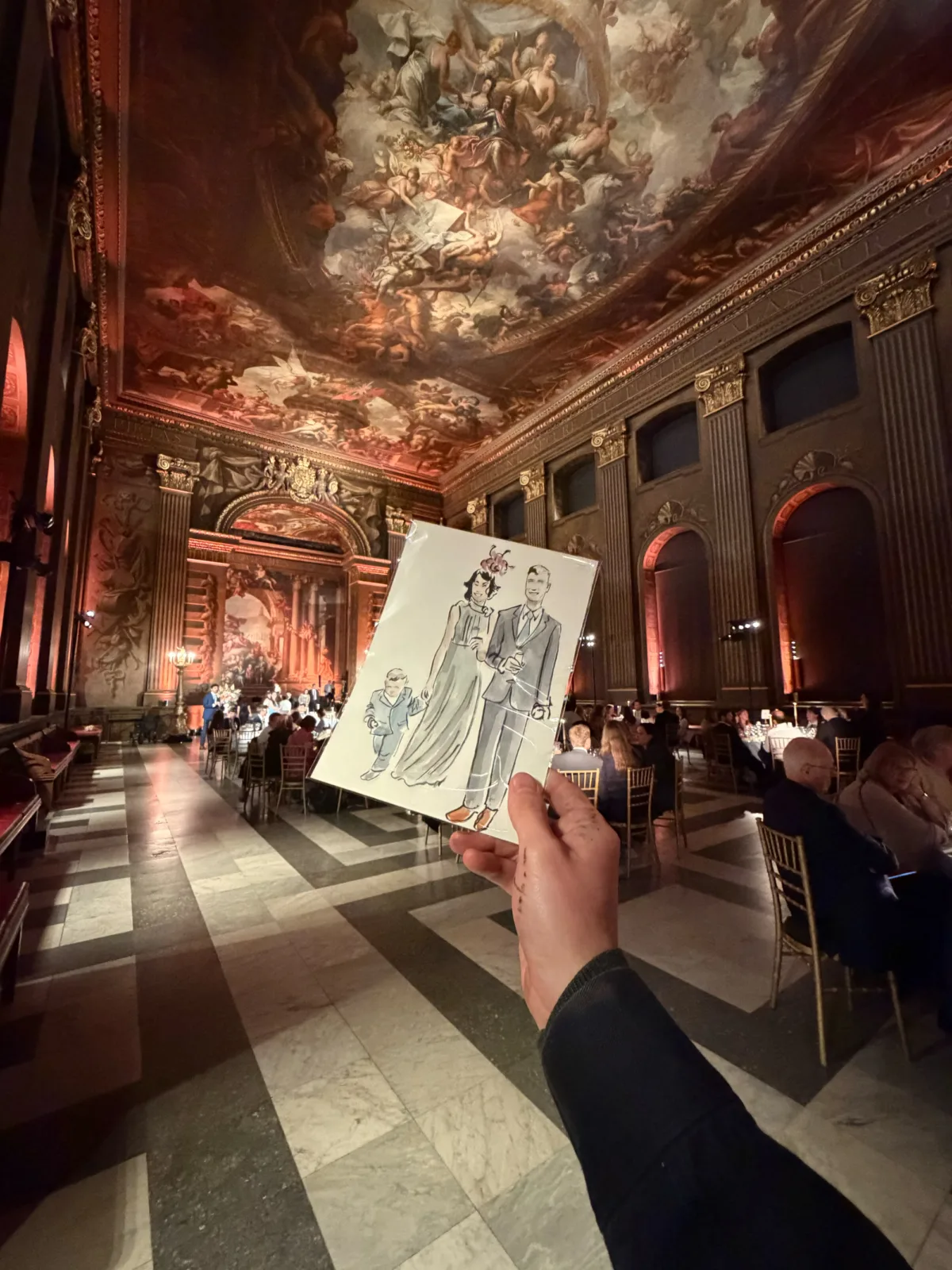
The modern wedding industry is currently witnessing a significant shift toward experiential services that prioritize tangible, human-centric outcomes over digital convenience. Amidst the rapid advancement of generative artificial intelligence and automated photography, a growing segment of the luxury events market is returning to classical mediums. At the forefront of this movement is Peter Kuznicki, the founder of Kuznicki Live, a specialist in live event illustration. Kuznicki, a classically trained draughtsman, has transitioned from a lengthy career in digital graphic design to provide live watercolor and ink portraits, a service that functions as both on-site entertainment and a provider of bespoke keepsakes for guests.
The Evolution of a Creative Career: From Digital Design to Analog Illustration
The professional trajectory of Peter Kuznicki reflects a broader trend within the creative industries, where professionals are increasingly seeking "AI-proof" niches that value physical presence and manual dexterity. Kuznicki spent approximately 15 years working as a graphic designer, a period characterized by the industry’s total pivot to digital software and, eventually, the looming integration of automated design tools. This shift led to a documented disillusionment within the field, as many creators felt a disconnect between their technical skills and the final, often intangible, output.
Recognizing the growing uncertainty surrounding the impact of AI on commercial art, Kuznicki sought to realign his career with the fundamental elements of human connection and observational drawing. His transition was not immediate but was built upon a rigorous foundation of life drawing. To hone the speed and accuracy required for live events, Kuznicki spent months practicing in public spaces, such as parks and commuter trains. This environment provided a high-pressure setting where subjects were often in motion, necessitating a "first-time-right" approach to anatomy and likeness.
The definitive "click" moment for this career pivot occurred at a wedding in Essex for a couple named Deborah and Samson. The event served as a successful proof-of-concept, demonstrating that live illustration could provide a unique social focal point. The positive reception from the guests and the emotional reaction of the couple confirmed that there was a viable market for high-speed, high-quality traditional portraiture that digital alternatives could not replicate.
Technical Methodology and Classical Draughtsmanship
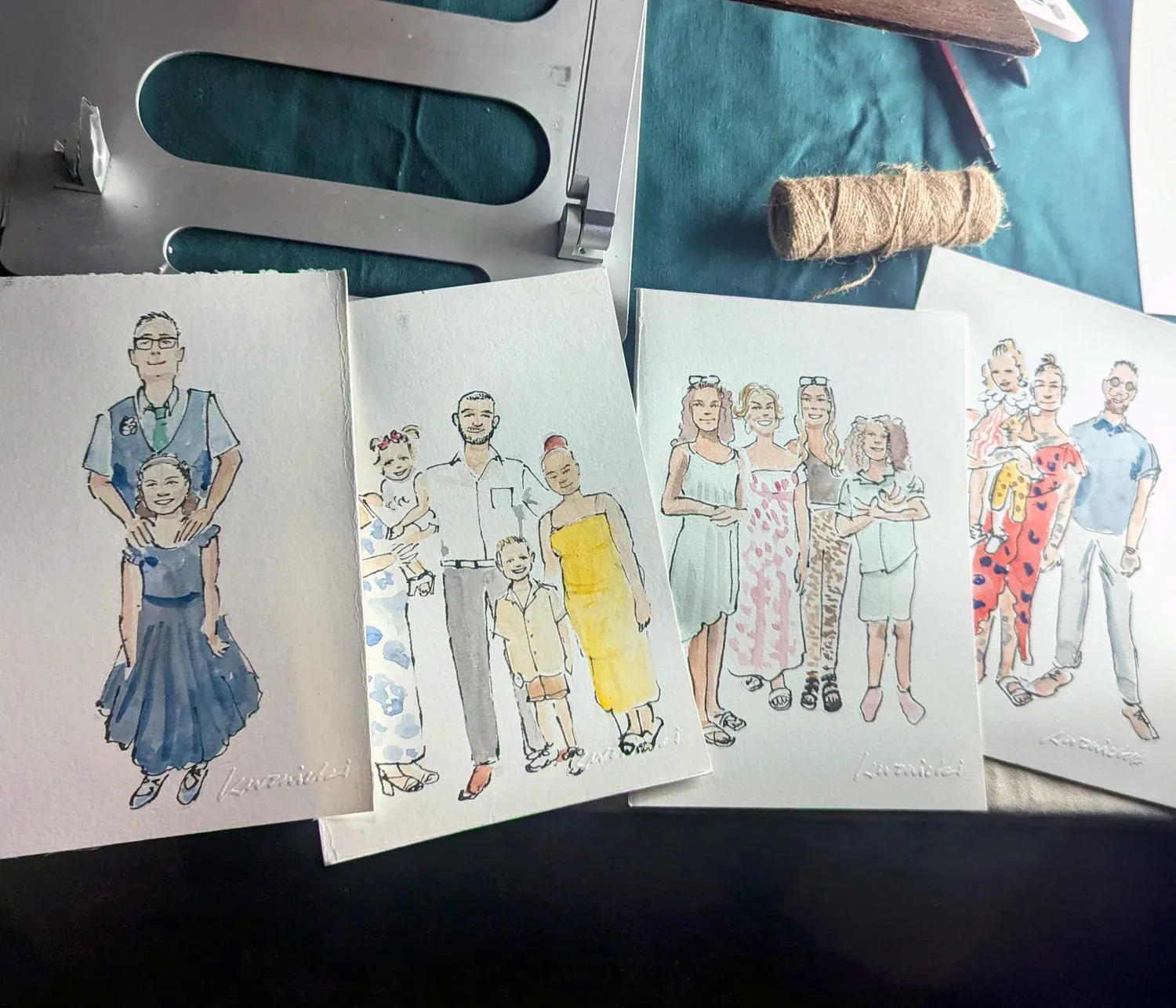
The ability to capture a recognizable likeness within the timeframe of a social reception—typically five to ten minutes per portrait—requires more than just artistic talent; it requires a repeatable, structural methodology. Kuznicki utilizes a process rooted in classical training, which prioritizes the "envelope" or the larger geometric forms of the subject before moving into specific features.
The Structural Process
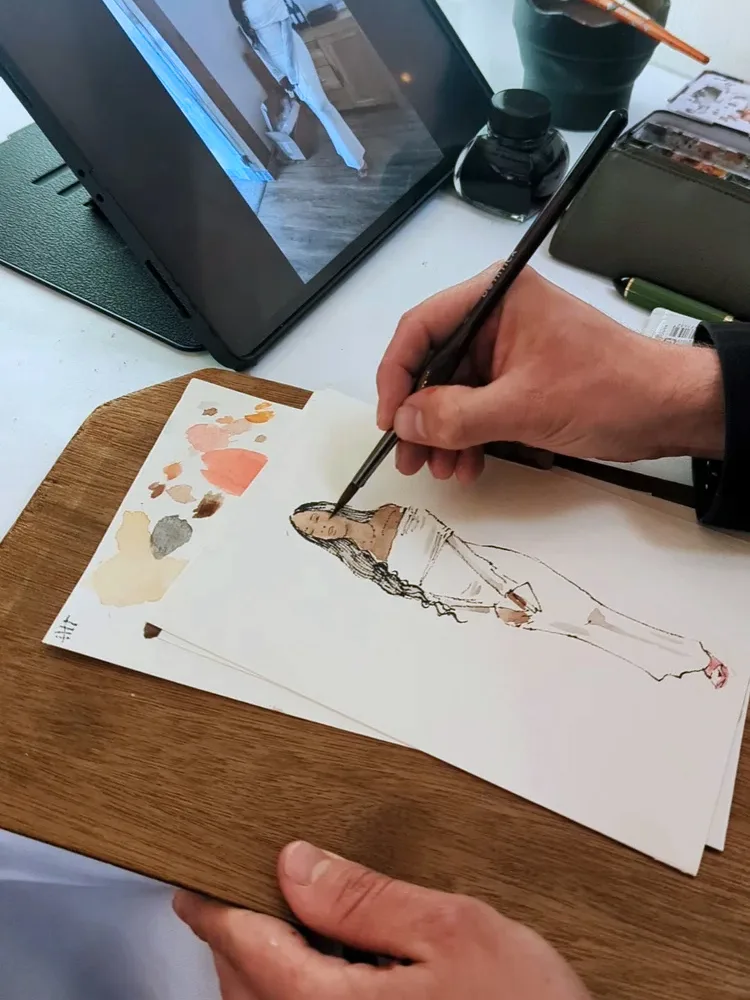
Each live portrait begins with the establishment of the head’s structure and the proportions of the face. By focusing on the relationship between the eyes, nose, and mouth relative to the cranial mass, the artist ensures that the foundation of the likeness is secure. Following the structural mapping, Kuznicki employs ink and brush to define the character. The use of a brush rather than a rigid pen allows for a variation in line weight, which can suggest depth, movement, and personality with minimal strokes.
Materiality and Medium
The choice of materials is central to the aesthetic and longevity of the work. Kuznicki employs traditional watercolors to add vibrancy and form to the ink drawings. Unlike digital prints, these original works possess the unique textures of pigment on paper, a quality highly valued in the contemporary "experience economy." Furthermore, for his studio-based bespoke prints, Kuznicki utilizes archival-grade inks and fine-art paper, ensuring that the final products are resistant to fading and degradation over time.
Supporting Data: The Rise of the Experience Economy in Weddings
The success of services like Kuznicki Live is supported by broader economic data regarding wedding spending and guest expectations. According to industry reports from 2023 and 2024, there has been a 15% increase in budget allocation toward "unique guest experiences." Couples are increasingly moving away from traditional "favors"—such as sugared almonds or generic trinkets—which are often left behind or discarded. Instead, they are investing in services that provide a personalized, interactive element.
Data suggests that:
- Personalization: 78% of couples now prioritize "personalized guest experiences" over traditional decor.
- Tangibility: In an era of digital saturation, physical keepsakes have seen a 22% rise in perceived value among Millennial and Gen Z wedding hosts.
- Engagement: Live artists provide a "low-pressure" social catalyst. Observational data from event planners indicates that live painting or illustration stations increase guest dwell time in reception areas by an average of 30 minutes, as guests gather to watch the artistic process.
The Bespoke Print Workflow: A Collaborative Creative Process
Beyond live on-site illustration, the service model includes a sophisticated workflow for "bespoke wedding prints." This process mirrors the professional standards of the commercial creative industries, moving through distinct phases of consultation, drafting, and finalization.
Phase 1: Consultation and Storyboarding
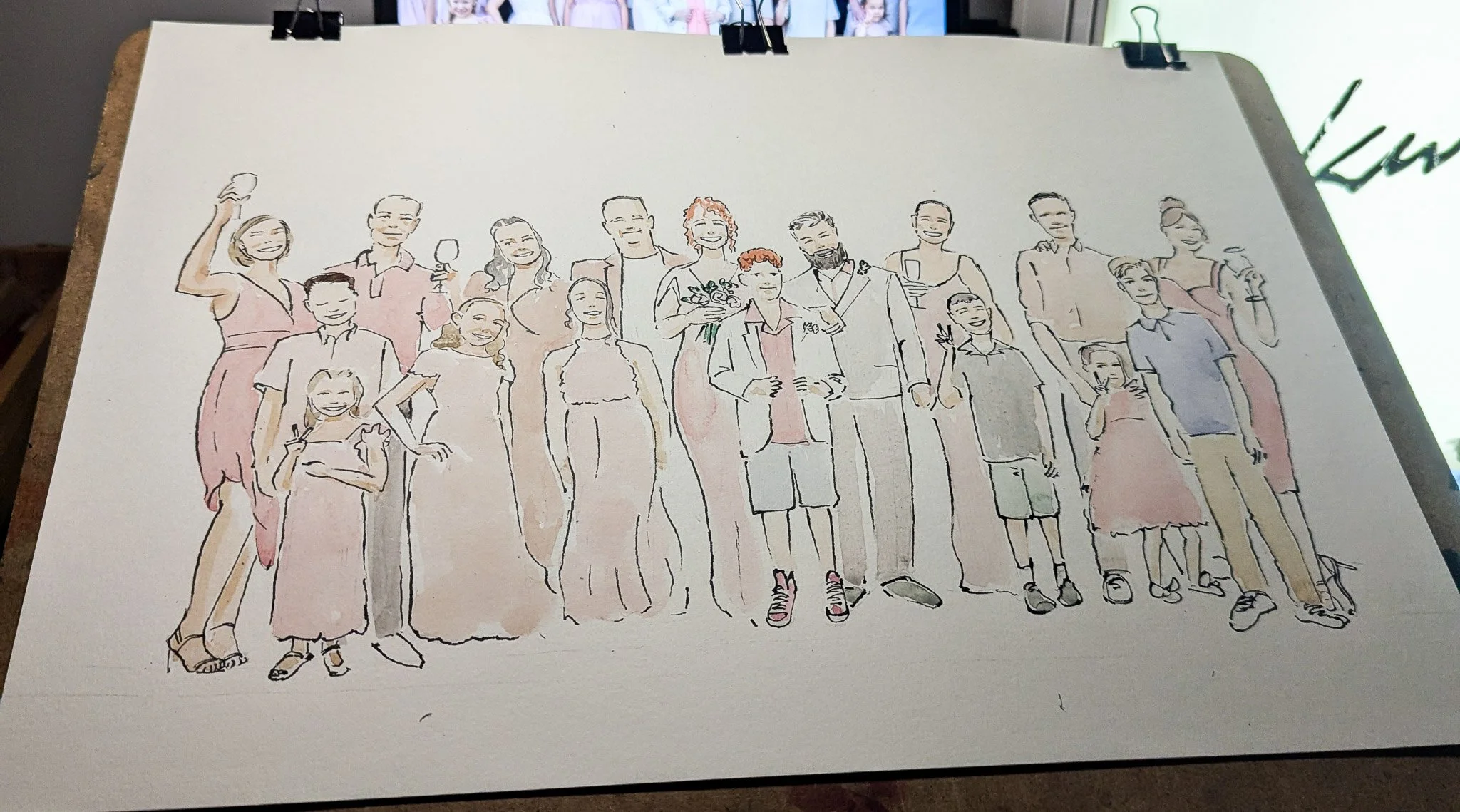
The process begins with a narrative-driven conversation. The artist and the couple identify key milestones, specific locations, and the "cast of characters" that define the wedding day. This phase is crucial for ensuring the final artwork functions as a visual summary of the event’s emotional landscape.
Phase 2: Composition and Sketching
Kuznicki develops initial concepts in pencil, mapping out the spatial arrangement of elements. This stage remains flexible, allowing couples to provide feedback on the placement of figures and the inclusion of specific architectural or floral details. By involving the couple in the composition phase, the artist ensures the final piece aligns with their aesthetic vision.
Phase 3: Ink, Color, and Archival Production
Once the pencil layout is approved, the artist moves into the permanent stages of ink and watercolor. To provide the couple with options, Kuznicki typically offers three distinct color directions. This level of professional service ensures that the final artwork complements the couple’s home decor or personal style. The final stage involves high-resolution archival printing, producing a gallery-quality piece that serves as a primary heirloom.
Social Impact and the Psychology of the "Ice-Breaker"
One of the most significant, yet often overlooked, impacts of live illustration is its role in social engineering within a wedding environment. Weddings often bring together disparate groups of people—colleagues, distant relatives, and childhood friends—who may not have a natural point of connection.
The presence of a live illustrator creates a "third object" for guests to focus on, facilitating natural conversation. As guests stand together to observe the artist’s progress, the shared experience of watching a likeness emerge on paper provides an organic ice-breaker. This interaction reduces social friction and enhances the overall atmosphere of the event. Unlike a photo booth, which is a momentary and often private interaction, live illustration is a performance that invites communal observation and discussion.
Broader Implications: Human Artistry vs. The Digital Shift
The emergence of Kuznicki Live is emblematic of a wider cultural resistance to the homogenization of art by AI. While generative AI can produce images in seconds, it lacks the "lived creative skill" and the situational awareness of a human artist. The value of a Kuznicki portrait lies not just in the final image, but in the fact that it was created by a human hand in response to a specific moment in time.
From a journalistic perspective, this represents a stabilization of the "artisanal" market. As digital technology becomes more ubiquitous and less expensive, the premium placed on manual, high-skill tasks increases. This trend is visible across various sectors, from the resurgence of vinyl records to the high demand for hand-crafted furniture. In the context of weddings, the "imperfections" and stylistic flourishes of a hand-drawn portrait are seen as marks of authenticity, contrasting sharply with the sterile perfection of AI-generated content.
Conclusion: The Future of Live Event Artistry
As the wedding industry continues to evolve, the demand for high-caliber, classically trained artists like Peter Kuznicki is expected to grow. The integration of professional design workflows with traditional artistic mediums provides a service that is both reliable and emotionally resonant. For couples, the investment in live illustration represents a commitment to celebrating their guests through the lens of human artistry.
The success of Kuznicki Live suggests that the future of event entertainment lies in the intersection of skill, performance, and personalization. By reclaiming the role of the "event draughtsman" for the modern age, Kuznicki has not only secured a niche in a competitive market but has also reaffirmed the enduring relevance of the human touch in our most significant life celebrations. This movement toward "slow art" in a fast-paced digital world serves as a vital reminder of the power of observation and the lasting value of a physical, hand-crafted memory.