



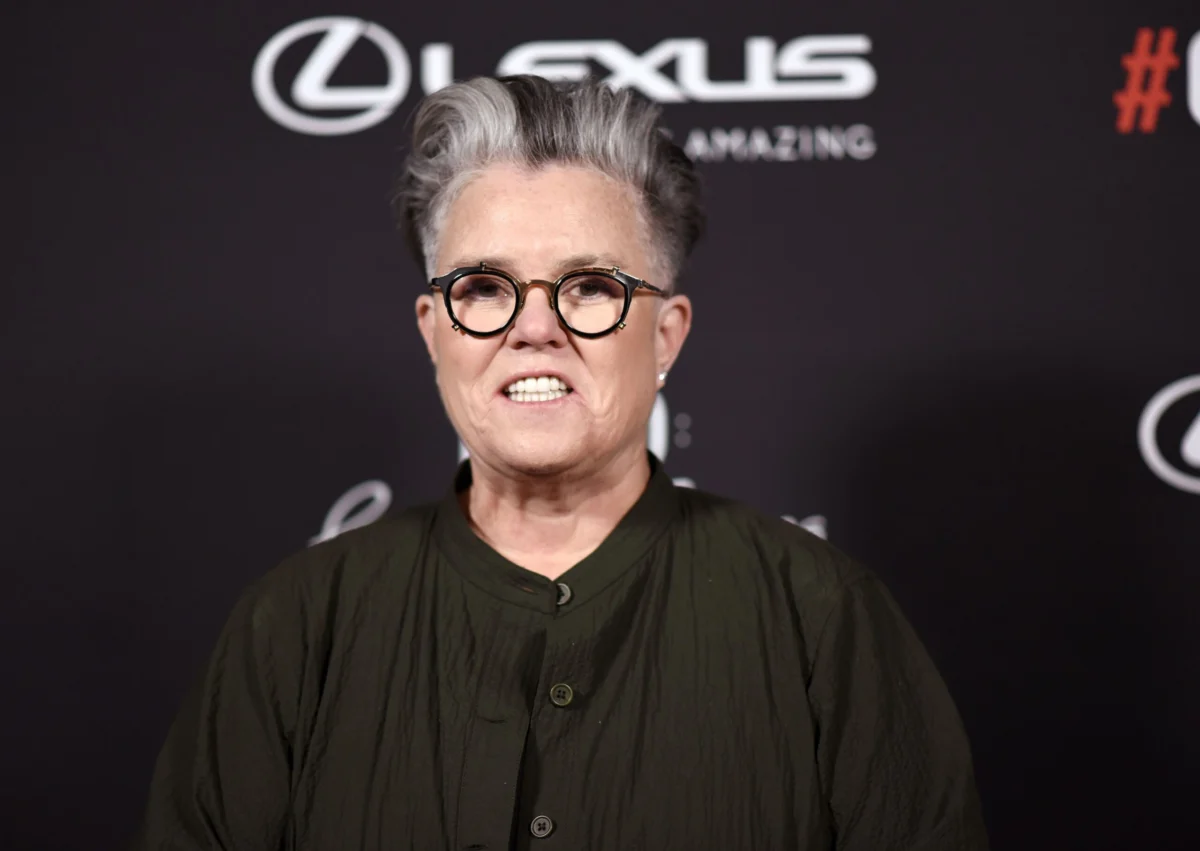
Rosie O’Donnell, the acclaimed comedian and actress, has publicly disclosed undergoing a lower deep-plane facelift in January 2026, a decision that has prompted a profound personal reflection she meticulously detailed in a recent Substack post titled "decisions." This revelation marks a significant moment for the television personality, known for her outspoken nature and strong stances, as she navigates the complex intersection of personal choices, societal expectations, and feminist ideals. O’Donnell’s candid account offers a rare glimpse into the internal struggle preceding and following a significant cosmetic procedure, resonating with a broader cultural conversation surrounding aging, self-perception, and the evolving landscape of beauty standards.
A Shift in Stance: From Moral Opposition to Personal Necessity
O’Donnell’s journey to the operating room was not a straightforward one. For years, she held a deeply entrenched moral opposition to facelifts, viewing them as a betrayal of feminist principles and a rejection of the natural aging process. In her Substack essay, she articulated this past conviction with striking clarity: "I used to feel very strongly about facelifts… Not casually—morally. I had assigned myself as head of all women who would never ever." This self-appointed role positioned her as a staunch advocate for embracing aging, seeing wrinkles as earned badges of a life lived. The prospect of altering her appearance surgically felt, to her, like a capitulation to societal pressures and a repudiation of solidarity with "our team of women worldwide."
However, a significant life event—a substantial weight loss of approximately 50 pounds—initiated a reevaluation of her long-held beliefs. O’Donnell described the physical changes to her face following this weight loss as a process of "melting with intention." While she initially attempted to embrace these alterations through acceptance, she found herself increasingly unable to reconcile her internal self with her external reflection. This internal conflict led to a pivotal realization: "There’s a point where acceptance starts to feel like lying." This statement encapsulates the nuanced struggle of reconciling personal comfort with deeply ingrained ideological commitments.
The Influence of Family: A Child’s Unvarnished Perspective
A pivotal moment in O’Donnell’s decision-making process involved her 13-year-old child, Clay. Upon learning of her mother’s contemplation of a facelift, Clay offered a direct and unsparing critique that deeply resonated with O’Donnell. The child argued that O’Donnell had "earned" her wrinkles and that undergoing surgery would send a contradictory message to young women who looked up to her for her advocacy of self-acceptance. Clay’s poignant observation, delivered with "strong effect," was stark: "’I wouldn’t be able to respect you if you did it.’"
O’Donnell’s reaction to Clay’s words was profound. She likened her child’s perspective to that of her own younger, more morally rigid self, stating, "Clay sounded exactly like me. Like my younger, more certain, more morally rigid self had somehow moved into my house and was now judging my face." This internal mirroring highlighted the deep-seated nature of her own past convictions and the challenge of reconciling them with her present feelings and desires. The conversation with Clay forced O’Donnell to confront the potential implications of her choices not only for herself but also for the values she aimed to impart to her children and to the wider community.
Reconciling Autonomy with Ideology: A Feminist Reconsideration
The ensuing months saw O’Donnell wrestling with the implications of her potential surgery. She recognized that opting out of the procedure would also constitute a form of teaching Clay a lesson, but she ultimately concluded that this lesson might be misconstrued. "If I’m teaching Clay anything, it can’t be that my body belongs to an idea either," she wrote. This statement underscores a crucial shift in her thinking, moving from an external adherence to an ideology to a more internal understanding of personal freedom and bodily autonomy.
O’Donnell argued that even a well-intentioned ideology, such as feminism, could, in its rigid application, become another form of authority dictating how individuals should present themselves. "Even feminism. Because that’s still not freedom—that’s just a different authority telling you what you’re allowed to do with your own face." This perspective aligns with broader discussions within feminist discourse regarding individual agency and the potential for ideological frameworks to inadvertently impose limitations.
Her words echo those of Allure contributor Joan Kron, who, after undergoing three facelifts, remarked, "The feminist line is, ‘We’ve earned these wrinkles. We don’t want to erase them.’ Well, I’m a feminist, but I don’t believe in telling people what to do with their bodies." This parallel highlights a growing sentiment among some feminists that personal choices regarding cosmetic procedures should be respected as expressions of individual autonomy, rather than viewed through a lens of ideological purity.
The Procedure and Its Aftermath: A Subtle Transformation
Ultimately, O’Donnell proceeded with the lower deep-plane facelift, selecting a surgeon recommended by friends whose results she admired for their subtlety. Her primary goal was to retain her identity while achieving a more rested and emotionally stable appearance. "I wanted to still be me, just…less haunted. And I do look like me…a slightly more well-rested, emotionally stable version of me," she stated.
In a striking turn of events, despite the profound internal struggle and the significant physical alteration, O’Donnell revealed that the most profound outcome was the lack of external notice. "I went through a full existential feminist crisis, had my face and neck surgically altered, and the result is…zippo," she recounted. This unexpected lack of acknowledgment from others, while initially perhaps surprising, ultimately became what she deemed "the best possible outcome."
O’Donnell explained that she did not feel she had disappeared or become someone else. Instead, the surgery provided a sense of peace with her reflection: "I just stopped arguing with the mirror. And maybe that’s enough." She described the subtle result as "what a lower, deep plane face lift [sic] looks like when it minds its own business." This understated outcome suggests a successful application of the deep-plane technique, which is designed to provide natural-looking rejuvenation by addressing deeper facial structures.
The Deep-Plane Facelift: A Modern Surgical Approach
The deep-plane facelift, as O’Donnell underwent, represents an advancement in traditional facelift techniques. Unlike superficial facelifts that primarily address the skin, the deep-plane method involves repositioning ligaments and deeper tissues beneath the superficial musculoaponeurotic system (SMAS), a layer of tissue covering the facial muscles. This approach aims to achieve a more comprehensive and natural-looking lift, addressing sagging and volume loss in a way that can appear more integrated with the natural facial anatomy. This technique has become increasingly prevalent in the field of plastic surgery, contributing to the broader trend of greater transparency and discussion surrounding celebrity cosmetic procedures.
A Wave of Celebrity Transparency
O’Donnell’s decision to share her experience places her within a growing cohort of celebrities who are choosing to be open about their cosmetic surgeries. This trend towards transparency can be seen as a departure from past practices where such procedures were often kept secret. Denise Richards, for instance, openly discussed her recent facelift with Allure, even sharing unedited before-and-after photographs. Similarly, Keltie Knight detailed her own facelift experience in an interview with Glamour, emphasizing her initial intention to keep the procedure private. Other notable figures who have confirmed undergoing facelifts include Kris Jenner, Ricki Lake, and Kathy Griffin, demonstrating a broader cultural shift where plastic surgery is becoming less taboo. This openness extends to male celebrities as well, who are increasingly participating in this conversation about cosmetic enhancements.
This openness also reflects a wider societal reevaluation of attitudes toward aging and cosmetic intervention. As individuals, like Allure contributor Val Monroe, who "loves an old face," find themselves grappling with the aesthetic consequences of aging, such as the appearance of disdain around the mouth, the consideration of surgical options becomes more prevalent. The experience of these public figures, coupled with the increasing accessibility of information about various surgical techniques, contributes to a more nuanced public discourse on beauty, aging, and personal choice.
Conclusion: Embracing the "Act Three"
In her closing remarks, O’Donnell acknowledged that she owes no one an explanation for her decision but expressed a personal aversion to secrets. "Part of my desire to show myself…is to come clean," she wrote, posing the introspective question, "But who do I owe that truth to? Is it mine to keep?" She also reflected on the financial aspect of the surgery, noting its significant cost—"more money than I have ever paid for a car"—and acknowledging her "privileged place" in the world.
Despite the lingering complexities of her decision, O’Donnell, at 64 years old, concludes her reflection with a sense of profound gratitude for life and the ability to express herself. She states that she and her "new lower face and neck" are "just happy to be alive…able to feel and choose and use my voice whenever I feel called to…as we carry on in act 3." Her journey underscores the personal nature of aesthetic choices and the ongoing evolution of societal perceptions surrounding beauty, aging, and individual autonomy, particularly within the framework of feminist thought. O’Donnell’s candor offers a valuable contribution to the ongoing dialogue, encouraging a more empathetic and less judgmental approach to personal decisions about appearance and self-care.