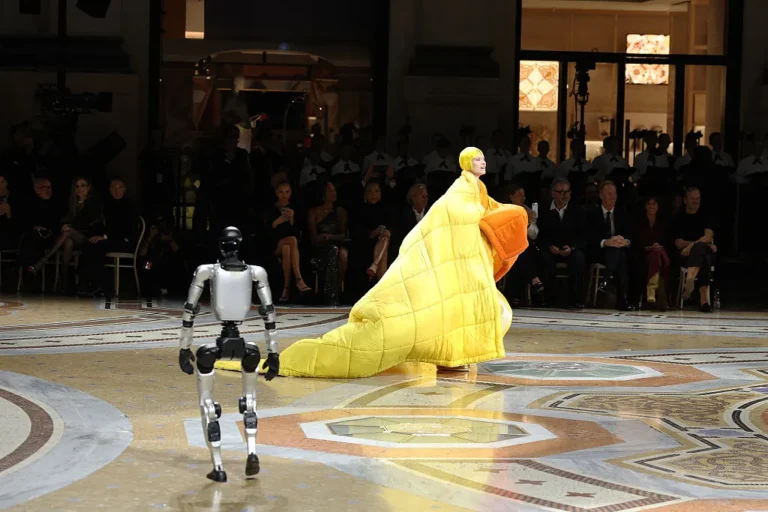







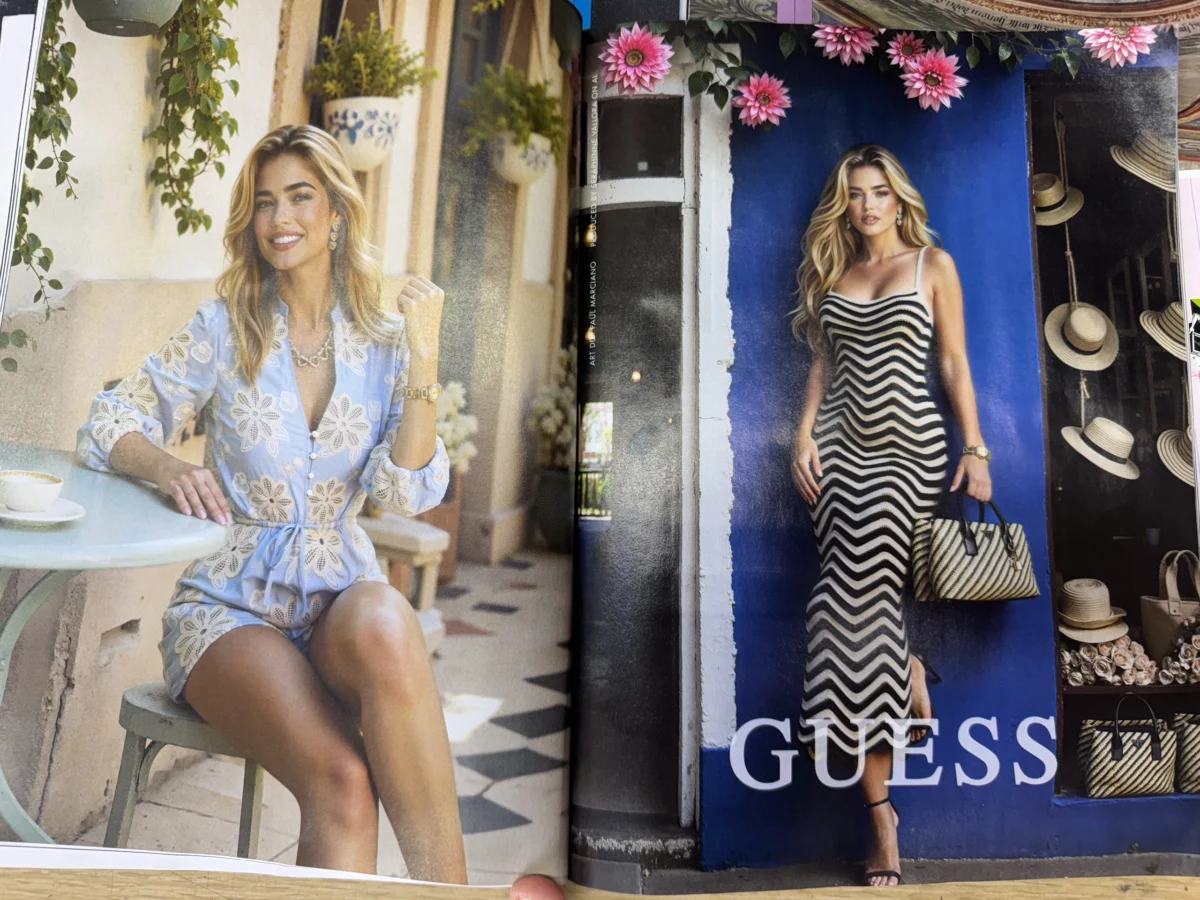
The global fashion industry stands at a profound technological and ethical crossroads as generative artificial intelligence increasingly replaces human labor in commercial advertising and e-commerce catalogs. What began as experimental digital rendering a few years ago has rapidly evolved into a mainstream commercial practice, saving brands millions of dollars while displacing traditional human models, photographers, and stylists. The controversy reached a boiling point following the publication of Vogue’s July print edition, which featured an advertisement by the fashion brand Guess utilizing a fully synthetic, AI-generated model. While legacy media gatekeepers maintain that advertising standards were met, the inclusion of artificial imagery in the self-proclaimed "fashion bible" has reignited intense debate regarding authenticity, labor rights, and the future of creative professions.
Chronology of the Digital Shift in Fashion
The integration of artificial intelligence into fashion marketing has accelerated dramatically over a brief three-year window, transforming from isolated experiments into widespread commercial implementation.

In 2013, early iterations of digital integration began to emerge in European retail, with French retailer Veepee pioneering the use of virtual mannequins to display apparel online. However, these early tools were largely static and lacked the photorealism necessary for high-end campaigns.
A significant cultural tipping point occurred in March 2023, when denim giant Levi Strauss & Co. announced a partnership with AI studio Lalaland.ai. The initiative aimed to introduce "diverse" digital fashion models to make e-commerce catalogs more inclusive. The backlash from human models and industry observers was swift, with critics labeling the move "artificial diversity." Commercial models expressed profound disillusionment, noting that brands were opting for synthetic avatars instead of employing readily available human talent from diverse backgrounds.
By 2024 and into 2025, major global brands including H&M, Mango, and Calvin Klein integrated generative AI models into their digital workflows, primarily targeting high-volume e-commerce platforms.
The most recent escalation occurred in the summer of 2025, when Vogue’s July print edition featured the Guess advertisement showcasing a hyper-realistic, AI-generated blond model. The placement in a premier print publication signaled an implicit cultural normalization of synthetic imagery, prompting widespread internet discourse and heightened concern among labor advocates.

Economic Pressures and the Push for Mass Content Scaling
The primary driver behind the widespread adoption of AI models is economic efficiency and the insatiable demand for digital content across social media channels. According to technologists and industry experts, the traditional marketing model was architected for an era when brands produced approximately four major campaigns per year. Today, digital ecosystems—driven by TikTok, Instagram, and fast-paced e-commerce platforms—require between 400 and 400,000 distinct pieces of visual content annually.
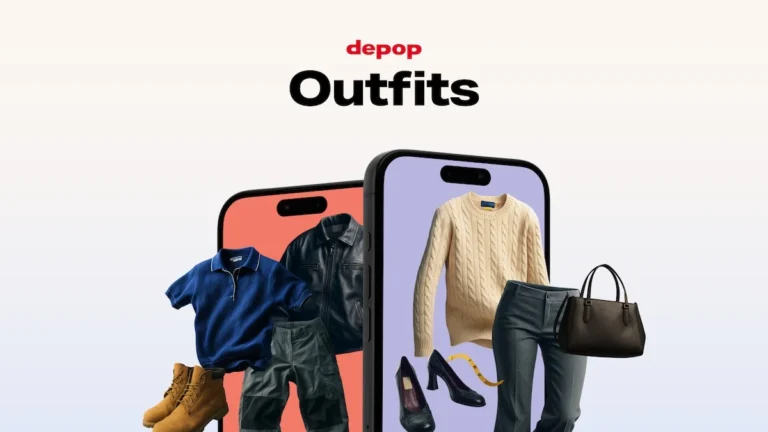
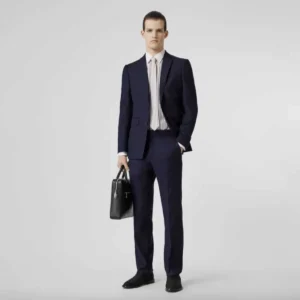
Producing this volume of content using traditional methods involving live models, international travel, specialized studio rentals, lighting technicians, photographers, makeup artists, and wardrobe stylists is financially prohibitive, particularly for mid-sized and smaller brands. Industry analysts note that AI allows companies to take a simple flat-lay product photograph, digitally wrap it onto a photorealistic virtual model, and place the avatar within a coherent, high-end background at a fraction of the traditional cost.
Paul Mouginot, an art technologist who has worked extensively with luxury fashion houses, explains that the economic incentive is nearly impossible for commercial brands to ignore. While luxury heritage brands remain cautious and continue to rely on human authenticity, mass-market and e-commerce brands view automation as an operational necessity to remain competitive in a high-speed digital economy.

Labor Implications and the Vulnerability of E-commerce Models
While high-fashion runway models secure elite status and prestige, commercial and e-commerce models form the backbone of the profession’s financial security. Sinead Bovell, a model, tech entrepreneur, and founder of the WAYE organization, emphasizes that e-commerce models are the demographic most immediately threatened by automation.
For many working models, catalog shoots provide steady income that sustains their careers. The substitution of these workers with synthetic avatars risks dismantling the entry-level pipeline of the modeling industry. Furthermore, commercial models have raised serious legal and ethical concerns regarding data privacy and likeness rights. Many professionals report encountering ambiguous contractual clauses that appear to demand the surrender of their facial scans and physical likenesses to train proprietary brand AI systems without adequate long-term compensation.
In response to these labor vulnerabilities, advocacy groups such as the Model Alliance, led by founder Sara Ziff, are actively pushing for legislative protections like the Fashion Workers Act in New York. This proposed legislation seeks to mandate explicit model consent and fair compensation for the creation and deployment of digital replicas, aiming to prevent the unchecked exploitation of human likenesses.

Mitigating Bias and the Quest for Distinctive Humanity
As the market floods with AI-generated imagery, technologists and creative studios face mounting challenges regarding homogeneity. Early generative models frequently produce uniform facial structures, symmetrical features, and standardized body types that merely replicate narrow Western beauty standards, amplifying existing biases present in training datasets.
Creative studios are attempting to counteract this by introducing intentionality into their prompting and training practices. Sandrine Decorde, CEO and co-founder of the AI creative studio Artcare, describes her team as "AI artisans" who meticulously refine datasets to inject unique human characteristics, such as subtle imperfections, distinctive gazes, and varied physical traits, into synthetic models.
Significantly, Artcare and similar agencies have channeled a substantial portion of their generative work into children’s fashion. Given that employing minors in commercial modeling has historically involved complex regulatory hurdles and risks of exploitation, the generation of synthetic child models has emerged as an ethically viable alternative in high-demand markets.

Future Outlook: Coexistence or Complete Automation?
Industry leaders remain divided on the ultimate trajectory of AI in fashion. While technology firms and fast-fashion retailers champion automation for its scalability and cost reduction, booking platforms and talent agencies argue that human authenticity remains irreplaceable, particularly for luxury brands where narrative, heritage, and emotional connection dictate consumer loyalty.
Claudia Wagner, founder of modeling booking platform Ubooker, suggests that the current wave of AI integration is largely experimental, driven by a desire for brand visibility rather than genuine creative advancement. However, data from early adopters indicates that despite vocal public criticism on social media platforms, silent majorities of digital consumers frequently engage with and purchase from campaigns utilizing synthetic imagery at significantly higher rates.
As the industry navigates this transition, the boundary between human and machine creativity continues to blur. Fashion writer and author Amy Odell notes that historical precedents—such as the industry’s eventual embrace of reality television stars after initial resistance—suggest that institutional endorsements by publications like Vogue could pave the way for broader acceptance. Ultimately, the long-term survival of human talent in fashion may depend on the ability of models and artists to leverage their personal narratives, entrepreneurial ventures, and unique human experiences—elements that algorithms and synthetic avatars can simulate, but never truly replicate.