








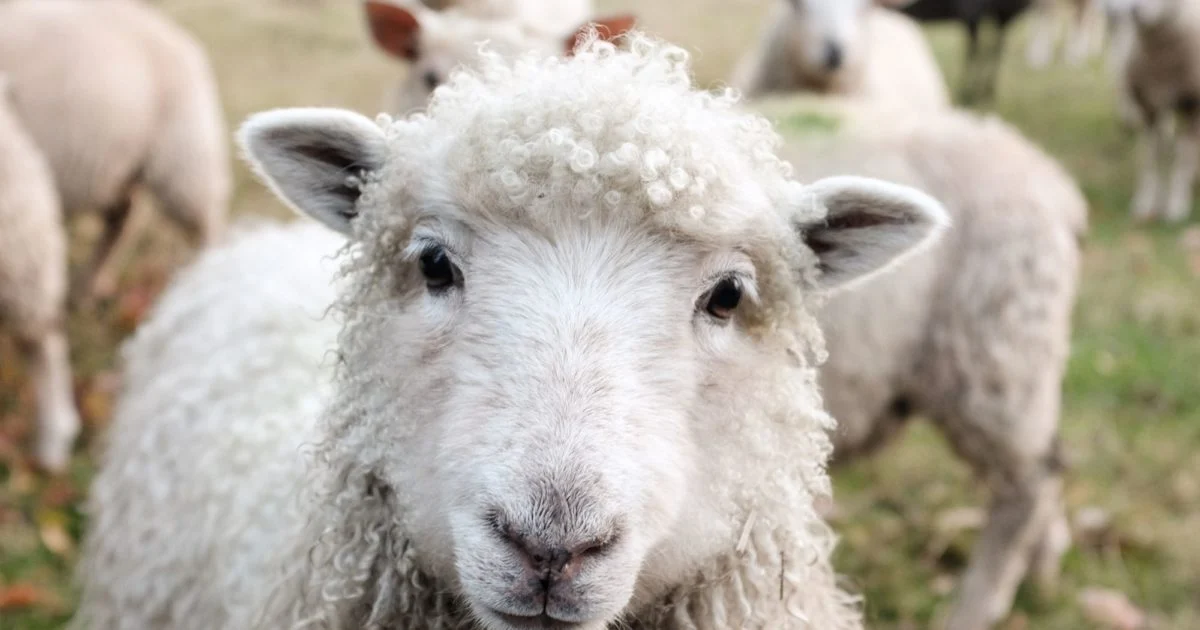
Wool, long cherished for its warmth and comfort, embodies a seemingly wholesome image of well-cared-for sheep grazing idyllic pastures. However, beneath this pastoral veneer lies a supply chain fraught with intricate animal welfare concerns and significant environmental impacts, prompting a critical examination of its true sustainability and ethical standing. The journey from sheep to sweater is far more convoluted than a simple haircut, revealing a reality that challenges the industry’s picturesque ideal.
Unraveling the Wholesome Image: A Woolly Topic
For generations, wool has been presented as a natural, renewable fiber, a product of a mutually beneficial relationship between humans and sheep. The prevailing narrative suggests that shearing is not only essential for the animals’ health but also provides us with a versatile textile. This perception, deeply ingrained in consumer consciousness, has allowed the industry to cultivate an image of harmony and natural stewardship. Yet, a growing body of evidence, including numerous investigations and undercover exposés, has begun to dismantle this long-held belief, revealing systemic issues that extend beyond isolated incidents.
A pivotal moment occurred in 2015 when ethical outdoor clothing company Patagonia, a brand known for its commitment to sustainability, ceased purchasing wool from Ovis 21, a supplier it had previously believed adhered to high ethical standards. This decision followed revelations of animal cruelty practices within the farms, underscoring that even seemingly "ethical" operations can fall short and highlighting the difficulty of ensuring welfare across complex supply chains. This incident served as a stark reminder that the industry’s self-regulation and external certifications required more scrutiny.
Beyond specific farm issues, more widespread and deeply ingrained practices have come under fire. Investigations have repeatedly exposed painful procedures such as mulesing (also known as live lamb cutting) and tail docking, surgical interventions often performed on lambs without pain relief, using crude tools like knives. These practices, while common in certain major wool-producing regions, raise profound questions about the industry’s commitment to animal welfare and the definition of "ethical" wool.
Impact on Animals: A Question of Sentience and Suffering
The domesticated sheep of today are a far cry from their ancestors. Humans have selectively bred sheep over millennia to maximize wool production, transforming them into animals that are entirely dependent on shearing to prevent heat exhaustion, flystrike, and other ailments. Unlike their believed original ancestor, the mouflon, which could naturally shed its winter coat, modern sheep breeds like the Merino possess dense, continuous fleeces that necessitate human intervention. This genetic modification has created a symbiotic, albeit often exploitative, relationship where the animals’ existence is intertwined with human consumption of their meat, wool, and skins.
Australia, one of the world’s largest wool producers, boasts comprehensive animal welfare laws and standards on paper. However, the legality of practices like mulesing, despite the suffering it inflicts, demonstrates a significant gap between legal frameworks and ethical considerations. Sheep, like many other farmed animals, are sentient beings capable of feeling pain, fear, and distress, a fact supported by scientific evidence. Studies, such as those demonstrating sheep’s ability to recognize and remember up to 50 individual sheep faces and familiar human faces, challenge popular culture’s underestimation of their intelligence and emotional complexity.
The search for "kinder" alternatives has led some consumers to alpaca wool, often marketed as a product of small-scale, sustainable farming. However, a PETA investigation into Peru, the leading producer of alpaca wool, exposed severe abuses, including alpacas being tied down and roughly shorn, resulting in injuries and extreme distress. The widespread outrage following this exposé prompted major retailers like UNIQLO to ban the fiber, demonstrating the power of consumer advocacy and investigative journalism in driving corporate change.
Painful Standard Practices in the Wool Industry
Several routine practices in the wool industry are sources of significant animal suffering. Castration, tail docking, and mulesing are legally permitted in many regions and are frequently performed without adequate pain relief, even on very young lambs. While mulesing has been outlawed in the European Union, the UK, and New Zealand, it remains prevalent in Australia, where it is primarily used to mitigate the risk of flystrike.
Flystrike is a serious condition where blowfly eggs laid on a sheep’s warm, moist skin hatch into larvae that feed on the animal’s living tissue, leading to infection, severe pain, and potentially death. Mulesing involves cutting large strips of skin from a lamb’s buttocks, creating an area of bare, scarred skin that is less attractive to flies. Tail docking, as its name suggests, involves severing a sheep’s tail, often to prevent a build-up of fecal matter that could attract flies. These procedures are typically recommended for lambs just a few weeks old, intensifying the ethical concerns surrounding their execution without pain management.
Fortunately, flystrike can be prevented through less invasive methods, including regular surveillance, crutching (shearing around the buttocks), and breeding sheep with natural resistance to the condition. Animal rescue sanctuaries demonstrate that such care is feasible. However, the economic model of large-scale industrial farming, where the average Australian flock comprises over 2,400 sheep, makes it logistically challenging to provide the individualized attention required for these alternative interventions. The sheer numbers often prioritize efficiency over comprehensive animal welfare, creating a systemic barrier to more humane practices.
The increasing consumer awareness has spurred a positive shift. Numerous brands have publicly pledged to use mulesing-free wool or have transitioned to entirely wool-free alternatives. Campaigns like Four Paws’ #woolwithabutt are actively advocating for the abolition of mulesing and other mutilations, demonstrating that industry practices are subject to increasing ethical scrutiny and pressure for change.
The Intertwined Destinies: Wool, Meat, and Live Export
The wool industry often attempts to distinguish itself from the leather industry, arguing that wool is harvested from living animals, implying a "kinder" process. However, the reality is that the wool and meat industries are intrinsically linked. Animals raised for wool, including sheep and alpacas, are typically slaughtered for their flesh once their wool production declines or becomes financially unviable. This "dual-purpose" model is particularly prevalent in Australia, where three-quarters of the sheep population are Merinos, historically bred for wool, but also routinely used for meat.
Sheep generally reach an age of 5 or 6 years when their wool quality begins to degrade, making them less profitable for the industry. Despite a natural lifespan of up to twelve years, these animals are deemed "cast for age" and sent to slaughter. A significant proportion of these older sheep, particularly in Australia, enter the live export industry. This practice involves transporting millions of animals over vast distances, often in overcrowded, unsanitary conditions on ships. The journey is notoriously horrific, with many animals dying from stress, starvation, dehydration, and heat stress before reaching their destination. The suffering endured during live export has been extensively documented, leading to widespread condemnation. In a significant victory for animal welfare advocates, Australia has committed to banning live sheep export by 2028, a decision that underscores the growing recognition of the inherent cruelty of this trade.
The Brutality of Winter Lambing
The suffering in the wool and meat industries begins even before birth, with the practice of "winter lambing." Lambs are strategically bred to be born during the colder winter months, a cost-effective decision for the industry as it ensures access to abundant green pastures in spring, reducing the need for expensive supplementary feed. However, this economic strategy comes at a devastating cost.
Reports indicate that as many as fifteen million lambs die within the first 48 hours of their lives each year in Australia alone, primarily due to exposure to the cold, starvation, and neglect. This staggering mortality rate is exacerbated by generations of selective breeding for higher rates of twins and triplets. These multiple births often result in smaller, weaker lambs less equipped to withstand harsh weather conditions. Furthermore, mother ewes, particularly those with triplets, struggle to adequately care for multiple offspring, especially given they typically only have two teats. This often leads to birthing complications, increased mortality rates for both ewes and lambs, and an industry practice of culling ewes deemed reproductively unprofitable.
Organizations like Lamb Care Australia provide vital support by rescuing orphaned lambs, offering a glimmer of hope amidst the systemic suffering. These efforts highlight the potential for compassion that exists outside the industrial model, while simultaneously underscoring the vast scale of the problem. The widespread suffering associated with winter lambing is entirely avoidable, especially with the availability of numerous animal-free alternatives that offer similar performance characteristics.
Environmental Footprint: Beyond Biodegradability
While wool is a natural fiber and biodegradable, offering an advantage over synthetic plastics like nylon, polyester, and acrylic in terms of post-consumer waste and microplastic shedding, its environmental impact extends far beyond its end-of-life characteristics. The sheer scale of sheep farming globally, with an estimated 500 million sheep killed annually for human consumption, places immense pressure on the planet’s resources.
Comparative analyses reveal a stark picture. Collective Fashion Justice’s CIRCUMFAUNA initiative, comparing Australian wool with Australian-grown cotton, found that producing a wool knit jumper emits an astounding 27 times more greenhouse gas emissions than a cotton one. This significant difference is largely attributable to methane emissions from ruminant livestock and the energy-intensive processes involved in wool production and processing.
Land use is another critical environmental concern. To produce a single bale of wool, a staggering 367 times more land must be allocated compared to a bale of cotton. Animal agriculture, in general, is the world’s largest user of land resources, with pasture and arable land dedicated to feed production accounting for almost 80% of total agricultural land and 26% of Earth’s ice-free surface used for grazing. This extensive land clearing leads to profound biodiversity loss, as wild animals lose their natural habitats, increasing their risk of endangerment and extinction. Deforestation for pasture also releases significant greenhouse gas emissions, exacerbating climate change. Intensive sheep farming further contributes to land degradation and can even lead to desertification in fragile ecosystems, as observed in regions like the Patagonian steppe.
Despite these challenges, environmental scientists offer a hopeful vision. Research suggests that a global transition away from animal agriculture towards plant-based, recycled, and lab-grown production systems could facilitate the rewilding of vast tracts of land. This rewilding, in turn, has the potential to sequester 99-163% of our carbon emissions budget, demonstrating a powerful pathway to mitigating climate change and restoring ecological balance.
Navigating Ethical Wool: Standards and Alternatives
For consumers committed to making more ethical choices, the market offers various standards and certifications that claim to ensure animal welfare, such as the Responsible Wool Standard (RWS) and ZQ Merino Standard. However, a closer examination reveals their limitations. While these standards aim to improve conditions, they do not prohibit the slaughter of sheep, nor do they prevent the practice of winter lambing. The ZQ Merino Standard, for instance, has not yet finalized an official process for pain relief during tail docking or castration. The RWS acknowledges that these procedures should only be performed when "necessary" and with pain relief if available, but the inherent ambiguity and the subjective definition of "necessity" leave room for practices that cause suffering. Crucially, many of these "necessary" mutilations would be entirely avoidable if sheep were not bred so intensively for industrial production. Furthermore, practices like tail docking would be illegal for companion animals like dogs or cats in many jurisdictions, highlighting a speciesist double standard.
For those seeking genuinely ethical options, prioritizing vintage, pre-loved, or recycled wool goods is a viable solution. These choices do not contribute to the direct harm of living animals or the environmental footprint of new production, while simultaneously reducing textile waste in landfills.
Beyond wool, a growing array of animal-free alternatives offers comparable warmth, comfort, and performance, often with a significantly reduced ethical and environmental cost. These include:
- TENCEL Lyocell: A highly sustainable cellulosic fiber derived from responsibly managed wood sources, known for its softness, breathability, and excellent thermal regulation.
- Organic Cotton: While cotton has its own environmental footprint, organically grown varieties reduce pesticide and synthetic fertilizer use.
- Hemp and Linen: Durable, breathable natural fibers that require less water and fewer pesticides than conventional cotton.
- Recycled Polyester (rPET): Made from recycled plastic bottles, it diverts waste from landfills and reduces reliance on virgin fossil fuels, though it still sheds microplastics.
- Innovative Plant-based Materials: Emerging textiles derived from sources like mushrooms, pineapple leaves, or even algae, offering novel solutions with minimal environmental impact.
- Recycled Synthetic Insulations: Modern technical fabrics and insulation materials, often made from recycled human-made fibers, provide exceptional warmth without animal products, ideal for winter wear.
The discussion surrounding wool’s ethics and sustainability is a microcosm of broader debates within the fashion industry and agricultural sectors. It compels consumers, brands, and policymakers to look beyond traditional narratives and confront the complex realities of production. As awareness grows and technological innovations advance, the imperative to move towards truly compassionate and environmentally sound material choices becomes ever more urgent, paving the way for a future where warmth and comfort do not come at the expense of animal welfare or planetary health.