










The year 2026 marks a significant moment for Cartier, a maison that has cemented its position at the pinnacle of the horological world. Riding a wave of unprecedented popularity and a strong brand appeal, particularly among younger collectors, Cartier is strategically leveraging the pervasive cultural nostalgia for the early 2000s. This trend has paved the way for the highly anticipated return of the Cartier Roadster, unveiled as a centerpiece of the brand’s Watches and Wonders Geneva 2026 novelties. After a 14-year hiatus since its initial run from 2002 to 2012, the Roadster collection is reborn, signaling a refined evolution that balances its distinctive heritage with contemporary design sensibilities. While the overt quirks and ’50s automotive Americana of its predecessor have been softened, the new generation presents a cleaner, more sophisticated, and universally appealing sports watch, poised to become a cornerstone of Cartier’s diverse lineup.
A Strategic Reintroduction Amidst Market Dominance
Cartier’s current market position is undeniably strong. Reports from industry analysts indicate a consistent year-over-year growth in luxury watch sales, with Cartier consistently ranking among the top three most valuable watch brands globally. This resurgence is fueled by a successful reinterpretation of iconic models and a keen understanding of evolving consumer tastes. The brand’s ability to tap into generational trends, particularly the millennial and Gen Z fascination with the aesthetics of the late 1990s and early 2000s, has been a key driver. The revival of the Roadster, a model that embodies the distinctive design language of the early 2000s, is a testament to this strategy. The original Roadster, launched in 2002, was a departure from Cartier’s more classical offerings, drawing inspiration from the golden age of automotive design, particularly American automobiles of the 1950s. Its unique tonneau case, prominent crown, and bold dial details captured a specific zeitgeist. The decision to reintroduce it now, after a decade-long absence, suggests a calculated effort to capitalize on both brand equity and current market dynamics.

Design Evolution: From Quirky Charm to Polished Sophistication
The new generation of Cartier Roadster watches debuts with a clear vision of modernization, while still retaining recognizable cues from its lineage. Rather than a phased introduction, Cartier has launched the collection with immediate variety. Two distinct case sizes are offered: a medium variant measuring 34.9mm in width and 42.5mm from lug to lug, and a larger model at 38mm wide and 47mm lug-to-lug. The available case materials include robust stainless steel, luxurious 18K yellow gold, and a refined two-tone combination of steel and gold. The stainless steel example showcased here is the medium size, while the two-tone model represents the larger iteration.
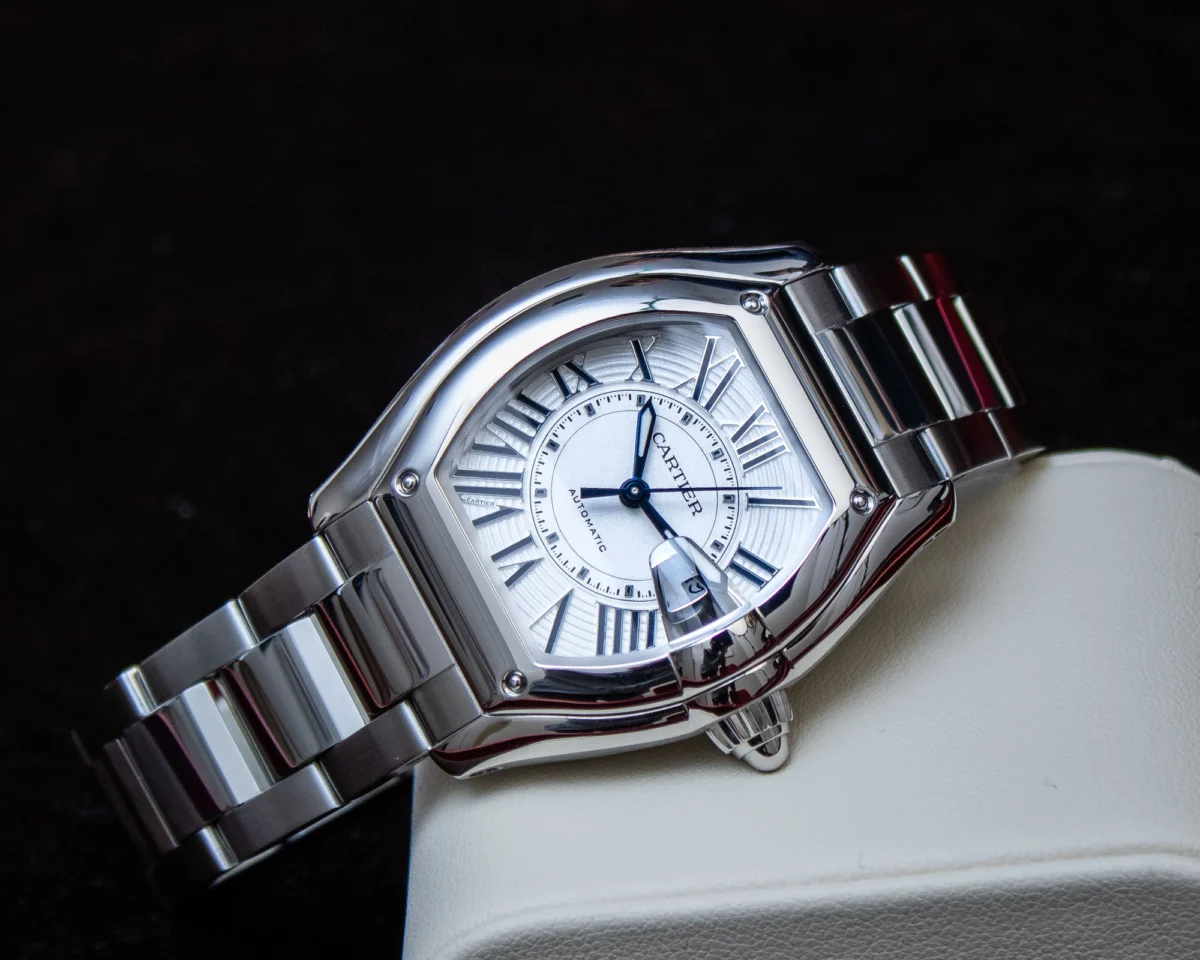
The overall silhouette of the new Roadster is undeniably familiar, yet it presents a smoother, more conventionally elegant tonneau case. The design has been refined for enhanced ergonomics and a more streamlined profile. A notable shift occurs in the lugs: the original Roadster’s recessed lug screws, inspired by the taillights of a 1957 Corvette, have been replaced by a fluid, flowing design that bears a closer resemblance to the lugs of Cartier’s Tortue collection. The smooth, polished bezel now features four small rivets, a design element that aligns with the current trend for integrated sports watches, though it marks a departure from the overt homage to ’50s American automotive styling that defined the original.
However, Cartier has masterfully preserved and refined the Roadster’s signature design element. The 1959 Cadillac Eldorado taillight-inspired motif, which flows seamlessly from the date magnifier at 3 o’clock through the ornate, oversized crown, remains a defining characteristic. In this new iteration, the crown, while still a prominent visual statement, has been subtly redesigned. It is now slightly recessed into the case, a departure from the original’s potentially intrusive protrusion. This modification ensures greater comfort during wear, preventing unnecessary digging into the back of the hand, a common concern with the previous generation. This less obtrusive presentation is likely to broaden the Roadster’s appeal, making it less divisive and more universally accepted.

Furthermore, the case design has been engineered for a more comfortable and integrated fit on the wrist. Significant undercuts on the case sides, described as almost wing-like from the caseback perspective, minimize the watch’s perceived footprint. This allows the Roadster to sit lower and appear slimmer, enhancing its wearability. The solid caseback remains faithful to the original design, and a commendable water resistance rating of 100 meters positions these new models as some of the sportiest offerings within Cartier’s extensive catalog.
Dial Design: A Symphony of Depth and Refinement
While the case underwent significant stylistic evolution, the dial designs of the new Cartier Roadster remain more closely aligned with the original. Yet, as with the case, there is a palpable elevation in the overall feel and execution. The main dial surface best encapsulates this new, more refined Roadster. It presents a far more three-dimensional appearance than its predecessors. The VDO gauge-inspired ridged hour track now features deeper, more pronounced grooves, adding a tactile and visual richness. Cartier’s signature oversized Roman numerals have been stamped and are either lumed or filled with enamel, a significant upgrade from the simply printed numerals of the past.
Within the hour ring, the central dial surface has moved away from the intricate guilloché patterns of the originals. Instead, it features a simple, grained matte texture. This is complemented by a more purposeful minutes scale and new, subtle applied indices positioned at five-minute intervals. The slim Roman sword hands, a staple of the series, are now presented with a new blued treatment on the stainless steel model. This blue hue, along with matching blue fills for the Roman numerals, imbues the design with a classic Cartier elegance. A new, stylized frame around the date window at 3 o’clock adds a touch of contemporary flair, enhancing the Roadster’s visual appeal without compromising the unique tapering date display shape that has been preserved.

Mechanical Prowess and Bracelet Integration
Cartier maintains its characteristic discretion regarding the precise specifications of the movements powering the Roadster collection. However, industry consensus suggests that the "large" variants are equipped with the in-house 1847 MC automatic movement, while the "medium" models utilize the slimmer in-house 1899 MC automatic power plant. Despite the differences in case size, both movements offer comparable performance metrics. They operate at a beat rate of 28,800 vibrations per hour and provide approximately 40 hours of power reserve. While these specifications are functional, they are considered somewhat modest for watches at this price point within the current luxury watch market, where higher power reserves and advanced complications are increasingly common.
A notable departure from the first-generation Roadster, which offered a wide array of quick-release strap and bracelet options, is the new Roadster’s primary focus on a redesigned three-link bracelet. This new bracelet, while still employing Cartier’s established butterfly clasp, presents a clean and versatile aesthetic. It features smoothly brushed outer links paired with broad, polished center links. The two-tone variant introduces a unique twist on this design, with the center links presented in an alternating pattern of gold and steel links. This "patchwork" effect offers a distinctive visual appeal that sets it apart from other two-tone three-link bracelets on the market, though its long-term market reception remains to be seen.
Pricing and Market Positioning
Cartier has positioned the revived Roadster collection with a price range that reflects its premium standing and material choices. The collection is available immediately through authorized dealers worldwide. The Manufacturer’s Suggested Retail Price (MSRP) for the Cartier Roadster begins at $9,300 USD for the medium model in stainless steel. For those seeking a more opulent option, the large version in full 18K yellow gold commands a price of $57,000 USD. This broad price spectrum allows Cartier to cater to a wider audience within the luxury watch segment, from those seeking an entry into the brand’s more sport-oriented offerings to collectors desiring high-end precious metal timepieces.

Broader Implications and Strategic Outlook
The reintroduction of the Cartier Roadster is more than just a product launch; it is a strategic move that underscores Cartier’s commanding presence in the 2026 watch market. With record sales and a significant cultural footprint, particularly among younger demographics, the brand is in an ideal position to innovate and expand its offerings. The Roadster’s evolution from its early 2000s idiosyncratic styling to a smoother, more conventionally handsome design demonstrates Cartier’s adeptness at balancing heritage with contemporary appeal. By refining the collection’s aesthetic and elevating its perceived value, Cartier has successfully repositioned the Roadster as a more upscale sports watch. This move not only appeals to existing Cartier enthusiasts but also aims to attract a new wave of collectors who appreciate refined design, brand prestige, and a touch of nostalgic flair. The success of this revival will likely influence future heritage-based reintroductions by other luxury brands, setting a precedent for how iconic models can be modernized to resonate with both established and emerging markets. The integrated approach, from case design to dial execution and bracelet refinement, showcases a comprehensive vision for the Roadster’s future, ensuring its place as a significant and desirable timepiece in Cartier’s illustrious history.