









Unsecured creditors of the premium womenswear business LK Bennett are facing substantial losses, with total debts exceeding £34 million, as the retailer’s liquidation process reportedly nears its conclusion. Creditors are set to receive a mere 2.65 pence in the pound, a stark figure that underscores the severe financial distress and the challenges inherent in the current retail landscape. This outcome, understood by industry sources, marks the final chapter for a brand that once epitomized accessible luxury and enjoyed a high-profile presence on the British high street and in royal circles. The minimal return for unsecured creditors – a category that typically includes suppliers, landlords, and various trade partners – highlights the devastating impact of retail insolvencies on the broader economic ecosystem, where numerous smaller businesses often bear the brunt of such collapses.
The Trajectory of a Premium Brand: From Founding to Finality
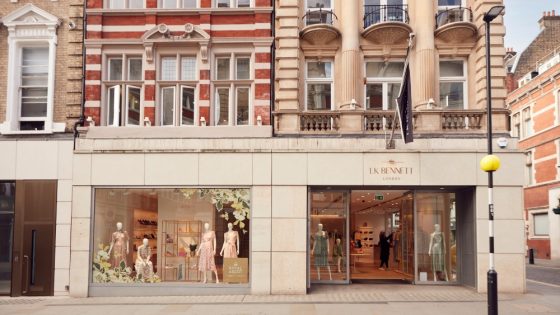
LK Bennett, founded by Linda Bennett in 1990, began as a footwear brand with a vision to offer "fashion-forward shoes with a visible quality finish." It quickly expanded into clothing and accessories, establishing itself as a go-to destination for professional women and those seeking classic, elegant attire. The brand gained significant traction and became synonymous with sophisticated British style, famously favored by members of the Royal Family, particularly Catherine, Princess of Wales. Its distinctive blend of modern design with timeless appeal allowed it to carve out a niche in the competitive premium segment.
However, despite its strong brand identity and loyal customer base, LK Bennett encountered increasingly turbulent trading conditions in the mid-2010s. The seismic shifts in consumer behaviour, characterized by a move towards online shopping, coupled with mounting operational costs associated with a large physical store footprint, began to erode its profitability. High street footfall declined across the UK, and fierce competition from both fast fashion giants and direct-to-consumer online brands squeezed margins. These pressures culminated in the company’s first major financial restructuring event, signaling the beginning of its protracted struggle for survival.
A Chronology of Financial Distress and Attempted Rescues
The journey to LK Bennett’s current liquidation is punctuated by several critical junctures, reflecting the broader challenges faced by the UK retail sector:
- 1990: Linda Bennett founds LK Bennett, initially focusing on shoes, later expanding into clothing and accessories.
- Early 2000s: The brand solidifies its position as a premium British label, known for its elegant aesthetic and quality.
- 2008: Linda Bennett sells a majority stake in the business to private equity firm Phoenix Equity Partners and the management team, valuing the company at £100 million. This period saw expansion both domestically and internationally.
- Mid-2010s: Growing signs of financial strain emerge due to declining high street sales, increasing overheads, and intense competition. Reports suggest significant losses and a struggle to adapt to the rapidly evolving retail landscape.
- March 2019: Facing unsustainable losses and mounting debt, LK Bennett files for administration. The move places over 1,000 jobs and 200 stores at risk, sending shockwaves through the industry.
- April 2019: In a significant development, founder Linda Bennett repurchases the struggling business from administration through a new entity, B.Ventures Ltd. The rescue deal saves approximately 32 stores and secures around 300 jobs, but a substantial number of outlets are closed, and staff are made redundant. The aim is to simplify the business, focus on core markets, and strengthen its digital presence.
- 2020-2022: The revitalized LK Bennett, under its founder’s renewed leadership, faces unprecedented challenges brought on by the COVID-19 pandemic. Lockdowns, a dramatic shift to remote working, and the cancellation of social events severely impact demand for occasion wear and office attire, key segments for the brand. Despite efforts to pivot to more casual wear and enhance online sales, the economic fallout proves formidable.
- Late 2025 (Inferred): After sustained efforts to navigate post-pandemic economic volatility, high inflation, and a cost-of-living crisis impacting consumer discretionary spending, the business is unable to maintain viability and enters liquidation proceedings.
- April 2026: The liquidation process nears completion, with official reports confirming the dismal return of 2.65p in the pound for unsecured creditors, revealing the full extent of the financial liabilities.
The Plight of Unsecured Creditors: A Broader Economic Ripple Effect
The figure of 2.65 pence in the pound for unsecured creditors is a stark indicator of the company’s asset-light position at the point of liquidation and the hierarchy of creditor claims. In insolvency proceedings, secured creditors – typically banks or financial institutions holding charges over company assets – are paid first from the sale of those assets. Preferential creditors, such as employees for unpaid wages (up to a statutory limit) and certain government claims, follow. Only after these claims are satisfied do unsecured creditors receive a distribution from any remaining funds.
For the unsecured creditors of LK Bennett, which would have included numerous suppliers of fabrics, garments, and accessories, logistics providers, marketing agencies, landlords, and potentially HM Revenue & Customs for unpaid taxes, the outcome is devastating. A return of less than 3% means that for every £100 owed, they will recoup only £2.65. This can lead to significant financial hardship for smaller businesses in the supply chain, some of whom may have relied heavily on their contracts with LK Bennett. The ripple effect can extend to job losses within these supplier companies, contributing to broader economic instability. It underscores the fragility of the retail ecosystem, where the failure of one prominent player can trigger a cascade of financial difficulties for many others.
Supporting Data and the Broader Retail Context
The collapse and subsequent liquidation of LK Bennett must be viewed within the context of a challenging and transformative period for the entire UK retail sector. Data from various industry bodies paints a grim picture:
- High Street Decline: Figures from the British Retail Consortium (BRC) and KPMG consistently show declining footfall in town centres and high streets across the UK, a trend exacerbated by the pandemic and the shift to online shopping. Vacancy rates for retail units have remained stubbornly high, indicating a persistent oversupply of physical retail space relative to demand.
- Retail Insolvencies: The number of retail businesses entering insolvency proceedings has seen a significant increase in recent years. According to reports from the Insolvency Service, the retail sector has consistently been among the most affected industries. Factors such as rising inflation, increased energy costs, elevated business rates, and consumer caution driven by the cost-of-living crisis have created a "perfect storm" for many retailers, particularly those without robust online infrastructure or a highly differentiated offering.
- Premium Segment Pressures: While luxury retail has shown resilience at the very high end, the "affordable luxury" or premium mid-market segment, where LK Bennett operated, has faced particular pressure. Consumers in this segment are often more sensitive to economic downturns and have a broader array of choices, from value-oriented fast fashion to aspirational online brands. The blurring lines between workwear and casual attire, accelerated by hybrid working models, also reduced demand for the traditional office and occasion wear that was a core strength of LK Bennett.
- E-commerce Dominance: The relentless growth of e-commerce has fundamentally altered the retail landscape. Retailers without a seamless, compelling omnichannel strategy have struggled to compete against digitally native brands and established online giants. Investment in digital transformation, supply chain efficiency, and data analytics has become paramount for survival.
Inferred Reactions and Expert Analysis
While specific statements from the liquidators or LK Bennett’s former management were not immediately available, common responses in such situations can be logically inferred.
From the Liquidators: The appointed liquidators would likely emphasize that their primary duty has been to maximize returns for all creditors in accordance with insolvency law. They would typically cite the complexity of winding down a retail operation, the challenges in realizing asset values in a depressed market, and the significant claims of secured creditors as factors influencing the low return for unsecured parties. They would confirm that the process has been conducted with due diligence and transparency.
From Former Management/Founder: Linda Bennett, having previously bought the company out of administration, would likely express profound regret at the eventual outcome. Her previous actions demonstrated a deep commitment to the brand she founded. She would likely acknowledge the immense efforts made by her team and herself to navigate an increasingly hostile retail environment, attributing the ultimate failure to the insurmountable economic headwinds and structural changes within the industry.
Industry Analysts and Experts: Retail sector commentators would undoubtedly view this liquidation as another poignant example of the ongoing structural transformation of the UK high street.
"The LK Bennett story serves as a cautionary tale for even well-established brands," notes Dr. Eleanor Vance, a retail economics professor at the London School of Business. "The rescue in 2019 offered a glimmer of hope, but the subsequent onslaught of the pandemic and the cost-of-living crisis proved too much. It highlights that even with founder passion and a strong brand identity, without a fundamentally sustainable business model adapted to modern consumer habits, survival is incredibly difficult."
Another expert, Marcus Thorne, a consultant specialising in retail restructuring, might add: "The minimal return for unsecured creditors is a stark reminder of the financial fragility within the retail supply chain. When a major player like LK Bennett goes under, it creates a domino effect, potentially pushing smaller, dependent businesses into their own financial difficulties. This level of loss will be felt keenly by many."
Trade bodies, such as the British Retail Consortium, would likely reiterate calls for government support, including reform of the business rates system and measures to stimulate consumer spending, arguing that the retail sector is a vital component of the UK economy and employment.
Broader Implications and Lessons Learned
The liquidation of LK Bennett carries significant implications for the wider retail landscape and offers critical lessons for businesses striving to thrive in the 21st century:
- Resilience and Agility: The case underscores the absolute necessity for retailers to build highly resilient and agile business models. Relying solely on a traditional brick-and-mortar presence or a single product category is no longer viable. Companies must be able to pivot quickly, adapt to technological advancements, and respond to rapid shifts in consumer behaviour.
- Omnichannel Imperative: An integrated omnichannel strategy is no longer an option but a prerequisite. Physical stores must complement a strong digital presence, offering seamless customer experiences across all touchpoints. Investment in e-commerce platforms, digital marketing, and data analytics is crucial for understanding and engaging with modern consumers.
- Supply Chain Vulnerability: The substantial losses faced by unsecured creditors highlight the vulnerability of supply chains. Businesses need to diversify their client base and build financial buffers to withstand the shockwaves from customer insolvencies. For retailers, working closely with suppliers and ensuring fair payment terms are essential for fostering a healthy ecosystem.
- The Cost of Inaction: Delaying strategic restructuring or failing to invest in necessary transformation can be fatal. While LK Bennett did attempt a rescue, the sheer scale of the challenges, particularly post-pandemic, proved overwhelming. Early and decisive action is critical when facing systemic market changes.
- The Future of the High Street: The ongoing reduction in physical retail footprints from once-prominent brands contributes to the changing character of high streets and shopping centres. Local authorities and property owners face the challenge of repurposing vacant units, fostering experiential retail, and creating vibrant mixed-use spaces to attract footfall.
In conclusion, the news that unsecured creditors of LK Bennett are set to recover just 2.65 pence in the pound on £34 million owed is a sobering final chapter for a once-beloved British brand. It serves as a powerful reminder of the profound and ongoing transformation within the UK retail sector. While the brand’s legacy of elegant design and quality will be remembered, its ultimate demise underscores the immense pressures of a highly competitive market, changing consumer habits, and the unforgiving economic climate, leaving a trail of significant financial loss for its many stakeholders. The retail industry, particularly its premium segment, must continue to innovate and adapt at an unprecedented pace to navigate these enduring challenges.