












The relentless march of digital connectivity has made the idea of truly disconnecting a distant memory for many, with ubiquitous smartphones and constant app engagement becoming involuntary reflexes. In an era where "doomscrolling" often overshadows genuine engagement, a growing global movement seeks to reclaim attention spans and foster more authentic connections with the physical world. This widespread desire to switch off and reconnect with something tangible formed the impetus for a unique collaboration between Dazed and Polaroid, exploring the potential of an analogue lifestyle for contemporary creatives.
The Pervasive Digital Dilemma: A Global Phenomenenon
Modern life is inextricably linked to digital devices. Studies consistently reveal staggering statistics: the average adult spends several hours a day on their smartphone, with social media consumption a significant portion of that time. Data from sources like Statista and various mental health organizations indicate a rise in digital dependency, often manifesting as decreased attention spans, increased anxiety, and a pervasive sense of "Fear of Missing Out" (FOMO). The constant influx of information, notifications, and the pressure to maintain an online persona can lead to mental fatigue and hinder deeper creative thought. This hyper-connectivity, while offering unparalleled convenience and global reach, simultaneously threatens to erode our capacity for sustained focus and presence.
This societal shift has sparked a counter-movement, with individuals and organizations advocating for digital detoxes, mindfulness practices, and a return to analogue activities. From the burgeoning popularity of physical books and vinyl records to the resurgence of traditional crafts, there is a clear yearning for experiences that are tactile, deliberate, and free from the distractions of the digital realm. It is within this context that the Dazed x Polaroid initiative emerged, seeking to understand how a deliberate withdrawal from digital tools could foster creativity and well-being.
Polaroid’s Enduring Legacy and the Flip Camera’s Role
Polaroid, a brand synonymous with instant photography, holds a unique position in this analogue revival. Its cameras produce tangible, square images that evoke a powerful sense of nostalgia and timelessness, standing in stark contrast to the ephemeral nature of digital photos. For this collaborative experiment, Dazed partnered with Polaroid, specifically utilizing the brand’s latest innovation, the Polaroid Flip camera. This device was chosen for its ability to honor Polaroid’s iconic heritage while incorporating modern functionality that still champions a deliberate approach to image-making.

The Polaroid Flip camera boasts a four-lens system designed to adjust based on distance, ensuring optimal focus for various subjects. Its sonar autofocus system further enhances clarity, while a robust flash performs admirably even in low-light conditions. Crucially, the camera’s design inherently limits the user to a finite number of shots per film pack—eight exposures at a time. This constraint was central to the experiment’s philosophy: by removing the endless, consequence-free snapping of digital photography, participants were compelled to be more mindful, intentional, and present in their photographic choices. A spokesperson for Polaroid noted, "The Flip camera isn’t just about taking pictures; it’s about making moments. In an age of endless digital captures, we believe there’s profound value in the deliberate act of choosing and creating a single, tangible image."
The Challenge Unfolds: A Call to Disconnect
Last year, Dazed issued a global call to its "Dazed Club" community, inviting three adventurous individuals to embark on a multi-day digital detox. The premise was simple yet radical: completely log off from all digital devices and document their experience exclusively with the Polaroid Flip camera, limited to eight shots per session. This stringent limitation was designed to amplify the challenge’s core objective: to foster a deeper appreciation for observation, presence, and the intrinsic value of each captured moment.
From a pool of enthusiastic applicants, three distinct voices were selected, representing vibrant cultural hubs: Kaiden Ford, based in London; Raiya Kimble, from Los Angeles; and Molly Johnson, residing in New York City. Each participant brought a unique perspective and lifestyle to the challenge, promising a diverse range of insights into the impact of a digital sabbatical. The goal was not merely to abstain from screens but to actively engage with their immediate environments, rediscover dormant passions, and forge more meaningful connections, all through the lens of analogue photography.
Personal Journeys: Insights from the Participants
The experiences of Kaiden, Raiya, and Molly offered compelling evidence of the profound impact a digital detox, coupled with analogue tools, can have on individual well-being and creative output.
Kaiden Ford: Reclaiming Time and Embracing the Singular Shot (London, 28)
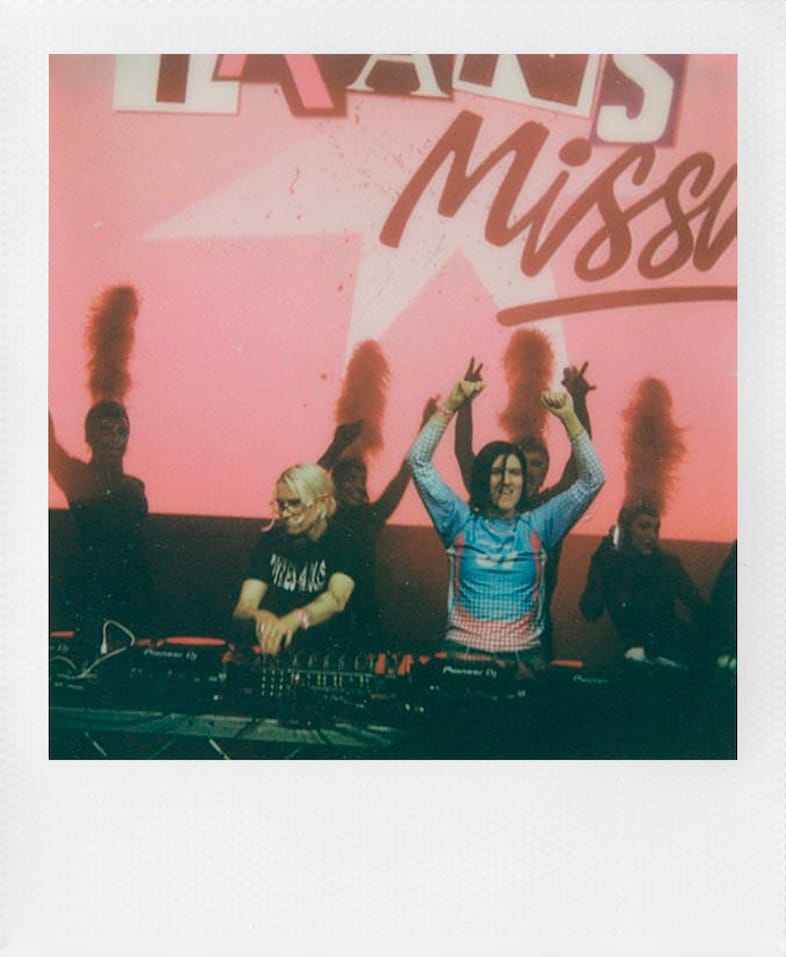
For Kaiden Ford, a 28-year-old queer artist based in London, the digital detox offered an unexpected gift: time. "I realised how much time I was losing just trying to keep track of three phones, misplacing them at home or during gigs. Letting that go gave me back nearly three hours in my day," Kaiden recounted. This reclaimed time proved to be a fertile ground for creativity and self-discovery. The constraint of the Polaroid Flip camera, allowing only one shot at a time, forced a shift in photographic philosophy. "Accepting that I only have one shot taught me to embrace the moment as it is," Kaiden explained, highlighting a move from quantity to quality in image-making. This intentionality led to a renewed love for photography, unburdened by the digital compulsion to capture everything.
Kaiden’s detox allowed for a profound reconnection with both nature and their "queer family." A weekend in Cheltenham became a vivid tapestry of "smooches, reconnecting with nature and with ourselves. Slowing down, being present." The simplicity of sharing a bath with a friend unexpectedly sparked "the best creative ideas," underscoring how unstructured, present moments can be catalysts for artistic inspiration. Despite the detox, Kaiden’s artistic drive remained vibrant, revealing that creativity isn’t solely dependent on digital tools. "Being a queer artist, my creative mind is always planning the next project. Not working isn’t an option; it’s survival." During this period, Kaiden worked on a new track with HAAi, slated to debut at the Royal Albert Hall. The intention behind the song, "to hold your hand," reflects the desire for genuine connection fostered by the detox. A powerful moment of feeling "alive and present" came from performing at Transmission, a trans fundraiser at Wembley Stadium. Sharing the stage with their queer family, surrounded by fellow artists, was an "indescribable rush" that felt like "home," emphasizing the profound joy derived from communal, real-world experiences.
Raiya Kimble: Intentional Connections and Earthly Inspiration (Los Angeles, 27)
In Los Angeles, 27-year-old genetic scientist and fashion enthusiast Raiya Kimble found that life offline felt surprisingly "normal." The primary difference, she observed, was the need for intentionality in facilitating connections. "I did not know everything that was happening in their days, but that also gives us a special window for true connection." This insight highlights a key implication of digital detox: while it might reduce passive awareness of others’ lives, it can deepen active, face-to-face interactions. Raiya reconnected with her "love for the outdoors," discovering a profound appreciation for the earth’s beauty and its role as an omnipresent source of inspiration. "We take inspiration from her knowingly or unknowingly. It’s easier to see if you take a second to see her."
The process of seeing her Polaroid photos develop was an "alchemical experience" for Raiya. The unpredictable, tangible outcome of each shot brought genuine joy and pride. This underscores the unique pleasure inherent in analogue processes—the delayed gratification and the surprise element that digital photography often lacks. Professionally, Raiya used the detox to explore her creative identity beyond her scientific career, focusing on fashion and creative direction. Her inspiration flowed from everywhere: "In the trees, in the music I listen to, the creatives I’m surrounded by, and by the earth naturally." For Raiya, true presence was found in acknowledgment. "Stopping to appreciate and admire anything is giving that thing acknowledgement… A silent ‘I see you’ that can also be interpreted as warm love." This philosophy of mindful appreciation serves as a powerful antidote to the fleeting, often unacknowledged interactions of the digital world.
Molly Johnson: Clarity, Productivity, and Present Moment Awareness (New York City, 27)
Molly Johnson, 27, navigating the bustling energy of New York City, experienced a profound sense of mental clarity during her digital detox. "My mind was so clear. I didn’t overwhelm myself by taking in useless information." This direct correlation between reduced digital input and improved mental acuity is a consistent finding in digital detox studies. The newfound mental space allowed Molly to reconnect with neglected projects, turning away from "doomscrolling" towards productive endeavors. She filled "almost half a journal already of my ideas, thoughts and feelings in two weeks," demonstrating a surge in self-reflection and creative ideation.

Molly’s approach to starting her day shifted dramatically. She incorporated "high-frequency subliminal videos" and meditation to set intentions, noting that previous attempts were often undermined by immediately succumbing to digital distractions. Her inspiration stemmed from her "friends and my simple, awesome life," emphasizing the beauty found in everyday reality. She found herself "annoyingly finding a way to appreciate every moment and chore," a conscious effort to absorb the unique experience of living in New York in her twenties. "Life changes, I don’t know what will change, so I have to absorb this right now," she asserted, capturing the essence of being present.
The detox significantly boosted Molly’s productivity. She finally completed a planner design project that had languished for six months, realizing she could finish it in a week "when I was not distracting myself or comparing myself to other people online." She also dedicated time to learning bass lines and redecorating her room. "There’s actually a lot of time in each day if you allow it," Molly concluded, a powerful testament to the hidden hours consumed by digital engagement. Her ultimate takeaway on feeling alive and present was the fleeting nature of beauty. "You see a beautiful moment, then BAM, it’s gone. You cannot take a picture of it or recreate the feeling of it, and you have to be looking up to see it." She also highlighted the importance of mindful breathing as a direct way to regulate the nervous system and foster internal presence.
Broader Implications: The Value of Digital Detox in a Connected World
The Dazed x Polaroid collaboration offers compelling qualitative evidence supporting the growing body of research on the benefits of digital detoxes. The experiences of Kaiden, Raiya, and Molly underscore several key implications for individuals and society:
- Enhanced Mental Clarity and Reduced Overwhelm: All three participants reported clearer minds and a reduction in the mental clutter associated with constant digital input. This aligns with psychological studies indicating that excessive screen time can impair cognitive function and increase stress levels.
- Reclaiming Time and Boosting Productivity: The unexpected discovery of "extra hours" in the day, coupled with a surge in productivity and project completion, highlights the significant time sink that passive digital consumption represents.
- Deeper, More Intentional Connections: The challenge fostered a shift from superficial digital interactions to more meaningful, face-to-face engagements, whether with friends, family, or the natural world. This points to the potential for stronger social bonds and a richer sense of community.
- Catalyst for Creativity and Self-Discovery: By removing digital distractions, participants found space for introspection, rekindled passions, and new artistic endeavors. The limitations of the analogue camera, in particular, encouraged a more mindful and deliberate creative process.
- Cultivating Presence and Appreciation: The act of slowing down, observing, and intentionally capturing moments with a tangible medium instilled a deeper appreciation for everyday beauty and the fleeting nature of experience. This increased mindfulness is a vital component of well-being in a fast-paced world.
From a commercial perspective, this initiative demonstrates how brands like Polaroid can position themselves not merely as product providers, but as facilitators of valuable experiences that resonate with contemporary anxieties and desires. By championing analogue tools in a digital age, Polaroid reinforces its brand identity as a purveyor of authenticity and mindful creation.
In a world increasingly tethered to screens, the Dazed x Polaroid challenge serves as a powerful reminder that disconnecting can be a pathway to profound reconnection—with ourselves, our communities, and the world around us. The analogue lens of the Polaroid Flip camera proved to be more than just a tool; it became a portal to a more present, intentional, and creatively rich existence. The lessons learned by Kaiden, Raiya, and Molly resonate far beyond their individual journeys, offering a blueprint for how others might navigate the complexities of modern connectivity and rediscover the enduring value of simply being present.