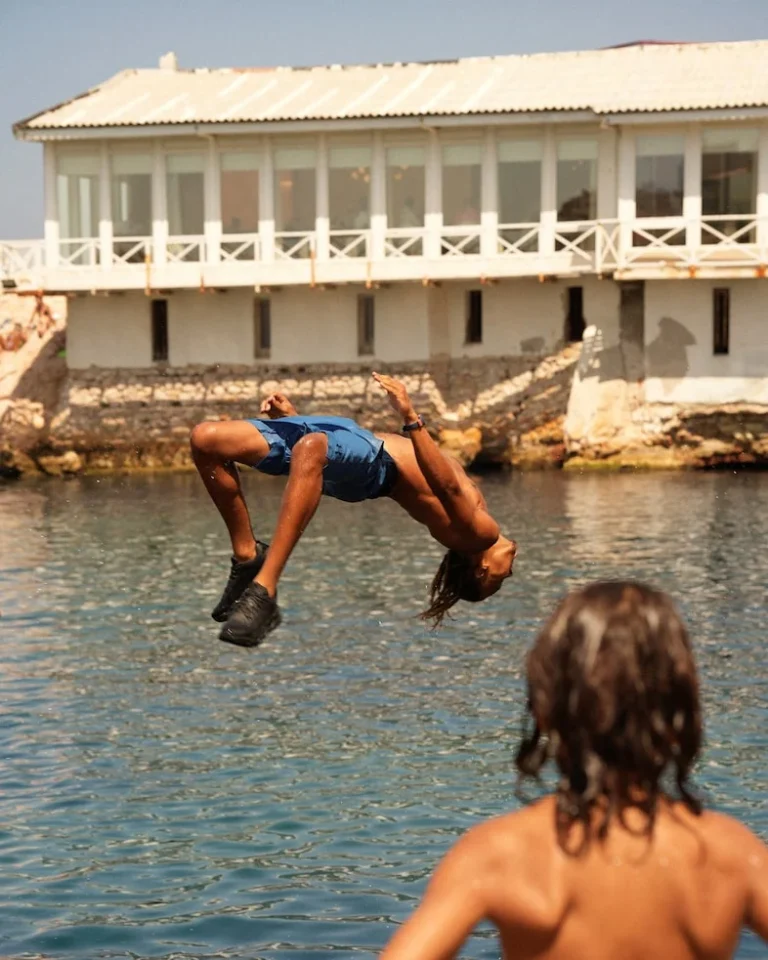



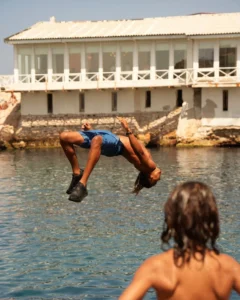
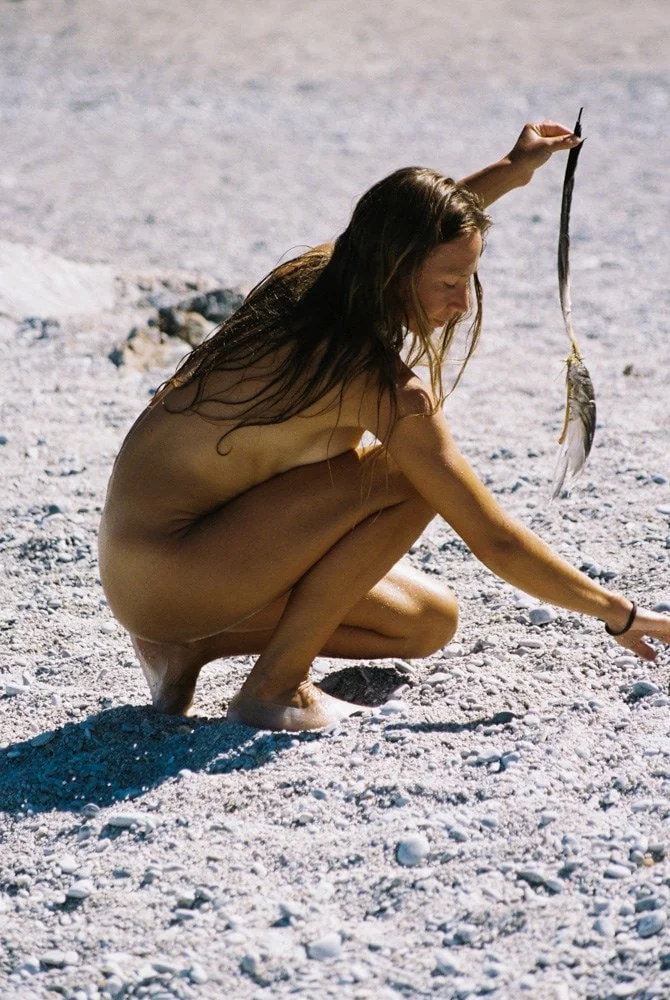
Akila Berjaoui, an acclaimed photographer known for her evocative imagery of coastal life, is set to release her eagerly anticipated new book, The Possible Dream, published by Prestel on May 5th. This collection promises a captivating journey through sunlit landscapes and sensual portraits captured across the Greek Cyclades, the Balearics, Italy, and Tunisia, reflecting a profound exploration of freedom, connection to nature, and personal reclamation. The work builds upon her distinctive aesthetic, delving deeper into themes of the human form, the healing power of water, and the enduring allure of the Mediterranean light, all filtered through a lens shaped by a unique bicultural upbringing and a steadfast commitment to artistic and personal integrity.
A significant aspect of Berjaoui’s artistic vision is rooted in her formative years, marked by a fascinating interplay of cultures and landscapes. Born in New South Wales, Australia, to a Lebanese father and an Australian mother, her early childhood unfolded against the vibrant backdrop of Beirut. Living on The Corniche, a picturesque waterfront promenade, she developed an early, profound connection to the Mediterranean Sea. However, this connection was tempered by a palpable sense of restriction. Berjaoui recalls, "We lived on The Corniche, right on the Mediterranean Sea. For as long as I can remember, I’ve loved the beach, but there was an artificiality to it because you had to pay to access it. You shouldn’t have to pay for the beach, ever." This early experience instilled in her a nascent awareness of access, privilege, and the fundamental right to nature’s embrace. The concept of restricted natural beauty, often a reality in densely populated urban coastal areas or private resorts, contrasted sharply with a nascent yearning for uninhibited freedom.
The family’s relocation back to New South Wales, Australia, in 1984 marked a dramatic shift in her perception of coastal living. The Australian coastline, renowned for its vast stretches of public beaches, presented a stark contrast to her Beirut experience. "That was totally different. Endless golden beaches stretching as far as the eye can see, topless women and girls, beach bikini contests. The freedom of it all. I was in heaven," Berjaoui recounts. This stark difference between a paid, somewhat constrained beach experience and the boundless, free-spirited Australian shores profoundly shaped her understanding of the beach as a sanctuary, a place of uninhibited expression, and a symbol of liberation. This early dichotomy between restriction and freedom, artificiality and natural expanse, would become a foundational motif in her photographic work.
The conceptual heart of The Possible Dream lies in this deep-seated affinity for the sea and the freedom it represents. Following her critically acclaimed 2017 book, The Last Days of Summer, this new collection was primarily created during the summers spanning 2020 to 2025. The period immediately following the initial global lockdowns due to the COVID-19 pandemic offered a unique window into these coastal regions. With reduced tourism, Berjaoui discovered a rare tranquility. "I discovered these silent landscapes, without any tourism, and felt this overwhelming sense of gratitude," she reflects. This unprecedented stillness allowed her to capture the Mediterranean’s inherent beauty in a more raw and intimate state, devoid of the usual bustling crowds, offering a glimpse into a world paused and pristine.
A Refined Vision: Light, Film, and the Human Form
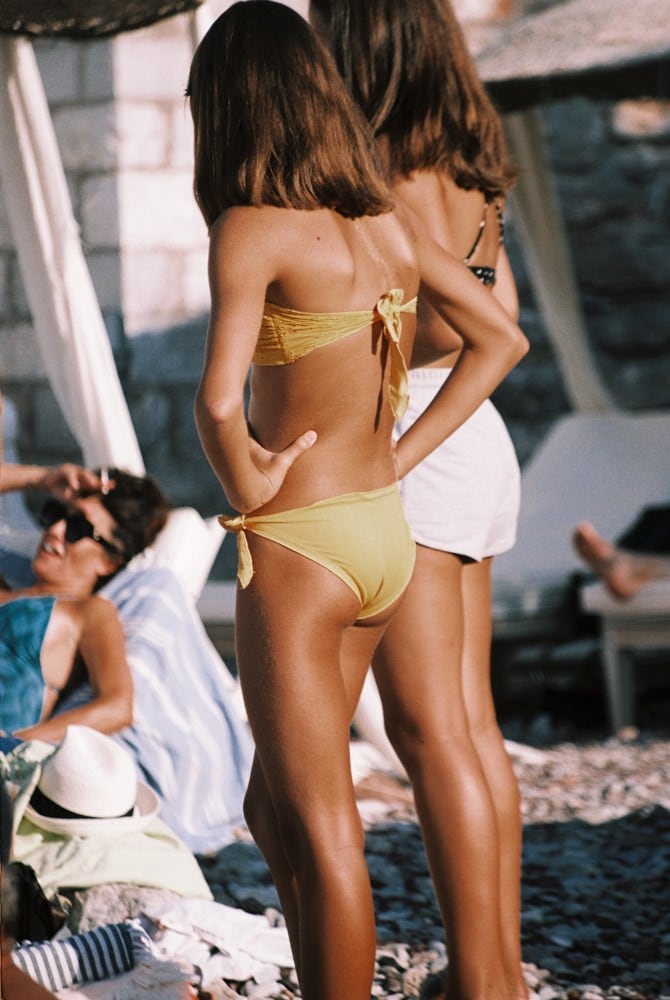
Berjaoui’s photographic approach for The Possible Dream signifies a subtle yet impactful evolution from her previous work. While The Last Days of Summer often embraced the bright, crisp light of early afternoon, this new series consciously shifts its focus to the later hours of the day. From approximately 5 pm onwards, she seeks out the "more dramatic" light, a golden hour glow that imbues her scenes with a rich, almost painterly quality. This choice of light is not merely aesthetic; it profoundly influences the mood and emotional resonance of her images, lending them a heightened sense of warmth, nostalgia, and introspection.
Her commitment to traditional film photography further defines her signature style. Working predominantly with Portra 400, a medium-speed color negative film celebrated for its fine grain, accurate skin tones, and wide exposure latitude, Berjaoui achieves a distinctive aesthetic. The film’s ability to render rich, warm hues perfectly complements the late afternoon sun, creating images that feel both timeless and deeply sensual. The inherent grain of the film adds a tactile quality, enhancing the sense of a memory captured rather than merely a moment documented. This deliberate choice of analogue medium underscores her dedication to a craft that prioritizes texture, depth, and the subtle imperfections that digital photography often smooths away.
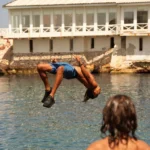
Beyond technical considerations, Berjaoui is intensely focused on capturing a specific "bodily state." Her subjects, whether locals or companions, are often depicted in moments of post-sun exposure, yearning for the cooling embrace of the water. She articulates this desire: "When you’ve been baking all day, and all you want is to get in the water, and reset. Water is the ultimate healer." This perspective elevates water from a mere element to a profound symbol of cleansing, renewal, and liberation. Across the pages of The Possible Dream, figures are seen walking the shore, stretching languidly in the sun, or wading into the serene waters, embodying this visceral connection to the natural world and the restorative power of the sea.
Portraits of Authenticity and Personal History
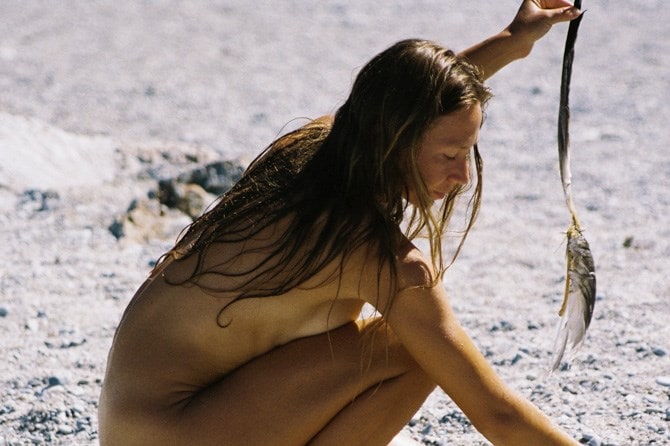
The portraits within The Possible Dream are characterized by a magnetic sensuality that is both unadorned and powerful. Many of her subjects are locals encountered during her travels, often photographed in the nude, a testament to the trust and rapport Berjaoui establishes. This raw honesty in depiction emanates from her own confessed sensuality. "I’m often told I’m a sensual person, so maybe that comes through in the way I direct," she observes. However, the impetus for photographing bodies, particularly women’s bodies, naked and uninhibited, stems from a deeply personal and transformative journey.
Berjaoui candidly reveals that her profound appreciation for "all bodies" is a direct response to an "oppressive upbringing" where her father exerted significant control over her attire and appearance. "My father was very controlling; he monitored everything I wore. I often felt ashamed of my body," she shares. This past experience of body shame has fueled a powerful artistic mission. "Only now, I’m realising I’m drawn to women’s bodies because I want to reclaim those lost years." Her photography, therefore, becomes an act of defiance, an assertion of freedom, and a celebration of bodily autonomy, not just for her subjects but also for herself. This theme resonates strongly with contemporary discussions surrounding body positivity, female gaze, and the dismantling of societal beauty standards within art.
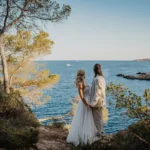
Confidence emerges as a key attribute that most attracts Berjaoui to a subject. She cites Johanna, a Greek woman she met in a shop, as an example. Berjaoui was immediately captivated by Johanna’s inherent beauty and effortless grace. Another compelling narrative thread follows Malina and Amos, a couple with whom Berjaoui travelled in Italy aboard a vintage yacht. These photographic sessions took place on secluded, often inaccessible beaches, requiring subjects to swim ashore. "Malina ran around naked; she was so free," Berjaoui recalls, highlighting the untamed spirit she seeks to capture. The book also includes deeply personal photographs of her now ex-boyfriend, offering an intimate glimpse into a significant period of her life. "My love for him at the time is reflected here. They’re very personal and intimate photos of a passionate and chaotic period in my life," she explains, adding another layer of vulnerability and raw emotion to the collection.
Influences and Cinematic Language
Berjaoui’s visual language is undeniably shaped by her long-standing relationship with cinema. Before embarking on her photography career, she worked as a stylist, a role where her mood boards consistently drew inspiration from film. This cinematic sensibility is evident in The Possible Dream, with some portraits evoking the sun-drenched, introspective aesthetic of Eric Rohmer’s films, particularly Pauline à la Plage, which Berjaoui explicitly cites as an influence. Rohmer’s works are celebrated for their naturalistic portrayal of characters and settings, often exploring themes of love, desire, and human relationships against idyllic backdrops, a resonance clearly visible in Berjaoui’s work.
More recently, personal experiences have led her to revisit films from her youth, further informing her current artistic output. "Lately, I’ve been going through perimenopause and feeling really nostalgic," she says. "I’m revisiting films from my youth like Candy with Heath Ledger, or Cate Shortland’s Somersault. That feeds a lot into my work." Candy, a poignant Australian drama about addiction, and Somersault, a critically acclaimed Australian film exploring adolescent sexuality and vulnerability, both carry a raw emotional depth and a distinct visual style that can be seen subtly woven into the fabric of Berjaoui’s contemporary photography, enriching its psychological and emotional dimensions.
Landscapes: Echoes of Heritage and Environmental Reflection
Beyond the human form, The Possible Dream features landscapes that are notably pared back and elemental, deliberately exposing the muted tones of the Mediterranean coast. These arid, rocky expanses hold a particular resonance for Berjaoui. "I’ve always been drawn to these arid, rocky lands. They are reminiscent of my childhood in Lebanon," she explains. This connection speaks to a deeper ancestral and cultural memory embedded in the landscape. The Cyclades, in particular, felt familiar due to the presence of ancient olive trees, which hold immense cultural and historical significance across the Mediterranean and Levant.
Berjaoui poignantly highlights this connection: "Lebanon and Palestine are home to olive trees said to be over 6,000 years old, though they’re now being completely destroyed." The olive tree, a symbol of peace, longevity, and prosperity in many cultures, particularly in the Middle East, serves as a powerful link to her heritage. Its destruction, often due to conflict, urban expansion, or environmental degradation, adds a layer of melancholic reflection to her otherwise celebratory landscapes. This observation subtly weaves in an ecological and geopolitical dimension, anchoring her artistic vision in real-world concerns.
Art and Advocacy: A Principled Stand
Akila Berjaoui is not merely an artist documenting beauty; she is also an artist with a conscience, unafraid to use her platform for advocacy. She has been vocal in her support for Palestine, a stance that, she acknowledges, has come at a professional cost. "I don’t regret it," she states unequivocally. "I’m going to keep speaking out and dreaming of a world no longer broken by violence, genocide, injustice and our own maximalism."
In an increasingly polarized world, where artists are often pressured to remain apolitical, Berjaoui’s decision to speak out is a significant one. Her willingness to risk work and followers underscores a deeply held conviction that art and activism can, and perhaps should, intersect. This stance aligns her with a growing number of creatives who believe their role extends beyond aesthetic creation to include social commentary and ethical responsibility. The implications of such public stands can be far-reaching, influencing public discourse, inspiring other artists, and challenging the traditional boundaries of artistic engagement. Her resolve to continue advocating for justice, despite potential professional repercussions, positions her as an artist whose vision extends beyond the frame, aspiring to contribute to a more just and peaceful world.
The Broader Vision: A Call for Simplicity and Humanity
Ultimately, The Possible Dream transcends a mere collection of photographs; it functions as a visual manifesto, a call to action for a more conscious and humane existence. Berjaoui hopes her photographs will "encourage people to embrace a simpler way of living, shaped by land, season, water, rest, and pleasure." In an era dominated by consumerism, digital overload, and global conflicts, her message advocates for a return to fundamental human experiences and connections with the natural world.
The book’s title, The Possible Dream, encapsulates this profound aspiration. It suggests that while the ideal world free from violence and injustice may seem distant, it is not entirely out of reach. It is a dream that is possible if individuals and societies collectively choose a path of greater empathy, simplicity, and respect for both humanity and the environment. Prestel, a renowned international publisher of art, photography, and architecture books, publishing The Possible Dream further elevates its potential reach and impact, ensuring Berjaoui’s poignant message and evocative imagery find a broad, engaged audience.
As The Possible Dream prepares for its release on May 5th, it stands as a testament to Akila Berjaoui’s evolving artistry, her deeply personal narrative, and her unwavering commitment to using photography as a medium for both aesthetic beauty and profound social commentary. It is an invitation to immerse oneself in the restorative power of the coast, to celebrate the human form in its natural state, and to contemplate the possibility of a world shaped by peace, justice, and a simpler, more meaningful existence. The book is currently available for pre-order, promising to be a significant contribution to contemporary photography and a powerful statement on the human condition.