










The global fashion industry is currently grappling with an inventory crisis of unprecedented proportions, with major brands holding billions of dollars in unsold stock while emerging markets face the environmental consequences of low-quality textile imports. In a strategic move to address this imbalance, South African recommerce startup FARO has announced the successful raising of $6 million in a seed funding round led by JP Zammitt, President of Bloomberg. This capital injection is earmarked for the expansion of FARO’s unique retail model, which seeks to bridge the gap between the surplus of high-end Western fashion and the rising demand for affordable, authentic branded apparel across the African continent.
The funding round saw participation from a diverse syndicate of venture capital firms and private investors, including Presight Capital, Gharage Ventures, and E4E Africa. Notable individual contributors included Mato Perić of MPGI, Leonard Stiegeler of Pulse, and Vikram Chopra of Cars24, among others. This collective investment underscores a growing confidence in "recommerce"—the selling of previously owned or surplus goods—as a viable solution to the fashion industry’s sustainability and logistical challenges. FARO’s model specifically targets the "deadstock" and customer return segments, transforming potential waste into high-value retail opportunities.
The Global Inventory Crisis and the African Dilemma
The fashion industry produces an estimated 100 billion garments annually, a significant portion of which never reaches a consumer. Global giants like ASOS, H&M, and Zara have historically struggled with seasonal overstock, often resulting in heavy discounting that can dilute brand equity in primary markets such as the United Kingdom and the United States. To protect their premium positioning, these brands frequently avoid reselling excess inventory within their core territories. Simultaneously, the logistical and economic barriers to entering emerging markets often leave these brands out of reach for millions of aspirational consumers in the Global South.
In regions like Sub-Saharan Africa, the fashion market is dominated by the importation of secondhand clothing, often referred to as "mitumba" in East Africa. While this trade provides affordable clothing, it carries a heavy environmental price. Industry data suggests that between 30% and 40% of imported secondhand items arrive in a condition deemed unusable, leading to massive textile waste in local landfills. This paradox—where developed nations hold surplus high-quality new goods while emerging markets receive unusable waste—creates a significant arbitrage opportunity for startups capable of managing the complex supply chain of reconditioned apparel.
The FARO Operating Model: Reconditioning and Value Addition
FARO, founded in 2023, operates on the premise that African consumers desire authentic, high-quality brands but lack the purchasing power for full-price retail. The company sources its inventory through strategic partnerships with major international labels, including Levi’s, G-Star, Jack & Jones, and Boohoo. The stock typically consists of 60% overstock—items that simply did not sell during their primary season—and 40% customer returns.
The management of customer returns is where FARO distinguishes itself from traditional off-price retailers. In developed markets, the labor cost associated with inspecting, cleaning, and repairing a returned item often exceeds the item’s residual value, leading many brands to incinerate or discard returns with minor defects. FARO leverages South Africa’s more affordable labor market and specialized industrial facilities to rehabilitate these items. The startup utilizes industrial laundries and steam tunnels to restore garments to a "like-new" state.
According to co-founder and co-CEO David Torr, the company is able to acquire this inventory at exceptionally low price points, sometimes as low as £1 per unit. FARO then applies a disciplined fixed-margin model, targeting a 45% margin after processing, packaging, and logistics costs. Rather than maximizing profit on high-demand items, the company reinvests excess margins into lower prices for the consumer, a strategy designed to build long-term brand loyalty in a price-sensitive market.
Technological Innovation: Moving Beyond the Spreadsheet
One of the primary hurdles in the off-price and recommerce sectors is the sheer complexity of inventory management. Unlike traditional retail, where a buyer might purchase 10,000 units of a single SKU, off-price inventory often consists of thousands of unique, single-item pieces. Historically, this has required massive teams of planners to manually manage manifests in Microsoft Excel—a process that is both labor-intensive and prone to error.
FARO is addressing this inefficiency by developing proprietary AI-powered agents. These agents are designed to automate the workflow of inventory buyers, breaking down complex manifests into micro-tasks. Torr notes that while some global retail head offices employ thousands of people to manipulate data, FARO’s AI models can process the same information in seconds with superior accuracy. This technological edge allows the startup to scale its operations without a linear increase in administrative overhead, facilitating its ambitious plan to expand to 1,000 stores over the next decade.
Strategic Localization: Why Physical Retail Trumps E-commerce
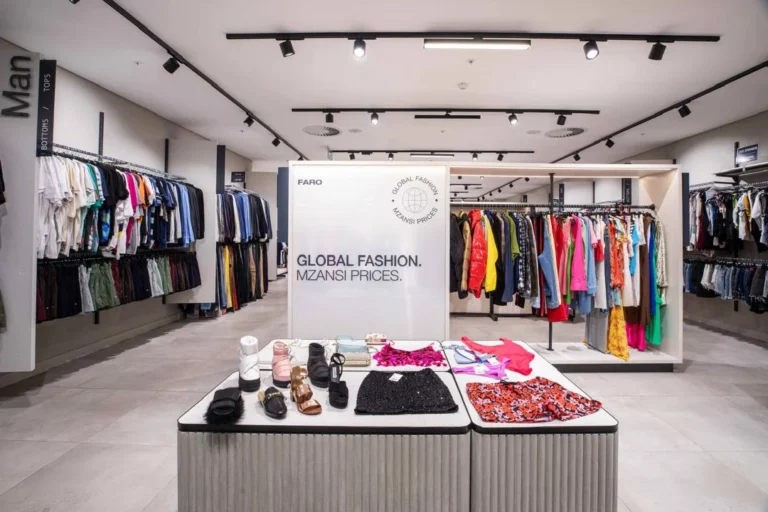
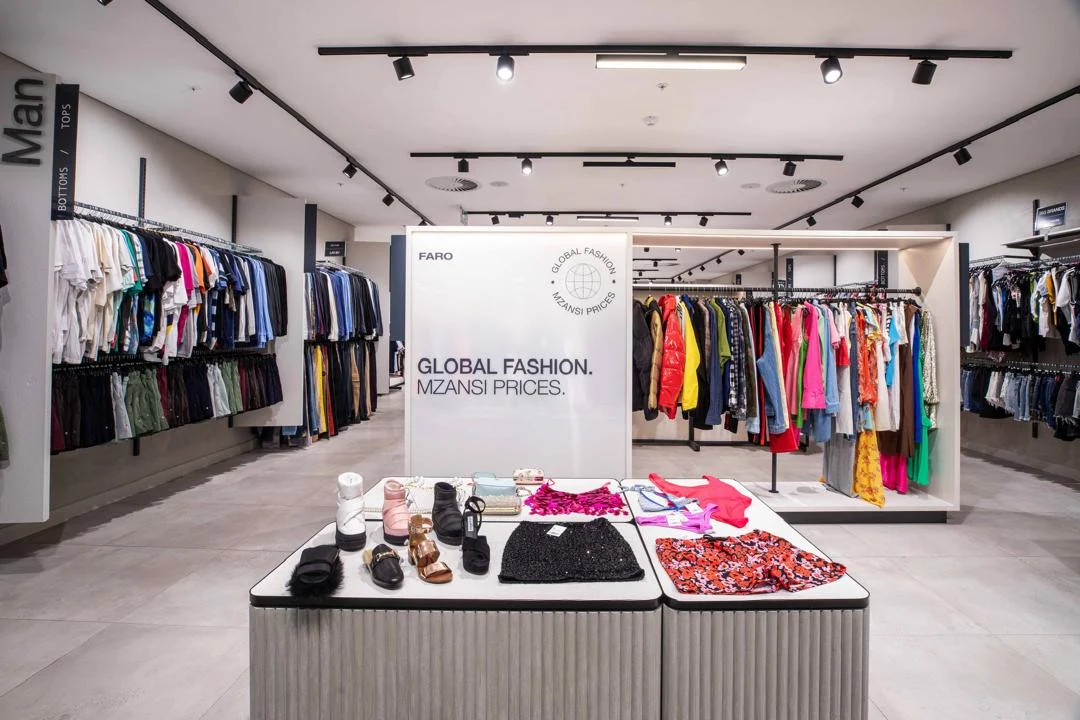
While the global trend in retail has shifted toward e-commerce, FARO is intentionally focusing on physical brick-and-mortar locations. This decision is informed by the unique landscape of the South African market and the logistical realities of off-price inventory. South Africa possesses a highly developed retail infrastructure, boasting over 2,000 shopping centers. This mall culture provides a ready-made distribution network for physical goods.
Furthermore, the nature of FARO’s inventory—often one-of-a-kind pieces due to the "returns" aspect of the business—makes digitization prohibitively expensive. Listing a single unique item online requires individual photography, copywriting, and measurement, which can negate the slim margins of off-price retail. By operating physical stores in urban hubs and mid-market centers, FARO allows customers to discover items in person, eliminating the high costs of last-mile delivery and digital listing.
This "offline-first" approach also serves as a defensive moat against the rise of ultra-fast-fashion platforms like Shein and Temu. While these platforms have disrupted the South African market with low-priced, unbranded goods, they struggle with the high costs of international shipping and the logistical hurdles of the African continent. FARO’s focus on established, high-status brands at similar price points offers a value proposition that digital-only players find difficult to replicate.
Chronology of Growth and Future Expansion
FARO’s trajectory since its inception has been marked by rapid scaling. The company began in early 2023 with an experimental pop-up store in South Africa. The success of this pilot was immediate, generating $100,000 in its first month of operation. While initial projections suggested that the company would need seven stores to reach an annual revenue of $2 million, FARO surpassed this milestone with only four locations, recording $2.3 million in revenue and achieving a 20-fold growth rate in its first year.
The roadmap for the next ten years is aggressive. FARO aims to grow fivefold in the current fiscal year and eventually establish a presence in 1,000 locations across Africa, South America, Asia, and the Middle East. However, the leadership acknowledges that expansion into other emerging markets will require localized strategies. Consumer preferences in South Africa, which has a strong affinity for Western brands and a robust mall culture, may not perfectly mirror those in Nigeria, Kenya, or Brazil. Success will depend on the company’s ability to build localized price profiles and tailor its brand mix to regional demands.
Leadership and Institutional Support
The founding team of FARO brings a wealth of experience from some of the most prominent names in global and African commerce. Alongside David Torr, the team includes Will McCarren, Chris Makhanya, and Amber Penney-Young. Their collective resumes include tenures at Amazon, Jumia, UCOOK, and Superbalist, providing the startup with a blend of logistics expertise, digital savvy, and local market knowledge.
The involvement of JP Zammitt and a host of international VCs suggests that FARO is being viewed not just as a local retail play, but as a scalable solution to a global supply chain problem. The participation of investors like Tushar Ahluwalia of Razor Group and Sudeep Ramnani of 885 Capital indicates an interest in the "roll-up" and "recommerce" potential of the model.
Broader Implications for the Fashion Industry
The success of FARO could signal a shift in how global fashion brands manage their "end-of-life" inventory. As ESG (Environmental, Social, and Governance) pressures mount, brands are under increasing scrutiny to eliminate the incineration of unsold stock and reduce their contribution to landfill waste. By providing a transparent, value-adding channel for excess inventory in emerging markets, FARO offers a "win-win" scenario: brands protect their primary markets and fulfill sustainability goals, while consumers in developing nations gain access to high-quality goods.
Furthermore, the integration of AI into the buying and distribution process sets a new benchmark for the off-price industry. If FARO can prove that AI can manage the "chaos" of single-item inventory at scale, it may force legacy retailers like TJX (parent company of T.K. Maxx) to modernize their own aging systems.
As FARO prepares for its next phase of growth, the company stands at the intersection of three major global trends: the rise of the circular economy, the technological transformation of retail, and the increasing economic influence of the African middle class. While the road to 1,000 stores is fraught with logistical and regional challenges, the startup’s early performance suggests that the "inventory paradox" may finally have found a market-driven solution.