








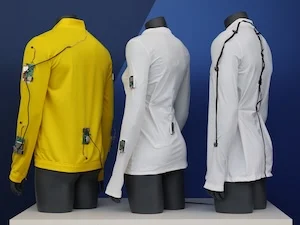
AACHEN, Germany — The Institut für Textiltechnik (ITA) at RWTH Aachen University has officially unveiled a pioneering medical advancement in the field of wearable technology: the PhysioTaix smart jacket. Announced on September 11, 2026, this innovation represents a significant leap forward in musculoskeletal rehabilitation, merging advanced textile engineering with artificial intelligence to bridge the gap between clinical supervision and home-based recovery. By integrating motion-tracking sensors directly into a washable, reusable garment, the ITA aims to provide patients with real-time, objective feedback, potentially transforming how chronic conditions and post-operative recovery are managed globally.
The Problem of Supervised Rehabilitation
Rehabilitation therapy is fundamentally rooted in consistency and the repetition of specific movements. Whether recovering from orthopedic surgery or managing chronic neurological conditions, patients are frequently tasked with completing rigorous exercise regimens at home. However, the efficacy of these home-based programs is often hampered by a lack of real-time professional oversight.
Clinical studies have consistently demonstrated that improper form during rehabilitation exercises not only reduces the therapeutic benefit but can also lead to secondary injuries or prolonged recovery times. Historically, therapists have been unable to monitor every repetition performed outside the clinic, leaving patients to rely on memory or written instructions. The PhysioTaix project addresses this "supervision gap" by providing a digital surrogate for the therapist’s watchful eye, ensuring that home-based sessions adhere to clinical standards.
Technical Architecture and Design
The PhysioTaix jacket is not merely a piece of apparel; it is a sophisticated data-acquisition system. Unlike traditional motion-capture setups that require the painstaking application of individual sensors, adhesive markers, or complex camera arrays, the PhysioTaix solution utilizes conductive fibers and integrated micro-sensors woven directly into the textile structure.
The garment is engineered for comfort and daily use, mimicking the ergonomics of athletic wear. Because the sensors are embedded, the jacket remains fully washable and durable, meeting the hygiene and convenience requirements of long-term healthcare applications. Once the user puts on the garment, it automatically aligns with key anatomical points, allowing for seamless synchronization with a dedicated mobile application. As the patient performs prescribed movements, the jacket captures kinematic data, which is then processed by a sophisticated artificial intelligence engine to provide immediate, actionable feedback.

Chronology and Development Roadmap
The development of PhysioTaix is part of a structured multi-year research timeline aimed at transitioning from laboratory concept to commercial healthcare integration.
- Initial Conceptualization (2024–2025): The ITA research team began identifying the specific textile requirements for reliable sensor integration, focusing on signal stability during physical exertion.
- Prototype Iteration (Late 2025 – Mid 2026): Development of the modular smart textiles workshop at the Digital Innovation Centre Europe (DICE) accelerated the prototyping phase. Students and engineering experts collaborated to refine the sensor placement and data transmission protocols.
- Current Testing Phase (September 2026 – February 2027): The project is currently in a critical validation phase. The research team is working closely with clinical partners to test the system’s accuracy against gold-standard clinical assessment tools.
- Project Completion and Future Integration (February 2027 and beyond): Following the project’s conclusion in early 2027, the focus will shift toward regulatory compliance, validation studies with major health insurance providers, and the exploration of mass-market deployment strategies.
The Role of Artificial Intelligence in Patient Feedback
The integration of AI into the PhysioTaix platform serves as the core "intelligence" of the system. The raw data collected by the jacket’s sensors is translated into human-readable performance metrics. When a patient performs a squat or an arm extension, the AI analyzes the trajectory, speed, and range of motion. If the movement deviates from the therapist’s prescribed parameters, the app provides real-time alerts or guidance.
This immediate feedback loop is critical for "motor learning." By correcting errors as they occur, patients can adjust their form instantly, fostering a more effective and safer recovery process. Furthermore, the longitudinal data stored in the app provides a comprehensive history of the patient’s progress, which can be shared with medical professionals during follow-up consultations.
Professional Benefits and Clinical Utility
Physiotherapists and orthopedic surgeons stand to gain significant objective insights from the PhysioTaix system. In current practice, patient progress reports are often subjective, relying on verbal feedback or limited visual assessments during brief clinic visits. With the PhysioTaix dashboard, therapists receive a granular, data-driven report of the patient’s performance over weeks or months.
This data allows for more personalized therapy adjustments. If a patient is consistently failing to reach a specific range of motion, the therapist can identify the plateau and modify the rehabilitation plan accordingly. This move toward "data-informed therapy" potentially reduces the risk of recovery stagnation and improves long-term outcomes.
Educational Impact at the Digital Innovation Centre Europe (DICE)
The development process for PhysioTaix has also served an educational purpose. By conducting the research within the modular smart textiles workshop at the Digital Innovation Centre Europe, the ITA has created an ecosystem where students are not just observers, but active contributors. This practical, hands-on experience in developing high-tech medical devices ensures that the next generation of engineers is well-versed in the intersection of textile science, data analytics, and healthcare technology. This collaborative model is a hallmark of the RWTH Aachen approach, bridging the gap between academic research and industrial application.

Broader Implications for the Healthcare Sector
The emergence of technologies like PhysioTaix arrives at a time when healthcare systems across Europe and the world are facing increasing pressure. An aging population and the rise of chronic musculoskeletal disorders have put a strain on clinical resources. Tele-rehabilitation, supported by wearable technology, is widely viewed as a necessary solution to decentralize care.
If successfully validated and integrated into health insurance coverage, the PhysioTaix jacket could significantly lower the cost of rehabilitation. By enabling effective remote therapy, healthcare providers can reduce the frequency of mandatory in-person clinic visits while maintaining or even improving the quality of recovery. Furthermore, the ability to monitor recovery progress in real-time may lead to earlier intervention in cases where a patient’s progress is not meeting clinical expectations.
Future Challenges and Considerations
While the technological promise of PhysioTaix is significant, the path to widespread adoption involves addressing several challenges. These include:
- Regulatory Hurdles: As a medical device, the system must undergo rigorous certification processes to ensure patient safety and data privacy compliance, particularly under the European Union’s GDPR and Medical Device Regulation (MDR).
- User Adoption: Ensuring that elderly or non-tech-savvy patients find the jacket and the associated app intuitive is essential for the product’s success in a real-world environment.
- Data Security: Protecting sensitive physiological data is paramount. The ITA is expected to prioritize robust encryption protocols to ensure that patient data remains secure during transmission from the jacket to the application and eventually to the therapist’s clinic.
Conclusion
As the project enters its final development phase toward February 2027, the scientific community and the healthcare sector are watching with interest. The PhysioTaix research project exemplifies the potential of interdisciplinary innovation to solve practical human challenges. By transforming a standard piece of clothing into a medical-grade diagnostic tool, the Institut für Textiltechnik at RWTH Aachen University is not only advancing textile technology but also redefining the standards of modern rehabilitation.
The success of this initiative will ultimately be measured by its ability to empower patients, support therapists, and provide a sustainable, data-backed pathway to recovery for individuals across the globe. As the industry looks toward 2027, the focus will undoubtedly remain on the scalable, clinical application of these "smart" garments, signaling a new era in which textiles serve as the foundation for digital health monitoring.