








The global fashion landscape is undergoing a systemic transformation as the traditional boundaries between creative design and technological execution continue to blur. In a move that signals increasing investor confidence in vertical-specific artificial intelligence, Raspberry AI, a startup dedicated to streamlining the fashion product development lifecycle, has successfully closed a $24 million Series A funding round. Led by Andreessen Horowitz (a16z), the investment also saw significant participation from existing backers, including Greycroft, Correlation Ventures, and MVP Ventures. This latest capital infusion arrives just ten months after the company’s $4.5 million seed round, underscoring the rapid adoption of generative AI tools within the apparel and retail sectors.
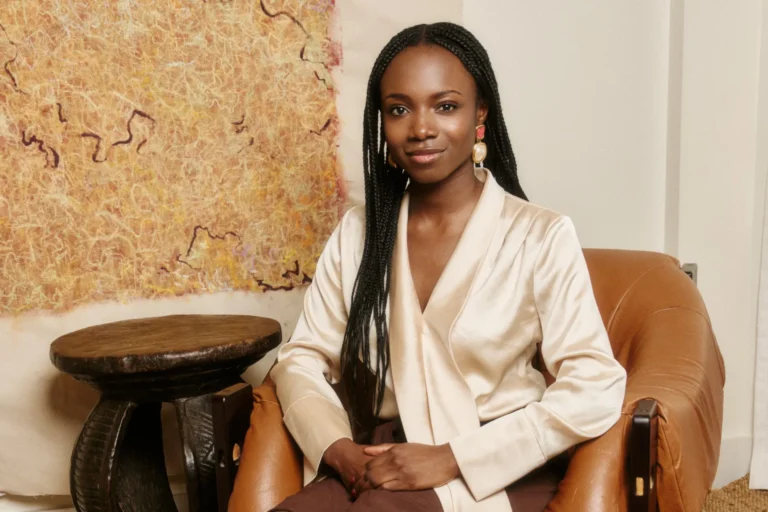
Founded two years ago by Cheryl Liu, Raspberry AI addresses a critical bottleneck in the fashion supply chain: the time-intensive and resource-heavy process of moving from a conceptual sketch to a manufacturable product. As retailers face mounting pressure to respond to viral trends and shifting consumer preferences within days rather than months, the ability to visualize and iterate on designs instantly has become a competitive necessity. Raspberry AI’s platform allows designers to utilize text-to-image and sketch-to-image technology to generate photorealistic renderings that mimic the final appearance of a garment on a brand’s e-commerce site, effectively bypassing weeks of physical prototyping.
The Evolution of Raspberry AI and the Shift in Design Methodology
The genesis of Raspberry AI is rooted in the convergence of high-level retail finance and the 2022 explosion of generative image models. Founder Cheryl Liu brought a unique perspective to the problem, having served as a private equity analyst at KKR with a focus on retail before moving into operational roles at Amazon and DoorDash. Her background allowed her to identify a recurring inefficiency in the retail sector: the "sample trap."
Historically, the design process was tethered to physical reality. A designer would create a concept, which would then be sent to a manufacturer—often overseas—to produce a physical sample. This sample would take weeks to arrive, only to potentially be rejected or require further modifications, triggering another multi-week cycle. While computer-aided design (CAD) tools like Adobe Photoshop and Browzwear offered digital alternatives, they often required specialized technical skills and lacked the intuitive, rapid-iteration capabilities of modern generative models.
The release of OpenAI’s DALL-E and Stability AI’s Stable Diffusion in late 2022 served as the catalyst for Liu’s vision. She recognized that for the first time, technology could generate hundreds of high-fidelity design iterations in seconds. By tailoring these general models to the specific linguistic and structural needs of the fashion industry, Raspberry AI created a tool that speaks the language of designers. For instance, while a general AI model might struggle to distinguish between various knit patterns or technical fabric finishes, Raspberry’s platform is engineered to understand industry-specific terminology, ensuring that a "fuzzy sweater" or a "technical ripstop jacket" is rendered with the precision required for professional decision-making.
Strategic Investment and Market Validation
The $24 million Series A led by Andreessen Horowitz reflects a broader venture capital trend of investing in "applied AI"—companies that take foundational models and build specialized layers for specific industries. Bryan Kim, a partner at Andreessen Horowitz, noted that the firm had been actively seeking an entry point into the AI-driven fashion manufacturing space. According to Kim, the decision to back Raspberry AI was driven by both Liu’s leadership and the company’s impressive roster of early adopters.
Despite being a relatively young company, Raspberry AI has already secured 70 major customers. These include a diverse cross-section of the industry, from the high-performance athletic brand Under Armour to the luxury heritage label MCM Worldwide. The platform has also found a foothold in large-scale manufacturing through Gruppo Teddy, an Italian fashion powerhouse that operates over 8,800 stores across 39 countries. The adoption by such varied entities—ranging from mass-market manufacturers to luxury houses—suggests that the need for speed and digital iteration is universal across the fashion hierarchy.
The financial trajectory of the company is equally notable. Raising nearly $30 million within a single year indicates a high "burn-to-growth" efficiency that is currently favored in the tightening venture market. The participation of Greycroft and other seed investors in the Series A further suggests that the company has met or exceeded its initial performance milestones.

Comparative Advantages in a Crowded AI Landscape
As generative AI becomes more ubiquitous, Raspberry AI faces competition from general-purpose giants like Midjourney and Adobe Firefly. However, the company maintains that its vertical focus provides a moat that general models cannot easily cross. One of the primary differentiators is the integration of "sketch-to-image" workflows. Professional designers often start with hand-drawn or digital sketches; Raspberry’s ability to take these raw outlines and apply textures, lighting, and fabrics while maintaining the original silhouette is a specialized task that requires deep domain training.
Furthermore, the platform acts as a bridge between the creative and commercial departments. By producing images that look ready for a web storefront, Raspberry AI allows merchandising teams to conduct "pre-mortems" on collections. A brand can visualize a single foundational piece in 50 different prints or materials without the cost of a single physical prototype. This capability not only saves money but also significantly reduces the environmental footprint of the design phase, which has traditionally been criticized for the waste generated by discarded samples.
Industry Implications and the Fast-Fashion Acceleration
The rise of tools like Raspberry AI is inseparable from the broader "ultra-fast fashion" movement pioneered by companies like Shein and Zara. These retailers have compressed the traditional six-month fashion cycle into a matter of weeks. To compete, legacy brands must adopt technologies that allow them to move at the speed of social media trends.
Data from industry analysts suggests that the generative AI market in fashion is expected to reach multi-billion dollar valuations by the end of the decade. The implications of this shift are twofold. First, it democratizes high-fidelity visualization, allowing smaller brands to iterate with the same speed as industry giants. Second, it shifts the role of the designer from a manual creator to a "creative director" who curates and refines AI-generated outputs.
However, the rapid acceleration of design also raises questions regarding intellectual property and the saturation of the market. As it becomes easier to generate designs, the value of unique brand identity becomes even more paramount. Raspberry AI’s focus on helping brands iterate within their own aesthetic guidelines—rather than just generating random garments—is a strategic move to address these concerns.
Future Expansion and the Path Ahead
With the new $24 million in capital, Raspberry AI is poised for a significant organizational expansion. The company plans to aggressively hire across its engineering, sales, and marketing departments to support its growing client base. Perhaps more importantly, the company has signaled its intention to look beyond apparel. The underlying technology of Raspberry AI—rapid visualization of physical products based on sketches and text—is highly transferable to other sectors.
The startup’s roadmap includes expansion into home goods, furniture, and cosmetics. These industries share similar pain points with fashion, including long lead times for physical prototyping and a high reliance on visual aesthetics for consumer conversion. A furniture designer, for example, could use the platform to visualize a sofa in dozens of different upholstery options in real-time, much like a fashion designer iterates on a dress.
As Raspberry AI scales, the focus will likely remain on the "accuracy" of its AI. In the professional design world, a "near-miss" in texture or color can render a digital sample useless. By continuing to refine its models with industry-specific data and terminology, Raspberry AI aims to remain the standard for professional-grade generative design.
The success of Raspberry AI serves as a case study for the current era of technology: the winners are often those who take powerful, general-purpose AI and wrap it in a deep understanding of a specific, legacy industry’s problems. For the fashion world, the era of waiting weeks for a physical sample may soon be a relic of the past, replaced by an era of instant, digital-first creation.