


The 2026 Metropolitan Museum of Art’s Costume Institute Gala, colloquially known as the Met Gala, centered on the ambitious theme of "Costume Art." This theme invited designers and attendees to explore the symbiotic relationship between high fashion and the fine arts, spanning from classical portraiture to modern abstract movements. Among the luxury houses present, Prada maintained a significant footprint, dressing a diverse array of Hollywood talent and cultural icons. The evening’s showcase provided a case study in how a legacy brand navigates the line between brand identity and the specific, often rigid, expectations of the Costume Institute’s annual brief.
Prada’s approach to the "Costume Art" theme was multifaceted, utilizing archival revivals, direct painterly references, and material experimentation. While some ensembles were lauded for their literal and intellectual engagement with art history, others adopted a more contemporary, subcultural lens that sparked debate among fashion critics regarding their adherence to the gala’s central premise.

The Intersection of Fine Art and Textile Design
The most direct engagement with the "Costume Art" theme came through the ensembles worn by Hunter Schafer and Maya Hawke. These garments did not merely hint at artistic influence but were constructed as tributes to specific movements and masterpieces.
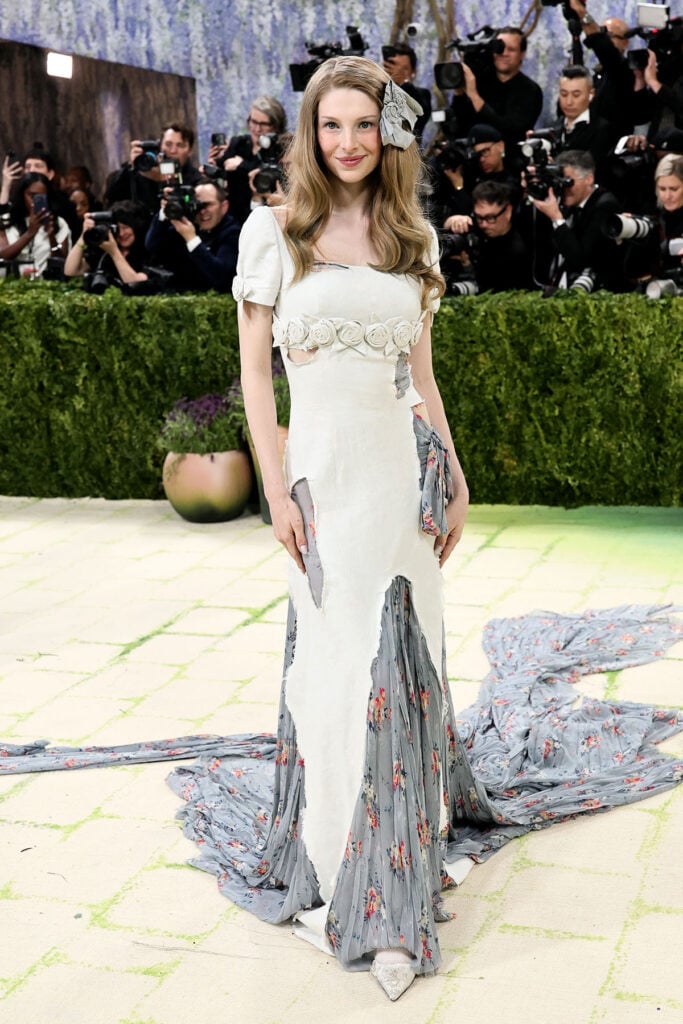
Hunter Schafer appeared in a custom Prada linen gown that served as a modern translation of Gustav Klimt’s 1912 portrait of Mäda Primavesi. The garment utilized silk chiffon devoré detailing to mimic the layered, textured aesthetic of the Viennese Secessionist movement. By choosing linen—a material often associated with the canvas of a painting—and pairing it with intricate surface work, Prada successfully bridged the gap between the tactile nature of clothing and the visual depth of a painting. The inclusion of a coordinating floral bow hair accessory and white embroidered satin pumps further emphasized the transition from the two-dimensional world of fine art to the three-dimensional space of the red carpet.
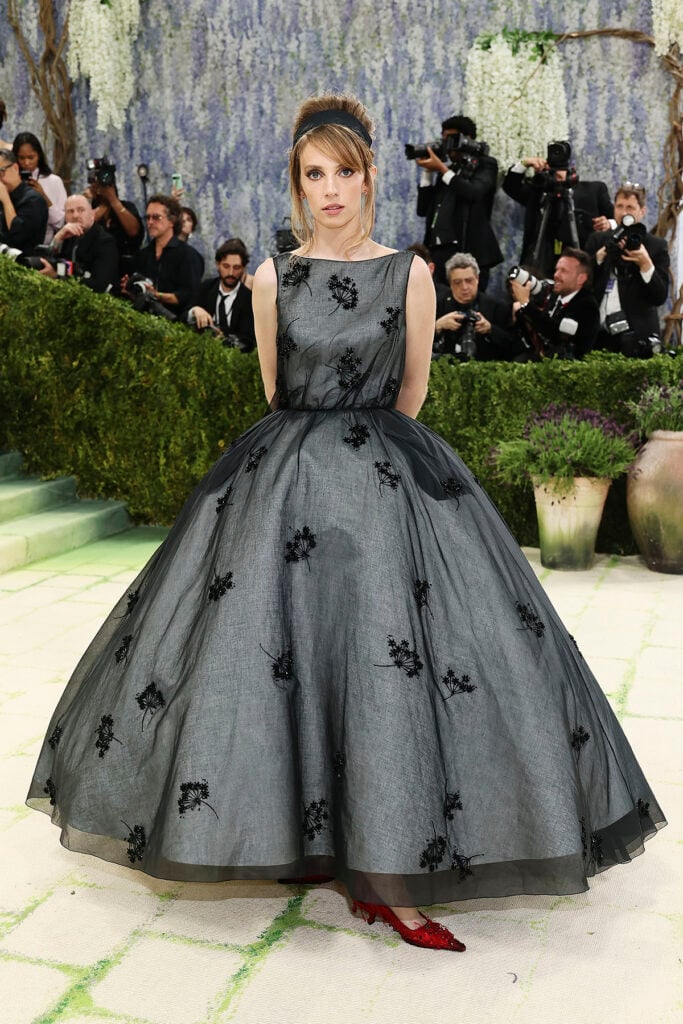
Similarly, Maya Hawke’s attire drew from the 18th-century Rococo period, specifically the works of Jean-Honoré Fragonard. Her custom layered dress featured floral micro-embroidery, a technique requiring hundreds of hours of manual labor, mirroring the delicate brushwork and pastel palettes characteristic of Fragonard’s "The Swing" or "The Progress of Love." While the silhouette remained relatively restrained compared to the more avant-garde interpretations of the Rococo era seen in past galas, the historical reference was clear. The look was accessorized with Prada Fine Jewelry from the Couleur Vivante collection, emphasizing the "Art" component of the brief through the lens of decorative craftsmanship.

Archival Revivals and the Solarization Technique
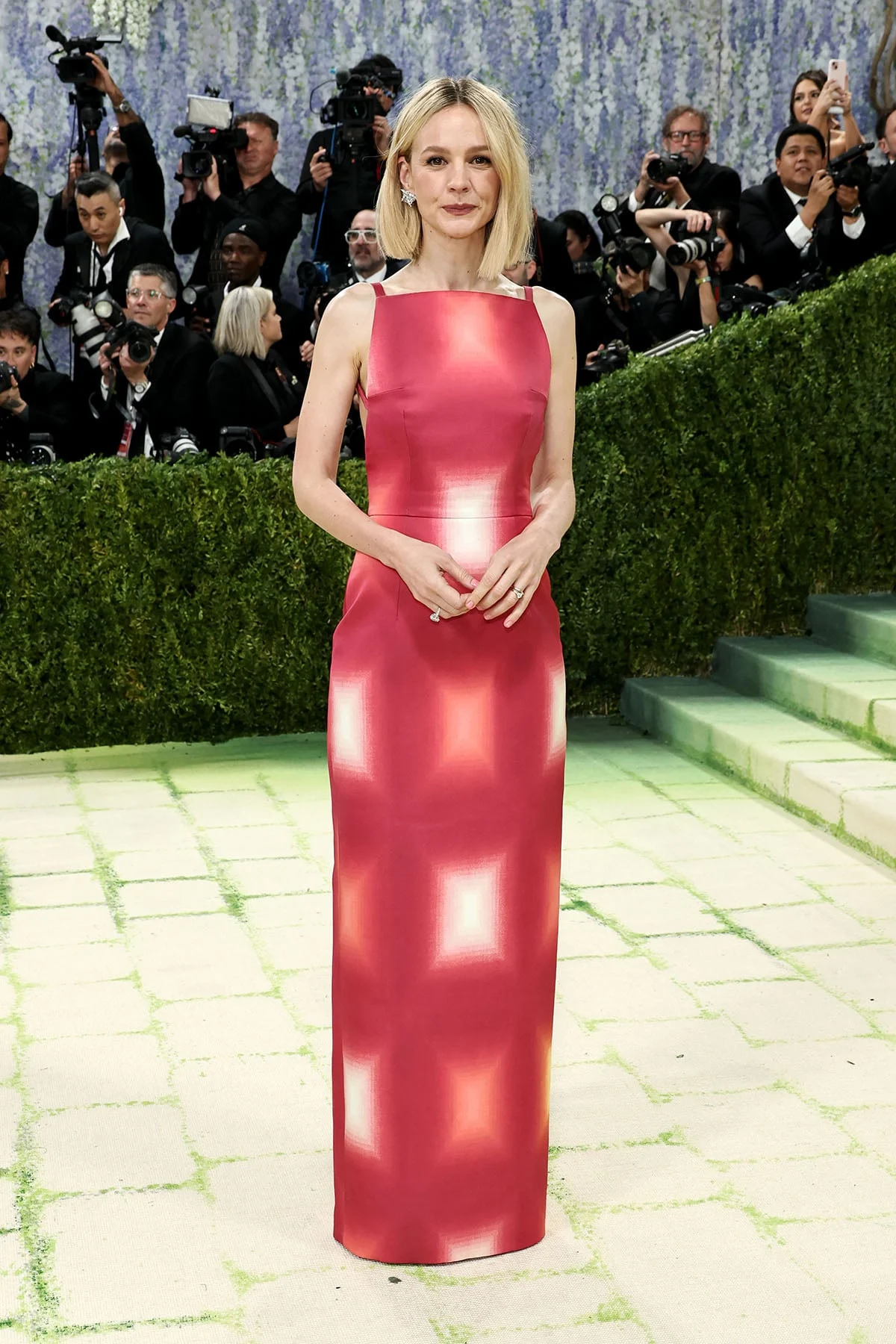
Carey Mulligan’s red carpet appearance offered a different perspective on the theme, looking inward at the house’s own history as a form of "Costume Art." She wore a custom strawberry-red column gown featuring a solarized rectangular motif. This print was a direct reference to the Prada Spring/Summer 1998 collection, which famously integrated art-inspired prints into minimalist silhouettes.
The use of solarization—a photographic process where an image is partially reversed in tone—linked Mulligan’s gown to the history of surrealist photography and avant-garde visual arts. Analysts noted that this choice reflected a broader trend in the fashion industry: the elevation of a brand’s archive to the status of fine art. By recontextualizing a print from nearly three decades ago, Prada positioned its own design history as a legitimate subject of the "Costume Art" theme. Mulligan’s look was completed with high-jewelry pieces from Tiffany & Co., maintaining the understated elegance that has become the actress’s signature.
Masculinity and Subcultural Narratives
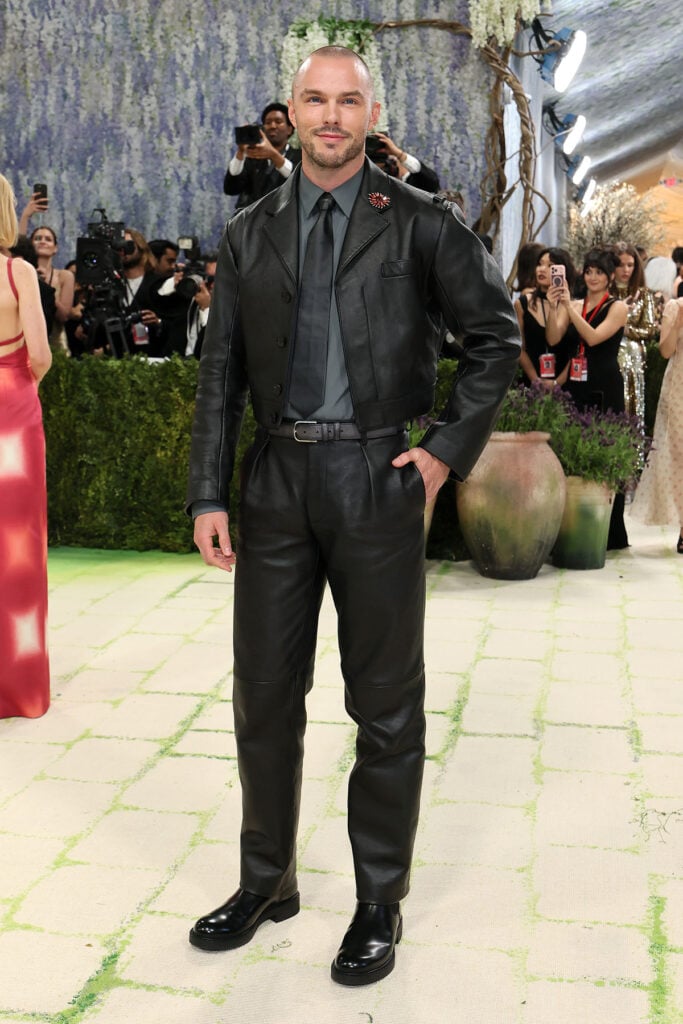
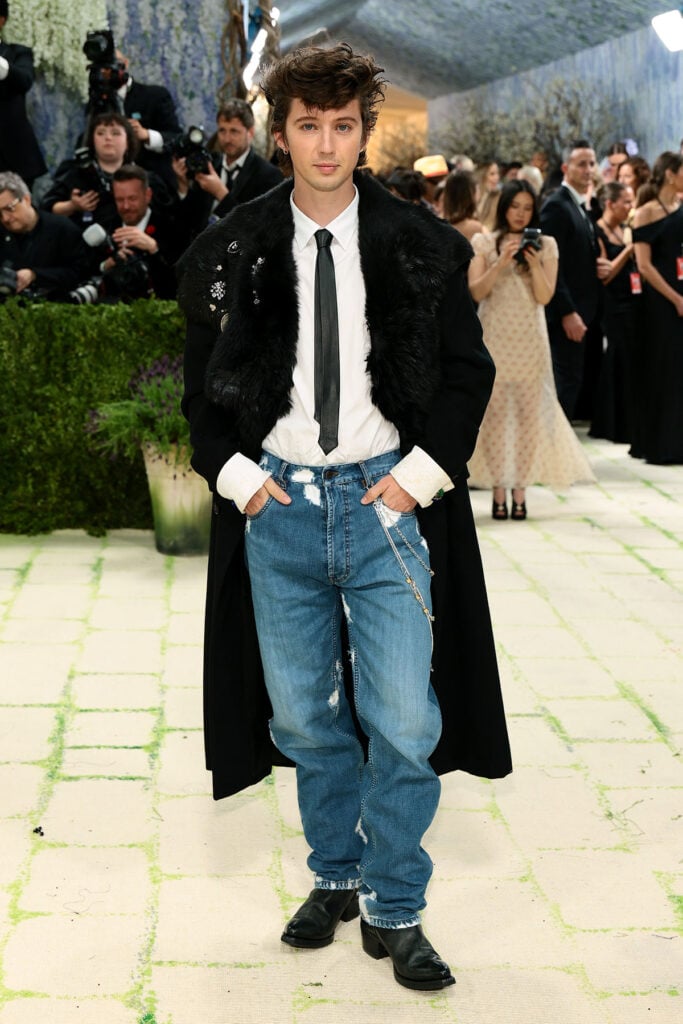
The menswear presented by Prada at the 2026 Met Gala moved away from classical art references toward cinematic and subcultural storytelling. Nicholas Hoult and Troye Sivan represented two distinct poles of this approach.
Nicholas Hoult opted for a full leather custom look, a departure from the traditional tuxedo. The ensemble, featuring a cropped jacket with precise proportions, was interpreted by many as a nod to the "villain aesthetic" or the stark, modernist lines of mid-century industrial art. The use of leather—a material with heavy associations in both counter-culture and high-fashion fetishism—provided a tactile contrast to the softer, more ethereal gowns of his peers. Hoult’s look was anchored by a Vacheron Constantin timepiece and a structural brooch, blending horological art with sartorial rebellion.
In contrast, Troye Sivan’s attire drew comparisons to 1950s and 1980s Americana, specifically the aesthetic popularized by the film Grease. Comprising a black coat, shirt, and jeans, the look leaned heavily into "off-duty" energy. While the ensemble was finished with Pandora Jewelry, some critics argued that it failed to fully engage with the "Costume Art" brief, opting instead for a minimalist tribute to pop culture iconography rather than a rigorous exploration of art history.
Technical Execution and Aesthetic Familiarity
Amanda Seyfried and Damson Idris rounded out the Prada cohort, showcasing the brand’s technical proficiency in garment construction, even when the thematic connection was less overt.
Seyfried wore an alabaster-pink gown characterized by a low-waist skirt and symmetrical bows. The construction of the bows demonstrated Prada’s mastery of architectural draping, a skill often equated to sculpture in the fashion world. Despite the flawless execution and the inclusion of Tiffany & Co. jewels, the look was noted for its familiarity. In the context of a "Costume Art" theme, which encourages radical experimentation, the gown was viewed as a safe, albeit beautiful, adherence to traditional red-carpet glamour.
Damson Idris also took a quieter approach compared to his previous Met Gala appearances. His custom black leather look was accented by a DIDRIS Rainbow Maxi necklace. Following his highly publicized, theatrical appearance the previous year, this ensemble was seen as a pivot toward a more streamlined, modernist silhouette. However, industry commentators suggested that the look may have been too understated for an event defined by its "Costume Art" mandate, which traditionally rewards bold, narrative-driven fashion.
Event Context and Broader Implications
The Met Gala remains the primary fundraiser for the Metropolitan Museum of Art’s Costume Institute, with the 2026 event reportedly raising upwards of $22 million. The success of the gala is measured not only by its financial intake but by its ability to generate global conversation around the cultural value of fashion.
The "Costume Art" theme arrived at a time when the distinction between "high art" and "commercial fashion" is increasingly blurred. Prada’s decision to blend archival prints with direct homages to Klimt and Fragonard highlights the brand’s strategy of positioning itself as an intellectual leader in the luxury sector. Under the dual leadership of Miuccia Prada and Raf Simons, the house has consistently prioritized the "conceptual" over the "ornamental."
The 2026 showcase also highlighted the significant role of brand ambassadors and the economic power of jewelry partnerships. The integration of Tiffany & Co., Vacheron Constantin, and Pandora into the Prada looks underscored the multi-layered commercial interests that converge on the Met steps. Each accessory was chosen to complement the artistic narrative of the garment, whether through the use of classical diamonds or avant-garde horology.
Conclusion: A Nuanced Response to the Brief
In evaluating Prada’s performance at the 2026 Met Gala, it is evident that the house prioritized a nuanced, scholarly interpretation of "Costume Art." By moving beyond literal costumes and instead focusing on the techniques of art—such as solarization, devoré, and micro-embroidery—Prada reinforced its identity as a brand rooted in the intellectual and the avant-garde.
While some critics noted that the menswear and more traditional gowns lacked the theatricality typically associated with the Met Gala, the overall presentation was a testament to the brand’s consistency. Prada did not merely dress celebrities; it curated a gallery of looks that invited viewers to consider the garment as a medium for artistic expression. As the fashion industry continues to grapple with its place within the broader cultural landscape, Prada’s 2026 showing serves as a reminder that the most enduring "Costume Art" is often that which challenges the viewer to look closer at the craft behind the clothes.