










The fashion industry, a multi-trillion-dollar global enterprise, stands at a critical juncture, facing intense scrutiny over its environmental footprint and social practices. As consumers become increasingly conscious of the origins and impacts of their clothing, shoes, and accessories, understanding the sustainability credentials of various fabrics has become paramount. This comprehensive guide aims to demystify the complex world of fashion materials, offering insights into their life cycles, environmental burdens, and ethical considerations.
The Unseen Costs of Fashion: A Global Challenge
A garment’s sustainability journey begins long before it reaches a store shelf, rooted deeply in the raw materials from which it is crafted. Fabrics, an ancient human technology, today consume vast quantities of resources as they transition from raw state to finished product. This transformation often involves significant inputs: oil for synthetics, extensive land and water for natural fibres, and a cocktail of pesticides, chemical agents, and dyes. The journey from a fluffy cotton boll, a dense tree trunk, or crude oil to the smooth, soft, and vibrant textiles we wear is a complex industrial process, each stage carrying distinct environmental and social implications. Beyond the ecological toll, the hands that manipulate these materials throughout the supply chain—from farmers to factory workers—are directly impacted by manufacturing processes and resource extraction, raising critical questions about labor rights and community health.
The urgency to address material sustainability stems from a growing awareness of fashion’s contribution to global crises. The industry is a significant consumer of water, a major polluter of waterways through chemical discharge, and a substantial contributor to greenhouse gas emissions. Fast fashion’s relentless cycle of production and consumption exacerbates these issues, pushing demand for cheaper, faster materials, often at the expense of environmental and human well-being. For the informed consumer, equipping oneself with knowledge about material impacts is a powerful tool in navigating this ethical fashion journey.
Despite the proliferation of new materials and evolving industry standards for familiar ones, deciphering which fabrics meet ethical benchmarks and warrant investment remains a formidable challenge. The landscape is dynamic, with innovations emerging constantly, yet a universally accepted hierarchy of sustainable materials remains elusive. Research consistently highlights the absence of comprehensive, comparable data, such as Life Cycle Analyses (LCAs), across all materials. What is clear, however, is that every material currently on the market presents a unique set of trade-offs and environmental impacts. A balanced approach, incorporating a mix of preferred materials, is increasingly seen as the path forward.
Organisations like Good On You, an independent assessor of fashion and beauty brands, dedicate extensive research to analyse available information and consult with industry experts to make sense of this complexity. They acknowledge that a material’s impact can vary significantly based on its production location and methodology. While welcoming novel material innovations, their assessments are grounded in solid scientific evidence, evaluating environmental impact across key areas. The understanding of "responsible materials" is not static; it evolves as new research and data emerge, underscoring the continuous nature of the sustainability quest. Ultimately, the choice rests with the consumer, guided by their personal values and informed by robust information. It’s also crucial to remember that material choice is but one facet of a brand’s overall responsibility; a brand using organic cotton but neglecting greenhouse gas emissions, textile waste, or labor rights issues is far from embodying best practices. However, adopting lower-impact materials forms a vital foundation for any truly responsible brand.
Debunking "Natural" Fibres: A Common Misconception
Before delving into specific materials, it’s essential to address a pervasive misconception: the idea that "natural" fibres are inherently more sustainable. This is not always the case. Conventional cotton production, for instance, can be an environmentally destructive agricultural activity, heavily reliant on water and pesticides, even before its transformation into cloth. Brands often employ "greenwashing" tactics, claiming products are "all natural" without genuinely committing to sourcing fabrics made with people, the planet, and animals in mind. Critical evaluation of such claims is vital for conscious consumers.
Plant-Based Materials: From Field to Fabric
Plant-based fibres offer a diverse range of textures and properties, but their sustainability profiles vary significantly based on cultivation methods and processing.
Cotton: A Global Staple Under Scrutiny
Cotton, celebrated for its softness, lightness, and breathability, is a cornerstone of global fashion, featuring prominently in everyday items from jeans to t-shirts. Its primary advantage lies in its biodegradability when pure and untreated. However, conventional cotton, whether genetically modified or not, is an incredibly resource-intensive crop. It is notorious for its high water consumption—with some estimates suggesting up to 2,700 litres needed for a single t-shirt—and holds the highest market share for insecticide use by sales globally. Beyond cultivation, the transformation of cotton bolls into coloured cloth involves extensive chemical processes for treating, dyeing, printing, and finishing, each stage adding to its environmental burden. The industry has also historically been plagued by issues of child slavery and forced labor in certain regions, particularly in its conventional supply chains.
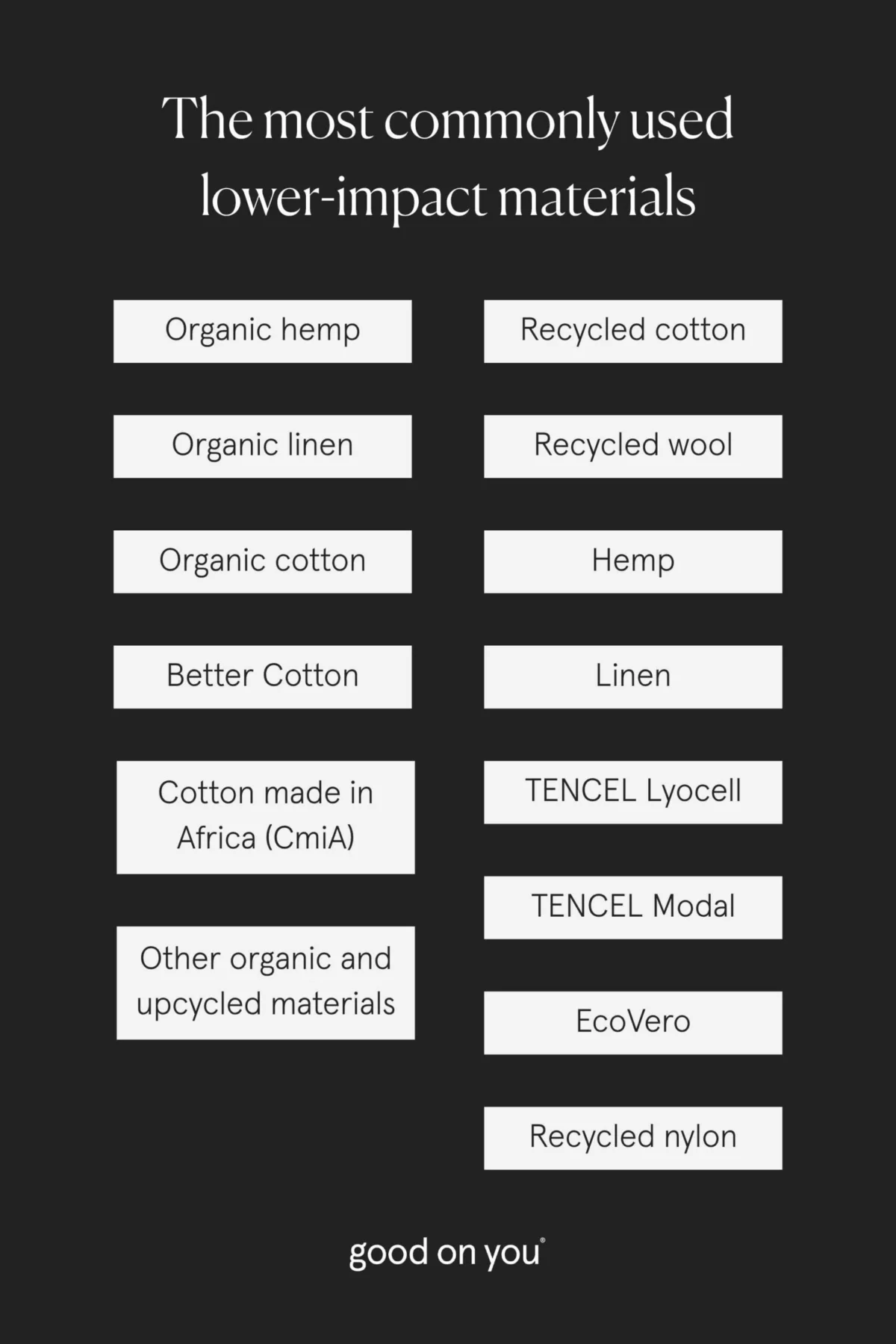
Organic cotton offers a significantly improved alternative. It is cultivated without synthetic pesticides, herbicides, or genetically modified seeds, relying instead on natural farming practices that promote soil health and biodiversity. These methods require less water and avoid harmful chemical runoff, leading to longer-lasting fertile land. While organic cotton represents a substantial improvement for both the planet and people, concerns about certification integrity have emerged. Reports, such as those in The New York Times, have highlighted issues with fraudulent organic cotton certifications, particularly from India, underscoring the need for consumers to verify the authenticity and robustness of certifications like Better Cotton and Cotton made in Africa. Recycled cotton also presents a viable option, reducing the demand for virgin fibres and mitigating textile waste.
Denim: More Than Just Cotton
Denim, intrinsically linked with cotton, carries additional environmental and social baggage. The dyeing process typically uses synthetic indigo, which can lead to significant local waterway pollution and health issues for workers due to chemical exposure. The popular "distressed" look often relies on sandblasting, a controversial technique that poses severe health risks, including silicosis, to workers exposed to fine silica dust. Furthermore, denim’s stretch variants often blend cotton with elastane, creating a composite fabric that is notoriously difficult to recycle, hindering circularity efforts. Opting for pure cotton denim or innovative alternatives like TENCEL Lyocell-blended denim, which is gaining traction, can mitigate these issues. The most sustainable denim choices are secondhand, certified organic cotton, or those utilising advanced, less toxic indigo dyeing methods.
Hemp: The Resilient Fibre
Hemp, derived from the cannabis plant, is a bast fibre known for its remarkable sustainability profile. It is a low-impact crop, requiring minimal water and no pesticides for cultivation. Organic hemp further guarantees the absence of harsh chemicals. The resulting fabric is durable, offers natural thermoregulation (warm in winter, cool in summer), and provides UV protection. Its texture is comparable to linen, making it a versatile and increasingly popular choice. As an alternative to conventional cotton, hemp, particularly organic hemp, stands out as a superior, environmentally conscious option.
Linen: Elegance and Eco-Friendliness
Linen, crafted from flax plant fibres, boasts a long history as a stylish and highly biodegradable fabric. It is naturally strong, moth-resistant, and, when untreated, fully biodegradable. Linen’s ability to withstand high temperatures and absorb moisture without harbouring bacteria makes it a practical choice. It gains strength when wet and softens with each wash, enhancing its appeal. To maximise its sustainability, consumers should seek out linen in its natural, undyed shades of ivory, ecru, tan, or grey, as bright white linen often undergoes intensive bleaching. Organic linen, free from harmful chemicals in production, is among the top-ranked materials for its minimal environmental impact.
Man-Made Cellulosic Fibres (MMCFs): The Promise and Peril of Wood Pulp
MMCFs, derived from regenerated cellulose, typically wood pulp, represent a significant segment of modern textiles. Their production processes, however, vary widely in sustainability.
-
Modal: Often sourced from beech trees, Modal is a breathable, silky-smooth MMCF known for its high water absorbency (50% more than cotton) and colourfastness. It is technically biodegradable and recyclable. Lenzing AG’s TENCEL Modal, produced under a global certification system, is lauded for its more sustainable closed-loop production, though it sells fibres to mills, meaning the final garment’s blend could vary. Consumers should prioritise brands demonstrating transparent production processes and verifiable use of 100% TENCEL Modal.
-
TENCEL Lyocell: A brand name for Lenzing AG’s cellulose fibre, TENCEL Lyocell is made from sustainably sourced wood pulp (eucalyptus, oak, birch). Lenzing’s closed-loop system for Lyocell boasts a 99% solvent recovery rate, drastically