

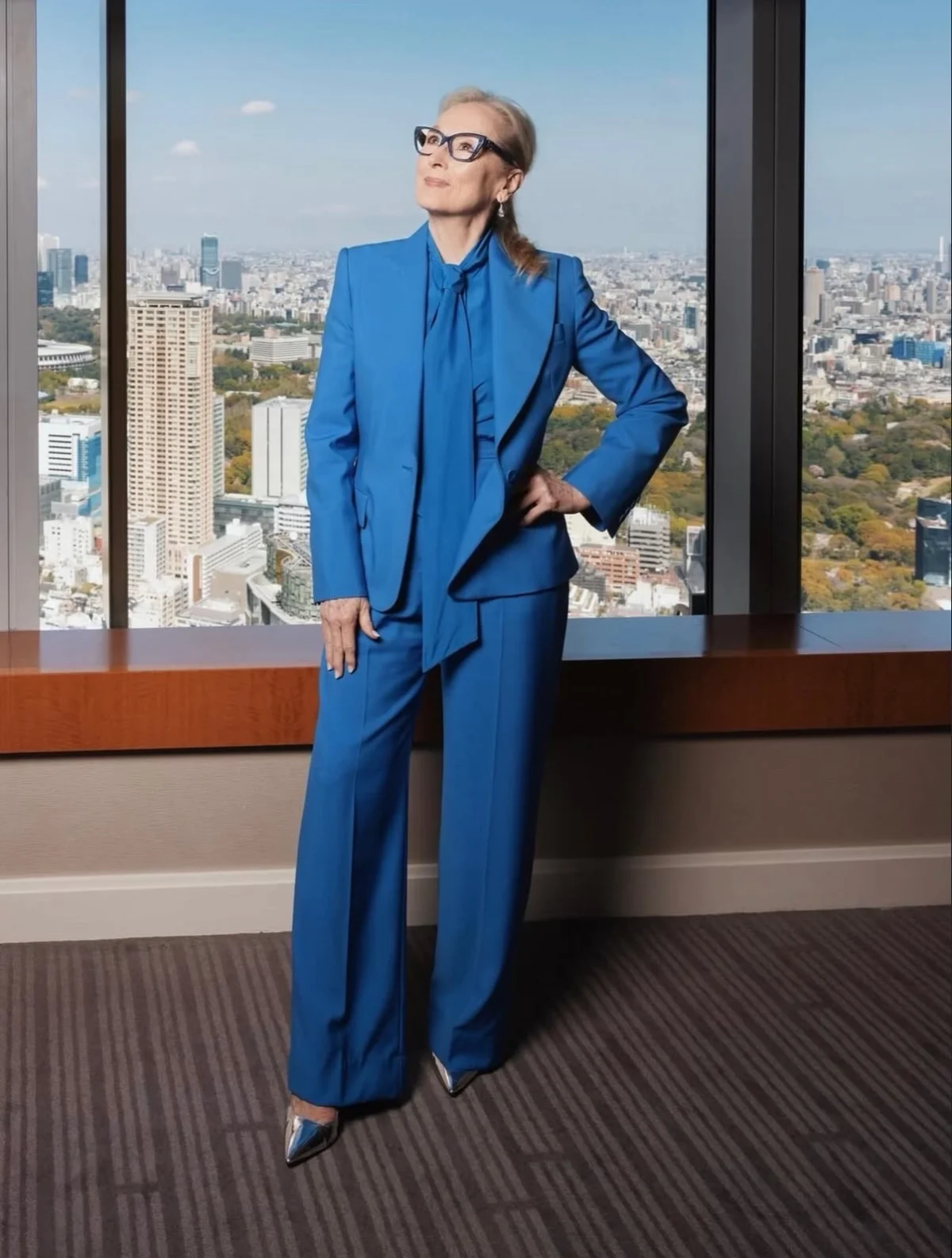
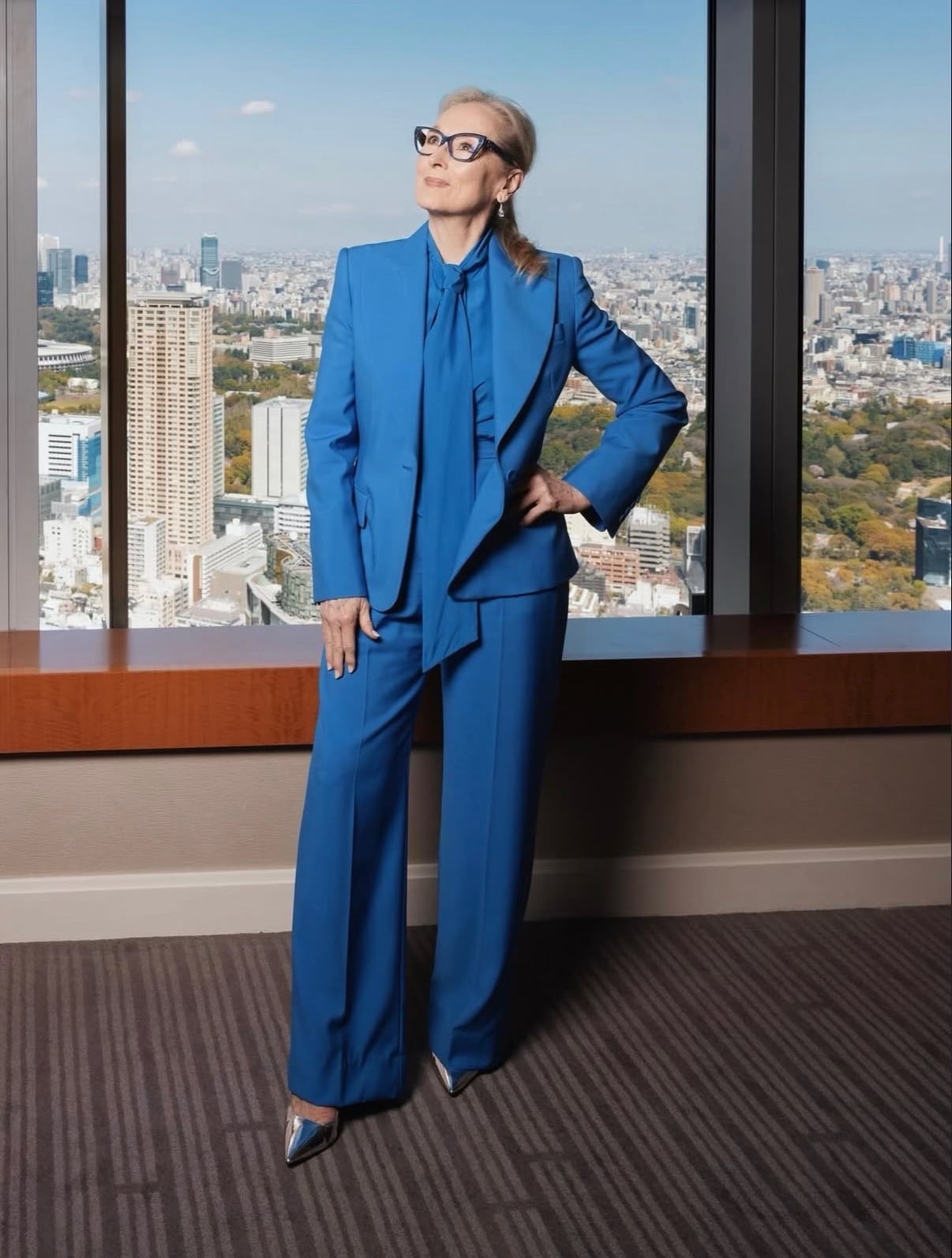
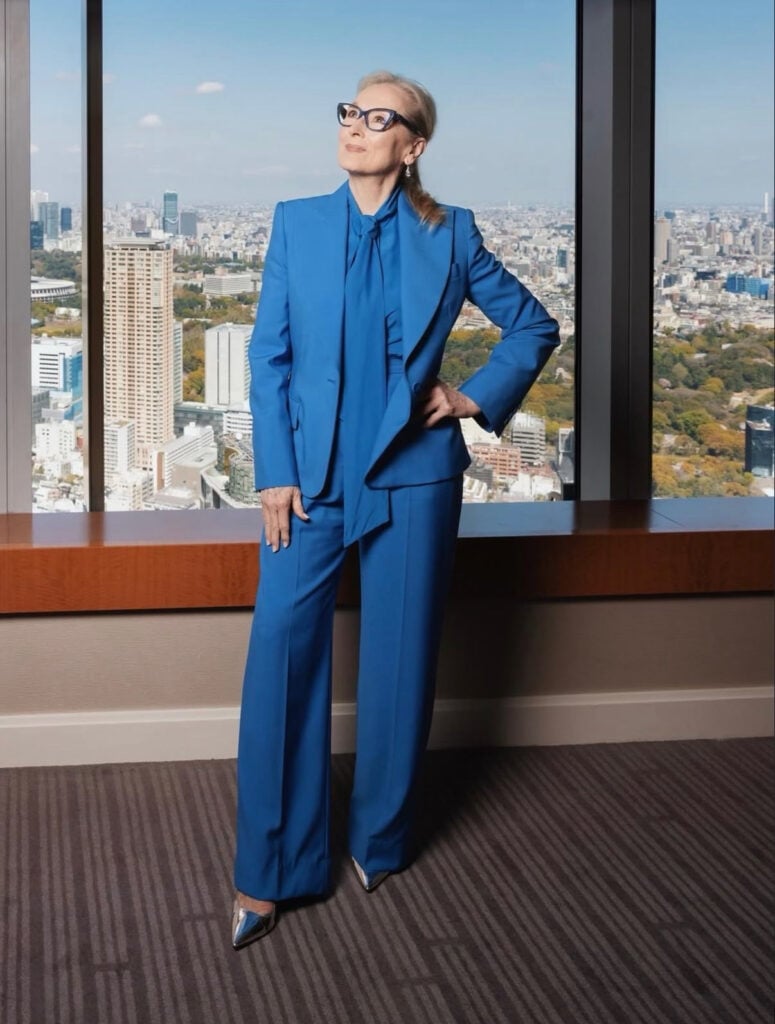
The Tokyo leg of the promotional tour for the highly anticipated sequel, The Devil Wears Prada 2, has reached a visual crescendo with the release of new images featuring Academy Award winner Meryl Streep. Captured by photographer Miles Diggs, the images document a significant aesthetic pivot in Streep’s promotional wardrobe, which has heretofore been dominated by a consistent palette of deep reds. In a move that industry analysts and fashion historians are describing as a masterful nod to cinematic legacy, Streep appeared in a custom ensemble by the British fashion house McQueen, rendered in a precise shade of cerulean blue. This stylistic choice serves as a direct homage to one of the most famous monologues in contemporary film history, signaling a deeper narrative layer to the film’s marketing strategy as it prepares for a global release.
A Thematic Shift in Promotional Strategy
Throughout the initial stages of the international press tour for The Devil Wears Prada 2, Meryl Streep’s public appearances were characterized by a rigorous adherence to crimson and scarlet tones. This "red era" was interpreted by many as a reflection of the power and intimidation associated with her character, Miranda Priestly, the formidable editor-in-chief of Runway magazine. However, the transition to cerulean during the Tokyo event suggests a more nuanced approach to "method dressing"—a trend where actors wear clothing that references their characters or specific plot points from their films.
The choice of cerulean is not merely an aesthetic preference but a calculated reference to the 2006 original film. In a pivotal scene from the first installment, Priestly delivers a scathing lecture to her assistant, Andy Sachs, regarding the origins of a "lumpy" cerulean sweater. The monologue, which traces the color’s journey from Oscar de la Renta’s 2002 collection to the "clearance bin" of a casual retailer, has since become a foundational text in fashion studies, illustrating the trickle-down effect of high-fashion trends into the mass market. By wearing this specific hue in Tokyo, Streep effectively bridges the twenty-year gap between the two films, reinforcing the enduring cultural relevance of the franchise.
Technical Analysis of the McQueen Ensemble
The custom McQueen suit worn by Streep in Tokyo represents a sophisticated blend of sharp tailoring and feminine fluidity. Under the creative direction of the house, the single-breasted jacket features a structured shoulder and a clean, elongated line that emphasizes a professional silhouette. The tailoring is balanced by a softly draped blouse in a matching cerulean silk, finished with a fluid bow at the neckline. This juxtaposition of "hard" and "soft" elements mirrors the dual nature of the Miranda Priestly character: a woman of immense executive power who operates within the fluid, aesthetic world of high fashion.
Stylist Micaela Erlanger, who has overseen Streep’s wardrobe for the duration of this tour, selected accessories that further lean into the "editor-in-chief" persona. Most notable is the Olympia Le-Tan "Runway" clutch, a hand-embroidered piece designed to look like a book or a vintage magazine cover. The inclusion of this accessory is a literal nod to the publishing industry that serves as the backdrop for the film. To complete the look, Erlanger opted for metallic silver Stuart Weitzman pumps, providing a modern, industrial contrast to the vibrant blue of the suit.
Chronology of The Devil Wears Prada 2 Development
The journey to a sequel for The Devil Wears Prada has been a lengthy one, spanning nearly two decades of industry speculation. The original 2006 film, directed by David Frankel and based on the novel by Lauren Weisberger, was a massive commercial and critical success, grossing over $326 million worldwide and earning Streep an Academy Award nomination.
Despite the original’s success, a sequel was not officially greenlit until the early 2020s, following a resurgence of interest in the film’s themes of workplace dynamics and the evolution of the media landscape. Reports indicate that the sequel’s script, penned by the original film’s screenwriter Aline Brosh McKenna, focuses on the decline of traditional magazine publishing in the digital age. The plot reportedly follows Miranda Priestly as she navigates the end of her career while facing off against her former assistant, Emily Charlton (played by Emily Blunt), who has risen to become a high-powered executive at a luxury fashion conglomerate.
The Tokyo press tour marks one of the final international stops before the film’s premiere. Japan has historically been a strong market for the franchise, with the original film maintaining a cult-like status among Tokyo’s fashion-forward demographic. The decision to debut such a significant sartorial reference in Tokyo highlights the importance of the Asian market in the film’s global distribution strategy.
Industry Implications and Method Dressing
The use of "method dressing" in the promotion of The Devil Wears Prada 2 follows a successful blueprint established by other recent blockbuster releases. Marketing campaigns for films such as Barbie (2023), where Margot Robbie wore archival Chanel and custom Schiaparelli to mimic various Barbie dolls, and Challengers (2024), where Zendaya wore tennis-themed Loewe and Thom Browne, have demonstrated that high-fashion engagement can significantly drive social media metrics and box office interest.
By employing this strategy, Streep and her team are engaging with a younger generation of viewers who may have discovered the original film through viral clips on platforms like TikTok and Instagram. The "cerulean monologue" remains one of the most shared pieces of fashion media online, and Streep’s physical manifestation of that color in 2026 creates a "full-circle" moment that is highly shareable and digitally resonant.
Financial analysts in the luxury sector note that these high-profile placements also benefit the brands involved. The "McQueen" brand, currently navigating a new creative era, gains significant prestige and visibility by dressing an icon of Streep’s caliber for a project so intrinsically tied to the fashion industry. The "Streep Effect" has historically led to increased interest in the labels she wears, particularly when the clothing is tied to a beloved character.
Projected Impact on the Publishing and Fashion Sectors
Beyond its entertainment value, The Devil Wears Prada 2 arrives at a time of significant upheaval in both the fashion and media industries. Since the release of the first film in 2006, the dominance of print magazines has waned, replaced by influencers, digital platforms, and AI-driven content. The film is expected to offer a satirical yet grounded look at these shifts, and Streep’s wardrobe choices serve as a visual bridge between the "Old Guard" of fashion and its contemporary iteration.
Industry insiders suggest that the film’s portrayal of the "death of the magazine" may serve as a meta-commentary on the current state of journalism. Streep’s polished, custom-tailored look in Tokyo reinforces the idea of "Quiet Luxury" and "Power Dressing"—trends that have seen a resurgence in a post-pandemic economy where consumers are looking for longevity and authority in their purchases.
Conclusion and Future Outlook
Meryl Streep’s appearance in Tokyo is more than a standard promotional stop; it is a meticulously choreographed cultural event. By stepping away from the aggressive reds of her previous appearances and embracing the "cerulean" legacy, she has successfully reignited the conversation surrounding the film’s core themes. The collaboration between McQueen, Olympia Le-Tan, and Stuart Weitzman, under the guidance of Micaela Erlanger, demonstrates the power of narrative-driven styling in the modern cinematic landscape.
As the press tour continues, the focus will likely shift to the film’s critical reception and its ability to capture the zeitgeist once again. However, from a branding and marketing perspective, the Tokyo event has already secured a victory. The Devil Wears Prada 2 is not just a sequel to a movie; it is a continuation of a fashion legacy that remains as sharp and relevant as Miranda Priestly’s tongue. With the film’s release imminent, the industry will be watching closely to see if the "cerulean effect" translates into box office gold and a new era of fashion influence.