










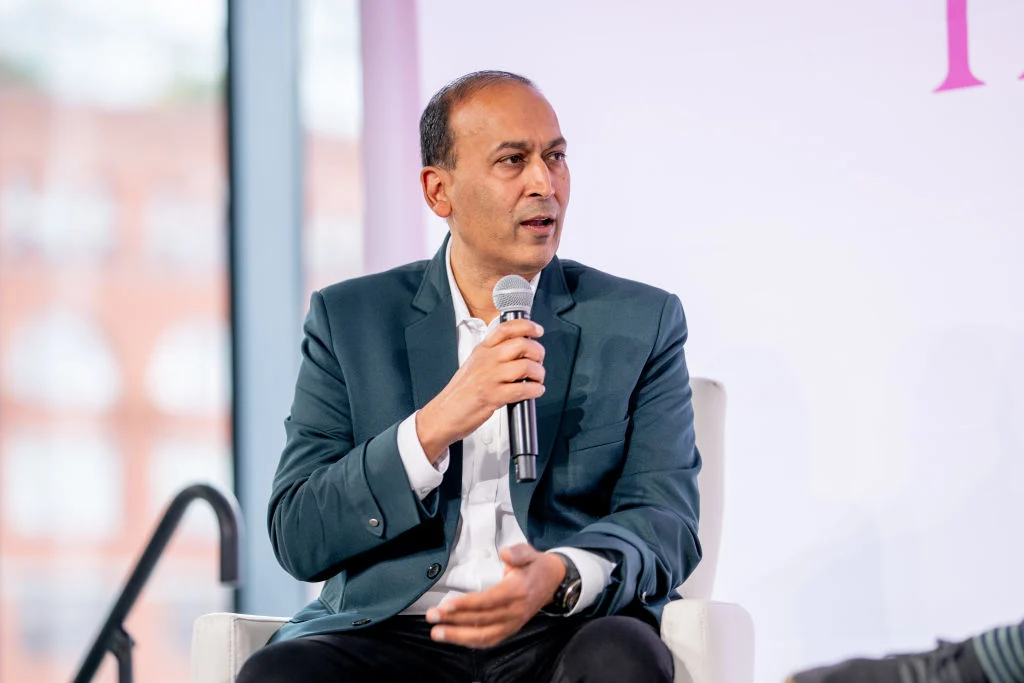
Poshmark, the leading social commerce platform for secondhand fashion, officially announced a significant leadership transition on Monday, marking the end of an era for the Silicon Valley mainstay. Manish Chandra, the visionary founder who has steered the company since its inception in 2011, will step down from his role as Chief Executive Officer. He is succeeded by Namsun Kim, who has served as the company’s executive chairman since April and currently holds the position of president of investments at Naver, the South Korean internet conglomerate that acquired Poshmark in 2022. While Chandra is relinquishing the top executive post, he will remain deeply involved in the company’s strategic direction by transitioning to a seat on the board of directors.
The transition comes at a pivotal moment for the global resale market, which has seen explosive growth alongside shifting consumer attitudes toward sustainability and value. Chandra’s departure follows nearly 15 years of leadership, during which he transformed a small startup operating out of a garage into a global marketplace with over 150 million users across the United States, Canada, and beyond. The appointment of Namsun Kim signals a deeper integration between Poshmark and its parent company, Naver, as the platform seeks to leverage advanced technology and global infrastructure to maintain its competitive edge in an increasingly crowded "recommerce" landscape.
A Legacy of Social Commerce: The Manish Chandra Era
The story of Poshmark is inextricably linked to Manish Chandra’s belief that shopping is inherently a social experience. Before founding Poshmark, Chandra had already established himself in the tech ecosystem as the founder of Kaboodle, a social shopping site acquired by Hearst in 2007. In 2011, alongside co-founders Tracy Sun, Gautam Golwala, and Chetan Pungaliya, Chandra launched Poshmark with a mobile-first strategy that was revolutionary at the time.
Unlike traditional e-commerce sites like eBay or Craigslist, Poshmark was built to function like a social network. Users did not just list items; they built "closets," followed other users, and participated in "Posh Parties"—virtual shopping events centered around specific themes or brands. This community-centric approach fostered high levels of user engagement and brand loyalty, setting the stage for a decade of rapid expansion.
Under Chandra’s leadership, Poshmark navigated the complex transition from a niche startup to a publicly traded entity. The company’s Initial Public Offering (IPO) in January 2021 was met with significant investor enthusiasm, with shares more than doubling on their first day of trading. At its peak, the company was valued at several billion dollars, buoyed by a surge in online shopping during the COVID-19 pandemic. However, as the broader tech market cooled and competition intensified from platforms like Depop, Vinted, and the luxury-focused RealReal, Poshmark sought a strategic partner to secure its long-term future. This led to the $1.2 billion acquisition by Naver in late 2022, which took the company private once again.
The Strategic Ascension of Namsun Kim
Namsun Kim’s appointment as CEO is the culmination of a deliberate succession plan that has been in motion since the beginning of the year. Kim is a seasoned executive with a background in high-stakes finance and technology investments. As the president of investments at Naver, he played a critical role in the acquisition of Poshmark, recognizing the platform’s potential to serve as a cornerstone of Naver’s global C2C (consumer-to-consumer) commerce strategy.
Since joining Poshmark’s leadership structure as executive chairman in April, Kim has worked closely with Chandra to understand the nuances of the Poshmark community and its operational hurdles. His background suggests a focus on operational efficiency, technological integration, and financial discipline. Industry analysts expect Kim to lean heavily into Naver’s technological prowess—particularly in search, artificial intelligence, and image recognition—to enhance the Poshmark user experience.
In his farewell communication to the Poshmark community, Chandra expressed confidence in Kim’s ability to lead. He noted that the two had been collaborating for months to ensure the transition would be "as smooth as possible." This collaborative handoff is intended to reassure both the internal workforce and the millions of active sellers who rely on the platform for income.
Chronology of Poshmark’s Evolution
To understand the weight of this leadership change, it is essential to review the timeline of Poshmark’s growth and its impact on the retail sector:
- 2011: Poshmark is founded in a Silicon Valley garage, focusing on a mobile-app-first experience for buying and selling fashion.
- 2014–2016: The platform expands its categories beyond women’s fashion to include men’s and children’s wear, significantly broadening its total addressable market.
- 2019: Poshmark expands internationally, launching in Canada, its first market outside the United States.
- January 2021: Poshmark goes public on the Nasdaq under the ticker symbol POSH, raising over $277 million in its IPO.
- October 2022: South Korean tech giant Naver announces its intent to acquire Poshmark for $17.90 per share in an all-cash deal valued at approximately $1.2 billion.
- January 2023: The acquisition is finalized, and Poshmark becomes a subsidiary of Naver, delisting from public markets.
- April 2024: Namsun Kim is appointed executive chairman, beginning the formal transition period.
- June 2024: Manish Chandra officially steps down as CEO, and Namsun Kim assumes the role.
Market Context and the Recommerce Boom
The leadership change at Poshmark occurs against the backdrop of a massive shift in the retail economy. The global secondhand apparel market is projected to reach $350 billion by 2027, according to data from ThredUp’s 2023 Resale Report. This growth is driven by Gen Z and Millennial consumers who prioritize sustainability and are increasingly comfortable with "circular fashion."
However, the sector is also facing headwinds. Fast-fashion giants like Shein and Temu have introduced ultra-low-priced new goods that compete directly with the value proposition of secondhand items. Furthermore, traditional retailers like J.Crew, Madewell, and Lululemon have launched their own in-house resale programs, threatening to siphon off supply and demand from multi-brand marketplaces like Poshmark.
Poshmark’s primary challenge under Namsun Kim will be to maintain its "social" identity while improving the technical aspects of the marketplace. Users have frequently called for better search functionality, more robust authentication services for luxury goods, and lower shipping costs. By integrating Naver’s "Smart Lens" technology and AI-driven recommendation engines, Poshmark hopes to make the process of listing and discovering items more seamless than its competitors.
Official Statements and Internal Sentiment
In an emotional email sent to Poshmark’s vast user base, Manish Chandra reflected on his tenure with gratitude. "Leading this company has been the greatest honor of my professional life," Chandra wrote. "Every success we’ve achieved, every challenge we’ve overcome, has been because of you. It’s been the privilege of a lifetime witnessing each of you grow, and it has truly inspired me every single day."
Chandra’s departure is viewed by many as the closing of a chapter on the "founder-led" era of Silicon Valley social commerce. His move to the board of directors suggests that while he is stepping away from day-to-day operations, his influence on the brand’s culture and community-first philosophy will likely persist.
Naver has also expressed its commitment to Poshmark’s long-term growth. In previous corporate filings and statements, Naver leadership emphasized that Poshmark serves as a "strategic high ground" for their entry into the Western e-commerce market. The appointment of a high-ranking Naver executive like Kim reinforces the parent company’s intention to be "hands-on" with its billion-dollar investment.
Implications for the Future of Poshmark
The transition from a founder-CEO to an investment-focused CEO often signals a shift from "aggressive growth" to "profitable scaling." For Poshmark, this could mean several things for its users and stakeholders:
- Technological Overhaul: With Namsun Kim at the helm, there is an expected acceleration in the deployment of Naver’s proprietary technology. This includes AI tools that can automatically generate descriptions for listings based on photos, improving the speed at which sellers can upload inventory.
- Global Synergy: Naver owns several other C2C platforms, including Wallapop in Spain and Kream in South Korea. Under Kim, Poshmark may see more cross-platform integrations or shared logistics infrastructure to lower costs.
- Monetization and Fees: While Poshmark has maintained a relatively consistent fee structure (20% for sales over $15), the new leadership will likely look for new revenue streams, such as promoted listings, enhanced seller tools, or premium subscription tiers.
- Operational Discipline: As a private subsidiary of a major corporation, Poshmark will be under pressure to contribute to Naver’s bottom line. This may lead to a streamlining of operations and a more data-driven approach to marketing and user acquisition.
As Manish Chandra moves to his new role on the board, the industry will be watching closely to see if Poshmark can retain its unique community spirit under the guidance of a more corporate-focused leadership. The transition marks a significant milestone in the maturation of the resale industry, moving from the "garage startup" phase into a sophisticated, tech-driven global enterprise. For the 150 million "Poshers" who use the platform, the hope is that Namsun Kim can preserve the social magic that Chandra built while fixing the technical frictions of a decade-old platform.