










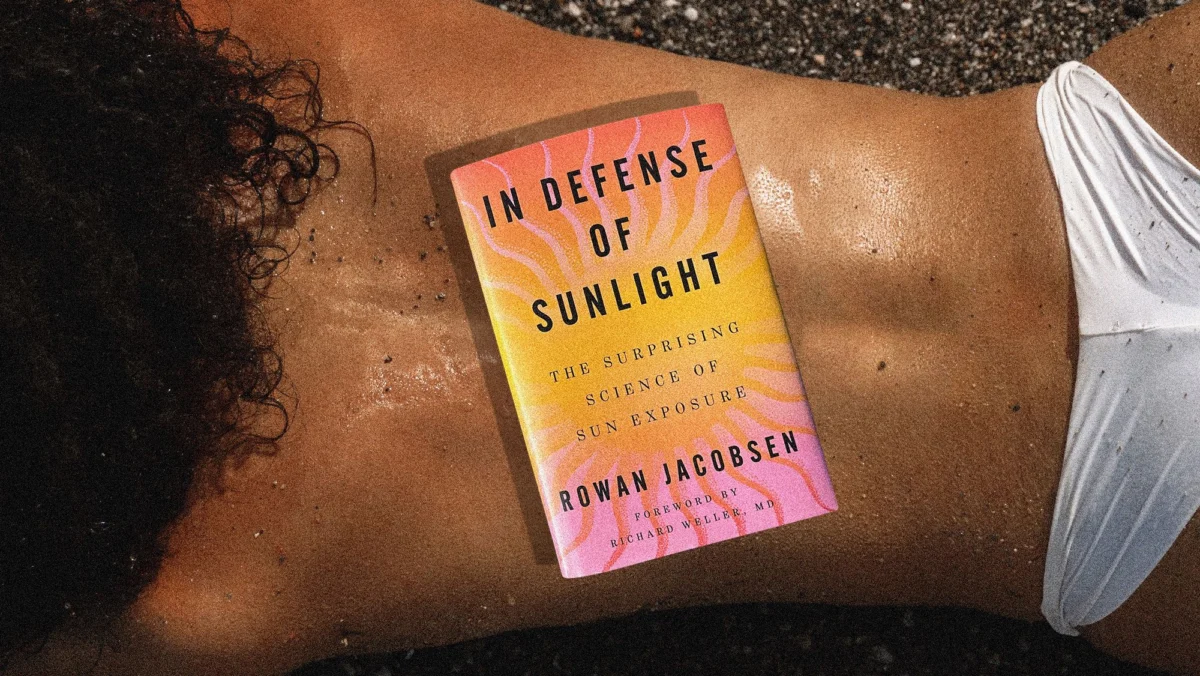
The seemingly simple advice, "Get sun. Not too much. Go outside," forms the crux of Rowan Jacobsen’s latest work, In Defense of Sunlight. This thesis, echoing a sentiment familiar to parents urging children away from screens and toward outdoor activity, has gained renewed traction in an era where "touching grass" has become an aspirational ideal. However, Jacobsen’s book delves into a more nuanced and often contentious aspect of our relationship with the sun: the prevailing public health discourse surrounding sun exposure and sunscreen use.
Jacobsen, a science journalist, posits that the current societal avoidance of the sun has become excessive, leading to potential health detriments. "I wrote the book because I thought we were getting to a point where our avoidance of the sun had gone too far," Jacobsen stated during a recent interview, observing the early spring warmth in Brooklyn’s Cobble Hill Park. He elaborated on the widespread recommendation of applying sunscreen even in winter months for individuals primarily indoors, suggesting a potential overcorrection in public health messaging.
The Spark of Controversy: "Against Sunscreen Absolutism"
Jacobsen’s exploration of this topic gained significant attention in 2024 with his article for The Atlantic, titled "Against Sunscreen Absolutism." The piece highlighted Australia’s then-recently revised sun safety guidelines, which offered a tiered approach to sunscreen use based on skin type and UV index. These guidelines suggested that individuals with lighter skin tones or higher skin cancer risk factors should continue daily sunscreen application, while those with olive or brown skin tones might only need it when UV indices exceeded 3. Individuals with the deepest skin tones were advised to use sunscreen primarily for prolonged sun exposure, such as extended beach days. Jacobsen argued at the time, "Yes, UV rays cause skin cancer, but for some, too much shade can be just as harmful as too much sun."
This perspective ignited a fervent debate within specific professional circles. Dermatologists, who have invested considerable effort in promoting sunscreen as a preventative health measure, expressed concern that Jacobsen’s article might undermine their advocacy. The American Academy of Dermatology (AAD) issued a formal statement asserting that Jacobsen’s article "contains misleading information that may discourage the public from using sun protection, thereby increasing their risk of skin cancer." This rebuttal underscored the established medical consensus on the dangers of unprotected sun exposure and the proven efficacy of sunscreen in mitigating skin cancer risks.
Shifting Public Perception and Rising Trends
Two years on from the initial controversy, the public’s perception of sunscreen and sun exposure appears to be evolving. Tanning is reportedly on the rise, particularly among younger generations like Gen Z and Gen Alpha. Social media platforms feature routines centered around "laying out," and many users actively track UV indices to optimize their sunbathing sessions. This trend is occurring against a backdrop of increasing invasive melanoma rates since the 1970s. A recent survey by the AAD revealed that over 20% of Gen Z respondents prioritized achieving a tan over skin protection.
Concurrently, a segment of the public is actively questioning the established narrative, suggesting that sunlight itself is beneficial and that overreliance on sunscreen and sunglasses may be detrimental to health. Data from the Centers for Disease Control and Prevention (CDC) indicates that a relatively small percentage of the population consistently uses sunscreen when exposed to the sun for extended periods; only 12% of men and 30% of women reported always using sunscreen if they planned to be outdoors for more than an hour on a sunny day. In a related development, the FDA recently blocked a proposed rule that would have banned tanning bed use for individuals under 18, further signaling a complex and sometimes contradictory public embrace of UV exposure.
The Scientific Case for Moderate Sun Exposure
Jacobsen’s book, a concise 199 pages (268 with end matter), meticulously cites a substantial body of research, including numerous studies published in peer-reviewed journals such as the Journal of the American Medical Association, The Lancet, and the Journal of the American Academy of Dermatology. These sources, he argues, point towards the significant health risks associated with prolonged sun avoidance.
"Sun deprivation was linked to heart attack, stroke, diabetes, dementia, depression, Parkinson’s, myopia, respiratory infections, certain cancers, and autoimmune conditions such as multiple sclerosis and inflammatory bowel disease," Jacobsen writes in his introduction. He elaborates that this evidence has been accumulating for decades, strengthening as scientific tools and methodologies have advanced. He cites a study published in the Journal of Internal Medicine which found that nonsmokers who avoided the sun had a life expectancy comparable to that of smokers who embraced sun exposure. The study’s authors concluded, "Avoidance of sun exposure seems to be a risk factor of magnitude similar to smoking in terms of life expectancy."
While "sun deprivation" is not a formally defined medical term, the studies Jacobsen references often correlate self-reported sun exposure habits with vitamin D levels and subsequent health outcomes. Jacobsen proposes a practical, albeit informal, benchmark: individuals are likely "deprived" if they do not achieve a vitamin D level of 20 ng/ml or above without supplementation. The duration of sun exposure required to reach this level varies based on environmental factors, season, skin tone, and geographical location. "But as a general rule, it’s never about getting lots of sunlight, it’s about making sure you get more than none," he emphasizes.
Conversely, moderate sun exposure is associated with a reduction in the aforementioned health risks. Benefits include improved mood, lower blood pressure, decreased risk of diabetes, enhanced wound healing, reduced cardiovascular disease, better mental well-being, less fatigue, and fewer autoimmune disorders. While historically attributed solely to vitamin D production stimulated by UV rays, emerging research suggests a more complex mechanism. Recent studies indicate that while vitamin D supplements can raise levels, these artificially elevated levels do not always translate to improved health outcomes, suggesting that sunlight offers additional, unquantified benefits.
Unpacking the "Special Sauce" of Sunlight
Scientists are actively investigating the precise pathways through which sunlight confers health benefits. Nitric oxide production, triggered by UV rays hitting the skin, is considered a significant factor, as are the low-level anti-inflammatory effects of sun exposure. It is crucial to note that no scientific consensus supports excessive, unprotected sun exposure. Experts generally suggest that approximately 15 minutes of daily unprotected sun exposure may be sufficient for many individuals. Jacobsen draws an analogy to allergies, noting that early exposure to small amounts of peanuts or environmental microbes can reduce the likelihood of developing allergies and asthma later in life.
Jacobsen attributes the pervasive and loud messaging about sun protection to the well-funded organizations behind it, such as the Skin Cancer Foundation and the AAD. These entities, he contends, are highly effective in promoting their primary objective: raising awareness about skin cancer risks. "There are no bad guys in this story," Jacobsen asserts. "Everybody is doing their job. But in the sciences now, your job tends to be very specialized." He highlights that dermatologists prioritize skin cancer, while cardiologists focus on heart disease. While both perspectives are valid within their respective fields, a comprehensive assessment of health risks requires considering all potential threats to well-being.
The AAD, for its part, maintains its stance. In a statement to Allure, current president Murad Alam, MD, stated, " In Defense of Sunlight: The Surprising Science of Sun Exposure seeks to undermine long established public health guidance aimed at preventing skin cancer, the most common cancer in the U.S." Dr. Alam characterized the research Jacobsen cites as "weak evidence" for sunlight’s potential health benefits, adding, "Many of the claims in this book are inadequately supported by low-level evidence, a single supportive paper, or the personal opinions of one doctor. On the other hand, the science linking unprotected sun exposure to skin cancers, including melanoma, is longstanding and well-established."
Re-evaluating Risk: A Global and Individual Perspective
Jacobsen, a science journalist without a medical degree, does not dispute the link between unprotected sun exposure and skin cancer. He advocates for sunscreen use throughout his book and in interviews. However, based on nine years of research involving hundreds of studies and interviews with numerous medical professionals, he concludes that the risk of skin cancer should not be the paramount health concern for most individuals. Globally, skin cancer ranks outside the top 40 deadliest diseases, with an estimated 120,000 annual deaths compared to the 20 million from cardiovascular disease and 10 million from other cancers.
Jacobsen highlights a compelling anecdote from research on the UK Biobank dataset, where over 15 years, only 40 individuals died from skin cancer attributable to UV exposure, while 2,982 died from diseases linked to insufficient sunlight. While acknowledging that skin cancer is the most common cancer in the U.S. and can lead to disfiguring treatments, Jacobsen’s analysis suggests a significant disparity in mortality rates when compared to other prevalent health issues.
This perspective, Jacobsen argues, is particularly relevant for individuals with darker skin tones, whose medical needs have historically been addressed through guidelines developed primarily for lighter-skinned populations. He suggests that these universal recommendations, assuming equal applicability across all skin types, may inadvertently lead to detrimental health consequences for those with darker skin. Diseases correlated with low sun exposure, such as cardiovascular disease and diabetes, disproportionately affect Black populations, while skin cancer remains relatively rare in this demographic. Jacobsen advocates for an end to blanket guidelines, urging for individualized sun safety plans developed in consultation with a doctor, taking into account skin tone and other specific risk factors.
The Challenge of Nuance in Public Health Messaging
Despite the logical appeal of Jacobsen’s arguments, the contemporary landscape of public health communication presents significant challenges to nuanced messaging. The debate over sunscreen serves as a prime example. Misinformation regarding sunscreen has proliferated, with a recent AAD report indicating that over 16 million adults have reduced or ceased sunscreen use due to online claims. A national news organization recently published a headline suggesting caution regarding sunscreens based on a report from the Environmental Working Group (EWG), an organization often viewed by medical professionals as biased.
Jacobsen, however, does not align with anti-SPF influencers. He clarifies, "Everyone wants to make [my book] a battle against sunscreen. Sunscreen is better than burning. Every expert I’ve talked to agrees that burning is bad. If sunscreen is going to help you avoid burning, great." His personal sun protection strategy aligns with established best practices, including seeking shade, wearing protective clothing, and applying broad-spectrum sunscreen with an SPF of 30 or higher to exposed skin.
Jacobsen reports using sunscreen when he anticipates potential burning, but he prioritizes long-sleeved shirts and wide-brimmed hats for prevention. He also avoids prolonged sunbathing, obtaining incidental sun exposure through daily activities. While acknowledging concerns about sunscreen ingredients, he believes the associated risks are minimal, particularly with advancements in filter technology. "I think of it as a great tool to help people spend more time outside," he states, while noting that hats and shirts offer even lower risks.
Historical Context and Evolving Understanding of Sunscreen
The history of sunscreen itself is complex. Early products, like L’Oréal’s Ambre Solaire introduced in 1935, were often tanning oils with very low SPF. Initially, many sunscreens primarily blocked UVB rays, preventing sunburn but allowing UVA rays to penetrate, contributing to skin cancer. A 1990 New York Times article, "Theory Hints Sunscreens Raise Melanoma Risks," explored the hypothesis that UVB-blocking sunscreens offered a false sense of security, leading individuals to prolong their sun exposure and increase their UVA intake.
While broad-spectrum sunscreens, effective against both UVA and UVB rays, have been available for decades, the historical perception of potential risks, amplified by such headlines and subsequent concerns about chemical ingredients like benzene contamination, has contributed to a polarized public discourse. Jacobsen suggests that the extreme "reapply-every-two-hours-even-inside-even-in-winter" recommendations, while well-intentioned, may lead to excessive sunscreen application. However, his research indicates that the risks associated with sunscreen ingredients remain relatively low and are diminishing with technological advancements.
Towards a More Nuanced Public Health Approach
Jacobsen advocates for a shift towards more nuanced public health guidelines, similar to Australia’s tiered sunscreen recommendations. He believes that improved public understanding of health recommendations is crucial, though acknowledges that the current healthcare system, with its specialized focus, often struggles to provide individualized guidance.
The challenge lies in effectively communicating complex scientific information to the general public. Experts interviewed by Jacobsen acknowledge that public health messaging is not their primary strength, often preferring to focus on their research and individual patient care. Cosmetic chemist and public health educator Julian Sass notes the lack of effective "nuanced" public health messaging in the American context, citing examples where the most extreme recommendations are adopted to prevent incremental risks from escalating. He points out that with low sunscreen usage rates, the immediate priority remains increasing adherence to basic protective measures rather than introducing complex nuances.
Public health guidelines, by necessity, aim to provide the safest advice for the broadest population. This often means recommending the most conservative approach, such as advising against all smoking or alcohol consumption during pregnancy, even though moderate or occasional exposure may not result in adverse outcomes for everyone. The rationale is to prevent a slippery slope where minor deviations could lead to more significant health risks.
Empowering Informed Choices in the Sun
While social media influencers may promote "doing your own research," genuine understanding requires a critical examination of studies conducted by relevant experts. Jacobsen’s In Defense of Sunlight offers a compelling case for the benefits of outdoor exposure, citing research on everything from sleep patterns in hunter-gatherer tribes to the potential for reduced risk of chronic diseases. He does not dismiss the risks of unprotected sun exposure, acknowledging skin cancer and photoaging as significant concerns.
Ultimately, Jacobsen’s work encourages a more balanced approach to sun exposure. The book aims to foster a greater appreciation for spending time outdoors, a practice that even dermatologists might endorse as a beneficial lifestyle choice. The key takeaway, however, remains a commitment to informed choices, integrating moderate sun exposure with appropriate protective measures, including the judicious use of sunscreen, protective clothing, and seeking shade when necessary. This approach allows individuals to harness the potential health benefits of sunlight while mitigating its inherent risks.