





The 2026 TIME100 Gala, held on Thursday evening at the Frederick P. Rose Hall, Jazz at Lincoln Center, served as a definitive intersection of global leadership, social advocacy, and high-fashion innovation. As an annual event celebrating TIME’s list of the world’s most influential people, the gala has evolved into a premier platform for designers to showcase custom creations and archival revivals. This year’s red carpet was characterized by a sophisticated blend of sculptural couture, historical references, and a notable shift toward textural complexity, reflecting the broader trends currently dominating the luxury fashion industry.
A Legacy of Influence: The Context of the TIME100 Gala
Since its inception, the TIME100 list has categorized influence across five primary sectors: Pioneers, Leaders, Titans, Artists, and Icons. The gala serves as the culminating celebration of this selection, bringing together heads of state, corporate executives, and cultural luminaries. Historically, the event has transitioned from a standard black-tie affair into a high-stakes fashion arena where the attire often mirrors the "influence" of the wearer. In 2026, the presence of major fashion houses—including Givenchy, Prada, and Calvin Klein—underscored the event’s importance as a marketing vehicle. According to industry data, the Media Impact Value (MIV) generated by the TIME100 red carpet has grown by approximately 15% annually, as digital platforms amplify the visibility of attendees to a global audience.
Architectural Couture and Texture: Anok Yai in Ashi Studio
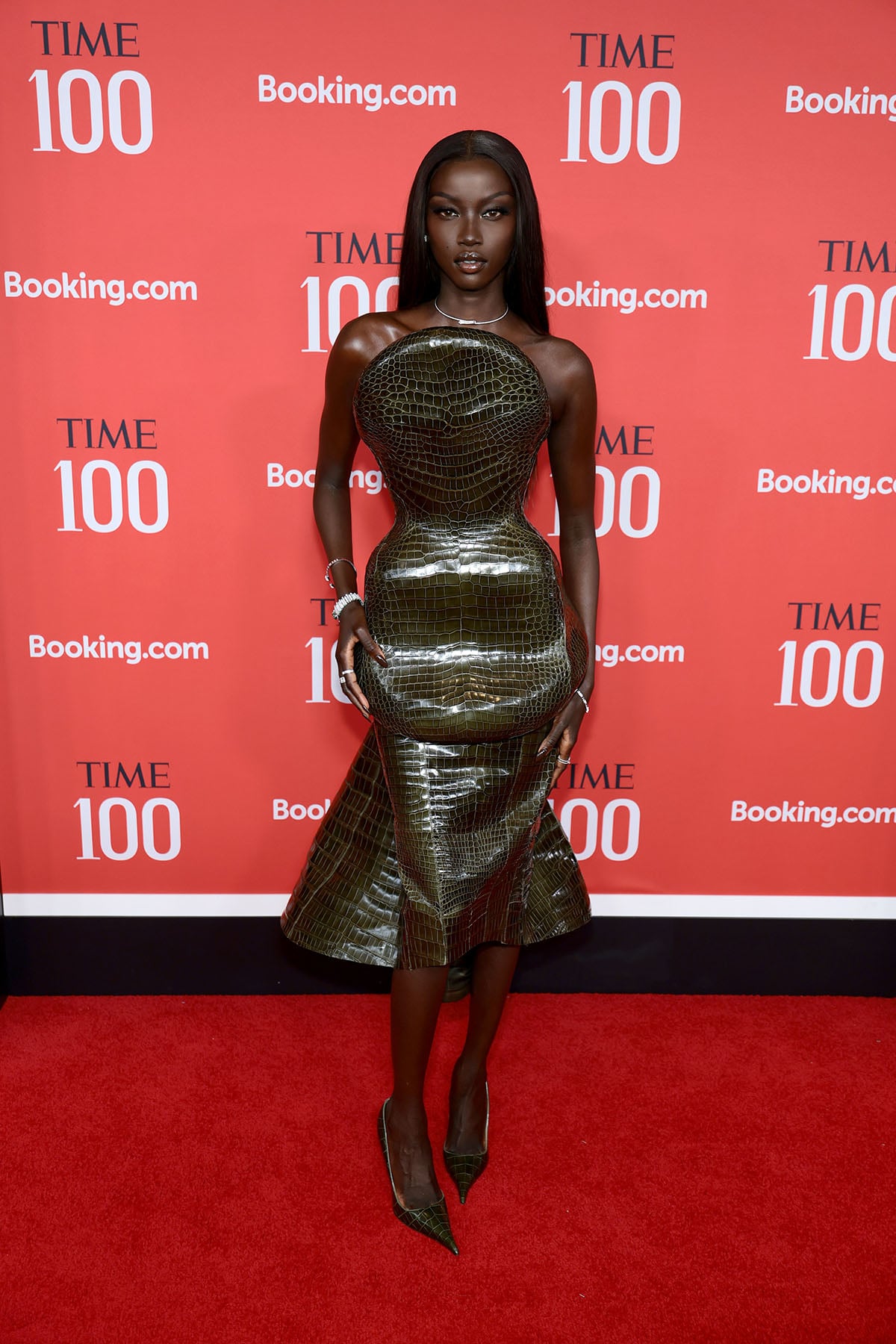
Model Anok Yai provided one of the evening’s most technically significant moments, appearing in a sculptural ensemble from Ashi Studio’s Spring 2026 Couture collection. The garment featured a green crocodile-skin texture, utilizing advanced fabric manipulation to create a liquid-like sheen. The silhouette was characterized by sharp, carved lines and a flared structure that demonstrated the house’s focus on architectural precision.
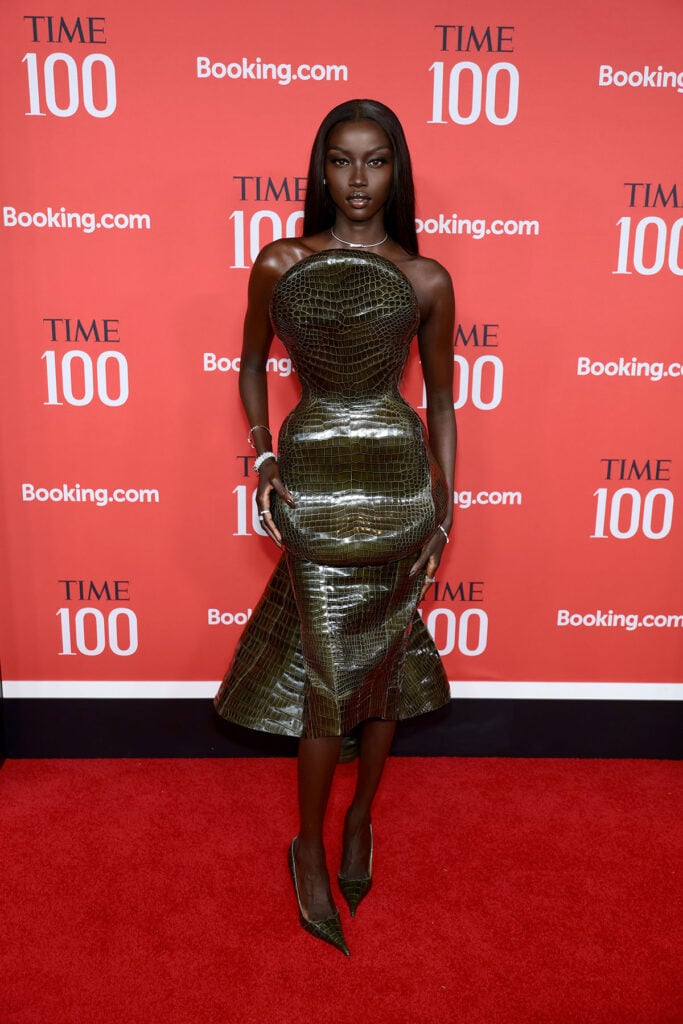
Ashi Studio, which has recently gained traction for its avant-garde approach to haute couture, utilized this appearance to reinforce its position in the luxury market. The choice of a deep, iridescent green served as a departure from the traditional gala palette of black and metallics. Fashion analysts noted that the cohesion between the garment’s texture and the styling—including matching pointed-toe pumps and Marli jewels—created a "total look" that emphasized the physical presence of the wearer.
The Return of the Archive: Hailey Bieber and Calvin Klein’s 1992 Revival
Hailey Bieber’s appearance in a custom Calvin Klein Collection gown highlighted the industry’s ongoing fascination with archival revivals. The lilac and silver floral lace column gown was explicitly inspired by the brand’s Spring-Summer 1992 archive, a period defined by the minimalism of Francisco Costa and the early influence of the "slip dress" aesthetic.

The decision to reference a 34-year-old design reflects a broader movement toward heritage-based fashion. By revisiting the 1992 archives, Calvin Klein reinforced its historical identity while catering to a contemporary audience that values "vintage" prestige. While the delivery was noted for its understated, low-key energy, the technical execution of the lace and the precision of the column silhouette remained a testament to the brand’s foundational design principles. Archival fashion on the red carpet has become a strategic tool for brands to demonstrate longevity and timelessness in an era of rapid trend cycles.
Sarah Burton’s Givenchy: Zoe Saldana and the New Era of Soft Drama
Zoe Saldana’s attendance at the gala marked a significant moment for the house of Givenchy, as she wore a design by Sarah Burton from the Fall 2026 collection. Following Burton’s transition to the historic French house, there has been a noticeable shift toward a more romantic, detailed aesthetic that contrasts with the street-wear influences of previous years.
Saldana’s black velvet dress moved beyond the standard "Little Black Dress" through the inclusion of sweeping bow draping and intricate ribbon embroidery. The look was accessorized with a black satin Givenchy bow clutch and pompom T-bar sandals, presenting a cohesive vision of Burton’s new direction for the brand. Industry observers pointed out that the choice of velvet for a spring event—while unconventional—offered a textural richness that photographed with greater depth than standard silks. This appearance follows Saldana’s recent high-profile outings in Milan, suggesting a strategic partnership between the actress and the house of Givenchy.
Structural Romanticism: The Rise of Wiederhoeft and Richard Quinn
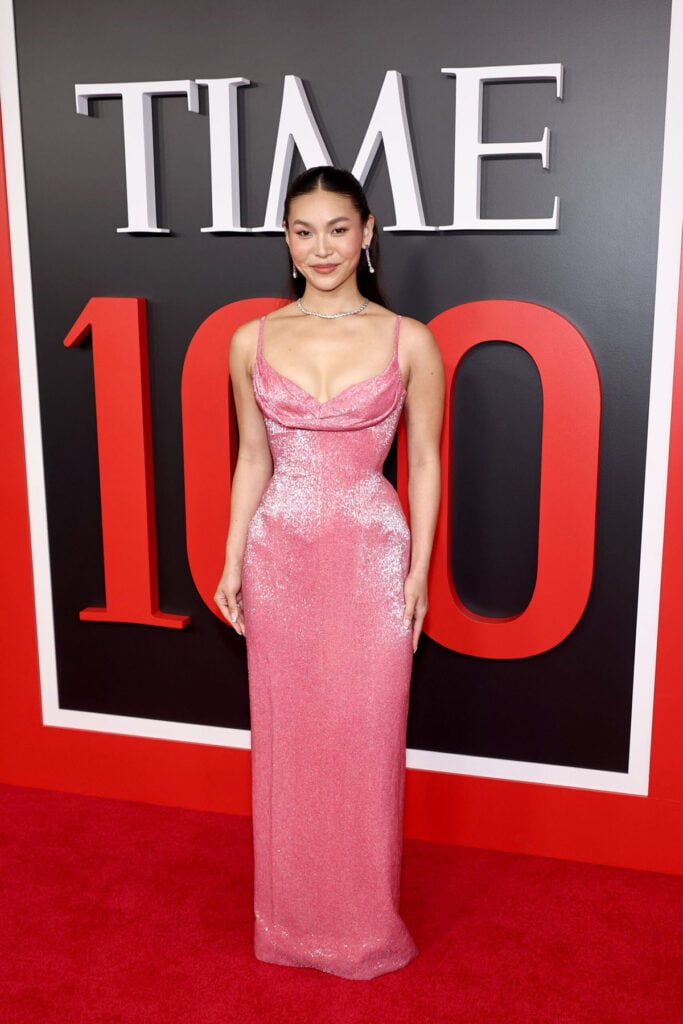
The 2026 gala also showcased the growing influence of "New Romanticism," a movement characterized by corsetry, tulle, and exaggerated feminine silhouettes. Both Chloe Kim and Keke Palmer selected designs by Wiederhoeft, a brand that has become synonymous with modern structural corsetry. Kim wore a pink iteration of a silhouette previously seen in red and gold, demonstrating the brand’s commitment to a signature "core" design. Palmer, conversely, opted for a black corseted look from the Spring 2026 collection, styled with Grown Brilliance jewels to evoke a vintage aesthetic.

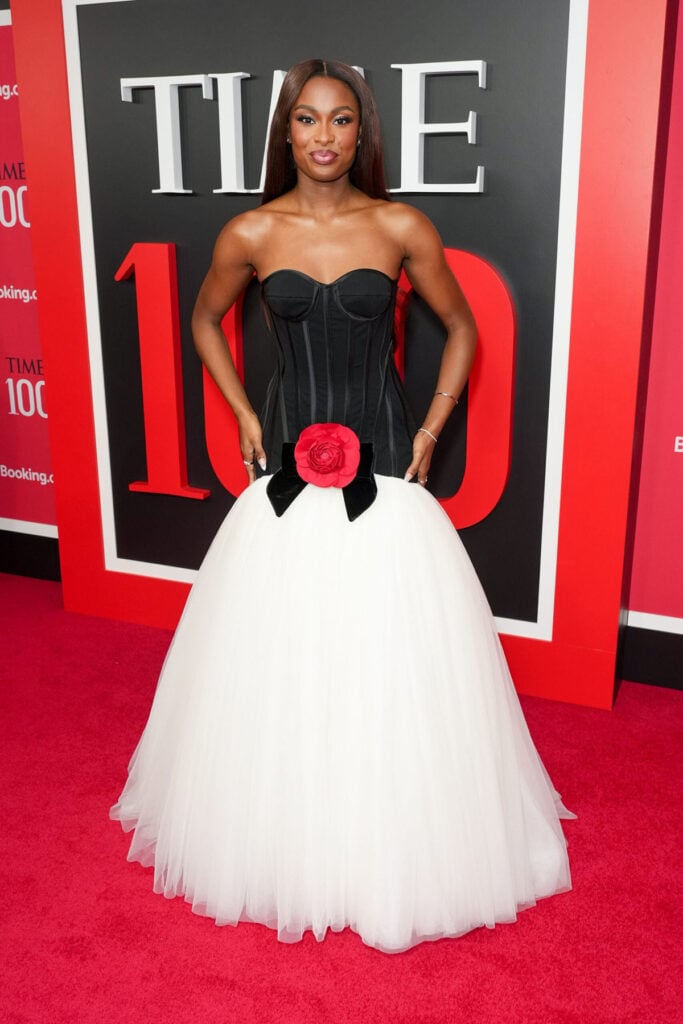
Similarly, Coco Jones represented the romantic trend in a Richard Quinn Spring 2026 gown. The ensemble paired a black corseted bodice with a voluminous white tulle skirt, anchored by a central red rose detail. Quinn’s work frequently explores the tension between traditional floral motifs and fetish-inspired corsetry, a combination that has made him a favorite for high-profile events. The recurrence of these structured silhouettes at the TIME100 Gala suggests a move away from the "quiet luxury" of previous seasons toward more performative and theatrical attire.
Graphic Simplicity and Modern Restraint: Claire Danes and Hilary Duff
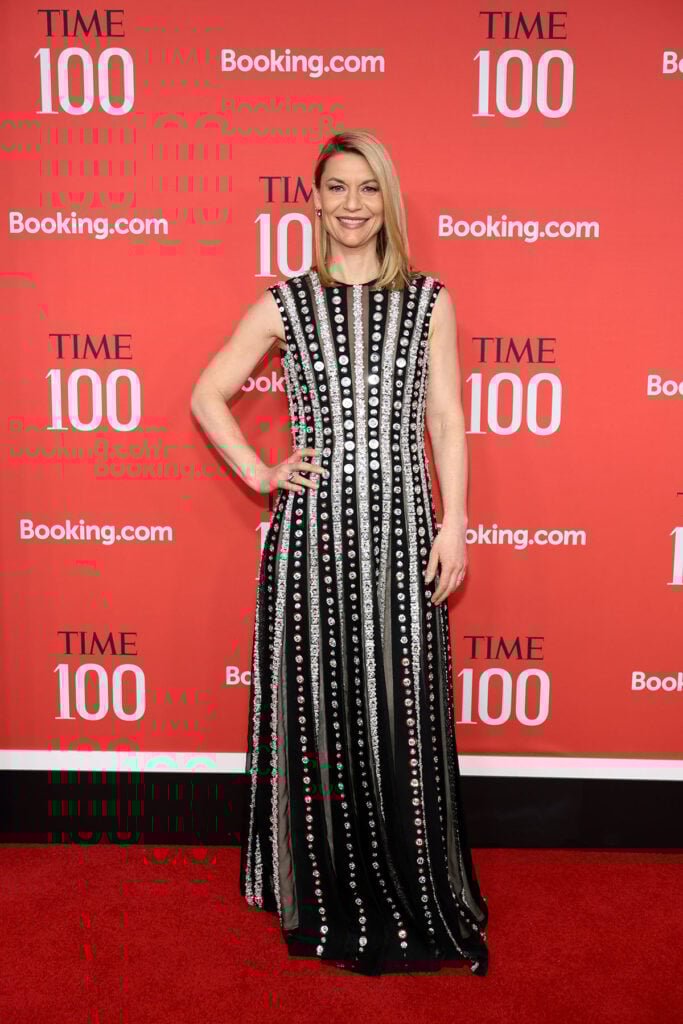
In contrast to the voluminous gowns, Claire Danes and Hilary Duff represented a more minimalist approach. Danes wore a Prada ensemble characterized by clean lines and a graphic sensibility. The look was elevated by Jessica McCormack jewelry, maintaining a focus on "clean" fashion that prioritizes fit and fabric over ornamentation. This aesthetic has long been associated with Danes’ red-carpet identity, emphasizing professional sophistication over dramatic flair.
Hilary Duff’s choice of an Anna October Spring 2026 dress introduced a different form of restraint. The garment featured restrictive sleeve detailing, a design element that has sparked debate among fashion critics regarding the balance between aesthetic form and wearer mobility. Accompanied by a Kinn Studio ring, the look highlighted the rise of Eastern European designers, such as October, on the global stage.
Modern Masculinity: Brioni and dunhill on the Red Carpet
The menswear at the 2026 TIME100 Gala reflected the evolving standards of formal attire for men. Sterling K. Brown appeared in a Brioni jacket in a shade of soft pink, a choice that challenged the traditional black-tie dress code. While the color choice drew mixed reactions from style commentators—some of whom suggested a deeper tone would have offered more gravitas—it represented the ongoing trend of men embracing color and non-traditional palettes in formal settings.
Wagner Moura, continuing a successful awards-season run, opted for a more classic but equally distinguished silhouette. His double-breasted suit from the dunhill Fall 2026 collection showcased the brand’s focus on British tailoring and sharp proportions. The contrast between Brown’s experimental color and Moura’s traditional tailoring illustrates the current duality in menswear: a respect for heritage craftsmanship paired with a desire for individual expression.
Economic and Cultural Implications of Red Carpet Appearances
The fashion choices made for the TIME100 Gala carry implications far beyond the red carpet. For emerging designers like Anna October or Wiederhoeft, an appearance at such a high-profile event can lead to a significant increase in brand searches and retail orders. For established houses like Givenchy and Calvin Klein, these moments are essential for maintaining cultural relevance and signaling new creative directions.

Furthermore, the gala serves as a reflection of the global zeitgeist. The blend of archival pieces and forward-looking couture mirrors the broader societal conversation regarding sustainability and innovation. By choosing to wear archival Calvin Klein, Hailey Bieber participated in a form of "sustainable luxury," highlighting the value of existing garments. Meanwhile, Anok Yai’s Ashi Studio look pointed toward a future of material experimentation.
As the evening concluded with performances and speeches from the honorees, the fashion remained a primary point of discussion. The 2026 TIME100 Gala successfully demonstrated that while the list honors influence in its many forms, the red carpet remains the most visible manifestation of that influence. The event solidified the current trend of "intentional dressing," where every garment is selected not just for its beauty, but for the specific narrative it conveys about the wearer’s place in the global cultural landscape.