






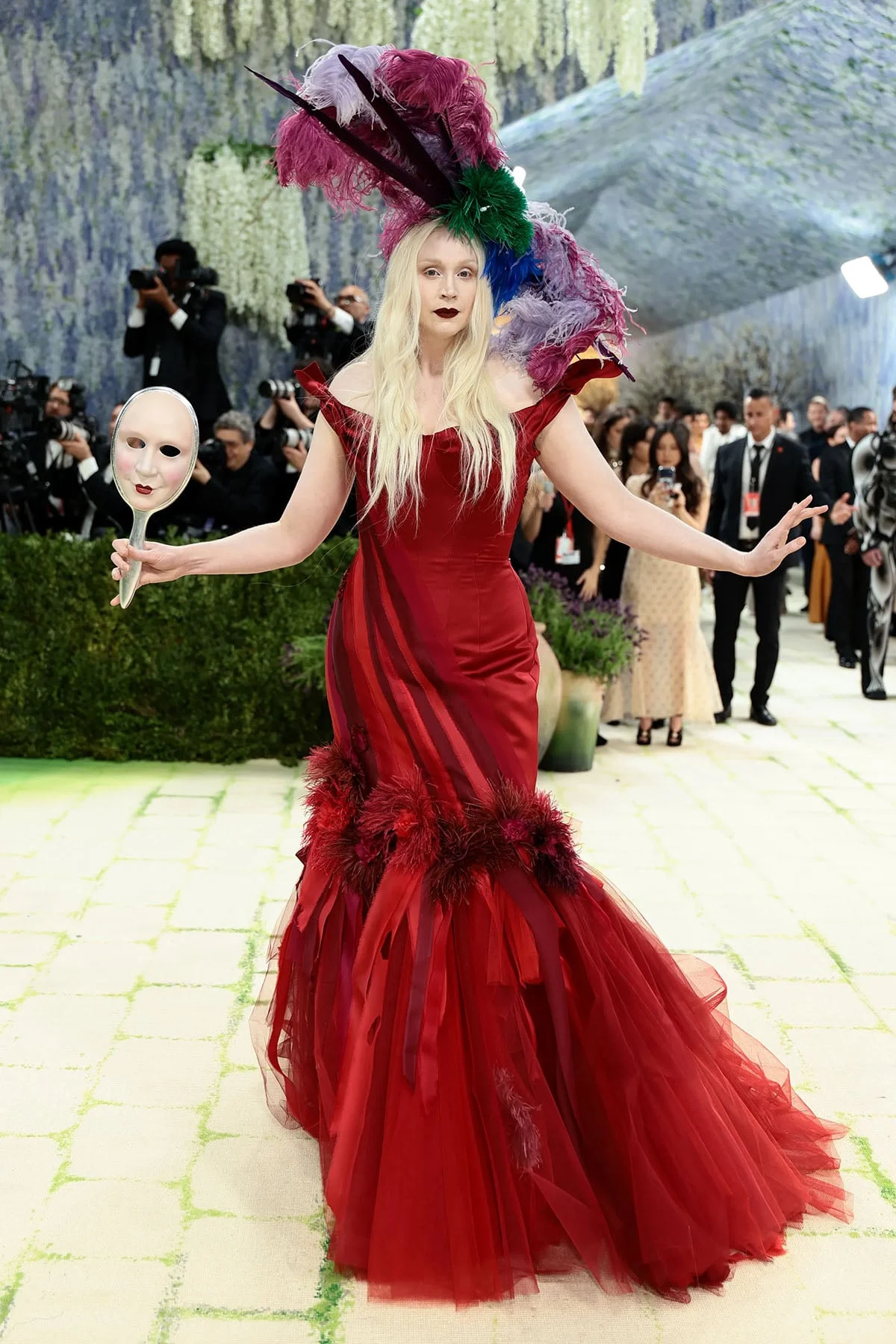
The 2026 Met Gala, held at the Metropolitan Museum of Art in New York City, served as the backdrop for a significant milestone in the intersection of high fashion and contemporary art. Gwendoline Christie, the British actress celebrated for her roles in "Game of Thrones" and "Wednesday," made her third appearance at the prestigious event, marking a definitive shift in her red-carpet evolution. While Christie has long been a fixture of the international fashion circuit, this year’s gala represented her debut wearing a custom creation by Giles Deacon. The collaboration, while a first for the Met steps, reflects a long-standing creative partnership between the actress and the designer, whose shared aesthetic often explores the boundaries between the wearable and the performative.
Under the 2026 theme of "Costume Art," the gala sought to investigate the historical and conceptual links between theatrical dress and the evolution of fine art. The theme challenged attendees to move beyond traditional evening wear and instead present garments that functioned as artifacts of narrative and character. Christie’s ensemble, a multi-layered crimson gown accompanied by avant-garde accessories, was widely cited by industry observers as one of the most rigorous interpretations of the evening’s curatorial mandate.
The Architectural Composition of the Crimson Gown
The centerpiece of the look was a custom Giles Deacon gown that prioritized volume and structural integrity. Constructed from heavy silk faille and layered with intricate tulle, the garment utilized a deep, monochromatic red palette. The bodice was meticulously sculpted to emphasize Christie’s stature, a design choice that Deacon has frequently employed in his work to celebrate unconventional silhouettes. The gown’s lower half transitioned into a dramatic flared hem, heavily embellished with hand-applied feather trimming that cascaded into a structured train.
The choice of materials served a dual purpose: providing the rigidity necessary for the gown’s architectural shape while offering the fluid movement required for the performance-art aspect of Christie’s arrival. Tulle, a staple of both classical ballet and 18th-century court dress, was used here to bridge the gap between historical costume and modern couture. Fashion historians noting the gown’s construction observed echoes of the "New Look" silhouette, though subverted by Deacon’s signature penchant for the exaggerated and the macabre.
The collaboration between Christie and Deacon is rooted in a shared history. Deacon, who has dressed Christie for numerous private and public events over the last decade, is known for his ability to translate Christie’s 6-foot-3-inch frame into a canvas for high-concept design. In the context of the 2026 Met Gala, this synergy allowed for a garment that did not merely clothe the actress but served as a physical extension of the "Costume Art" exhibition itself.
The Gillian Wearing Collaboration: Identity and the Mask
One of the most discussed elements of the ensemble was the inclusion of a handheld mask, a piece created specifically for the occasion by the Turner Prize-winning conceptual artist Gillian Wearing. The mask was a hyper-realistic recreation of Gwendoline Christie’s own face, rendered with startling detail. This inclusion moved the outfit from the realm of fashion into the territory of contemporary art, specifically referencing Wearing’s career-long exploration of identity, self-portraiture, and the "masks" individuals wear in society.

By carrying a replica of her own visage, Christie engaged in a meta-commentary on the nature of celebrity and the performance of the red carpet. In a journalistic analysis of the look, the mask serves as a tool of "duplication," where the wearer becomes both the subject (the living actress) and the object (the static art piece). This thematic layer aligned precisely with the Metropolitan Museum of Art’s objective for the 2026 exhibition: to show how costume can be used to construct, deconstruct, and obscure the human identity.
The mask also drew parallels to the "uncanny valley," a psychological concept where a near-perfect human likeness can evoke a sense of unease. In the setting of the Met Gala—an event often criticized for its artifice—the use of a literal mask of the self was interpreted by critics as a sophisticated critique of the industry’s focus on image over substance.
Millinery and Theatricality: The Stephen Jones Headpiece
To complete the silhouette, Christie wore a flamboyant feathered headpiece designed by Deacon in collaboration with Stephen Jones, arguably the world’s most influential milliner. Jones, whose career spans over four decades, has a storied history of creating headwear that functions as sculpture. The headpiece for the 2026 gala was an expansive arrangement of crimson feathers that added significant height and texture to the overall look.
The involvement of Stephen Jones added a layer of traditional craftsmanship to the avant-garde ensemble. Millinery has historically been the bridge between daily attire and theatrical costume, and Jones’s contribution ensured that the look maintained a sense of balanced proportion despite its exaggerated scale. The headpiece did not merely act as an accessory; it served to frame the face and the Gillian Wearing mask, creating a vertical line that emphasized Christie’s presence on the museum’s iconic grand staircase.
A Chronology of Gwendoline Christie’s Met Gala History
Gwendoline Christie’s trajectory at the Met Gala reflects a growing confidence in her role as a fashion icon. Her previous appearances provided a roadmap to this year’s Giles Deacon debut:
- 2019: "Camp: Notes on Fashion" – Christie made a memorable entrance in a high-necked, iridescent silk gown by Gucci. The look was praised for its regal quality and its adherence to the theme of artifice and exaggeration.
- 2023: "Karl Lagerfeld: A Line of Beauty" – For this tribute to the late designer, Christie wore a pale pink Fendi gown designed by Kim Jones, featuring a sheer overlay and a more ethereal, soft-glamour aesthetic. Later that same evening, she transitioned into a structured Maison Margiela look for the after-parties, signaling her interest in more experimental, deconstructed fashion.
- 2026: "Costume Art" – Her arrival in Giles Deacon marked the first time she wore a designer with whom she shares a personal and long-term creative bond on the Met stage. This appearance is viewed as the culmination of her efforts to blend her acting background with the world of haute couture.
Contextualizing the 2026 Met Gala: Economic and Cultural Data
The Met Gala remains the primary source of funding for the Metropolitan Museum of Art’s Costume Institute. While official figures for the 2026 event are pending, historical data provides a framework for the event’s scale. In previous years, the gala has consistently raised between $15 million and $22 million in a single evening. Ticket prices for the 2026 event were estimated to be in the range of $75,000 per person, with tables starting at $350,000, typically paid for by fashion houses who invite celebrity muses as guests.
The "Costume Art" exhibition, which Christie’s look helped launch, features over 150 objects ranging from 17th-century theatrical bodices to contemporary 3D-printed garments. Curators noted that the 2026 theme was designed to elevate the status of the "costume designer" to that of the "fine artist," a distinction that has historically been contested in the art world.
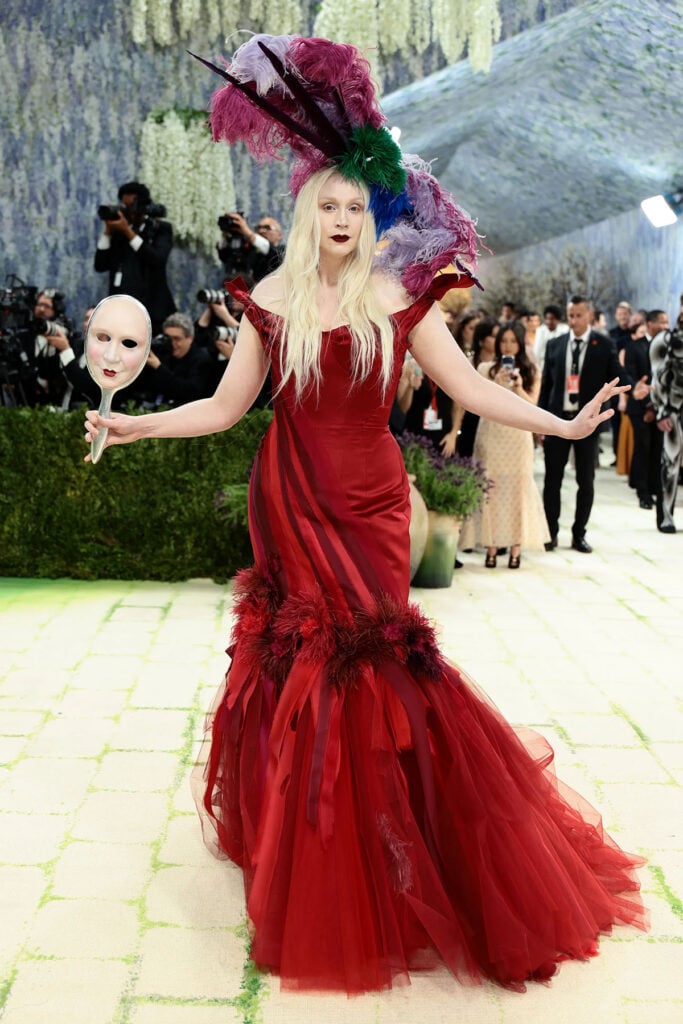
Social media metrics also underscore the impact of Christie’s appearance. Within the first four hours of her arrival, mentions of "Giles Deacon" and "Gillian Wearing" saw a 400% increase in global search volume, according to preliminary data from fashion analytics firms. The "performance art" aspect of Christie’s walk—pausing to interact with the mask—generated some of the highest engagement rates of the night, highlighting the public’s appetite for narrative-driven fashion.
Broader Implications for the Fashion Industry
The reception of Christie’s Giles Deacon look suggests a shift in the broader fashion landscape away from "quiet luxury" and toward "maximalist storytelling." As the industry grapples with the rise of artificial intelligence and digital fashion, the 2026 Met Gala emphasized the value of physical craft and the "human touch" in garment construction.
Industry analysts suggest that the success of the Christie-Deacon-Wearing-Jones collaboration may encourage more multi-disciplinary partnerships in the future. By involving a fine artist (Wearing) and a specialist milliner (Jones) in the design process, Deacon demonstrated how a red-carpet moment can transcend commercial interests to become a legitimate cultural contribution.
Furthermore, Christie’s continued success on the red carpet challenges traditional industry standards regarding age and body type. At 47, Christie has become a primary muse for designers who value character and presence over conventional runway dimensions. Her 2026 appearance reinforces the idea that the Met Gala is less about "trends" and more about the enduring power of the "persona."
In conclusion, Gwendoline Christie’s appearance at the 2026 Met Gala was more than a display of high fashion; it was a calculated synthesis of theatre, art, and identity. Through the expert craftsmanship of Giles Deacon and the conceptual depth provided by Gillian Wearing and Stephen Jones, the look achieved a rare alignment with the "Costume Art" theme, securing its place in the archives of Met Gala history. As the exhibition opens to the public, the discourse surrounding Christie’s crimson ensemble will likely serve as a primary case study in how fashion can function as a profound medium for artistic expression.