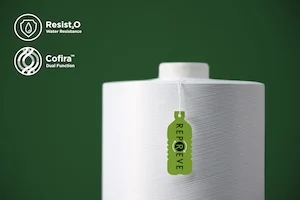






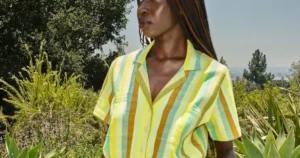



The environmental nonprofit Canopy has released a landmark report revealing that wheat straw, a common agricultural byproduct, possesses the technical and commercial potential to revolutionize the fashion industry by providing a sustainable alternative to wood-based fibres. The report, titled "From Wheat Straw to Wardrobes: Fashioning a New Fibre Future," details the successful results of a multi-year pilot project known as Project Latvus. This initiative demonstrates that pulp derived from Indian wheat straw can be transformed into high-quality viscose and lyocell fibres, matching the performance of traditional wood-based materials while significantly reducing the industry’s ecological footprint. By shifting the sourcing of Man-Made Cellulosic Fibres (MMCFs) from ancient forests to agricultural residues, the fashion sector could play a pivotal role in mitigating climate change, preserving biodiversity, and fostering economic growth in rural farming communities.
The Environmental Imperative for Alternative Fibres
For decades, the fashion industry has relied heavily on Man-Made Cellulosic Fibres, such as viscose, modal, and lyocell, as "natural" alternatives to petroleum-based synthetics like polyester. While these fibres are biodegradable and derived from plant matter, their production comes at a steep environmental cost. Current data suggests that more than 300 million trees are harvested annually to meet the global demand for MMCFs. A significant portion of this timber is sourced from climate-critical and biodiversity-rich forests, including the Great Northern Boreal Forest and tropical rainforests in Indonesia and the Amazon.
The destruction of these "carbon sinks" exacerbates global warming and threatens the survival of countless species. According to the Canopy report, protecting these existing forests is among the most immediate and cost-effective strategies for meeting the global "30×30" biodiversity target. This international agreement, established under the Kunming-Montreal Global Biodiversity Framework, aims to protect 30% of the world’s land and water by 2030. Project Latvus suggests that by utilizing the millions of tonnes of wheat straw left over from food production, the fashion industry can decouple its growth from deforestation.
Project Latvus: A Chronology of Innovation
The journey toward wheat-based textiles began with a foundational research effort commissioned by the Laudes Foundation titled "Spinning Future Threads." This initial study confirmed that agricultural residues—including straw, husks, and stalks—could technically serve as a raw material for textile-grade pulp. Building on these findings, Project Latvus was launched to test the commercial viability of this concept through a full-scale "farm-to-garment" pilot.
The timeline of Project Latvus involved several critical phases:
- Sourcing and Extraction (2024-2025): Working with A2P (Agri to Power) Energy, the project secured wheat straw from farmers in Northern India. The straw was processed into pulp using technology provided by Chempolis, a Finnish firm specializing in sustainable biomass refining.
- Fibre Production (2025): The wheat straw pulp was sent to the Thuringian Institute for Textile and Plastics Research (TITK) in Germany. Here, researchers successfully produced lyocell and viscose fibres, testing them for tensile strength, dye uptake, and texture.
- Yarn and Fabric Manufacturing (Late 2025): The fibres were integrated into the supply chains of various manufacturers, including Inovafil, Yee Chain, Shahi, Filpucci, and DBL. These partners spun the fibres into yarns and wove or knitted them into fabrics suitable for high-street fashion.
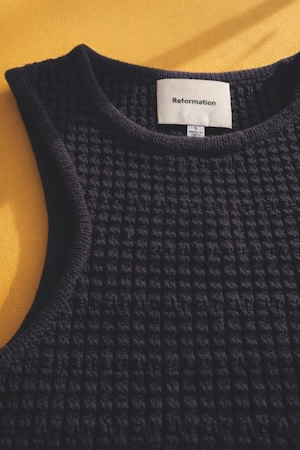
- Traceability and Brand Testing (Early 2026): Throughout the process, Textile Genesis provided digital traceability to ensure the integrity of the "Next Gen" material. Brands such as H&M Group, C&A, and Reformation then evaluated the final textiles for aesthetic and performance qualities.
The culmination of this timeline is the May 2026 report, which serves as a proof of concept for the entire industry.
Technical Performance and Material Standards
A primary concern for fashion brands when adopting new materials is whether they can meet the rigorous technical standards required for mass-market apparel. The results from Project Latvus indicate that wheat straw-derived lyocell and viscose are virtually indistinguishable from their wood-based counterparts.
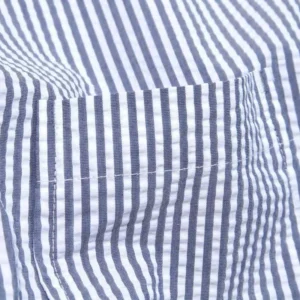
Representatives from Reformation and TITK noted that the wheat-based lyocell exhibited a "soft hand-feel" and "excellent drape," characteristics essential for the contemporary apparel market. In technical testing, the fibres showed high tenacity and durability, making them suitable for a wide range of applications, from lightweight summer dresses to more structured garments. The ability of wheat straw pulp to directly replace wood pulp in existing manufacturing machinery is a significant finding, as it suggests that the transition to sustainable feedstocks will not require a total overhaul of global textile infrastructure.
India’s Strategic Role in the Next-Gen Revolution
The report places a specific emphasis on India as a future hub for Next Generation (Next Gen) MMCF production. India is one of the world’s largest producers of wheat, and consequently, it generates a staggering amount of agricultural residue. Current estimates indicate that more than 90 million tonnes of crop residue are burned by Indian farmers every year.
This practice of crop burning is a major contributor to seasonal air pollution in Northern India. During the harvest months, levels of PM2.5—fine particulate matter that can penetrate deep into the lungs and enter the bloodstream—frequently soar to levels 20 to 30 times higher than the World Health Organization (WHO) safety guidelines. By creating a commercial market for wheat straw, Project Latvus offers a "waste-to-wealth" solution. Instead of burning the straw, farmers can sell it to pulping facilities, generating supplemental income for rural communities while simultaneously improving regional air quality.
Furthermore, India already possesses a robust textile manufacturing sector. Integrating wheat straw pulping into the existing domestic supply chain could position the country as a leader in circular fashion, attracting investment from global brands seeking to meet their 2030 sustainability commitments.
Stakeholder Reactions and Market Readiness
The successful pilot has garnered positive responses from across the fashion spectrum. Nicole Rycroft, Founder and Executive Director of Canopy, emphasized that the technology is no longer in the experimental stage. "Project Latvus shows that the future of fibre is already here," Rycroft stated. "While continued scale-up is needed to optimize efficiency and close the price difference, the direction is clear—Next Gen MMCFs are ready for the next stage of commercial adoption."
Brands involved in the pilot have expressed a readiness to integrate these materials into their collections, provided that production can be scaled. The challenge remains the "green premium"—the higher cost of new materials compared to established, subsidized commodities. Canopy is calling on global fashion leaders to "pool demand" by committing to large-scale purchase agreements. Such commitments would provide the financial security necessary for pulping innovators to build larger facilities, eventually leading to price parity with wood-based viscose.
Supply chain partners, including Shahi and DBL, have also noted that the inclusion of agricultural waste enhances supply chain resilience. As climate change makes traditional timber harvests more unpredictable due to wildfires and pest outbreaks, diversifying the "fibre basket" to include annual agricultural crops provides a more stable and scalable source of raw material.
Analysis: Implications for the Global Supply Chain
The shift toward wheat straw and other agricultural residues represents a fundamental change in the textile supply chain. Historically, the fashion industry has operated on a linear model: extract, produce, discard. The integration of "Next Gen" materials signals a move toward a circular bio-economy.
From a strategic perspective, the adoption of wheat straw pulp offers several advantages:
- Carbon Sequestration: Keeping forests standing allows them to continue sequestering carbon, while using agricultural waste prevents the carbon release associated with burning.
- Resource Efficiency: Utilizing land that is already being used for food production to also produce textile fibres maximizes the utility of existing agricultural acreage, reducing the need for land conversion.
- Regulatory Compliance: As the European Union and other jurisdictions introduce stricter regulations regarding deforestation-free products (such as the EU Deforestation Regulation or EUDR), brands that shift to agricultural residues will find themselves ahead of the compliance curve.
However, the report also highlights the need for significant infrastructure investment. To transition from pilot projects to global standards, the industry requires more "biorefineries" capable of processing non-wood biomass. These facilities must be strategically located near agricultural hubs to minimize transportation emissions and costs.
Conclusion: The Path to 2030
As the fashion industry faces increasing pressure from consumers and regulators to address its environmental impact, the findings of the "From Wheat Straw to Wardrobes" report offer a clear roadmap for progress. The success of Project Latvus proves that the technical barriers to using agricultural waste have been largely overcome. The focus must now shift to the economic and logistical scaling of these solutions.
The potential impact is profound. By substituting 50% of wood-derived MMCFs with agricultural residues, the industry could save over 150 million trees annually and prevent millions of tonnes of CO2 from entering the atmosphere. For the rural communities in India and beyond, this transition promises a future where agricultural waste is no longer a source of pollution, but a source of prosperity. The report concludes with a call to action for the world’s fashion houses: the technology is proven, the material is high-quality, and the environmental need is urgent. The next step is to move these "Next Gen" fibres from the pilot stage into the wardrobes of the world.